
How to Prepare Your Backyard for Patio Cover Installation

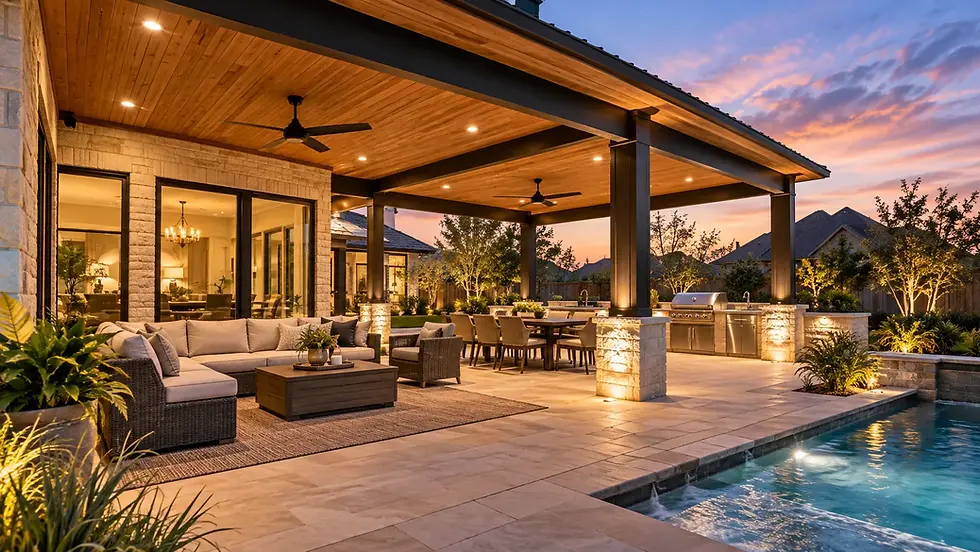
A patio cover is one of the easiest ways to make your backyard more comfortable. Shaded family dinners, a quiet spot to unwind, a place to host friends: a good cover handles all of it.
Before the crew shows up, though, a little prep goes a long way. Clearing the space, checking the ground, and planning around utilities can keep the project running smoothly and avoid surprise delays. If you’re adding a patio cover to your Texas home, here’s how to get your backyard ready.

7 Tips to Prepare Your Backyard for Patio Cover Installation
1. Clear the Installation Area
Start by moving outdoor furniture, grills, planters, toys, and anything else out of the area where the cover will go. The crew needs room to work safely, and clear space helps them work faster.
Trim any overgrown shrubs or branches that could get in the way. If big trees are close to the planned structure, think about whether their roots or branches could cause trouble.
You don’t have to remove every plant or decoration. Just decide what can stay and what needs to move for now. A clear work area also protects your belongings and makes it easier to picture the finished space.
2. Check the Ground and Existing Patio
Before installing patio covers, take a look at your existing patio or the ground where the new structure will stand.
Watch for cracked concrete, uneven spots, drainage problems, or places where water pools after rain. Those issues may need attention before construction starts.
For many patios in Texas, heavy rain can reveal drainage problems, and long stretches of heat can wear on outdoor materials. What the foundation needs will depend on the cover’s design, its size, and local building requirements.
A professional installer can tell you whether your current concrete is ready for the new structure or whether it needs extra footings or other prep.
3. Plan for Drainage and Water Flow
Good drainage keeps an outdoor living area in good shape for the long haul. A patio cover should send rainwater away from your home, not let it collect near the foundation.
Before construction, watch how water moves across your backyard when it rains. Check your downspouts, gutters, and any low spots that might need work.
Depending on the design, your new cover may need gutters and downspouts to handle runoff. Planning for them early helps protect your patio, landscaping, and foundation.
With patio covers in Texas, drainage deserves extra thought. The weather can swing quickly from heavy downpours to long, hot, dry spells.
4. Identify Underground Utilities
Before anyone digs for posts or footings, you need to know what’s underground. That could include water lines, gas lines, electrical cables, irrigation systems, and drainage pipes.
In Texas, call 811 before digging so the utility lines can be located and marked. Also tell your contractor about any private irrigation lines or other buried features, since standard marking services may not cover them.
This step helps you avoid damage, surprise repair bills, and construction delays.
5. Decide How You Want to Use the Space
One of the most important prep steps is figuring out how you want to use your covered patio.
Is it for outdoor dining, lounging, or entertaining with a TV and a ceiling fan? The answer shapes the cover’s size, layout, lighting, and other features.
Look at different patio cover ideas before you settle on a design. A solid roof gives you fuller shade and shelter, while a more open design lets in more natural light.
If you need room for outdoor furniture or cooking gear, think about how much space you’ll want to move around comfortably.
6. Choose the Right Patio Cover Design
The right design suits your home and fits the way your family lives. Think about the roof style, color, materials, upkeep, and how much shade you want.
Custom patio covers installation give you flexibility, since the size and design can be built around your backyard’s layout. You can also talk through lighting, ceiling fans, and built-in drainage during the design stage.
Knowing the benefits of patio covers can help you choose with confidence. They provide shade, make your outdoor space more comfortable, protect your patio furniture from some of the weather, and give you a better place to entertain.
7. Prepare for Installation Day
Before the crew arrives, confirm the schedule, where they’ll access the yard, and anything your contractor expects you to handle. Keep kids and pets away from the work zone, and set up a spot to store furniture and other belongings.
Ask about permits, inspections, and any neighborhood association approvals you might need. Taking care of these early can save you from frustrating delays.
Once the cover is up, follow your contractor’s advice on cleaning and upkeep. A few simple patio maintenance tips can keep your new structure looking good: clear the gutters, check the fasteners, and inspect the roof after severe weather.
Get Your Backyard Ready for a Better Outdoor Living Experience
Prepping your backyard makes for a safer, smoother build and a patio cover that fits your home. From checking drainage to choosing the right design, a little planning pays off.
If you’re thinking about a patio cover, American Eagle Builders can help you plan a design that suits your property and the way you like to live outdoors. With the right prep and professional installation, you’ll have a more comfortable, useful backyard for years to come.


Comments