
Covered Patio Design Ideas for Poolside Spaces

A backyard pool has a way of becoming the heart of the house. It's where summer afternoons turn into evenings, where friends end up staying longer than planned, and where a quiet cup of coffee can feel like a tiny vacation. The catch, if you've spent any real time outside during a Texas summer, is the sun. By early afternoon it stops feeling pleasant and starts feeling like an obstacle.
A well-designed patio cover solves that problem, and it does more than just block the sun. It adds comfort, it adds style, and honestly, it can change how often you actually use your backyard. Here are a few directions worth considering if you're planning a covered patio for your pool area.

1. Classic Attached Patio Covers
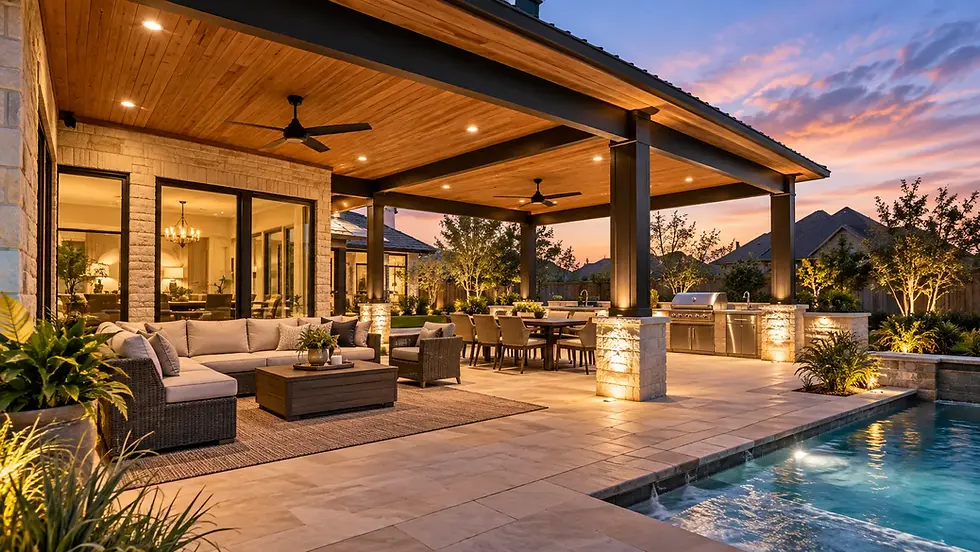
Attached covers are still the go-to choice for a lot of homeowners, and there's a simple reason for that: they connect directly to the house, so the indoor and outdoor spaces feel like one continuous area instead of two separate worlds.
Next to a pool, this setup is hard to beat. You get a shaded place to dry off, eat lunch, or just sit and watch the kids swim. And since the roofing, ceiling finish, and lighting can all be matched to your home's existing style, it doesn't look tacked on — it looks like it was always meant to be there.
2. Pergolas, for That Resort-Style Feel
If you'd rather have light, open shade instead of a solid roof, a pergola is probably the better fit.
A wood pergola brings warmth and a bit of texture to the yard, while aluminum holds up longer with almost no upkeep. Either way, you can dress it up further with climbing vines, string lights, outdoor curtains, or even a retractable canopy for the days when you want full shade.
It's a small structure, but it tends to make a pool area feel like something out of a resort brochure.
3. Custom Covers Built Around How You Actually Live
No two families use a backyard the same way. Some want a space built for hosting — big dinners, game days, that kind of thing. Others just want somewhere quiet to read or have coffee before the day starts.
That's the case for going custom instead of picking a standard layout off a brochure. A few things people often build in:
An outdoor kitchen
Built-in seating
Ceiling fans
Lighting wired into the structure itself
A spot for an outdoor TV or speakers
A fire feature
Storage for pool toys, cushions, or grilling supplies
The advantage of going custom isn't really about luxury — it's that the space ends up matching how you live, instead of you adjusting your habits to fit the space.
4. Modern, Minimalist Designs
If your taste runs more contemporary, a minimalist patio cover might suit you better than a traditional one.
Think slim metal framing, a neutral palette, and clean geometric lines — nothing fussy. Paired with simple outdoor furniture and understated landscaping, this style tends to age well; it doesn't chase trends, so it still looks current years later.
It's a particularly good match for newer builds, but it can work on an older home too if the rest of the yard leans clean and modern.
5. Rustic, Texas-Style Outdoor Living
Mention "patio cover" to a lot of Texans and rustic is probably what comes to mind first.
Exposed wood beams, stone columns, visible hardware, warm tones — it's a look that fits naturally with native landscaping and the kind of sprawling backyard that's common around here. It also tends to age gracefully; rustic materials are forgiving of weather and wear in a way that sleeker finishes aren't.
For year-round use, it's hard to beat.
What a Patio Cover Actually Gets You
Shade is the obvious benefit, but it's not the only one. A covered patio also tends to:
Keep outdoor furniture from getting beat up by sun and rain
Cut down on how hot the space gets in summer
Add real, usable square footage to your home
Make the property look more finished from the outside
Add to resale value
Give you an actual dedicated spot for entertaining, instead of "wherever there's shade that day"
For a lot of homeowners in Texas, those practical perks end up mattering as much as the design itself.
Finding the Right Team to Build It
Good design only goes so far if the construction doesn't hold up. A patio cover needs to be built to handle Texas weather and meet local codes, which is where having an experienced builder actually pays off — not just for the look of the thing, but for how long it lasts.
A good contractor will also help you think through material choices and design tradeoffs you might not have considered on your own, rather than just building whatever you sketched on a napkin.
If you're in the DFW area and thinking about a pergola, a custom build, or anything in between, American Eagle Builders is worth a conversation. They handle everything from pergola installation to full patio cover builds, and they're used to working with Texas weather rather than against it.


Comments