The most common sliding door problem is a panel that drags, caused by a dirty track, worn rollers or a frame that is out of level. Sliding door problems are mostly small and fixable, but a few mean it is time to replace the door. Here is a symptom, a cause and a fix for each.

The short answer
- A dragging panel is the most common sliding door problem, and a dirty track or worn roller is the usual cause.
- Clean the track and adjust the rollers before you consider anything more involved.
- Never force a sliding panel, because it wears the rollers and can bend the track.
- Water at the sill is more serious than a draft, since it can rot the subfloor under the track.
- Replace the door when the frame, the glass seal or the sill is failing, not just a part.
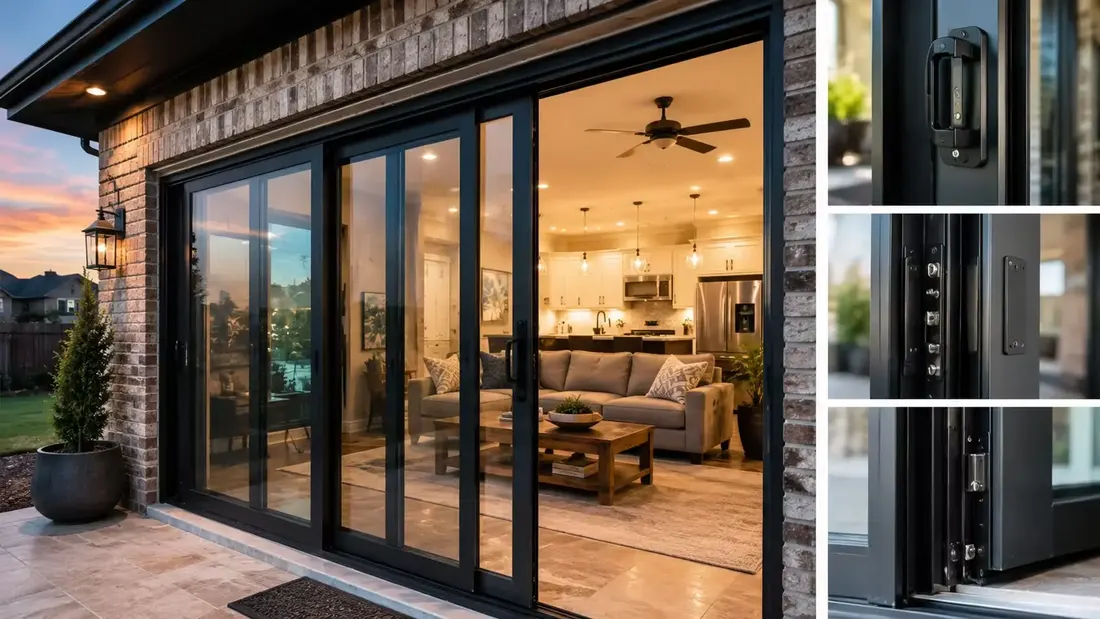
A sliding door is a simple machine. A panel rides on two rollers along a track, and the lock holds it shut. When something goes wrong, it is nearly always one of those parts, or the frame that holds them. If you can name the symptom, you are most of the way to the cause.
What is the most common problem with sliding doors?
A panel that sticks, scrapes or drags along the track. Dirt in the rail, a worn or damaged roller and a frame that is slightly out of level are the usual causes. Because the panel is heavy glass, even small friction feels like a fight when you open it.
| Symptom | Likely cause | The fix |
|---|---|---|
| Panel drags or scrapes | Grit in the track, or a worn roller | Clean the track, then adjust or replace the rollers |
| Panel jumps off the track | A bent track or a broken roller | Straighten or replace the track, replace the roller |
| Hard to lock or latch | Panel sits low, so the latch misses the keeper | Raise the panel with the roller screws, then adjust the keeper |
| Draft at the closed door | Worn weatherstrip or a gap at the panel edge | Replace the strips, and check the seal at the bottom |
| Water at the bottom | Clogged weep holes or a failed sill seal | Clear the holes, and check the sill and the subfloor |
| Fog between the panes | The sealed glass unit has failed | Replace the glass unit or the door |
| Screen will not roll | A dirty or bent screen track | Clean the track and straighten the frame |
The table covers most cases. The rest of this post shows what to do for the first one, since a dragging panel is behind most calls, and when a different answer is in order.
How do you fix a sliding door that sticks?
Work from the cheap and simple to the more involved. Clean first, because dirt is the most common cause and costs nothing to remove. Then lubricate lightly, adjust the rollers and test the door. Stop and call someone if the panel still binds after that, rather than forcing it.
- Open the door fully and vacuum the whole track, including the corners.
- Wipe the track with a damp cloth and look for dents, chips or a bent edge.
- Apply a dry lubricant sparingly along the track. Heavy grease holds dirt.
- Find the roller adjustment screws at the bottom edge of the panel and turn them a little at a time, both sides equally.
- Slide the panel through its full travel and check it again at the closed position.
- If it still binds, stop. A worn roller or a bent track needs a part, not more force.
Never force a sliding panel. Pushing a dragging panel wears the rollers flat and can bend the track, which turns a small adjustment into a replacement. If the door has dragged for a long time, the damage may already be done. Our post on door repair or replace shows how to tell.
Why does a sliding door leak air or water?
Air leaks past worn weatherstrip or a gap where the panel no longer meets the frame, and water gets in when the weep holes clog or the sill seal fails. A closed door should feel tight at the edges. If you can see light or feel a draft, the seals are the first place to look.
Check the seals each fall, before the cold fronts arrive, and again after the first hard freeze. ENERGY STAR’s seal and insulate pages show where air leaks hide in a house, doors included. Water is more serious than air, because it can soak the subfloor under the track. If you see stains, soft floor or a musty smell near the sill, have it looked at before the door is touched.
Can the ground under the house cause sliding door problems?
Yes. A slider needs a level frame from end to end. On clay ground in Plano or Frisco, a slab can settle unevenly, and a long glass panel shows it first because it has no room to flex. A dry summer like 2023 can pull clay away from a slab, so when a door starts dragging for no clear reason, check the level of the frame, not only the rollers.
When is it time to replace a sliding door?
When the problem is the frame, the glass or the sill rather than a part. A bent frame, fogged glass, rot under the track or a door that is drafty and loose no matter what you adjust will not respond to another repair. At that point a new door set on a sound, level sill is the honest answer.
- The frame is out of level or out of square, and rollers will not cure it.
- The glass has fogged between the panes, so the seal has failed.
- The subfloor under the track is soft or stained.
- The track is bent or worn, and parts are hard to match.
- The door is drafty even with fresh weatherstripping.
We install sliding patio doors across Dallas–Fort Worth, and at the sill we look for water damage before any new frame goes in. The sliding patio doors page shows our range, and a free in-home estimate brings us to your track. If you are choosing a new one, how to choose a sliding patio door will help. When you hire help, look for a firm with a recognized trade body behind it, such as NARI, and ask for proof of insurance.
Questions we get asked about this
Usually grit in the track, a worn roller or a frame that is slightly out of level. Vacuum and wipe the track first, apply a dry lubricant sparingly and adjust the rollers. If it still binds, stop and have it looked at instead of forcing it.
Most sliders have adjustment screws at the bottom edge of the panel. Turn each a little at a time, both sides equally, until the panel rides level and clears the track. Screw location varies by door, so look at your model before you start.
Common causes are clogged weep holes, a failed sill seal or worn weatherstrip. Clear the holes and check the seals. If you find stains or soft wood under the track, the leak has been going on for some time and needs a closer look.
A small bend can sometimes be straightened, but a badly bent or worn track often means the door needs replacing, because matching parts can be hard to find. A professional can tell you which case you have.
It depends on the door, how it was installed and how well the track is kept. A clean track, good rollers and a level sill help it run smoothly for a long time. A badly set door can drag within a short time.