Door repair means fixing one part of a door, such as the weatherstrip, a hinge, a lock or a track, while the door and its frame stay in place. It is the right call when the frame is sound and one part is worn. Here is a test by symptom for entry, patio and storm doors.
The short answer
- Repair a door when the frame is sound and one part, such as a sweep, hinge or roller, is worn.
- Replace when the frame is twisted, the sill is rotted or the glass seal has failed.
- A gap that changes from top to bottom often means the house has moved, not that the door is bad.
- Do not plane a painted door in an older house without lead-safe care.
- Never caulk over rot or force a sliding panel that drags.
A door tells you what is wrong if you read it in the right order. The mistake is to fix the symptom, a sticking edge or a cold draft, without asking what causes it. This post gives you a way to read the symptom, pick the repair that fits and know when the honest answer is a new door.
When is door repair enough?
When the frame is sound, the door is straight and one part is worn out. Weatherstripping, a sweep, a hinge screw, a lock or a roller is a small part on a good door. If the frame, the glass seal or the sill is failing, a repair only delays the problem.
| What you see | A repair may be enough | Replace if |
|---|---|---|
| Door sticks or rubs | Loose hinge screws, swollen paint or a dirty edge | The gap changes from top to bottom, or the frame is out of square |
| Draft or daylight around the edge | Worn weatherstrip or a flat sweep | The slab is warped or the frame has a gap a seal cannot close |
| Latch will not catch | A misaligned strike plate | The door sags or the frame is twisted |
| Soft or dark wood at the bottom | A small, dry spot on a sound door | Rot reaches the sill, the bottom rail or the subfloor |
| Sliding door drags | A dirty track or a worn roller | The track is bent or the frame is out of level |
| Fog between the panes | A replacement glass unit, if the rest of the door is sound | The door is old and the frame is tired as well |
| Storm door slams or sags | A new closer or a tightened frame | The frame is bent or the opening has moved |
The weatherstrip fix is a good example of the first column. ENERGY STAR has guidance on sealing air leaks around the house, and a worn strip at a door is one of the simplest. If the leak is at the frame itself, a strip will not close it.
Some of these fixes are simple enough to do yourself, such as tightening a screw, swapping a sweep or cleaning a track. Others, like resetting a frame or replacing a glass unit, are work for a professional. If you are not sure which side of that line your door is on, a second pair of eyes at the opening is worth having.
Why do doors stick in North Texas?
Often because the house has moved. Dallas and Plano sit on Blackland clay that swells in a wet spring and shrinks in a dry summer, and that movement can pull an opening out of square. A dry stretch like the summer of 2023 makes it worse. When the gap changes from top to bottom, suspect the frame before the door.
Humidity can swell a wood door too, and then it frees up when the air dries. That is the difference to watch for. A door that sticks only in damp weather may only need a light fix. A door that sticks all year, or shows a gap that changes with the seasons, points to movement.

What should you not do when a door fails?
Do not cut or plane the door before you know the cause. Shaving an edge on a door that sticks because the frame moved only hides the problem, and it can leave a gap when the season turns. Look at the hinges and the frame first. A repair that hides the cause is the one to avoid.
- Do not plane or sand a painted door in an older house without lead-safe care, since old paint may contain lead.
- Do not caulk over rot, because the wood keeps decaying underneath.
- Do not force a sliding panel that drags, since you will wear the rollers and bend the track.
- Do not pack the track with heavy grease, which holds dirt. A dry lubricant, used sparingly, is better.
- Do not add more locks to a door whose frame has moved.
Lead matters because many older homes have layers of old paint on their doors. The EPA’s lead renovation, repair and painting program sets rules for firms that disturb it. American Eagle Builders is an EPA Lead-Safe Certified Firm.
How do you tell which part of the door is failing?
Go through the door in order, from the frame to the hardware. Do it with the door closed first, then open, then closing slowly. Write down what you see at each step, because the pattern usually points at one cause.
- Look at the gap around the edge when the door is closed. It should be even all the way round.
- Tighten the hinge screws and see if the door sits better.
- Close the door slowly and watch where it rubs, and where it first touches the frame.
- Probe the bottom of the door and the sill with a blunt tool, and note any soft wood.
- Check the weatherstrip, the sweep and the lock keeper for wear.
- On a slider, vacuum the track and slide the panel to feel for a rough roller.
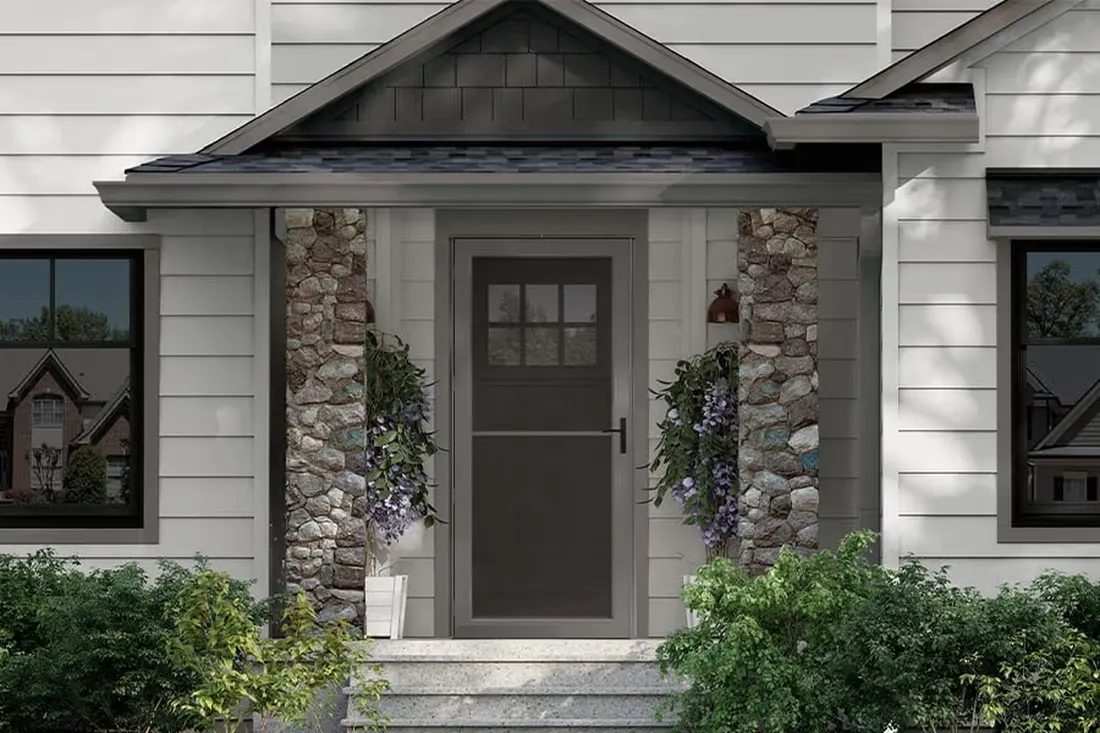
If the checks point to a worn part, repair it. If they point to the frame, the sill or the glass seal, replacing the door is the honest answer. Our posts on front door replacement signs and common sliding door problems go further for those two doors.
What happens if a door needs replacing?
A visit starts at the opening. We measure it, then look at the frame, sill and subfloor for water damage or movement. Then the door, hardware and trim go into one written estimate. We install entry, sliding, hinged and storm doors across Dallas–Fort Worth. Our doors page lists the types we install, and a free in-home estimate starts with a look at your opening. If you are weighing a storm door first, storm door benefits explains when it helps.
Questions we get asked about this
Repair when the frame is sound and one part, such as a sweep, a hinge or a roller, is worn. Replace when the frame is twisted, the sill is rotted or the glass seal has failed. A repair on a failing frame only delays the problem.
Humidity can swell wood, but in North Texas it may also mean the house has shifted. If the door frees up when the air dries, a light fix may do. If the gap changes from top to bottom year-round, check the frame.
Often. Clean the track, check the rollers and look at the level of the frame. If a roller is worn, replace it. If the track is bent or the frame is out of level, the door usually needs replacing or the frame needs repair.
Probe the bottom rail and the sill with a blunt tool. Wood that gives, crumbles or is dark and damp has rotted. Small dry spots may be fixed, but rot that reaches the sill or subfloor means the door and frame need work.
Yes. American Eagle Builders installs entry, storm, hinged and sliding doors across Dallas–Fort Worth. We measure the opening, check the frame and sill, and fix framing problems before the new door goes in.