Cost-effective windows are the ones that give you the most use for what you spend over the years you own them, not the ones with the smallest price tag. In most North Texas homes that means matching the window type to each room, then paying for better glass only where the sun hits hardest.
The short answer
- Cost-effective means the most use for what you spend over the years, not the lowest price.
- Match the window type to the room, because a good choice in a hallway can be a poor one in a bedroom.
- A fixed window has fewer parts to wear out, but a bedroom still needs a window that opens.
- Pay more for glass on west and south walls and for windows in the rooms you use most.
- Ask for a price on your first choice and a second choice so you can see the difference on your own house.
Ask ten people which window is the best value and you will get ten answers, because they are thinking about ten different houses. A window that is a bargain in a hallway can be a poor fit in a bedroom. This post is about the type of window, not the frame material or the total. For the total, see our post on the cheapest window replacement that is still worth doing.
What makes a window type cost-effective?
Three things: what it costs to buy and install, how long it keeps working without repair, and what it does for comfort and bills in the room it serves. A type that wins on all three in one room can lose on one of them in the next.
- Fewer moving parts means less to wear out. A fixed window has no sash to fail.
- A tight seal helps comfort. A sash that presses into its frame when you lock it tends to seal better than one that slides past it.
- Use matters. A window you never open does not need a crank, and a window you open daily needs hardware you will not curse.
Which window type fits which room?
Match the way a window opens to the way you use the room. Kitchens and bedrooms usually want fresh air. Living rooms and stairwells often want light and a view. The table shows where each common type earns its place and where we would skip it.
| Type | How it works | Earns its place | Think twice |
|---|---|---|---|
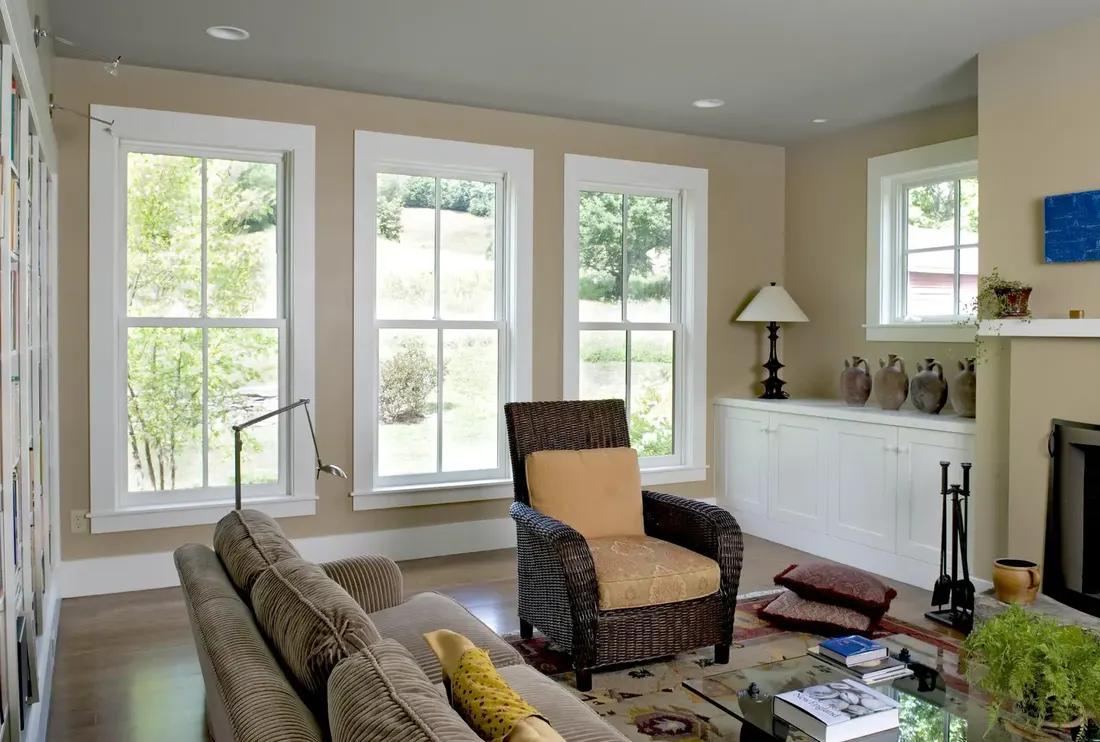
| Double-hung | Two sashes slide up and down | Traditional fronts and most bedrooms | A very tall opening where the sashes are heavy to move |
| Casement | Hinged at the side, swings out | Kitchens, and spots where you want good airflow and a tight seal | Over a deck or walkway where an open sash is in the way |
| Slider | Sash moves side to side | Wide, low openings and modern fronts | Rooms where you want the whole opening free to open |
| Awning | Hinged at the top, tips out | Bathrooms and high walls, since it can stay open in light rain | Large openings, where one hinge does a lot of work |
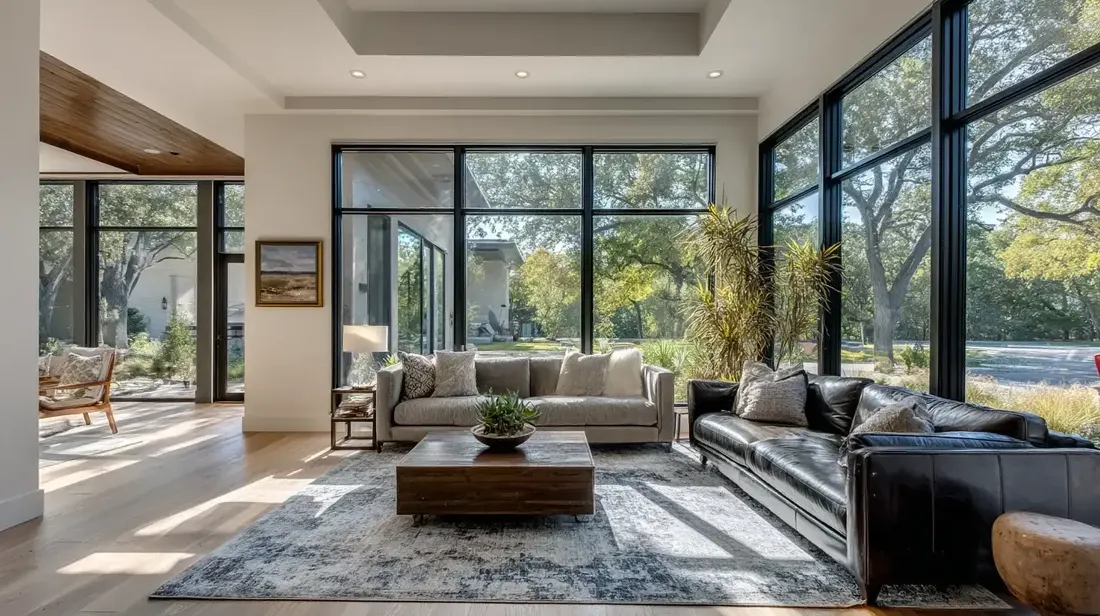
| Picture (fixed) | Glass that does not open | Views, stairwells, and walls where air is not needed | Any bedroom that needs a window that opens |
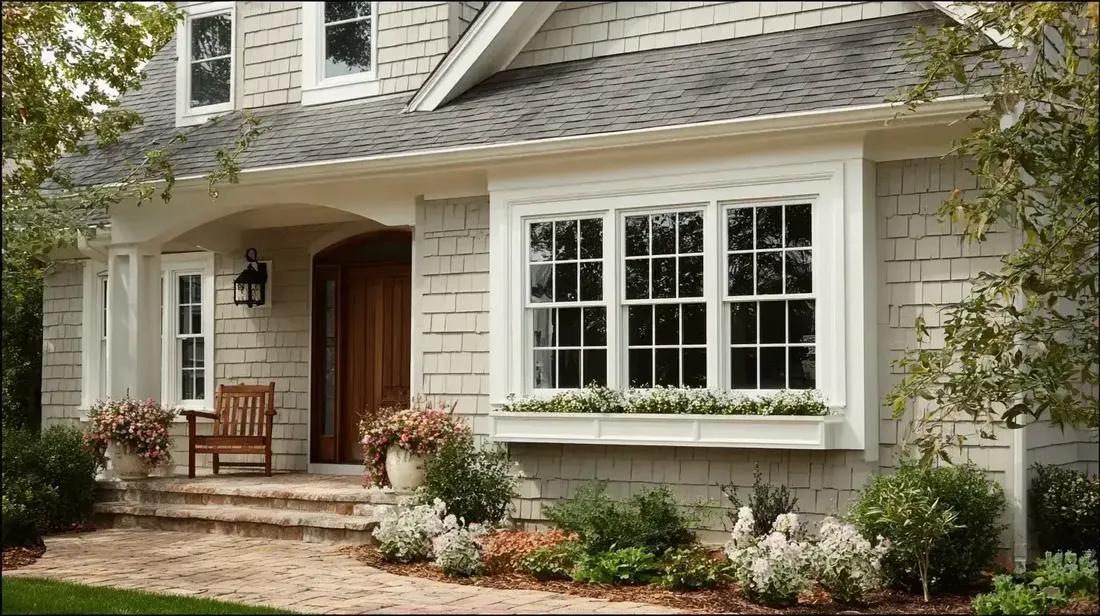
| Bay or bow | Projects out from the wall | A front room that needs depth and light | A budget that must stay tight, since it involves more framing |
Two notes on the table. First, hinged windows such as casements and awnings are only as good as their hardware, so ask to open and close a sample before you order. Second, the style has to suit the house. A grid pattern or a bay that looks wrong from the street will bother you long after the savings are forgotten, and no discount fixes that.
Is a fixed picture window the best value?
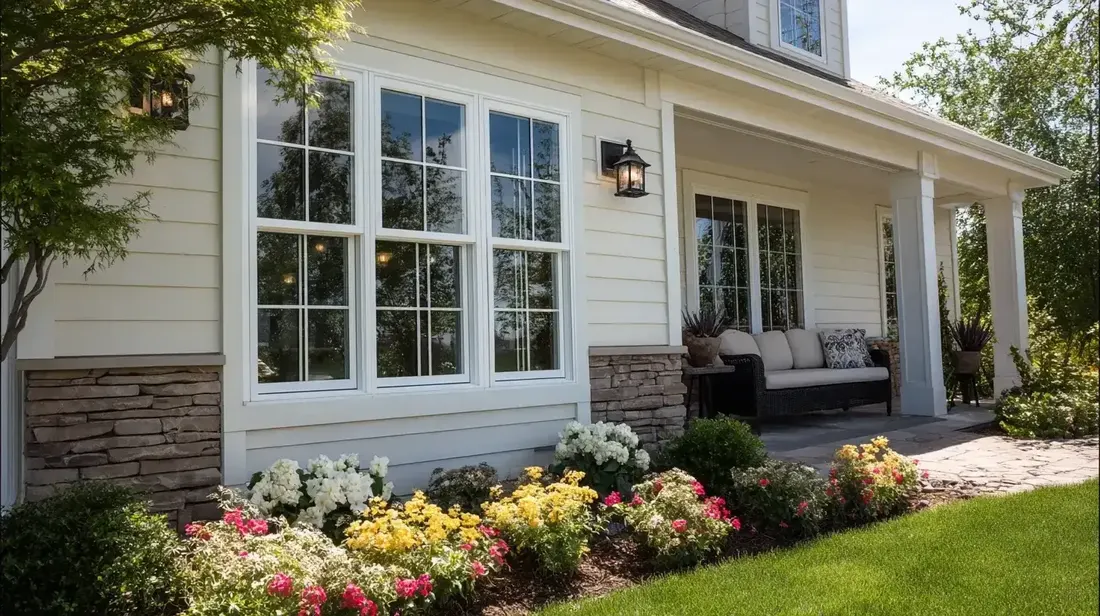
Often it is, where you do not need air. A fixed window has no sash, no hardware and no moving seal, so there is less to wear out and fewer places for air to leak. The catch is that a room needs a window that opens for fresh air and, in a bedroom, for escape.
That is the honest limit. A house of all fixed windows will cost less to build and will frustrate you to live in. Most homes do best with a mix: fixed glass for the view, with an opening window beside or below it for air. That pairing also suits the kind of wide opening that feels right in older Dallas bungalows and newer Frisco builds alike.
Where is it worth paying more for a window?
Pay more where the window works hardest: west and south walls, large openings, and the rooms you use most. Spend less in a guest room you open twice a year. In a summer like 2023, the rooms with big west-facing glass were the ones that asked the most from the cooling system.
- West and south glass: a better glass package, checked on the rating label for each window.
- Large openings: a stronger frame and good hardware, since the sash is heavier.
- Windows you clean: a sash that tilts in, so you can reach the outside glass.
- Rooms you use daily: hardware that feels solid when you turn it.
You can read how the ratings work on the ENERGY STAR windows page, and the Efficient Windows Collaborative explains the glass choices in plain terms. Do not pay for features you will not use. If a window will stay shut, a plainer unit is the better value.
How do you decide for your own house?
Go room by room and answer three questions: do I need air here, do I need a view, and how much sun does this wall get? Your answers point to a type. Then ask for prices on your first choice and your second choice, so you see the difference on your own house.
- List each room with a window and write down whether it needs fresh air.
- Mark the walls that take afternoon sun.
- Choose a type for each room from the table above.
- Ask for a price on that choice and on one alternative.
- Check each window’s rating label before you decide.
Our post on how to choose the right style of windows for a Texas home goes further on looks, and the best window styles for natural light is worth a read if daylight is your priority. We install Andersen windows in four lines, and you can see them on our windows page. American Eagle Builders offers free in-home estimates and will look at your rooms with you.
Questions we get asked about this
It depends on the room. A fixed picture window has no moving parts and often costs less where you do not need air. A casement or double-hung window earns its place in rooms where you want ventilation. Most homes do best with a mix of types, matched to each room.
Casements press into the frame when you lock them, which tends to give a tight seal and good airflow. Double-hung windows suit traditional fronts and are easy to use. Neither is better everywhere. Match the type to the room and the look of the house.
They can, because they have no sash or hardware to build and fewer moving parts to wear out. They only make sense where you do not need air. A bedroom needs a window that opens, so use fixed glass for views and pair it with an opening window.
Often yes. West walls take afternoon sun during the hottest part of a North Texas day, so the glass package matters more there. Compare the rating labels on each window you are considering, and ask about shade as well as glass.
Yes. We are a family-owned remodeler in Arlington, and we have worked across Dallas–Fort Worth since 1984. We install Andersen windows in the 100, 400, A-Series and E-Series lines. During a free in-home estimate we go room by room with you and match each opening to the type that suits it.