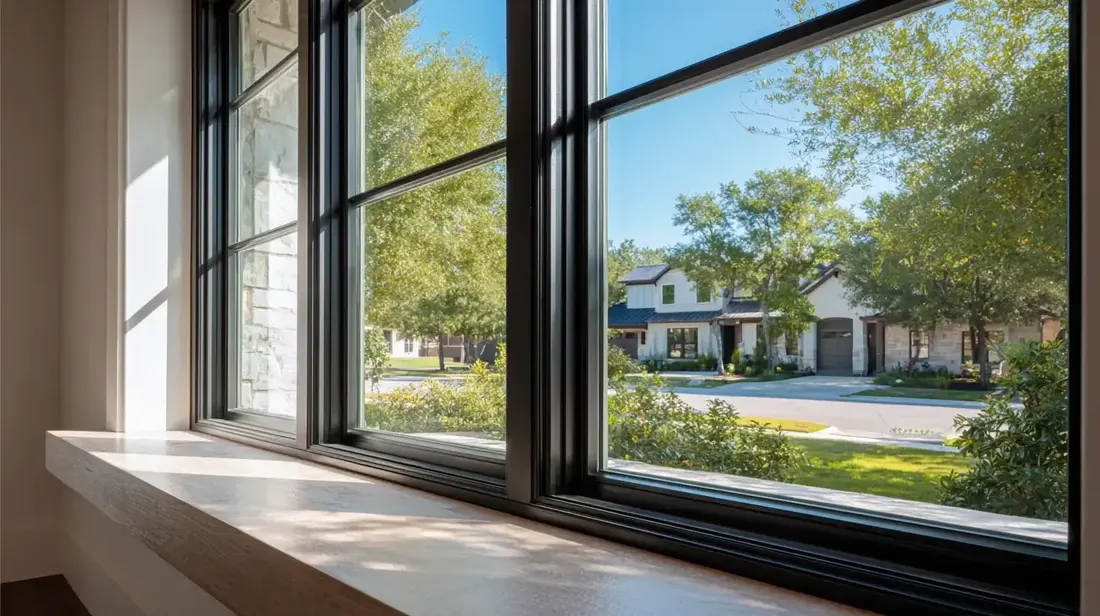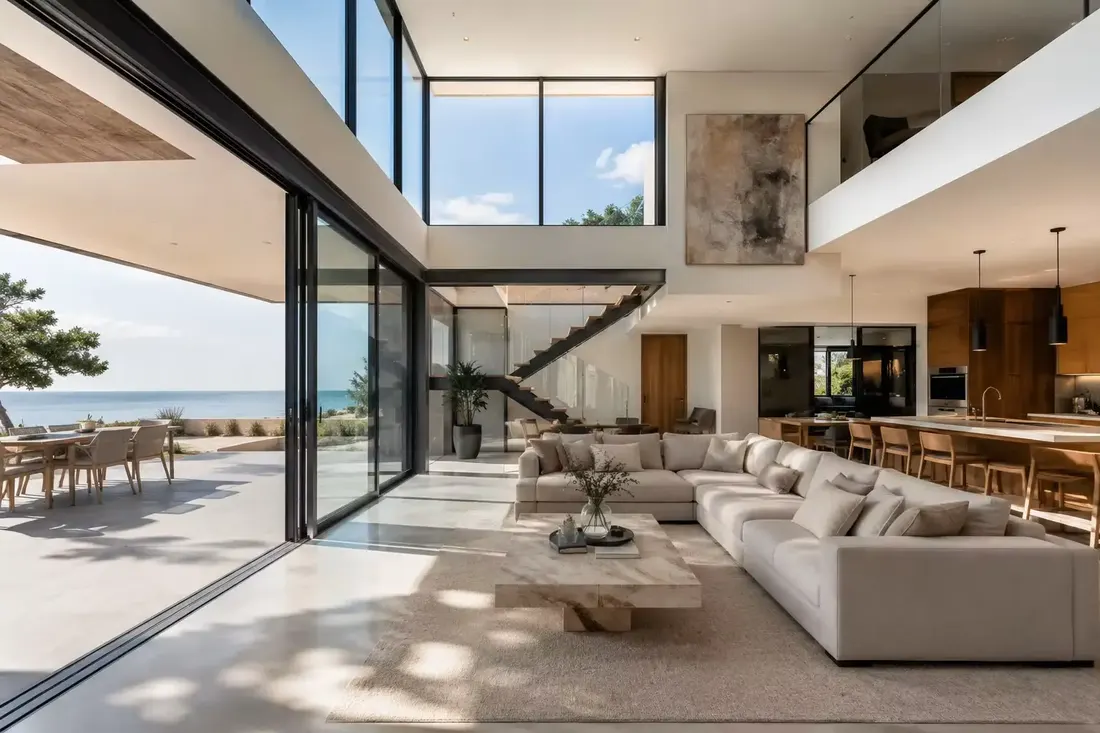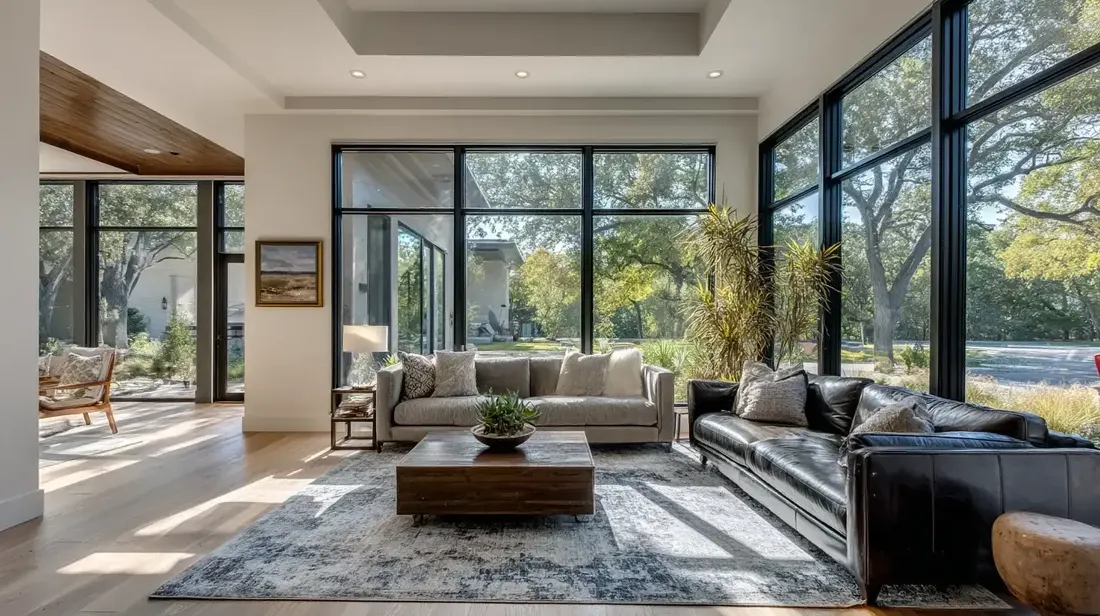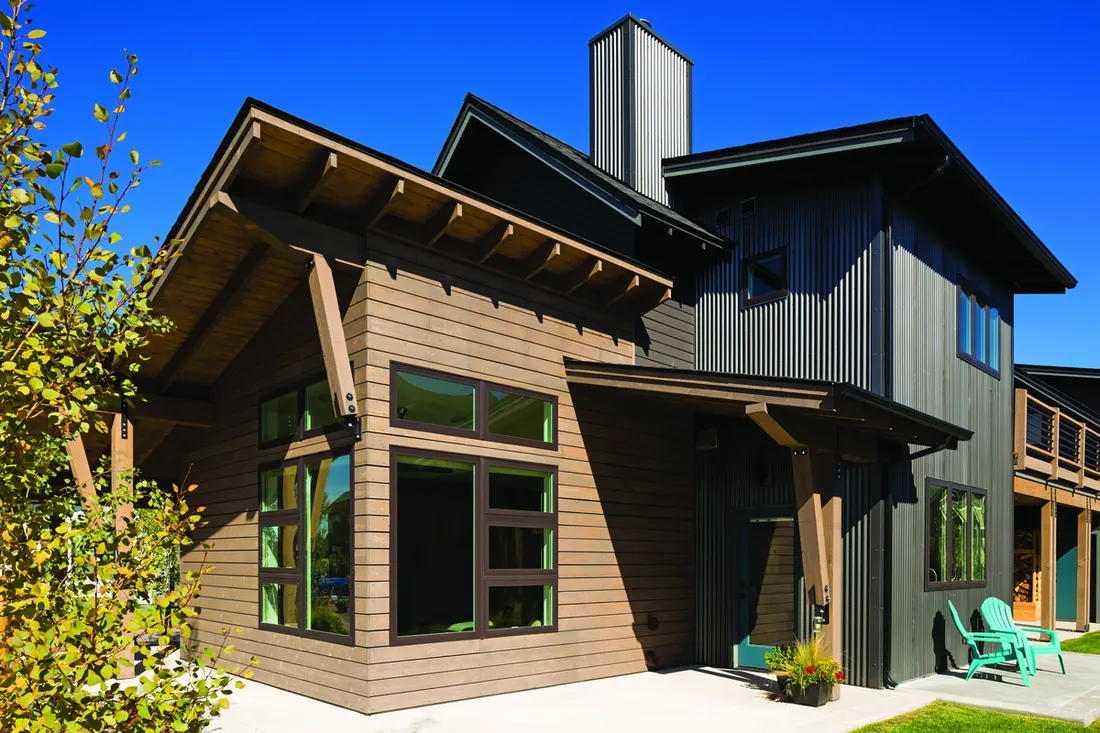
Windows for natural light are the ones with the largest glass area and the least frame in the way, placed on the wall where the sun helps you. In Texas the real task is getting daylight without the heat. That depends on the style, the glass coating and the direction the wall faces.
The short answer
- The windows with the least frame and the biggest glass area bring in the most daylight.
- Put big panes on north and east walls, and treat west-facing glass with care.
- A low SHGC and outside shade let a sunny wall keep its daylight with less heat.
- Full-height glass is a good fit on a shaded wall and a poor fit on an unshaded west wall.
- If a room is already too bright and hot, adding more glass will make it worse.
Texas has no shortage of sunlight. The trouble is that the sun that brightens a room at ten in the morning is the same sun that heats it at four in the afternoon. A bright house is mostly about picking the right wall for the right window, and only then about the style.
Which window styles let in the most natural light?
The ones with the least frame and the biggest panes. A picture window has no moving sash at all, so almost the whole opening is glass. A casement is next, because it has no bar across the middle. Sliding windows and double-hungs have a frame piece through the center, so the same opening shows less glass.
| Style | Glass in the opening | Opens for air? | Watch for |
|---|---|---|---|
| Picture | Most, no sash or center bar | No, it is fixed | Heat on a sun-facing wall, so pick the glass with care |
| Casement | High, a single sash that swings out | Yes, nearly the full opening | Needs clear room outside to swing |
| Awning | Medium, hinged at the top | Yes, and it sheds rain | Best as a small window, high on a wall |
| Sliding | Medium, a frame piece sits in the middle | Half the opening | Good where nothing can swing out |
| Double-hung | Lowest of these, a rail crosses the center | Half the opening | Suits traditional fronts |
| Bay or bow | High, glass on several sides | Often the side units | Adds more sun-facing glass, so plan shade |
These are general rules, not guarantees. A wide double-hung can out-shine a small casement. The point is to match the style to what the room needs.
Which direction should your biggest windows face?
Put the largest panes on the walls that get gentle light, and treat the west wall with caution. In the northern hemisphere the sun rises in the east, sits high to the south at midday and drops low in the west on summer afternoons. That low western sun is the hardest to shade.
- North: steady, even daylight all day and little heat. A good place for big glass.
- East: soft morning light that is gone before the day heats up. Good for kitchens and breakfast rooms.
- South: bright through the day, and the high summer sun is easy to block with an overhang or a patio cover.
- West: strong, low afternoon sun. Use smaller windows, glass with a low SHGC, outside shade, or all three.
How do you get daylight without the heat?
Choose glass with a low Solar Heat Gain Coefficient on the sun-facing walls and add shade outside the glass. Shade that stops the sun before it reaches the pane works better than a blind inside. Trees, awnings, an overhang and a covered patio all do the job.
The hot summer of 2023 made this point in many North Texas houses, where the west-facing family room became the room nobody wanted in at five. In Dallas and Colleyville, mature trees already shade many lots. On a lot without mature trees, the glass and an outside cover carry more of the load. Our patio covers can shade a rear wall of glass while keeping the view.
The NFRC label lists the SHGC for each window, and our post on U-factor and SHGC for Texas heat explains how to read it.
Do floor-to-ceiling windows make sense in DFW?
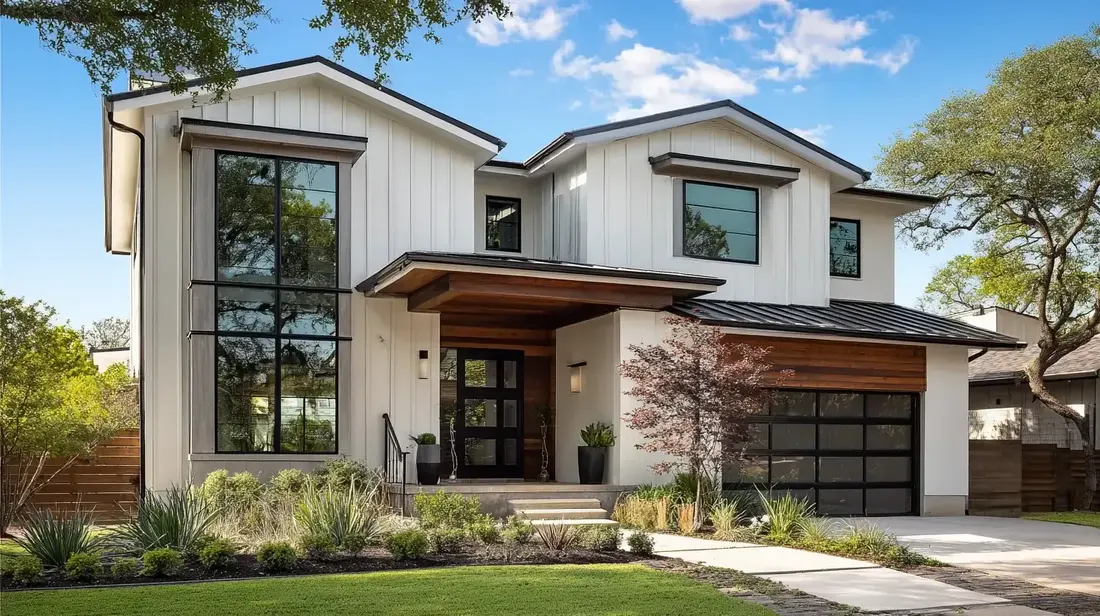
Only where the wall can take the sun. A full-height glass wall on the north or east side is a pleasure. On a west wall without shade it is a heater with a view. Most full-height glass is fixed panels or sliding doors, so you are really choosing a door style and a glass package together.
If the goal is a bright back room that opens to the patio, a sliding door can work, as long as the glass is chosen for the sun that hits it.
What about transoms, clerestories and skylights?
They bring light in from above eye level, which is useful when privacy or wall space is tight. A row of small windows high on a wall, called clerestory windows, can brighten a hallway or a bath without a view in. A transom is a narrow window above a door or another window.
Skylights are a roof job, so talk to a roofer about them. A skylight in a Texas roof also takes sun straight from above, so go in knowing it can add heat. If one room is dark, compare it to a taller or wider wall window first.
Which style works in which room?
Pick the style by what the room does, then check the wall it sits on. The Efficient Windows Collaborative also publishes window selection guidance if you want a second view on glass and orientation.
- Kitchen over a sink: a casement or awning is easy to reach and opens fully.
- Living room: a large picture window flanked by operable windows brings in light and air.
- Bedroom: a style that opens wide and closes tight, plus a shade you will use.
- Bathroom: a small high window or an awning keeps privacy and still brings daylight.
- Stairwell or hall: a transom or a high row of small windows lights the space without a view in.
When should you not chase more light?
When the room already gets too much sun, or when the glass is not the cause. A dark room is sometimes a paint, ceiling or lighting problem. A hot, bright room needs less glass area or better shade, not more. Our post on window ideas for open-concept homes looks at how light moves through bigger spaces.
American Eagle Builders is family-owned in Arlington and serves Dallas-Fort Worth. We measure the openings and check the sun on each wall during a free in-home estimate. Book one here.
Questions we get asked about this
A picture window lets in the most, because it has no sash or center bar. A casement is next. Both can be paired with each other so you get daylight from the fixed pane and fresh air from the one that opens. Sliding and double-hung windows show somewhat less glass in the same opening.
Not on every wall. Large panes on north and east walls give light without much heat. On west and south walls, pair them with glass that has a low SHGC and shade outside, such as an overhang or a patio cover.
SHGC, the Solar Heat Gain Coefficient, measures how much of the sun’s heat passes through the glass. A lower number lets in less heat. In Texas, a low SHGC on sun-facing walls lets you keep the daylight and trim the heat.
Not always. Skylights bring light from above, but they also take the full sun and are a roofing job. Check whether a larger or taller wall window, or a light-colored finish, solves the problem first.
Yes. American Eagle Builders gives free in-home estimates. We look at each wall’s exposure, measure each opening and talk through the Andersen window series and styles that fit your rooms.