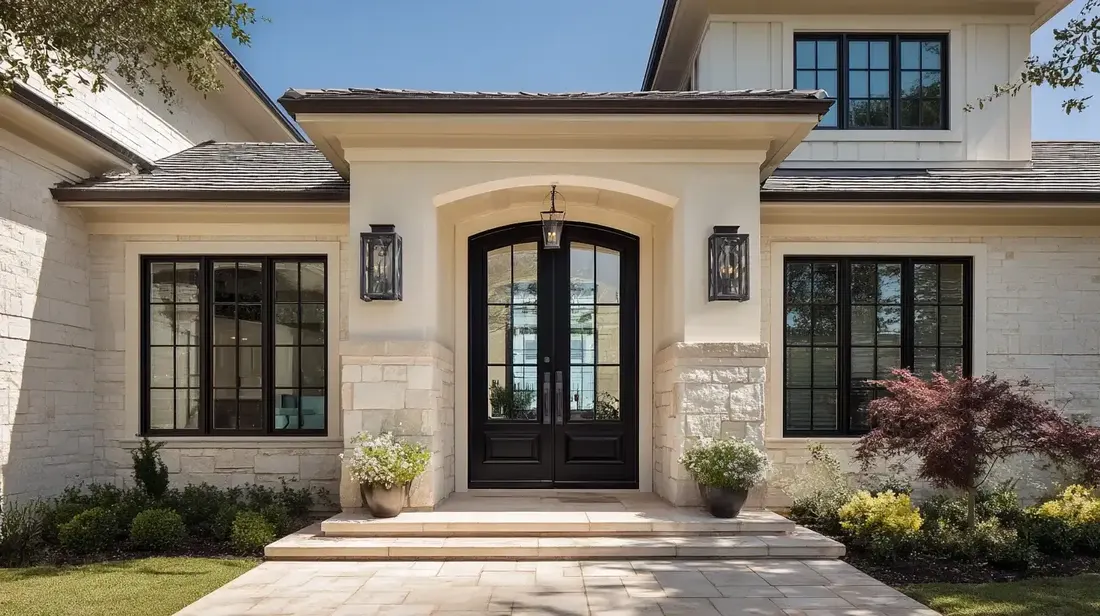
To match doors and windows to your home’s style, repeat three details: the frame color, the grille pattern and the proportions. Matching means the house reads as one design from the street. It does not mean every opening is identical, and the back of the house can be simpler.
The short answer
- Matching means repeating frame color, grille pattern and proportion, not making every opening identical.
- Name your house style first, because the style tells you which details to repeat.
- Match the street-facing side closely and relax on the sides and back.
- A door can be a deliberate accent if the frame color and style still agree with the windows.
- Replacing pieces at different times without a plan is the main cause of a mismatched look.
- Check HOA or design review rules before you order.
Matching doors and windows means choosing a small set of details and repeating them, so the house reads as one design from the street. It does not mean every opening is the same. Most houses that look wrong after a remodel have the right products and the wrong repeats: a plain window beside a paneled door, or a grille on one side of the house and none on the other.
How do you match doors and windows to your home’s style?
Name the style first, then repeat three details from it: frame color, grille pattern and proportion. Look at the roofline, the siding or masonry and the trim, because the doors and windows should agree with them. The table gives a starting point for common North Texas house types.
| House style | Windows that suit it | Door that suits it | One detail to repeat |
|---|---|---|---|
| Traditional or colonial | Double-hung with a regular grille pattern | Paneled door, sometimes with sidelights | The grille pattern on every street-facing window |
| Craftsman | Divided upper sash over a single lower pane | Wood-look door with a glass panel | The same divided top on windows and the door glass |
| Mediterranean or stucco and stone | Arched or tall windows in dark frames | Arched or double entry door | The arch, repeated in at least one window |
| Modern or contemporary | Large panes, thin frames, few divisions | Flat, simple door with a tall glass panel | The frame color, kept the same everywhere |
| Farmhouse | Taller double-hung windows, often with dark frames | Plain door with a glass panel | Frame color that picks up the roof or the trim |
| Mid-century ranch | Wide, low windows and horizontal bands | Simple flush door | The horizontal lines across the front |
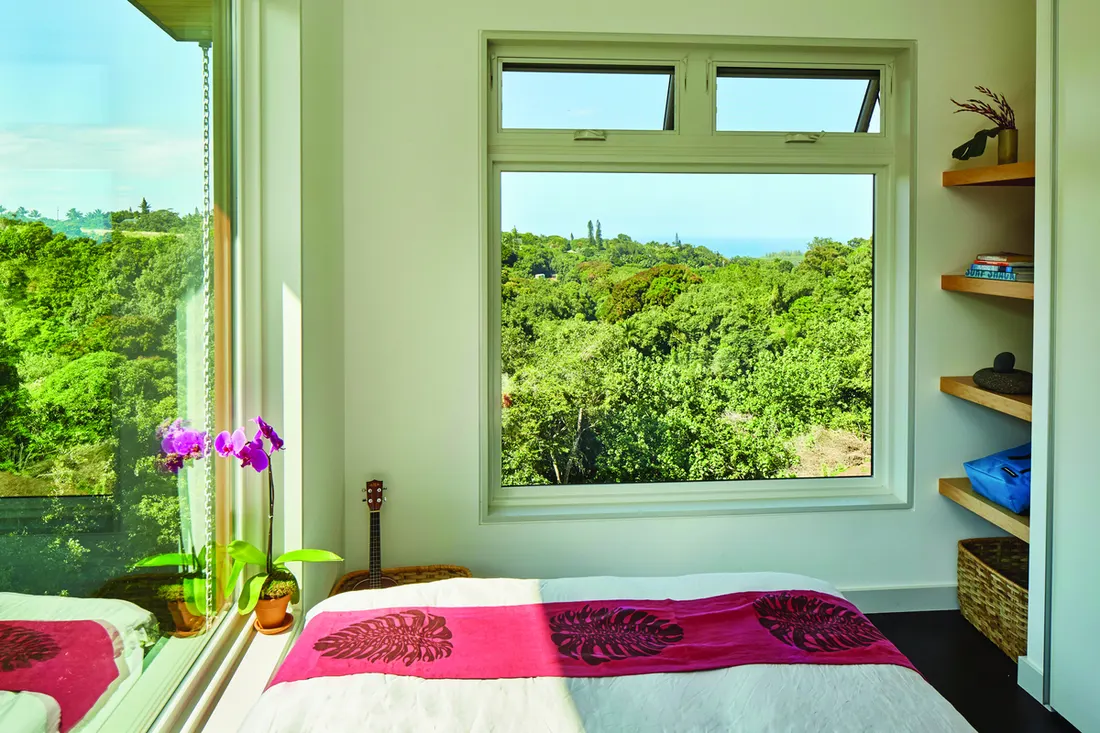
The ranch homes that fill older parts of Arlington and Garland are a good example. A ranch front is long and low, so wide windows and a plain door look right. Swapping in a tall arched door can look like it belongs on a different house. Our post on choosing the right window style for a Texas home goes further on how operation, such as casement or double-hung, fits the style.
Which three details make a house look matched?
Frame color, grille pattern and proportion. If you get those three right, you can vary almost everything else and the house still holds together. If you get one wrong, it is the first thing a neighbor notices from the street.
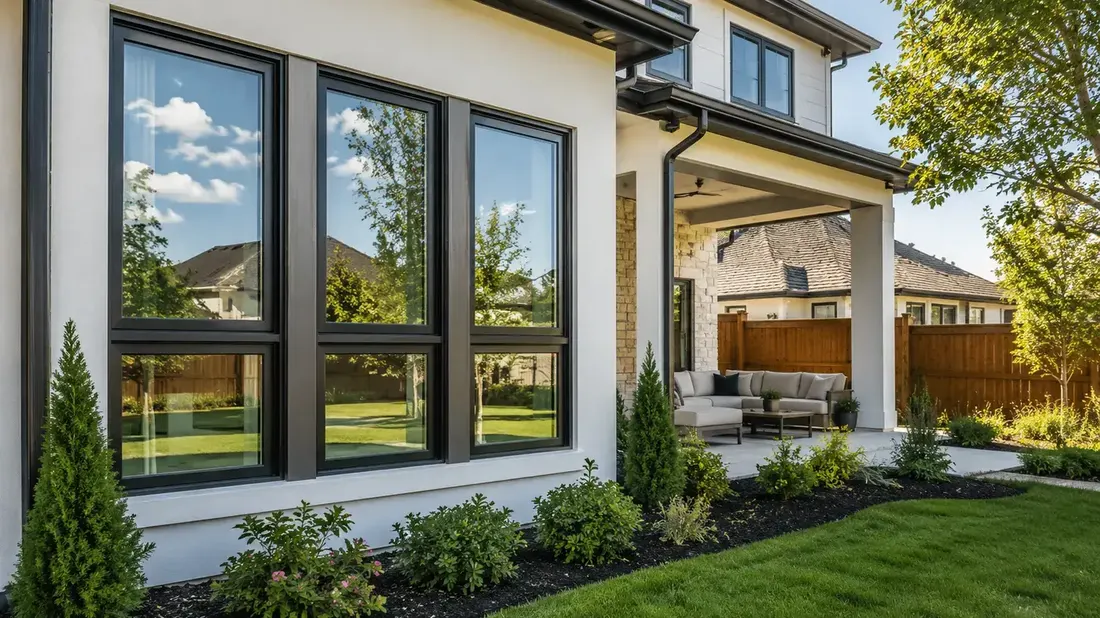
- Frame color: pick one color family for the windows and the door frames, and keep it the same on every street-facing opening.
- Grille pattern: if windows have divided panes, the door glass should echo that pattern. If the style is plain, keep every opening plain.
- Proportion: tall windows with a short door, or the reverse, can look off. Keep heads and sill heights in line where you can.
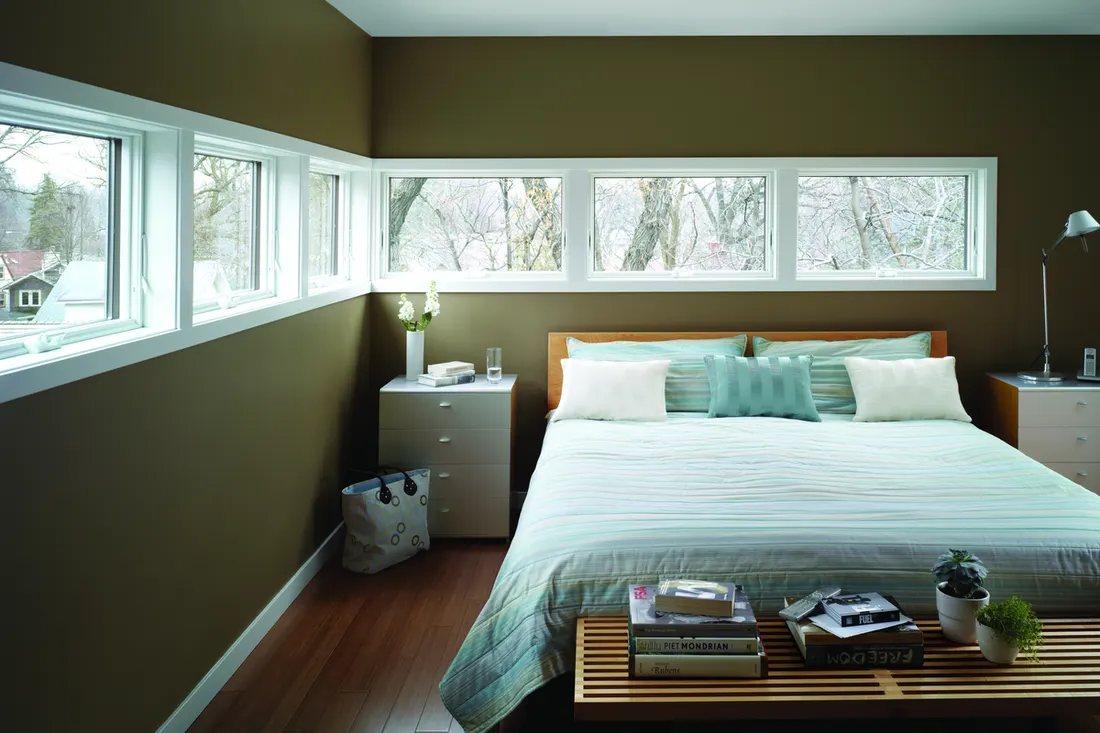
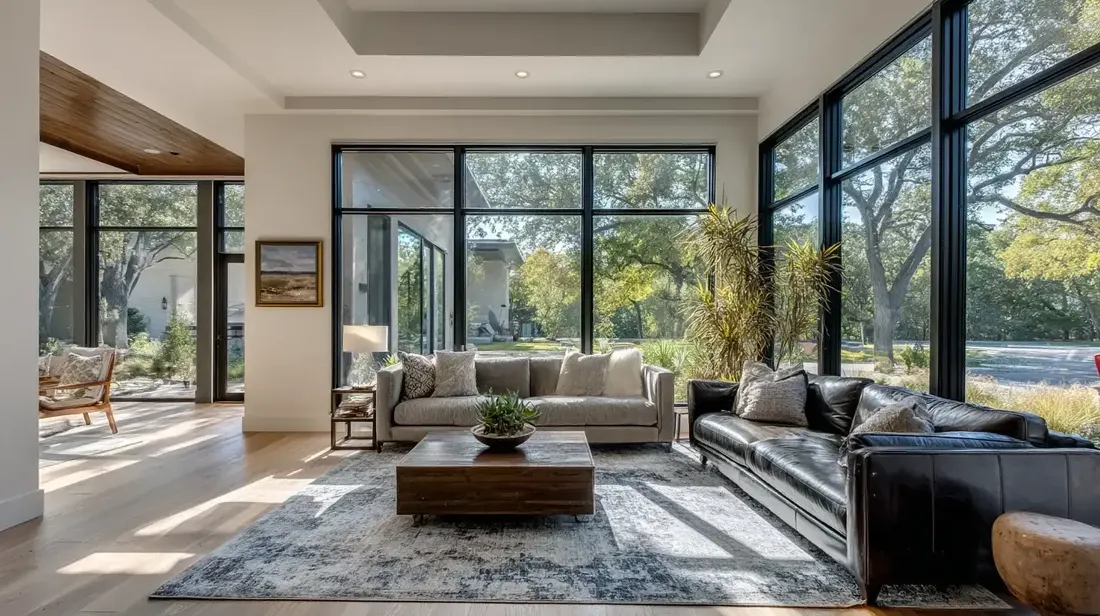
A ribbon of narrow windows, like the one above, is a bold choice. It works because everything else in the room is simple. The same idea applies to the outside of the house: one strong feature, a calm supporting cast. Our post on window series for DFW homeowners can help you pick the line that carries it.
What makes doors and windows look mismatched?
Mixed frame colors, mixed grille patterns and a door whose style fights the house. Most of these come from replacing pieces at different times without a plan. Decide the three details once, write them down and use them for every opening you replace.
- Replacing the front windows now and the side windows later in a different color.
- Choosing a door glass pattern that does not echo the windows.
- Adding a large glass door to a house whose windows are small and divided.
- Copying a neighbor’s house without checking whether yours has the same lines.
Do you have to match every door and window exactly?
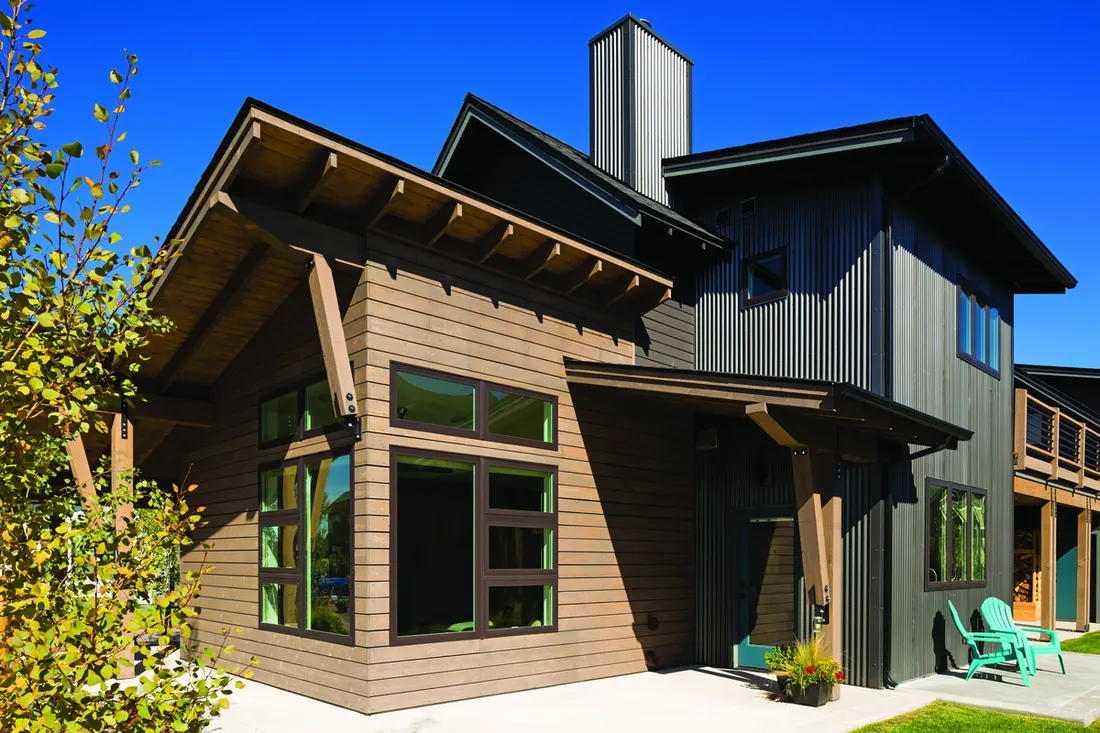
No. The street-facing side matters most, so match there and relax on the sides and back. An entry door can be a controlled accent, such as a deeper color, as long as the frame color and style still agree with the windows. A door that is the one bold choice in a calm house looks deliberate.
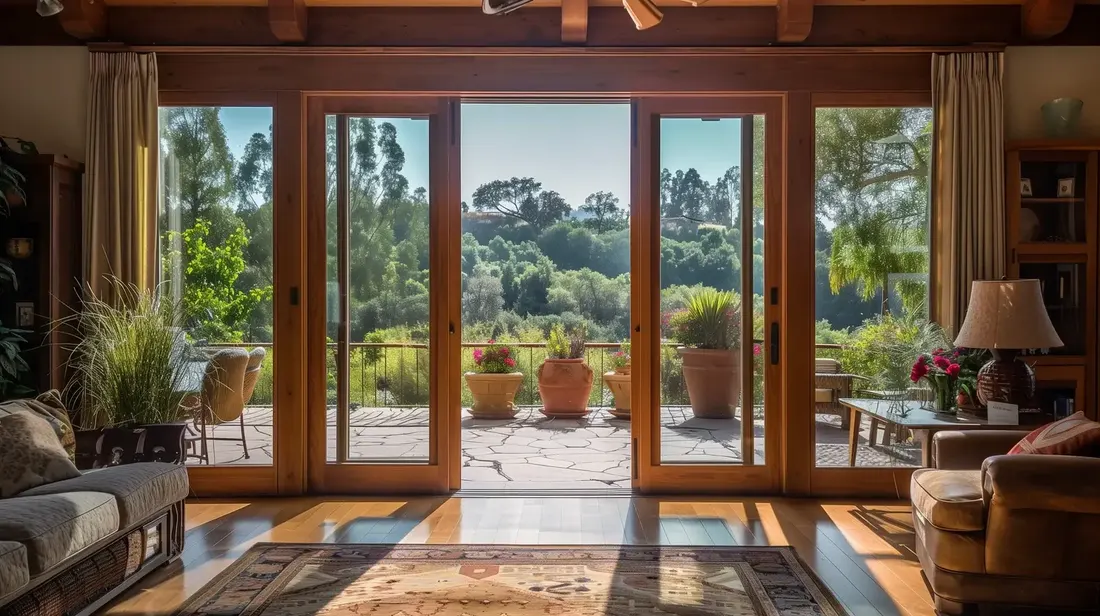
Patio doors count as part of the match, even when they sit at the back of the house. A sliding or hinged patio door is a large sheet of glass, so its frame color and grille pattern should agree with the windows around it. Choose between the two by the room: a hinged pair needs space to swing, while a slider keeps the floor clear. Our post on choosing a sliding patio door walks through the trade-offs. Storm doors are the easy one to forget, so pick a frame color that sits quietly with the entry door.
Check any HOA or design review rules before you order. Southlake, for example, is a city where an HOA review is common. It costs less to learn the allowed colors and grille patterns first than to redo an order.
Which Andersen lines help with style matching?
The A-Series is the line we use when a window has to match a specific architectural style, with shapes, sizes, grille patterns and finishes worked out to suit the house. The E-Series handles unusual openings and made-to-order work. For many houses the 400 Series, with a wood interior and exterior cladding, covers the style question well. Andersen publishes its full range if you want to browse.
ENERGY STAR also covers doors as well as windows, so check the ratings on both. American Eagle Builders is a family-owned exterior remodeler in Arlington, working across Dallas–Fort Worth since 1984. See our entry doors and windows, or book a free in-home estimate.
Questions we get asked about this
They should agree, not always match. A common approach is to keep the frame color the same on every street-facing opening, then use the door as a controlled accent in a deeper or contrasting color. The accent works best when everything else is calm.
Pick the pattern that suits the house style, then repeat it on every street-facing window and echo it in the door glass. If the style is plain, such as a modern house, keep every opening plain. Mixed patterns are the most common reason a house looks off.
Yes, within a plan. The front can use one set of details and the side and back can be simpler, as long as the frame color stays consistent. Mixed operating types, such as casement beside double-hung, are fine if the proportions and finish agree.
Many HOAs review exterior changes, including color and grille patterns. Check your rules before you order, and keep the approval in writing. A review is common in places like Southlake. It is cheaper to learn the rules first than to redo an order.
Yes. American Eagle Builders installs Andersen windows and offers entry, hinged, sliding and storm doors across Dallas–Fort Worth. We offer free in-home estimates and can look at your front elevation to suggest details that tie the two together.