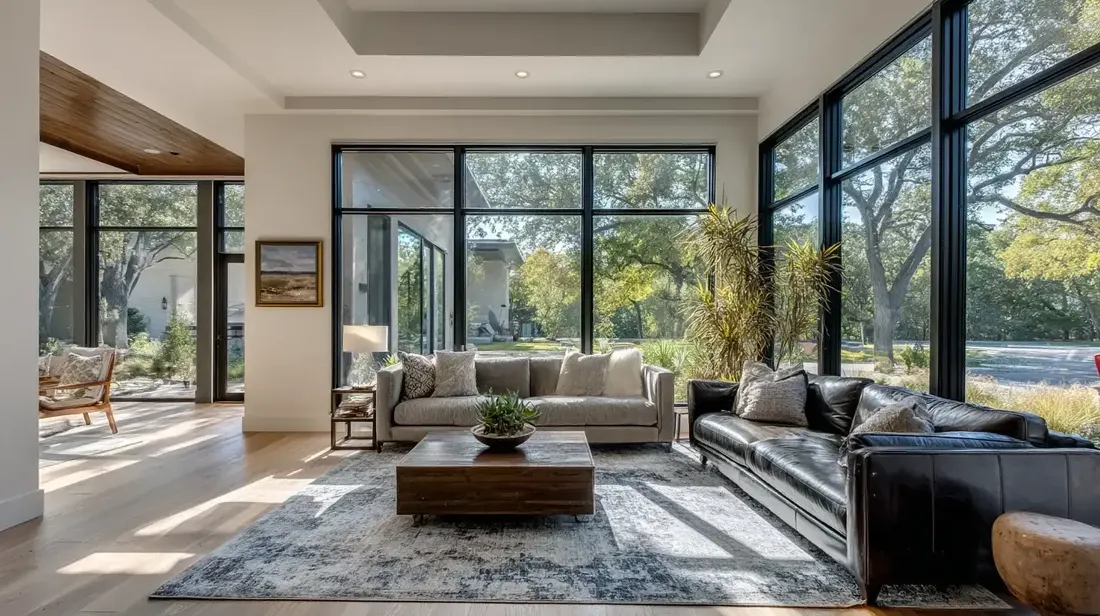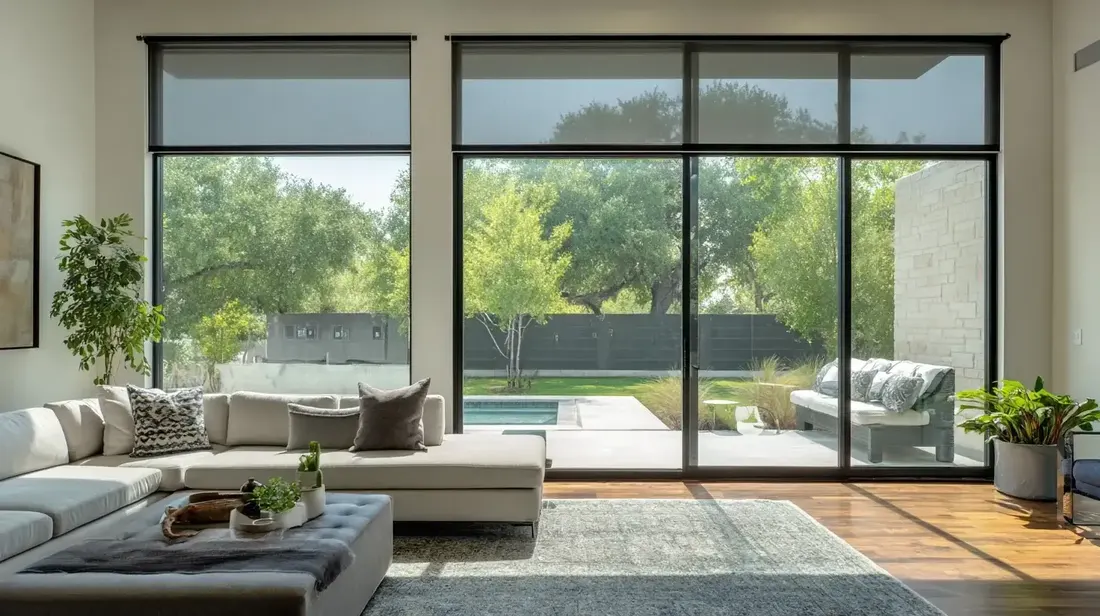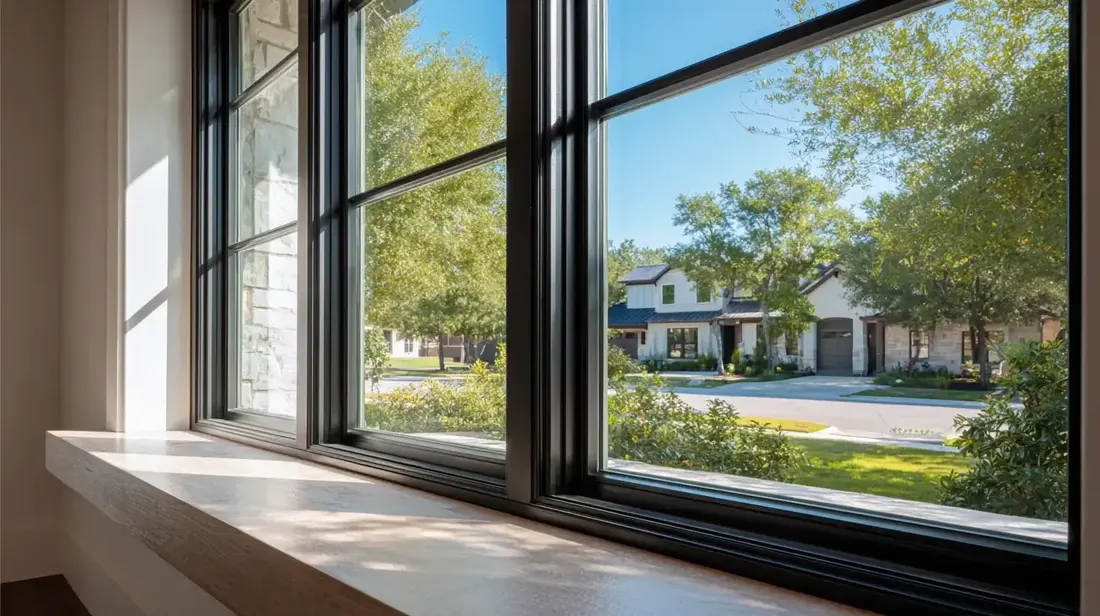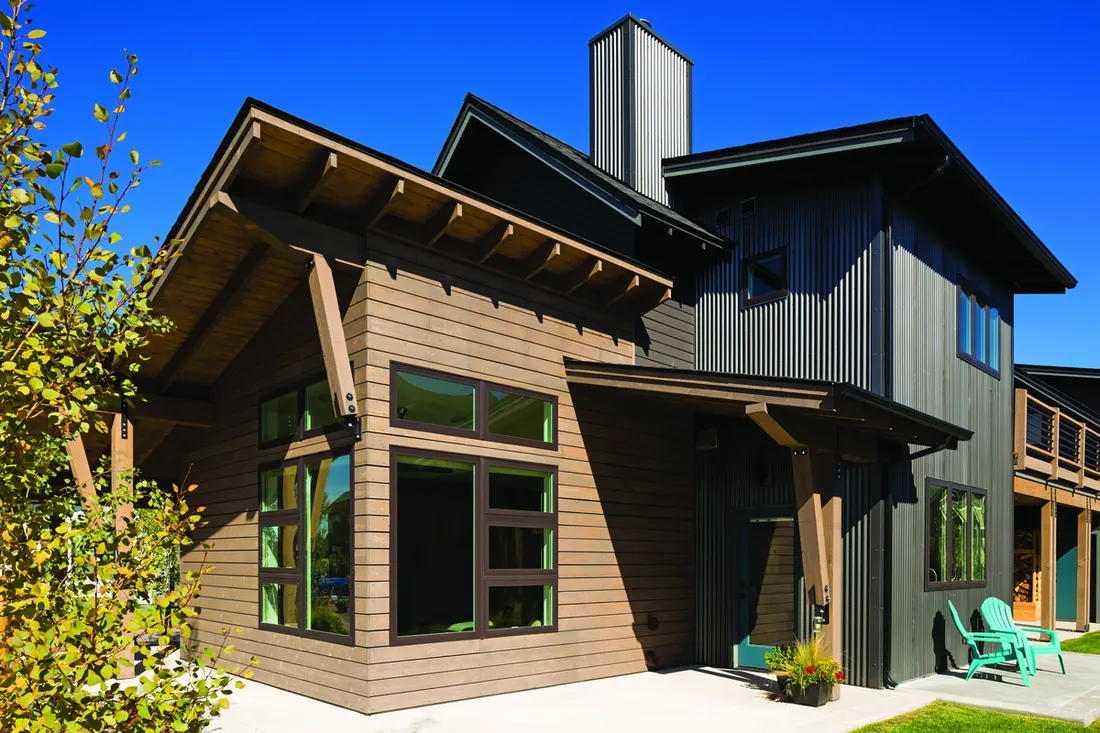
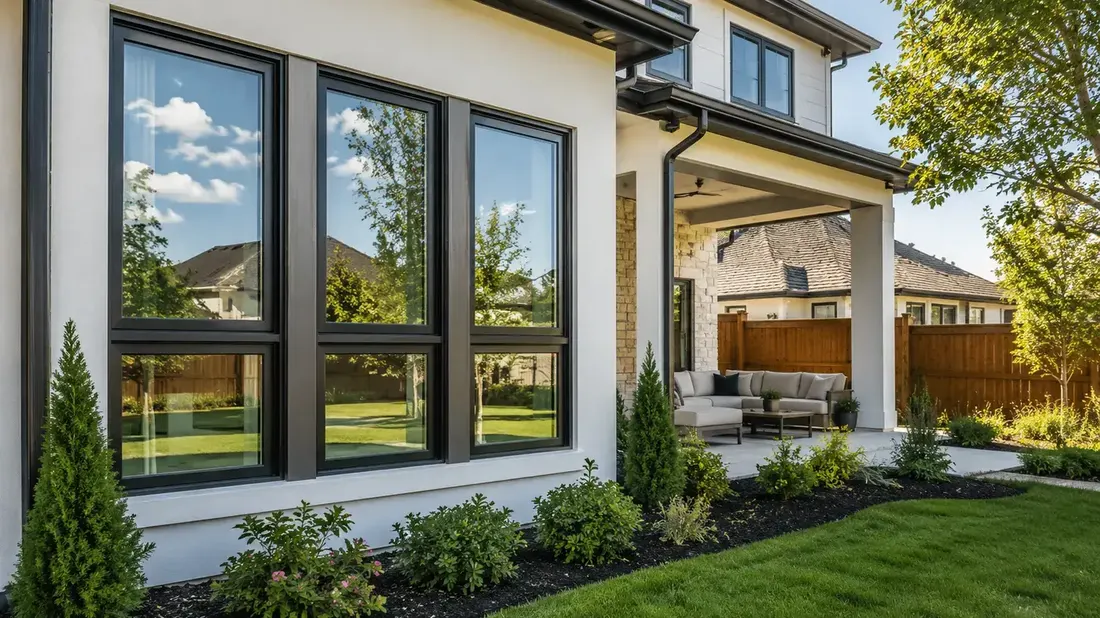
A window series is a manufacturer’s product line, with its own frame material, finish choices and size range. For most DFW homes the best window series is the one that matches your interior trim and your budget without paying for custom work you will not use. Here is how the four Andersen lines compare.
The short answer
- A window series is a product line, so it sets the frame, interior and size options before style does.
- The 100 Series suits whole-house replacement, and the 400 Series adds a real wood interior.
- The A-Series is for houses where architectural style matters, and the E-Series is for large or unusual openings.
- Use a more detailed series where the style shows and a simpler line elsewhere if the looks match.
- The glass ratings, careful measuring and good installation matter as much as the series name.
Picking a window series is a bigger decision than picking a style. The series decides what the frame is made of, what the inside looks like and how many sizes and colors you can choose from. The style, such as double-hung or casement, comes after. We install four Andersen series, and they stack up like rungs on a ladder.
How do the four Andersen window series differ?
They differ mainly in the frame, the interior and how much the window can be shaped to your house. The 100 Series is a composite frame with no wood inside. The 400 Series adds a real wood interior. The A-Series adds architectural style options, and the E-Series is built to order.
| Series | Frame and interior | Best fit | Probably not the pick when |
|---|---|---|---|
| 100 Series | Composite frame, finished inside and out, slim profile | Replacing every window in the house, low upkeep | You want real wood trim inside |
| 400 Series | Wood interior you can stain or paint, protective exterior cladding | Brick and traditional homes where windows meet wood trim | You need an unusual shape or a custom color |
| A-Series | Wood interior, wide color range, custom shapes and sizes | Craftsman, Prairie, Colonial or modern houses where proportions matter | The house has plain openings and a plain style |
| E-Series | Aluminum-clad exterior, choice of interior wood species, built to size | Large feature walls and unusual openings | A straightforward whole-house swap |
The Andersen site lists the full range if you want to compare product details alongside ours.
Which window series fits most DFW homes?
For many brick and stone houses in Dallas, Plano and Arlington, the 400 Series is where the conversation lands, because the wood interior matches the trim and the cladding handles the sun outside. Where the goal is clean, low-upkeep windows through the whole house, the 100 Series is the one to price first.
Use this short test to narrow it down before anyone visits.
- Do you want real wood inside that you can stain or paint? If yes, start at the 400 Series. If no, start at the 100 Series.
- Does the house have a defined style where grilles, proportions and colors must look right? If yes, price the A-Series for at least the front.
- Is any opening large, curved, angled or an odd size? If yes, ask about the E-Series for that opening only.
- Is the budget tight and the goal comfort and low upkeep? Then the simpler line almost always wins.
Can you use more than one series in the same house?
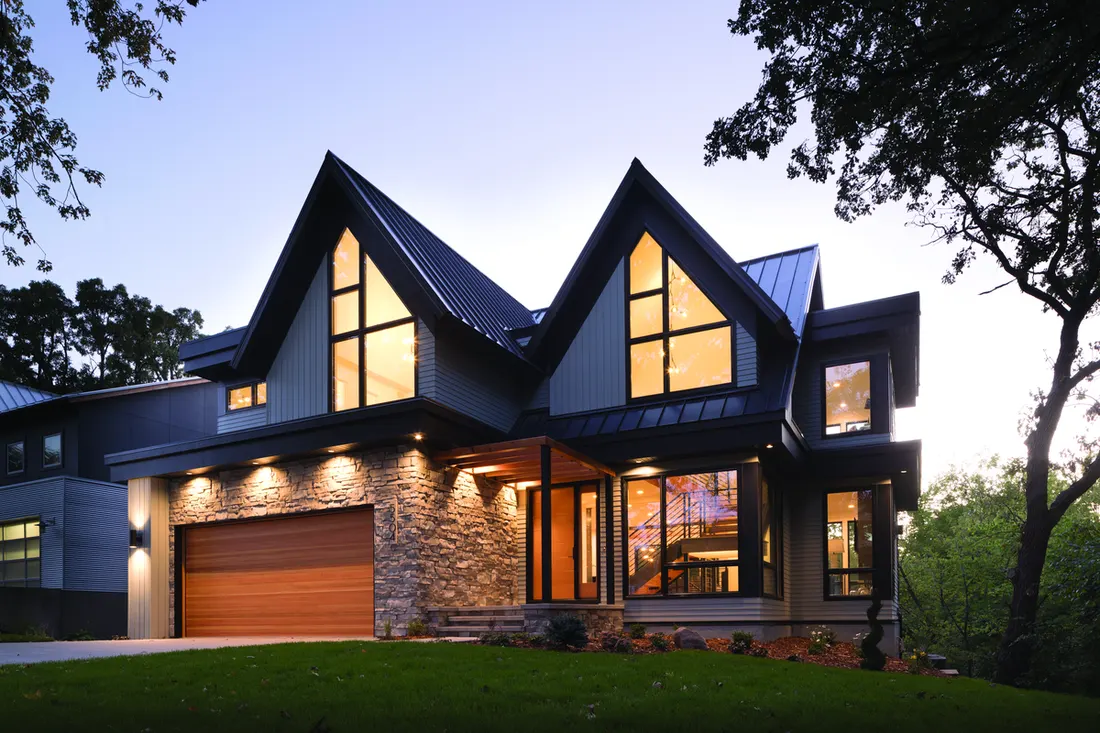
Yes, and it often makes sense. Some homeowners put the A-Series on the front elevation, where the style shows, and a simpler line on the sides and back. The catch is that the colors, grilles and sightlines have to look like they belong together from the street. Bring photos of the house from the curb when you ask.
What matters more than the series name?
The glass package, the measurements and the installation matter at least as much. A top series installed in an out-of-square opening still leaks air. In North Texas the glass choice deserves care, because the hot summer of 2023 showed how quickly west-facing rooms fall behind.
- Ask for the NFRC label numbers on the exact window, including U-factor and SHGC.
- Confirm who measures, and that every opening is measured on its own.
- Check whether your neighborhood needs HOA approval for exterior changes. In Southlake, for example, an HOA review often runs alongside the city permit.
- Ask what the installer does about flashing and the sill.
Our post on U-factor and SHGC in Texas heat explains the label numbers, and our post on window installation quality in DFW shows what good flashing and sealing look like.
What does each series ask of you after the install?
The composite frame of the 100 Series needs no painting, so the upkeep is washing the glass and checking the seals. A wood interior, in the 400, A and E lines, asks for the care you would give any wood trim: wipe up condensation, keep it out of standing water and refinish it when the finish wears. The exterior cladding does the weather work.
Whichever series you choose, the moving parts and weatherstripping need a look once a year. Clean tracks and hinges keep each sash closing fully, and a sash that closes fully is a sash that seals.
Is a window style the same thing as a series?
No. A style is how the window opens: double-hung, casement, sliding, awning or picture. A series is the product line that makes it. Most series offer most styles, so choose the series for the frame and the look, then choose styles room by room. Our post on choosing window styles for a Texas home covers that second step.
As a rule, casements and awnings seal tight and open wide. Double-hungs suit traditional fronts. Picture windows bring in light but do not open, so pair them with windows that do.
When is a premium series not worth it?
When the openings are standard, the house has a plain style and the goal is just comfortable, working windows. Paying for custom shapes, colors or sizes you will not notice is the easiest way to overspend on a window project. A lower series done well beats a premium series done badly.
American Eagle Builders is family-owned in Arlington and has worked in Dallas-Fort Worth since 1984. We give free in-home estimates and can price two series side by side for the same house. See our 400 Series page, browse the whole windows page or book a free estimate.
Questions we get asked about this
For many brick homes the 400 Series is a good balance, with a wood interior and protective cladding outside. If low upkeep and a simple look matter more than wood trim, the 100 Series is the one to price first. The right answer depends on your trim, style and budget.
The 100 Series has a composite frame with no wood inside, so there is nothing to stain or paint. The 400 Series has a real wood interior you can finish to match your trim, with cladding on the outside. Both come in the common window styles.
Choose the A-Series when the house has a defined architectural style and details like grille patterns and colors matter. Choose the E-Series when an opening is large, unusual or needs a made-to-order size or color. For plain whole-house swaps, a lower series is usually better value.
Yes. Some owners use a more detailed series on the front and a simpler line on the sides and back. The windows should look consistent from the street, so match colors, grilles and frame proportions.
Yes. American Eagle Builders installs the Andersen 100 Series, 400 Series, A-Series and E-Series. We measure each opening, explain the trade-offs in person and give a free in-home estimate across 90 DFW cities.