The best backyard pergola ideas add value because a buyer can use them on the first showing: shade where people sit, a place to eat and light after dark. A pergola is an open-roofed frame of posts and beams. These fifteen ideas are sorted by what holds up in North Texas.
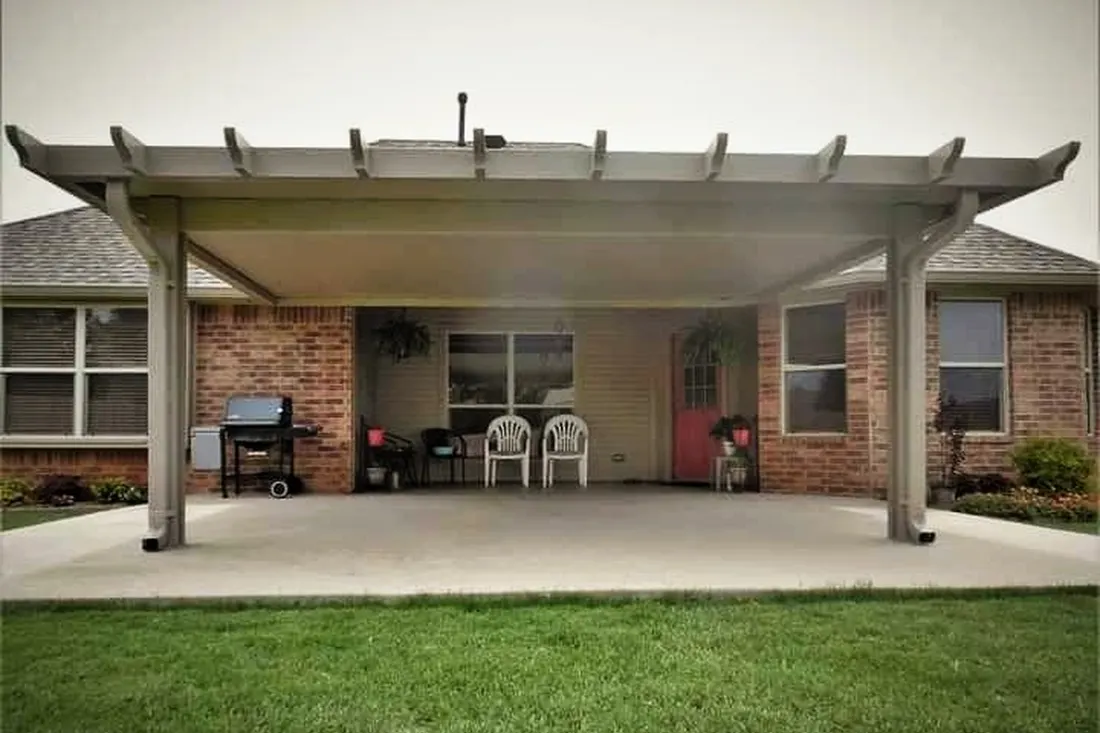
The short answer
- Pergolas add value when they create shaded, usable space that suits the house.
- No contractor can honestly promise a sale price, so plan around your own use first.
- Shade over the spot where you already sit is the idea that matters most in North Texas.
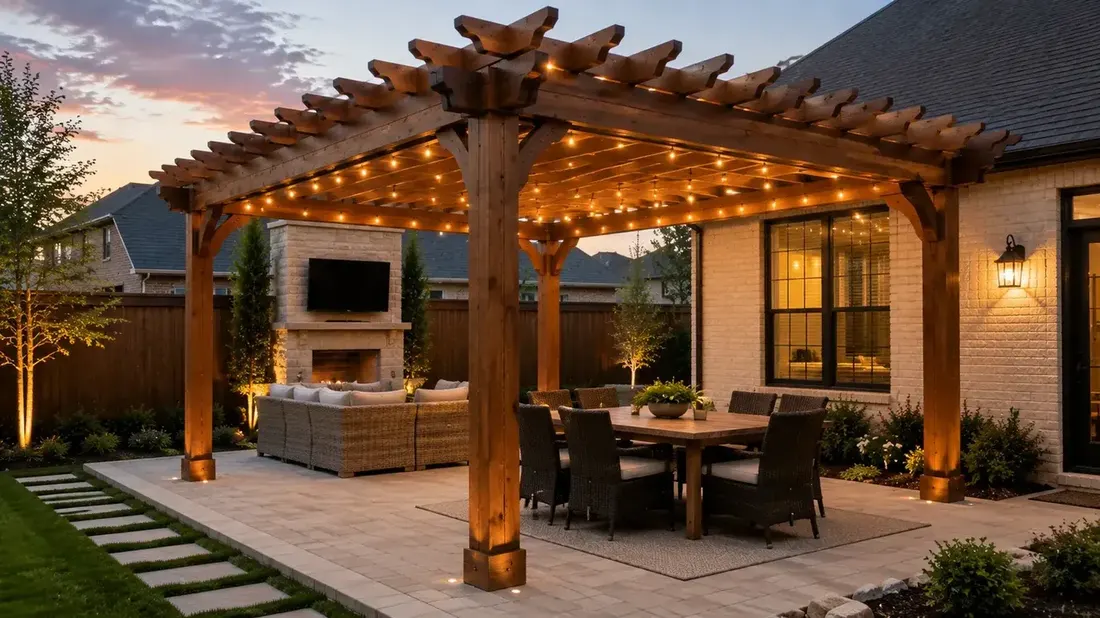
- Plan lights and fan wiring before the frame goes up, and hire a licensed electrician.
- Clay in Plano and Frisco and limestone in Fort Worth both change how footings are planned.
- Skip features that fight your house, your sun or the upkeep you will really do.
The hot summer of 2023 in North Texas made one thing plain in a lot of backyards: shade decides whether anyone goes outside. A pergola over the spot where you already sit does more for a sale than any single feature on a list. The ideas below start there and work outward.
Do pergolas really add value to a home?
They can, but nobody can promise a number. A pergola helps when a buyer sees shaded, usable space that suits the house and looks cared for. It hurts when it leans, peels or looks tacked on. Plan it for the years you will live under it, and treat resale as a bonus.
Two honest cautions. A permanent structure can change how your property is recorded, so ask your county appraisal district before you build. The Dallas Central Appraisal District is one example. Your city also decides whether the work needs a permit, so ask first. Be wary of any contractor who promises a sale price.
Which backyard pergola ideas hold their value best?
The ones that fix a daily problem. Shade over the place you already sit, a clear spot to eat and lighting that works at night come first. Matching the house comes next. Novelty features date fastest. The table covers all fifteen, with the catch to watch for on each.
| Idea | Why a buyer notices it | Watch for |
|---|---|---|
| 1. Dining area | Buyers picture meals outside | Leave room to pull chairs out and walk behind them |
| 2. Lounge corner | Reads as a second living room | Cushions need dry storage nearby |
| 3. Shade over the grill | Cooking in shade is plain comfort | Keep open flame well clear of the roof |
| 4. Ceiling fans | Moves air on still evenings | Use outdoor-rated fans and plan the wiring early |
| 5. Built-in lighting | The space works after dark | Wire it during the build, not after |
| 6. Climbing vines | Softens the frame | Heavy vines add weight and hold moisture |
| 7. Privacy panels | Helps on close lots | Solid panels catch wind like a sail |
| 8. Shade beside an existing pool | Gives swimmers a place to cool off | Keep footings clear of the shell and plumbing |
| 9. Pergola over an existing slab | Defines the patio you already have | Check the slab for cracks and movement first |
| 10. Gathering spot near a fire pit | Gives cool evenings a focus | Set the pit well away from the beams |
| 11. Modern lines | Suits newer, simpler houses | Can look off on a traditional house |
| 12. Colors and trim that match the house | Looks original to the home | Test paint samples in afternoon sun |
| 13. Screen and speakers | Game days and movie nights | Glare and weather; shade the screen |
| 14. Adjustable shade | You choose how much sun comes in | More moving parts to keep up |
| 15. Custom fit | Sized to your yard, not a kit | Needs a measured site visit |
Ceiling fans, lights and any outlet under the roof need a licensed electrician, not a weekend handyman. Texas licenses electricians through the Texas Department of Licensing and Regulation, and you can ask any installer who does the wiring. Plan the runs before the beams go up, because chasing a cable through a finished frame is slower and looks worse than a wire set in the beam during the build.
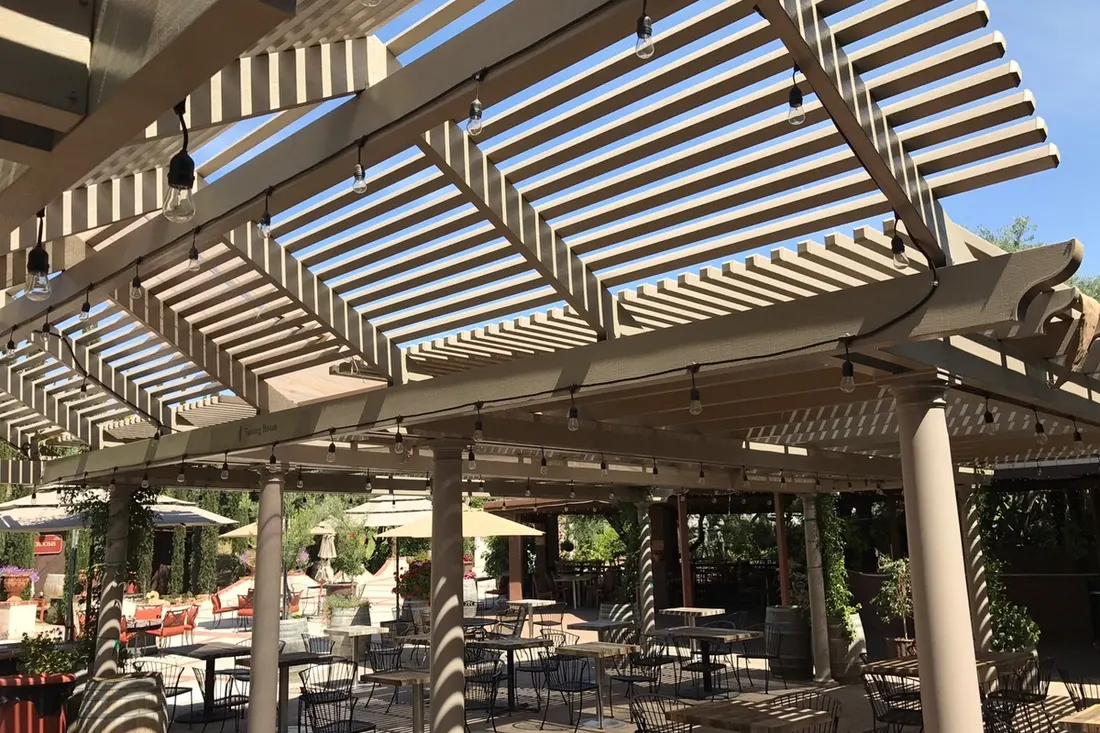
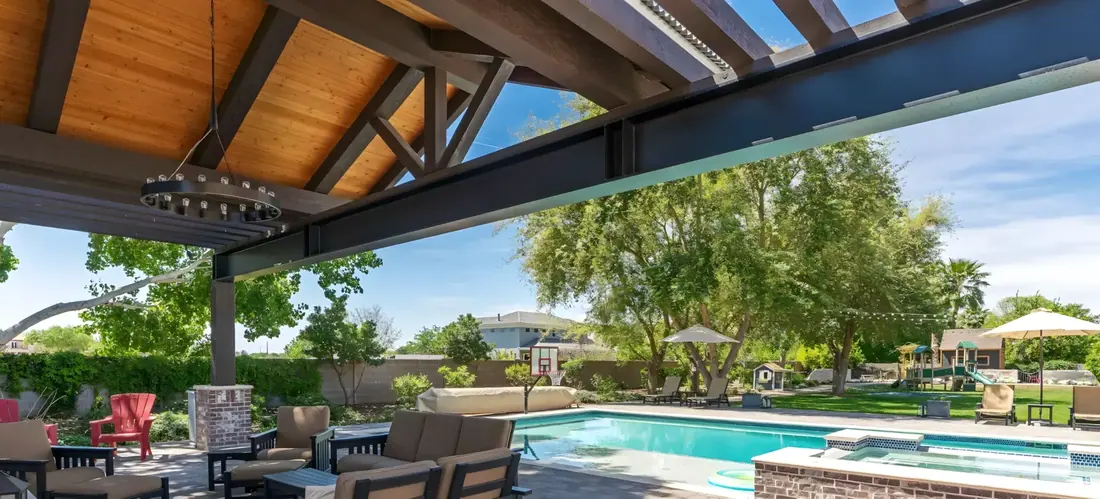
The louvered roof in the photo shows idea 14 at work: slats that tilt to let light in or shut it out. If you are weighing open, louvered, retractable or solid roofs, our post on pergola roof options compares them side by side.
How do you pick ideas that fit your yard?
Start with three questions. Where does the afternoon sun land, where do you already sit, and how far is that spot from the back door? Put the pergola where the answers overlap. Then choose two or three ideas from the table, not all fifteen. A pergola loaded with every feature looks crowded and costs more to keep up.
Match the house, not the magazine
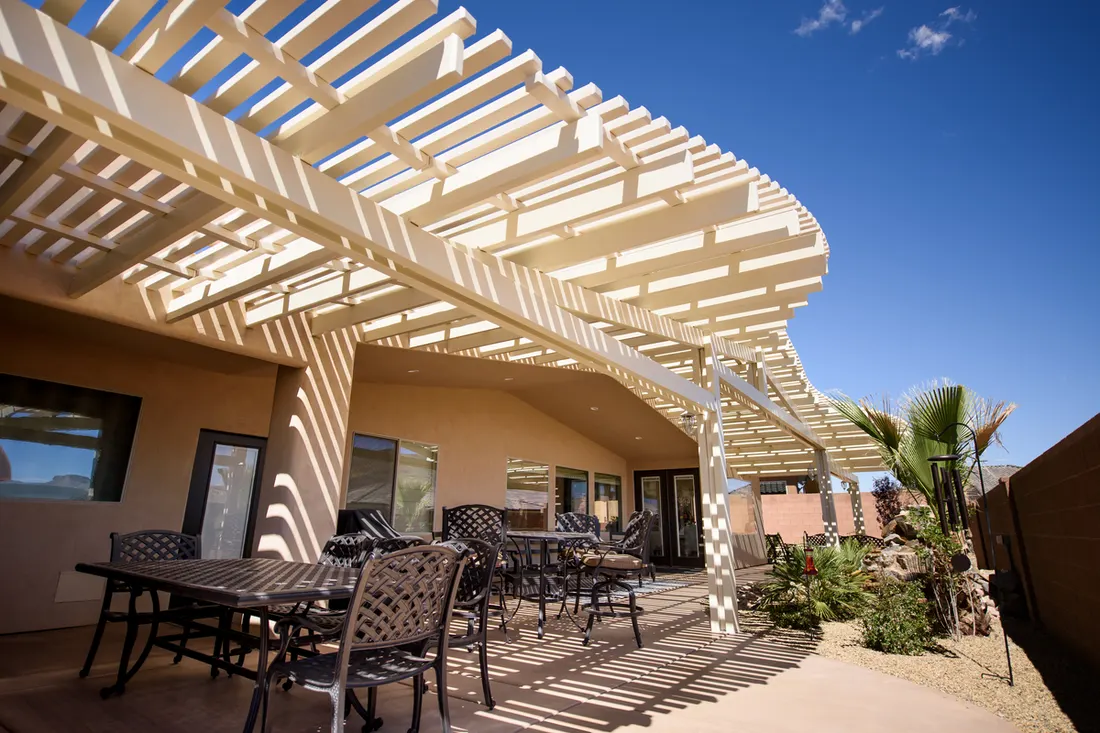
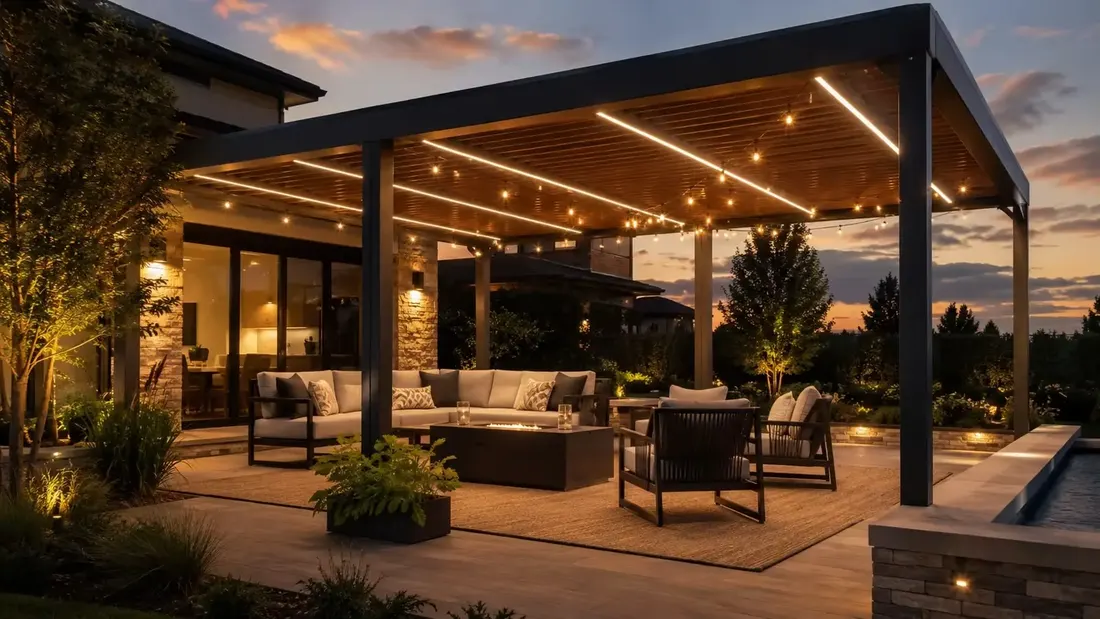
Look at the roofline, the brick or siding color and the trim. A white or tan frame suits many brick homes in Arlington and Plano. Slim dark beams suit a newer, flat-roofed house. The structure should look like the builder drew it, which is why our sizing post, how to choose the right pergola size, starts with the house rather than the yard.
Check the ground and the slab
In Plano, Allen and Frisco the Blackland Prairie clay swells in a wet spring and shrinks by August, so the footings and any slab you build on need honest attention. In Fort Worth the soil is thin over limestone, and a footing may hit rock. Neither is a reason to skip a pergola. Both change the plan, and we look at them at the site visit.
Which pergola ideas should you skip?
Skip any idea that fights your house, your sun or the upkeep you will really do. A dark frame on a west wall with no shade plan, heavy fixtures on a light frame and fire under the beams are the usual regrets. Here is the short list.
- A dark, rustic frame on a clean modern house, or the reverse. To a buyer it reads as an add-on.
- A thick vine on a light frame. Wet vines add weight and keep moisture against wood.
- A fan or swing hung from beams that were never sized for it. Ask the installer to size for the load before you buy the fixture.
- A fire pit under the roof. Keep open flame well away from the beams and posts.
- A television with no cover and no shade. Glare and weather beat it fast.
Fire and wood do not mix under a roof. The National Fire Protection Association publishes fire safety information for homeowners, and your city may have its own rules about open flame near structures. When in doubt, move the fire away from the frame and put the seating between them.
What should you ask before you build?
Ask who measures, how the posts are anchored, what the finish needs each year and whether your city wants a permit. Free in-home estimates let you compare those answers in your own yard, where the sun and the slab are visible.
American Eagle Builders is a family-owned remodeler in Arlington, working across Dallas–Fort Worth since 1984. Our pergola page shows the styles we build, and you can book a free in-home estimate to talk through which ideas suit your house. If lighting is your first priority, read our guide to pergola lighting from solar to LED before you choose fixtures.
Questions we get asked about this
It can, but no honest contractor can promise a figure. A pergola helps when it adds shaded, usable space that suits the house and is kept in good shape. A leaning or peeling one can hurt. Plan it for your own use first and treat resale as a bonus.
Shade where you already sit. North Texas summers are long, and the hot summer of 2023 showed how little a patio gets used without shade. After that, lighting and a defined dining spot are the ideas most buyers notice and use.
An attached pergola uses the house wall, stays close to the kitchen door and often suits smaller lots. A freestanding one can sit anywhere in the yard and works as a destination. The right choice depends on your sun, your layout and your city’s rules.
It depends on your city and on the size and design. Some cities treat an attached structure differently from a freestanding one. Call your city’s permit office before work starts. Our permit guide lists where to begin for cities across the area.
Yes, and it is easiest when the wiring is planned before the frame goes up. Use outdoor-rated fixtures, make sure the beams are sized for the weight of a fan, and have a licensed electrician do the work.