Pergola roof options come down to four: open slats, louvered, retractable and solid. A pergola roof is the top of the frame, and it sets how much sun, rain and air get through. The right one depends on what you want from the space and how much upkeep you will do.
The short answer
- Four roofs cover most pergolas: open slats, louvered, retractable and solid.
- Open slats give the lowest upkeep, and solid roofs give the most shade and rain cover.
- Louvers and canopies add control but also moving parts that need care.
- No pergola roof is hail-proof, so close or retract before a storm.
- Heavier roofs need stronger posts and footings and may be treated differently by your city.
- Choose by the hour you sit and the upkeep you will really do.
After size, the roof is the biggest choice on a pergola. It decides whether you sit in dappled light or full shade, whether a shower sends you indoors and how many moving parts you own. Each of the four roof types answers those questions differently, and none is right for every yard.
What pergola roof options are there?
Four cover nearly every case: open slats, louvers, a retractable canopy and a solid or panel roof. They run from fully open to fully covered. The table sets each against sun, rain and upkeep, and the sections after it explain the catch on each type.
| Roof | Sun | Rain | Upkeep |
|---|---|---|---|
| Open slats | Dappled, partial shade | Passes through | Low; finish the frame |
| Louvered | Adjustable, up to full shade | Sheds water when closed | Motors, seals and tracks need care |
| Retractable canopy | Shade when extended | Sheds water when extended, if rated | Fabric wears in sun; must be pulled in for storms |
| Solid or panel | Full shade | Keeps rain off | Heavier; clear debris and check drainage |
Open slats
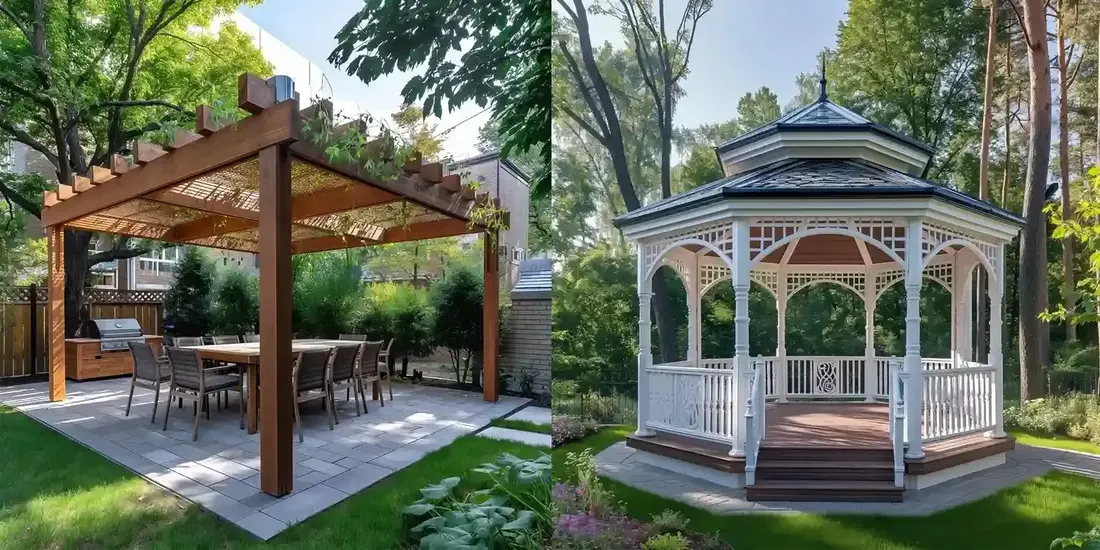
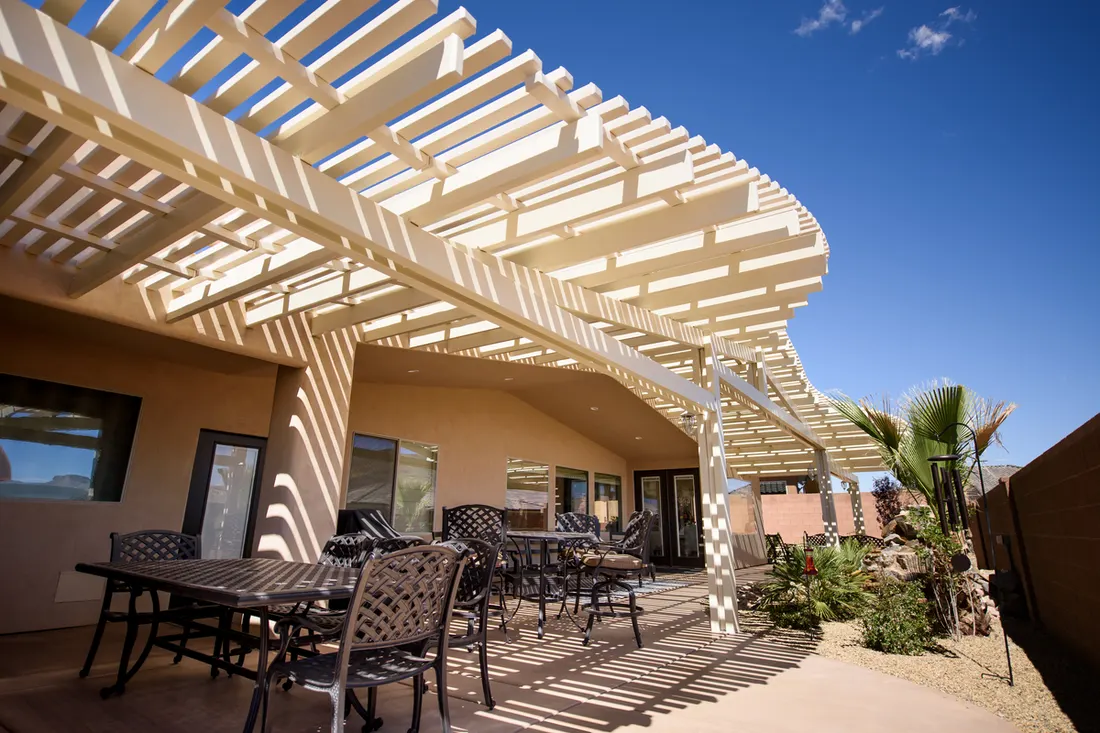
The classic pergola roof. Beams and slats cast patterned shade and let air move freely. It has no moving parts and the least to go wrong. The catch is that it gives only partial shade and no rain cover, and low sun slips in sideways. It suits a homeowner who wants light, a clean look and low upkeep.
Louvered roofs
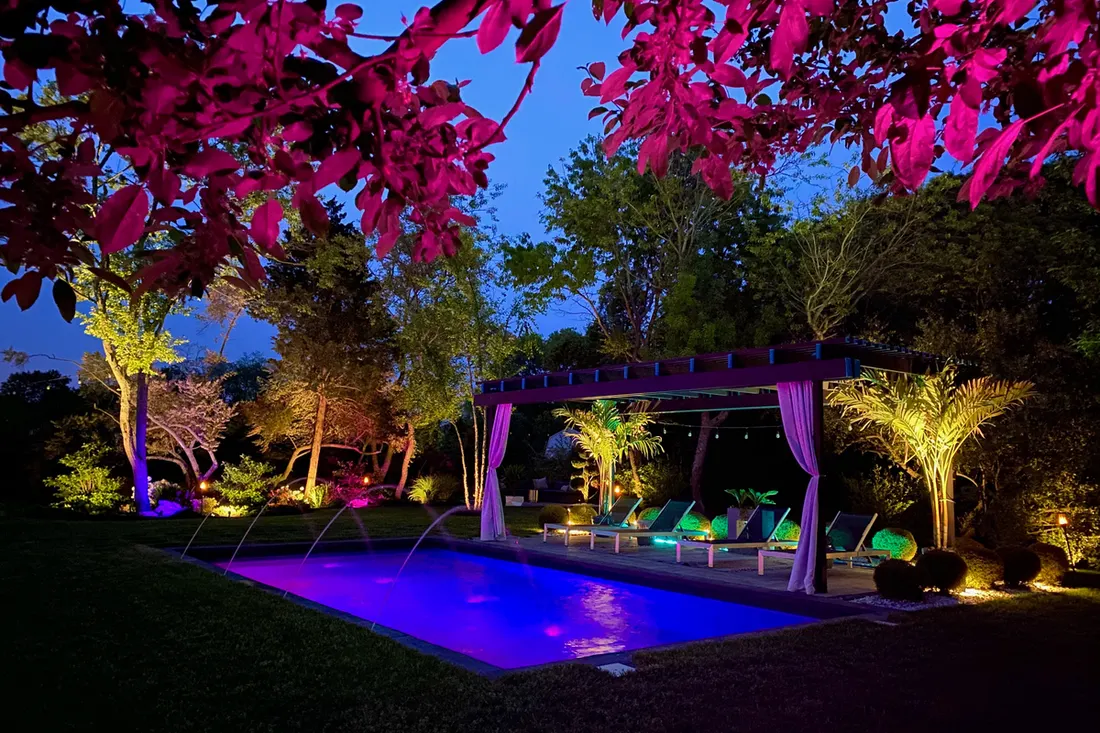
Slats that tilt, so you choose sun, shade or a closed roof. Many are motorized and some close tight enough to shed rain through channels in the frame. The trade-offs are moving parts, seals and a wind rating you should ask for in writing. Ask what happens in a power cut, and how the water drains.
Retractable canopies
A fabric panel that slides along tracks to cover or uncover the frame. It is the lightest way to get a roof you can open and close. The fabric wears in the sun and must be pulled in before a storm, so it needs a person who will do that. It suits a homeowner who is around and prefers fewer motors.
Solid or panel roofs
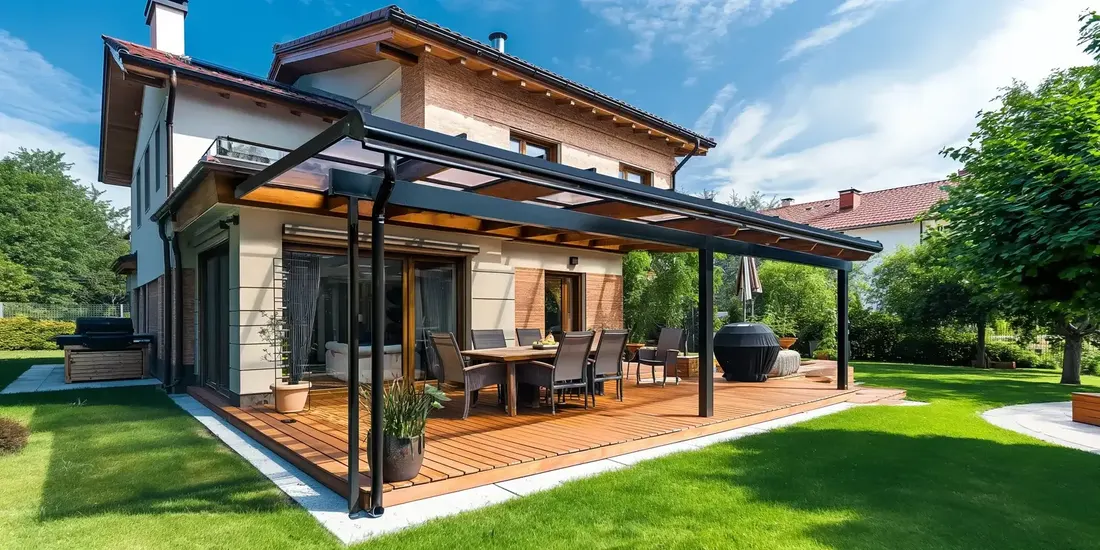
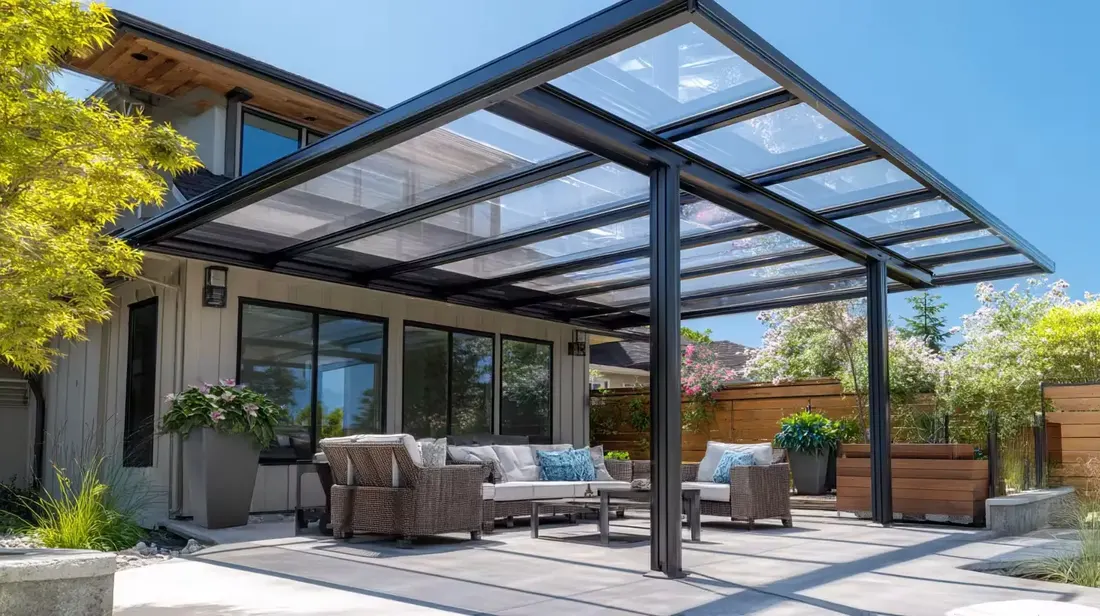
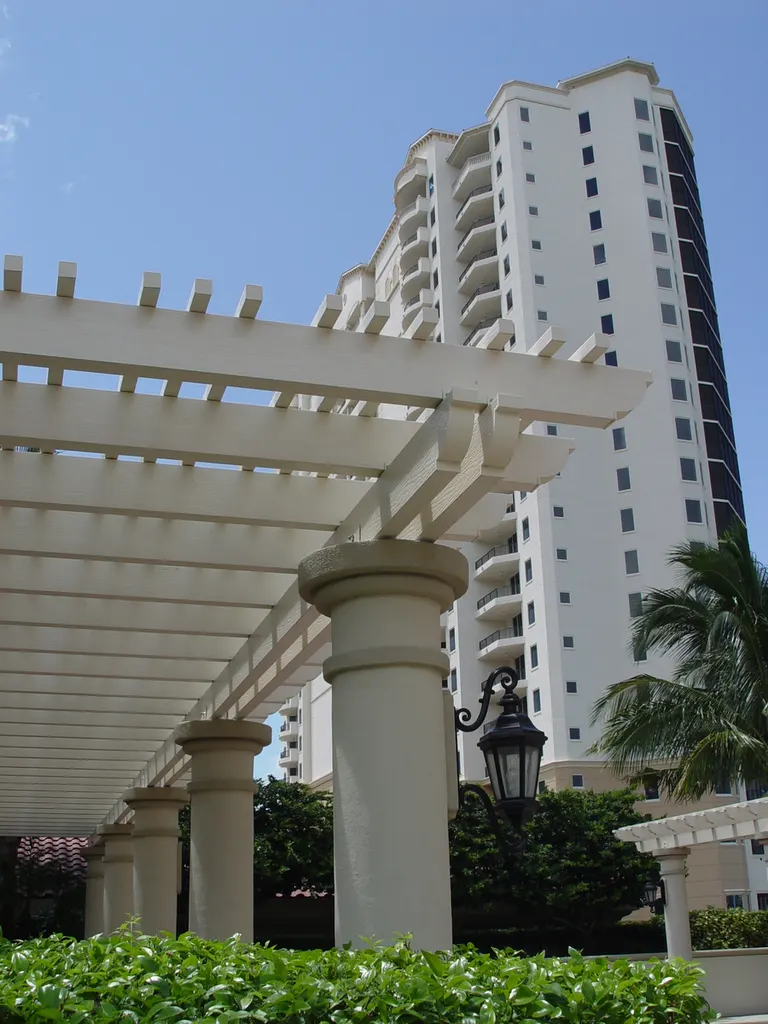
A fixed roof of panels, boards or shingles. It gives full shade and keeps rain off, which is why it suits a table, a TV or good furniture. It is also heavier, so posts and footings matter more, and it catches more wind. At that point the structure is closer to a patio cover, and our patio cover page covers that option.
Which pergola roof is best for Texas weather?
Whichever matches how you use the space and the upkeep you will really do. North Texas swings from July heat to spring hail, so no roof is perfect. Choose by the hour you sit, how much rain protection you need and whether you will close or retract it before a storm.
- Choose open slats if you want light, air and the lowest upkeep.
- Choose louvers if you want adjustable sun and some rain control, and will maintain the motor.
- Choose a retractable canopy if you want a roof you can open and are home to pull it in.
- Choose a solid roof if you want a dry, fully shaded space and accept the extra weight.
Weather plays a part. Spring storms bring wind and hail, and no pergola roof is hail-proof. Close louvers and pull in fabric before one arrives. The National Weather Service office in Fort Worth issues local warnings, and Ready.gov has general advice on severe weather. In July and August the roof’s job is shade, so check where the sun lands at the hour you sit.
One more test helps. Picture the worst day you expect to use the pergola, such as a hot, windy August afternoon, and ask what each roof does then. Open slats shade partly and ignore wind. Louvers tilt, and a motor does the work. A canopy has to be brought in. A solid roof does nothing, which is its strength.
Does the roof type change permits and engineering?
It can. A solid roof carries more weight and catches more wind than an open frame, so the posts, footings and connections must be designed for it. Cities may also treat a solid roof differently from an open pergola. Ask your city before you choose, and ask your installer who sized the frame.
Arlington and Dallas each post their own residential permit information. See Arlington’s permit page or Dallas’s residential page, and check your own city. Rules on size, height and attachment to the house vary, so a neighbor’s pergola is not a guide. Our post on reasons to add a patio cover or pergola shows how each roof does its job.
What should you skip when choosing a pergola roof?
Skip a roof that needs care you will not give, and skip claims you cannot check. A motor you never service, a canopy left out in a storm and a promise of a watertight pergola are the common regrets. Test each against your habits.
- Do not pick louvers if you will not maintain the motor, seals and drains.
- Do not leave a retractable canopy out in a storm or in strong wind.
- Do not put a solid roof on a frame that was sized for an open one.
- Do not assume closed louvers are fully watertight; ask how water drains.
American Eagle Builders is a family-owned remodeler in Arlington, serving Dallas–Fort Worth since 1984. Roof types vary by maker, so check our pergola page for the styles we install, and an in-home estimate will tell you which of these fit your yard. If you are still weighing structures, pergola vs gazebo explains how a full roof changes the picture.
Questions we get asked about this
It depends on how you use the space. Open slats give light and low upkeep. Louvers give adjustable sun and some rain control. A retractable canopy is a lighter-weight option. A solid roof gives full shade and rain cover. Choose by upkeep and the hour you sit.
Many close tightly enough to shed rain through channels in the frame, but designs differ. Ask the installer how water drains, what the wind rating is and what happens in a power cut. Do not assume any roof is fully watertight in every storm.
Sometimes. The frame must carry the added weight and wind load, and the connections must suit it. Louvers, panels or a canopy may need stronger posts or footings. Have an installer check the frame before you buy anything.
It is if you are home to open and close it, since it must be pulled in before a storm. The fabric wears in strong sun and will need replacing before the frame does. Skip it if you want a roof with no routine.
American Eagle Builders is a family-owned remodeler in Arlington serving Dallas–Fort Worth since 1984. Styles vary, so check our pergola and patio cover pages and ask during a free in-home estimate. We will tell you which roof types suit your yard.