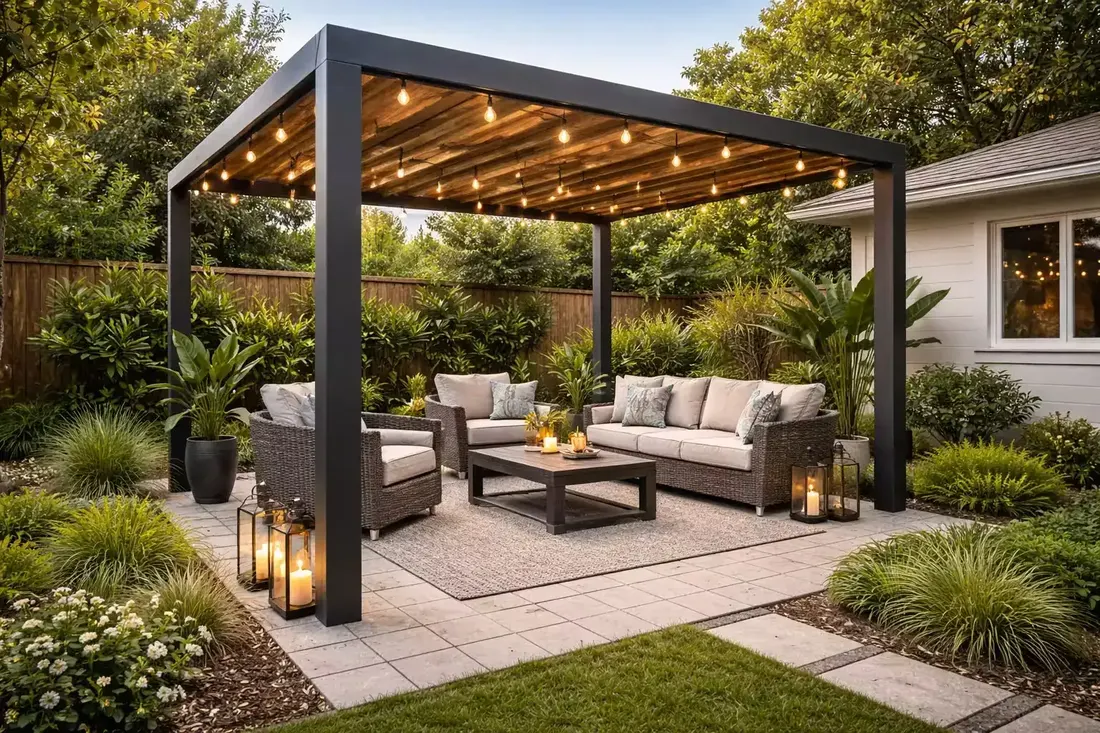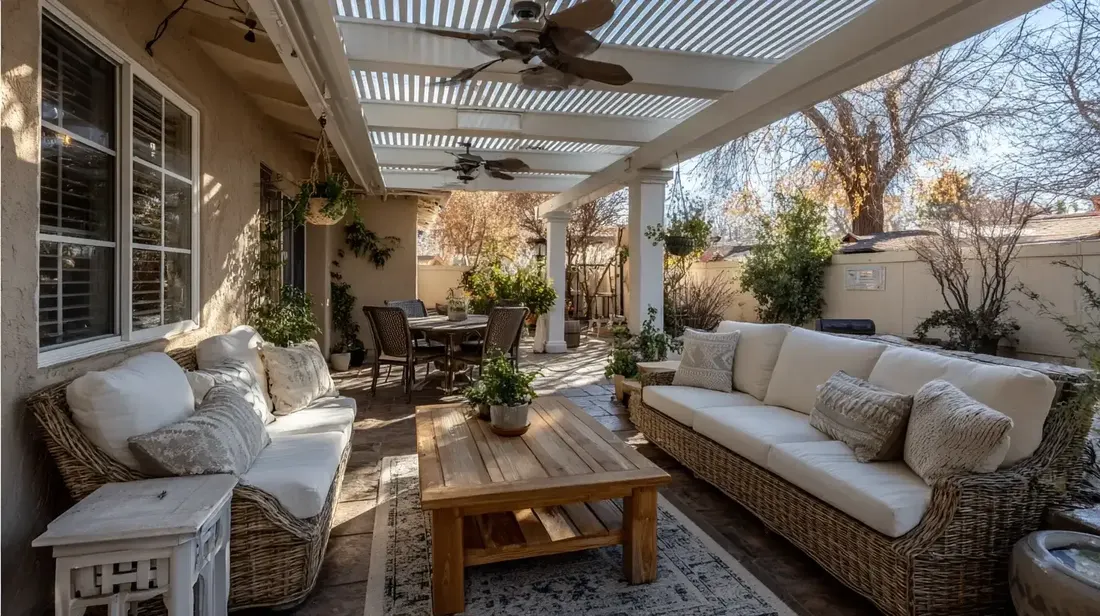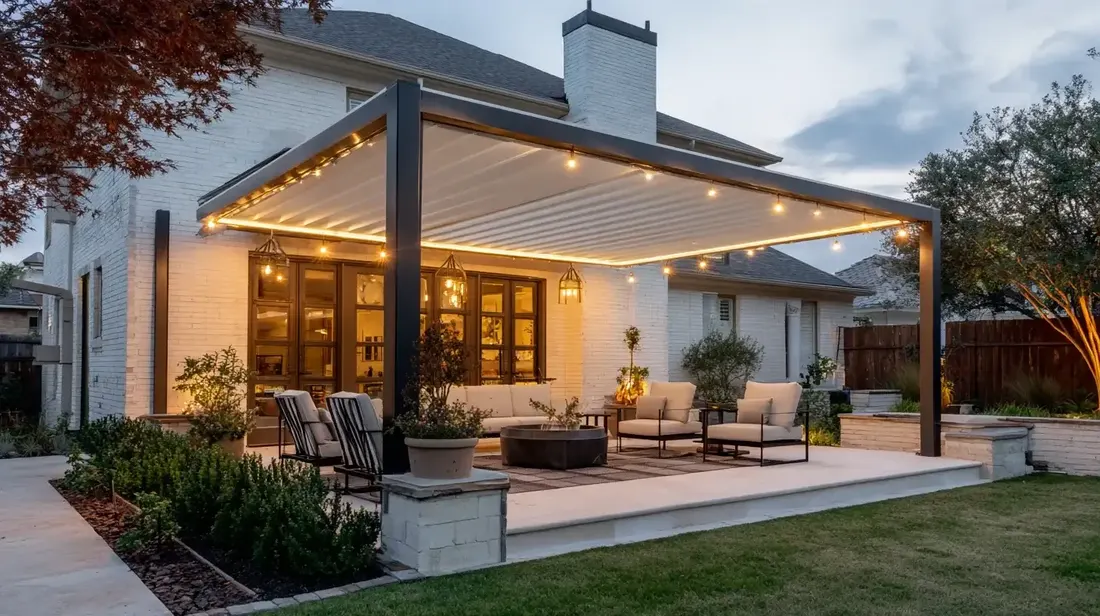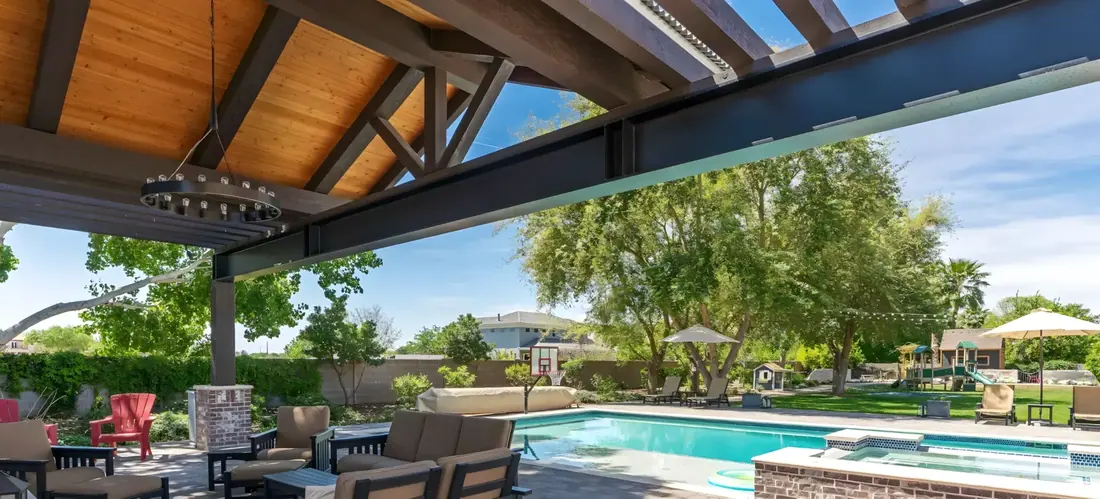
Pergola privacy ideas start with one question: who can see you, and from where? A pergola is an open frame of posts and beams, so privacy has to be added with curtains, screens, plants or panels. Match each option to a real sightline instead of screening everything.
The short answer
- Find the sightlines first, then block only the views that bother you.
- Curtains are flexible, screens are fixed, plants are soft and solid panels are the most private.
- Solid panels catch wind, so the frame and footings must be designed for them.
- Fabric fades in Texas sun, and plant screens need steady watering in summer.
- Cities and HOAs set their own rules on the height and style of screens, so check first.
- Keep curtains and plants well away from open flame.
An open frame is open to view, which is part of its charm and part of the problem. The same beams that let in air and light let in a neighbor’s window or the street. Good privacy is not about walling the pergola in. It is about closing the few lines of sight that bother you.
How do you add privacy to a pergola?
Find the sightlines first, then block only those. Sit where you will sit and look around. Note every window, upstairs deck and gap in the fence that can see you. A screen in the right spot does more than a wall around the whole frame, and it costs you less light and air.
- Sit in the seating spot and look in every direction for windows, decks and gaps.
- Note which view bothers you: the neighbor’s upstairs, the side fence or the street.
- Check the height of the view, since a screen at fence height will not stop a second-floor window.
- Decide whether you want privacy always, or only some evenings.
- Choose the lightest option that blocks each line of sight.
Which pergola privacy ideas work best in Texas?
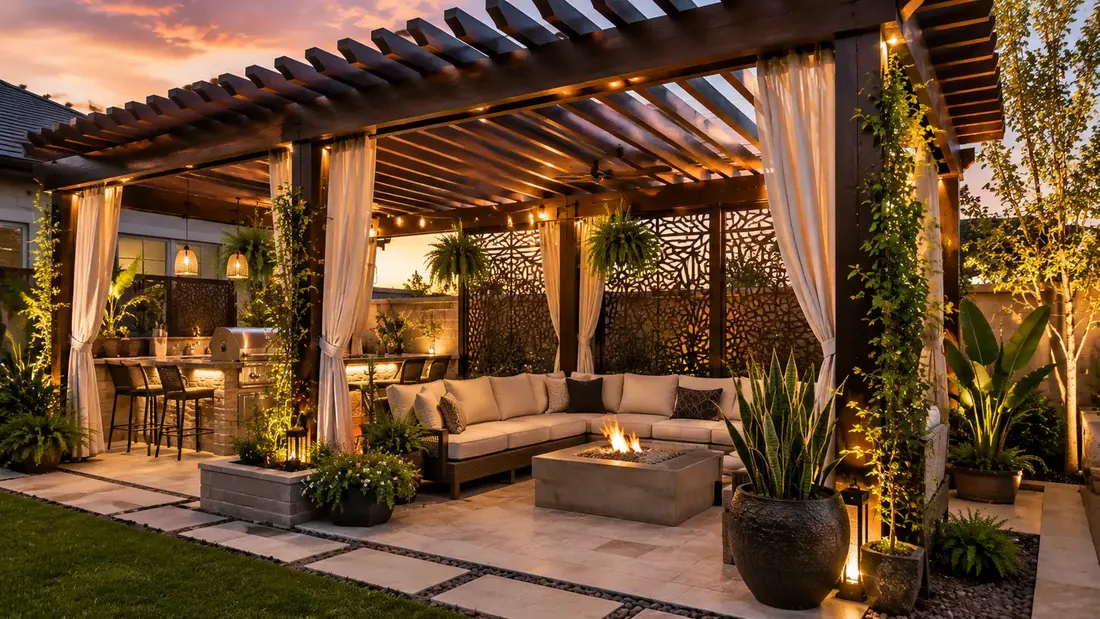
There is no single best. Curtains give flexible, soft cover. Slatted screens give fixed cover with some airflow. Plants give a natural look but take time. Solid panels give the most privacy but act like sails in wind. The table sets out each choice and the catch.
| Option | Good for | Catch |
|---|---|---|
| Outdoor curtains | Flexible privacy and soft shade | Flap in wind and fade in the sun; use tie-backs |
| Slatted screens | Fixed cover that still lets air through | Need solid posts and a proper fixing |
| Trellis with vines | A natural, soft look | Take time to fill in; need water and trimming |
| Solid side panels | Maximum privacy on one side | Catch wind; need engineering and often more footing |
| Planters and hedges | Privacy at ground level | Do not block a view from a second floor |
| Louvered side walls | Adjustable cover and airflow | Moving parts need upkeep |
Texas weather decides some of this. Wind pulls on anything that is solid, so a screen has to be fixed as if it were a wall. Sun fades fabric, so choose outdoor-rated cloth and expect to replace it sooner than the frame. In July and August a plant screen also needs steady watering, or it browns.
Can plants give a pergola privacy?
Yes, though they take time and care. A vine on a trellis softens a frame and screens a side. Choose plants that suit North Texas heat, and ask a local nursery which ones handle the sun on your wall. A heavy vine can load a light frame, so check with your installer before you plant.
Plants also drop leaves, usually by November, and a thick cover holds moisture against wood. That is fine on a sound frame and a poor idea on a soft one. If you want greenery without risk, use planters and a freestanding trellis near the frame rather than a vine on the beams. Our post on blocking sun on a patio naturally covers more plant-based ideas.
Can a pergola roof give privacy from above?
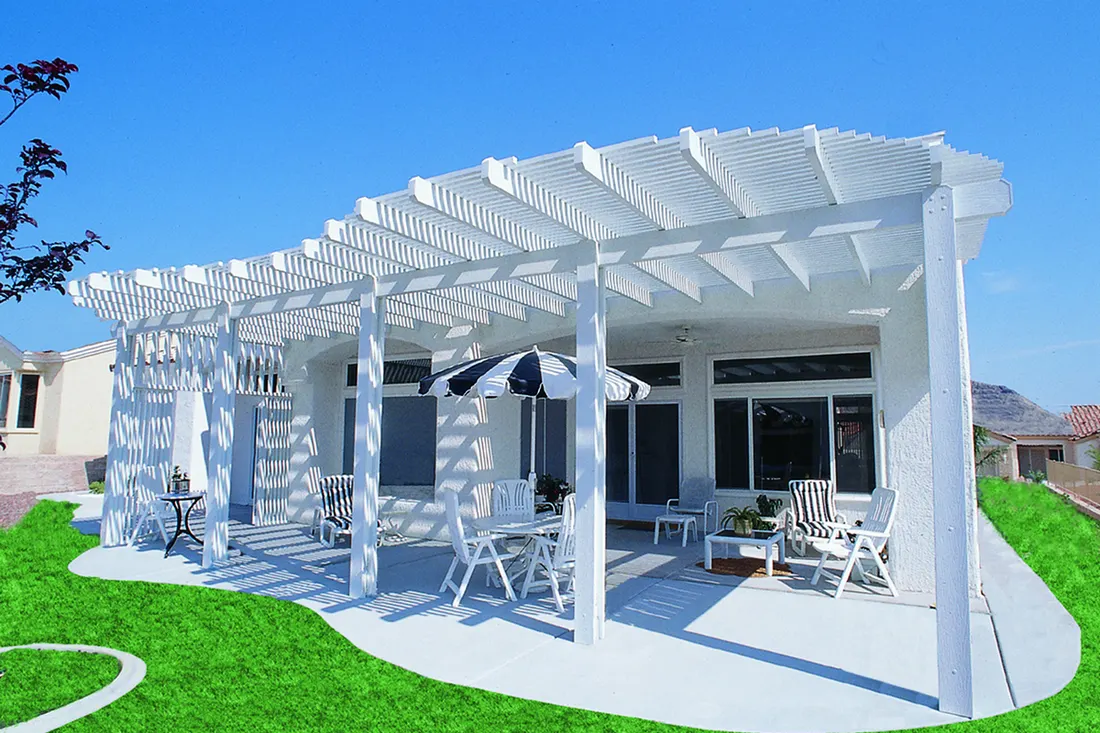
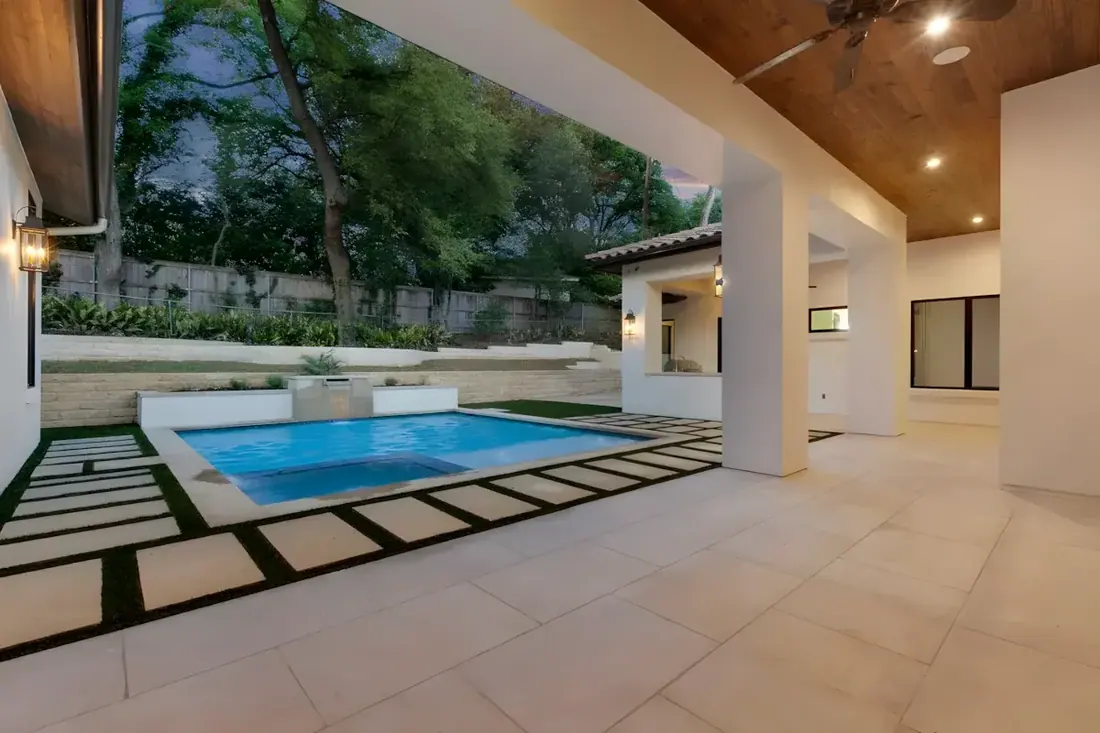
Yes, if the roof is built for it. Closely spaced slats, louvers angled toward the neighbor or a solid section over the seating can block a view from a second-floor window. A wide-open frame cannot. Ask the installer to check the angle of the view from your seat, not only from the ground.
Overhead cover has a trade-off. The closer the slats, the less sky you see and the more shade you get, which suits a patio that takes hard sun and may feel dark on a cloudy day. Decide how much light you are willing to give up before you pick a slat spacing.
What do city and HOA rules say about screens and panels?
They vary, and they can limit the height and style of side panels, fences and screens. Ask your city before you build, and your HOA if you have one. Do not rely on what a neighbor did in another city. A screen that counts as a fence may follow a different rule than a curtain.
Lots differ across the metroplex. Plano’s yards are mostly flat, fenced and already landscaped, so privacy often means closing gaps. Colleyville lots run large and heavily treed, which gives some cover already. Southlake has an HOA review in many neighborhoods. Check Plano’s residential permits page or Colleyville’s building inspections page to see how your city handles it.
What should you skip when adding pergola privacy?
Skip anything that fixes the view but creates a new problem. A solid wall on the windward side, a flame near a curtain and a heavy vine on a light frame are the common cases. Keep the list short and check each choice against your sightline.
- Do not hang curtains near a fire pit, grill or any open flame.
- Do not fit solid panels on a frame that was not designed for the wind load.
- Do not screen every side, because you lose the light and breeze you wanted a pergola for.
- Do not plant a fast, heavy vine on a light frame without asking the installer first.
If your yard is tight, read pergola ideas for small backyards for layouts that save room. American Eagle Builders is a family-owned remodeler in Arlington, serving Dallas–Fort Worth since 1984. Our pergola page shows what we install, and we offer free in-home estimates, so we can look at your sightlines in person.
Questions we get asked about this
Outdoor curtains and planters are usually the simplest, since they need no heavy structure. Whether they suit you depends on the view you want to block. We cannot give prices here, so ask for an estimate that lists each option side by side.
Yes, but solid panels act like sails in wind. The posts, footings and fixings need to be designed for the load. Ask your installer how the panels will be fixed, and check your city and HOA rules on height and style.
They can, with tie-backs and heavier outdoor-rated fabric. Thin fabric flaps and tears. Sun fades fabric, so expect to replace it sooner than the frame. Keep curtains well away from grills, fire pits and any open flame.
A fence-height screen will not do it. You need something above the sightline, such as a louvered or solid roof section, a screen on the pergola’s side beams, or a tall planter or tree placed to break the angle. Test it from your seat.
American Eagle Builders installs pergolas and patio covers across Dallas–Fort Worth. We are a family-owned remodeler in Arlington, working here since 1984. We offer free in-home estimates and can look at your sightlines and the structure before recommending anything.