Patio shade is the screen, plant or roof that stands between the sun and your seating. The right choice depends on where the sun hits. Low western sun needs a side screen, and high midday sun needs overhead cover.
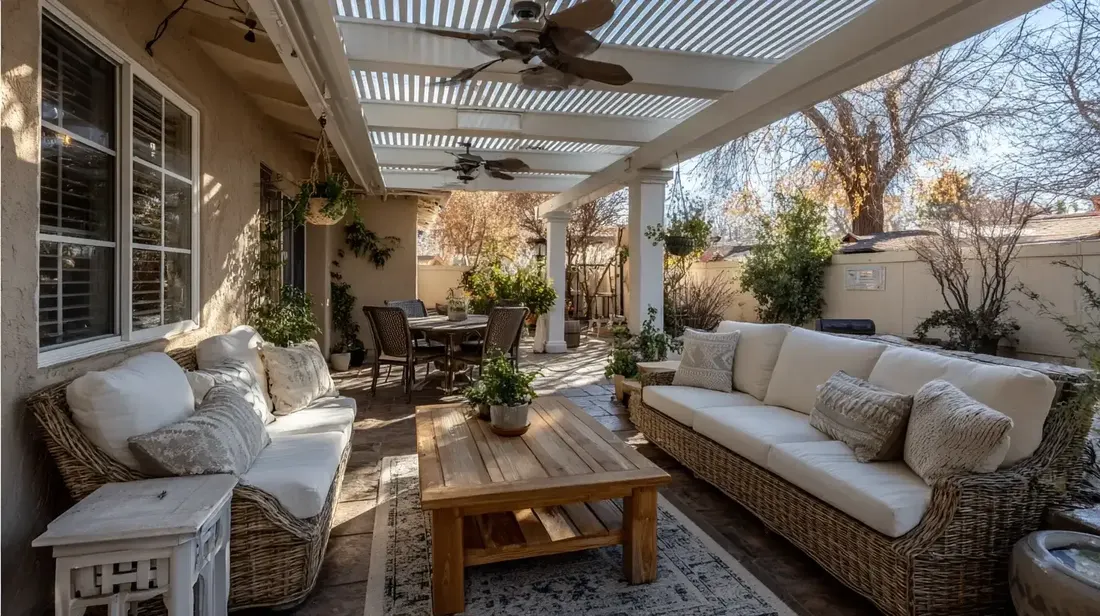
The short answer
- Match the shade to the sun: side screens for low western light, overhead cover for the midday sun.
- Do the four o’clock test on your own patio before you buy anything.
- Umbrellas, sails and curtains are quick fixes that each have a weak point in North Texas wind and heat.
- Plants give real shade but need water, so check your city’s irrigation hours first.
- A roof makes sense when you keep replacing temporary fixes or want shade and rain shelter together.
The old advice was to hang a curtain, plant a vine and buy an umbrella. Those can all work. But they work on different kinds of sun, and in North Texas some of them fail in a gust or a dry August. Here is how to pick shade by the sun you actually have.
What is the best patio shade for a west-facing patio?
Overhead cover plus a side screen. Afternoon sun comes in low from the west, so a roof alone leaves the open side lit. A west patio needs something that blocks the angle as well as the sky, such as a roof with a curtain or screen on the exposed side.
Before you buy anything, do the four o’clock test. Stand where you sit and note where the sun hits you, whether it is overhead or from the side. In a hot summer like 2023, the side sun in late afternoon is the part most North Texas patios struggle with. A fix that blocks the wrong angle wastes the money you put into it.
It also helps to think about the sun by time of day, because each part of the day needs a different answer.
- Morning: low sun from the east comes in from the side. A curtain or a screen on that side handles it, and a patio that faces east often needs nothing more.
- Midday: the sun is high and overhead. A roof, a sail or a pergola with close slats does the work.
- Late afternoon: low sun from the west, the hardest to block. You need an overhead cover and a screen on the west side.
- Evening: the sun has gone, and shade matters less than airflow and light.
Which shade options work, from quickest to most permanent?
Start with how long you want the fix to last. Movable shade is quick and flexible. A fixed frame is slower to set up and does more. The table lists common options and the weak point of each in North Texas.
| Option | Blocks best | Weak point here |
|---|---|---|
| Patio umbrella | High sun over a small table | A gust can lift or tip one, and it leaves the sides open |
| Shade sail | Overhead sun across a wide area | Needs strong anchor points and tight tension |
| Outdoor curtains | Low sun from the side | Sun fades cheap fabric, and wind moves them |
| Retractable awning | Overhead sun that you control | Must be retracted in storms |
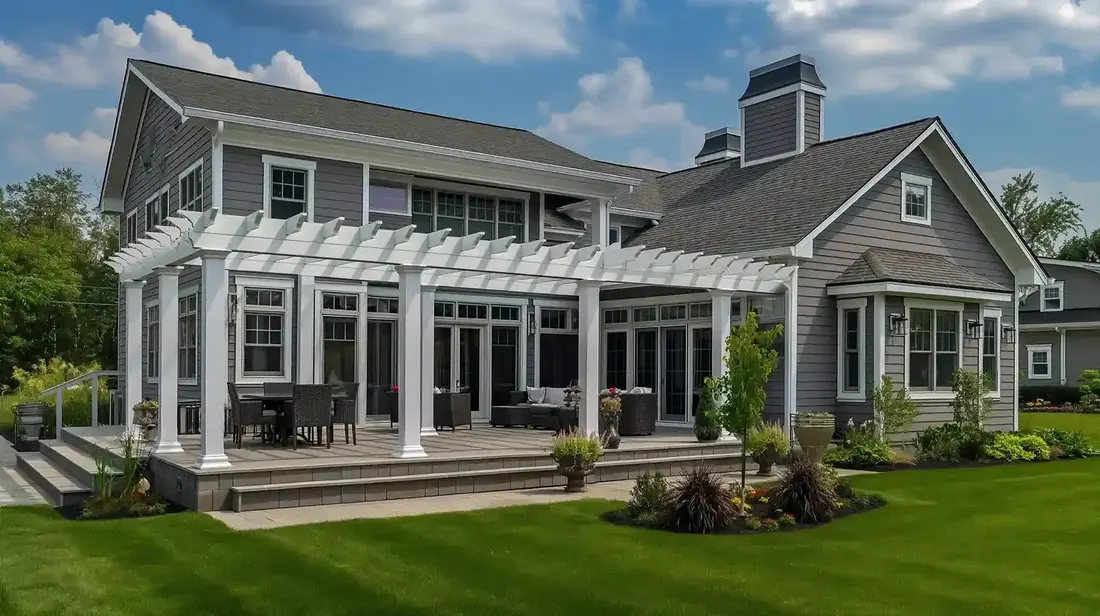
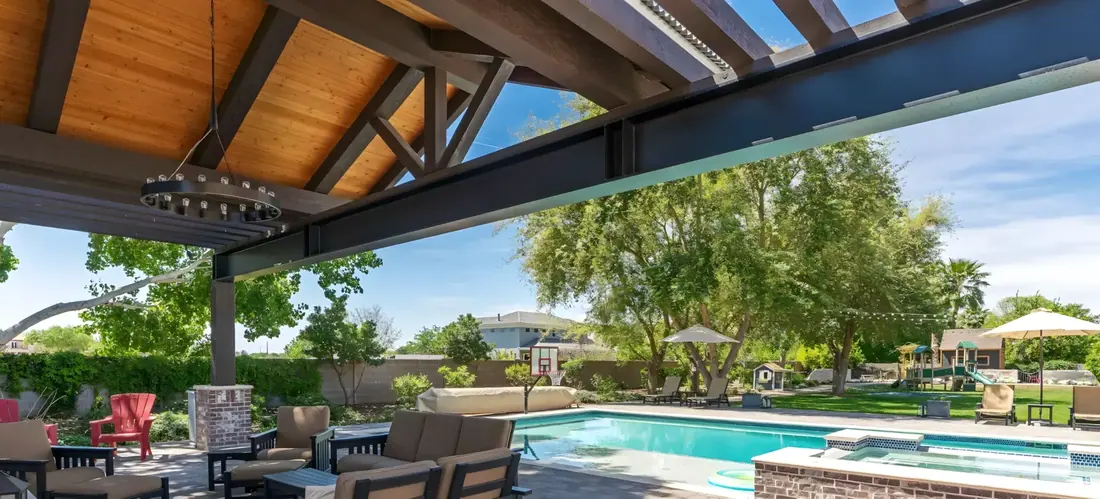
| Pergola or louvered pergola | Filtered or adjustable shade | Does not keep rain off unless the louvers close |
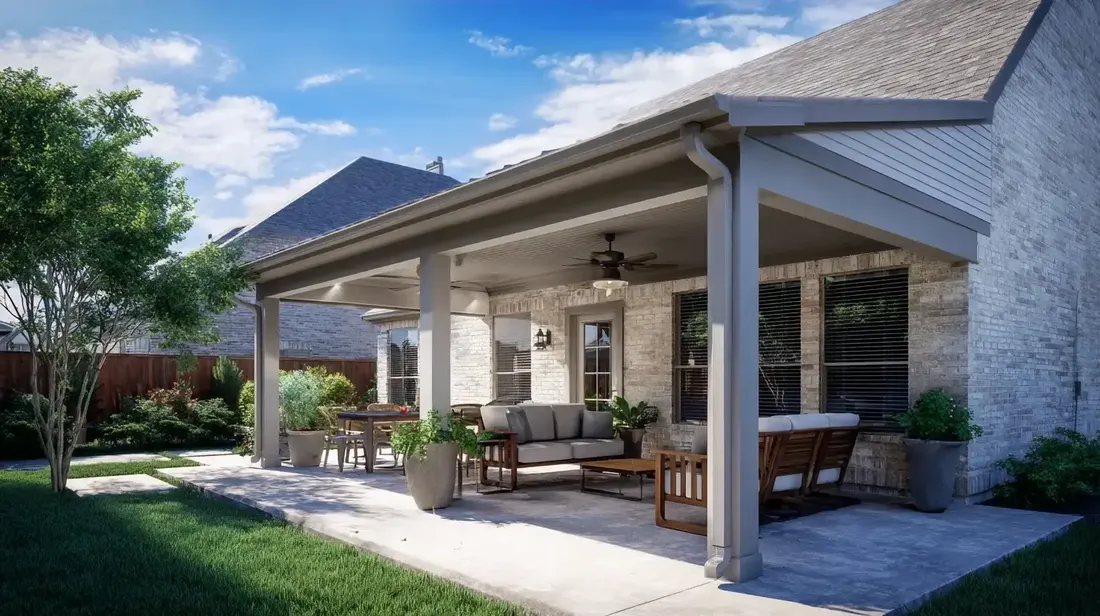
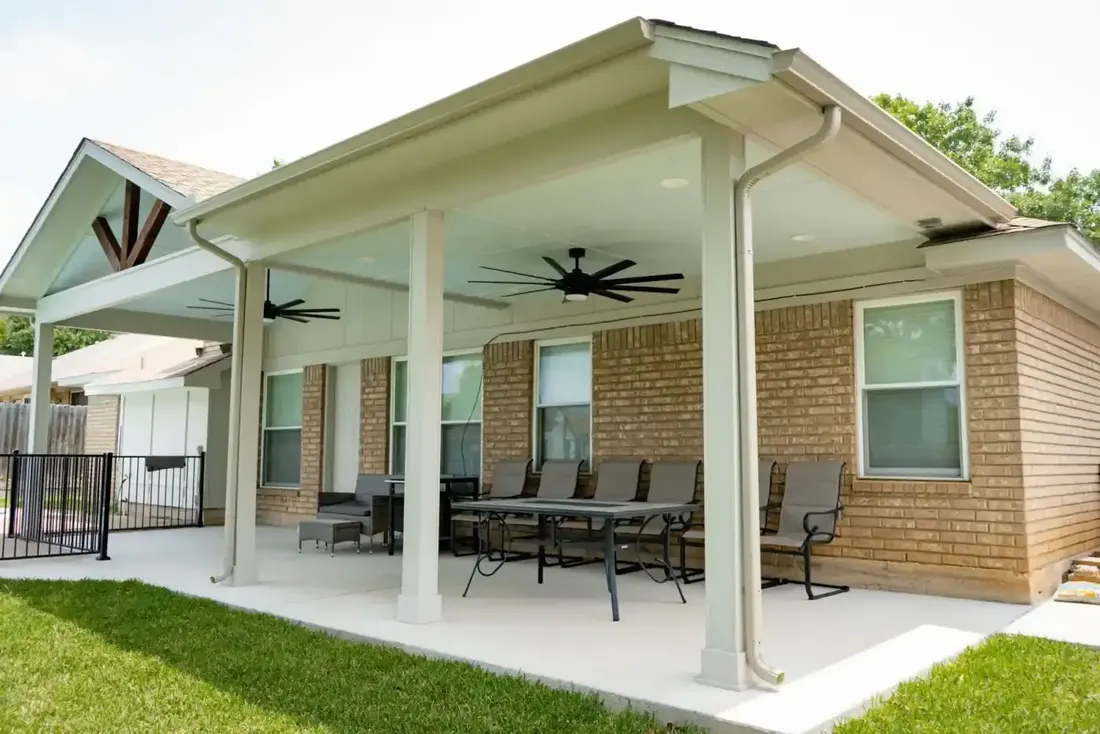
| Solid or insulated cover | Sun and rain, most of the day | A fixed structure that needs planning and a city check |
Do plants and trees work as natural patio shade in Texas?
Yes, with patience. Vines on a frame and trees give real shade and soften the heat around them, but they take seasons to fill in and they need water. The EPA’s heat island pages are a good background read on how plants and shade relate to heat.
Water is the catch. Grapevine bans irrigation between 10am and 6pm, and Mansfield prohibits it between 10am and 6pm year-round, so check your own city’s hours before you plan a green screen. Placement matters too. On clay ground, such as much of Dallas and Plano, a large tree planted close to the house can dry the soil beside the slab and affect it. Plant big trees well away from the foundation, and use smaller plants in pots near the seating.
Which shade ideas should you skip?
Skip anything that fails in a storm or does not match your sun. These are the ones we would think twice about before spending money.
- A big umbrella in an open yard. One strong gust can turn it into a hazard, so it needs a heavy base and should be closed when the wind rises.
- A shade sail tied to a gutter or a fence post that was not built for the pull. Anchor points need to be strong, and a failed one can damage the wall.
- Thin curtains on the west side. Sun fades them, and they flap in wind.
- A fast-growing tree close to the slab, where roots and thirsty soil can cause trouble later.
If your fixes keep failing, the problem may be the approach, not the product. Our post on covers versus open patios compares a fixed roof with temporary shade.
When does a roof make more sense than temporary shade?
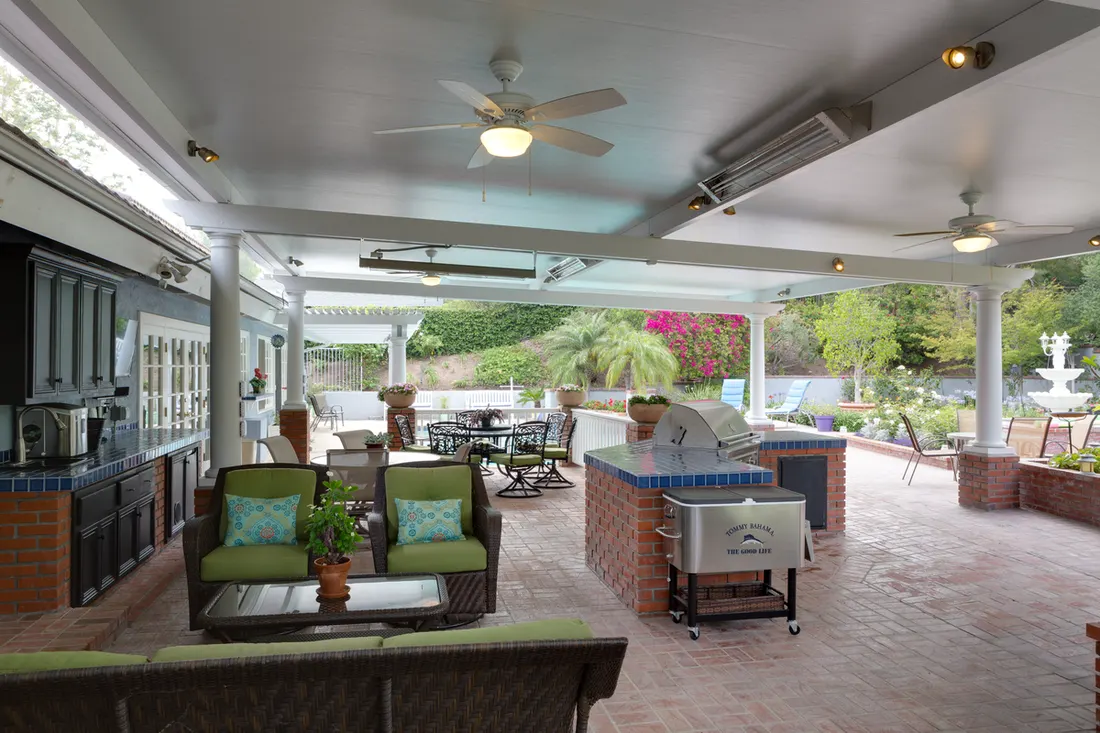
When you are replacing the fix every year, or when you want shade and rain shelter together. A roof is a one-time design decision with a longer life, and it can carry fans and lights. A pergola sits in between, with adjustable or filtered shade.
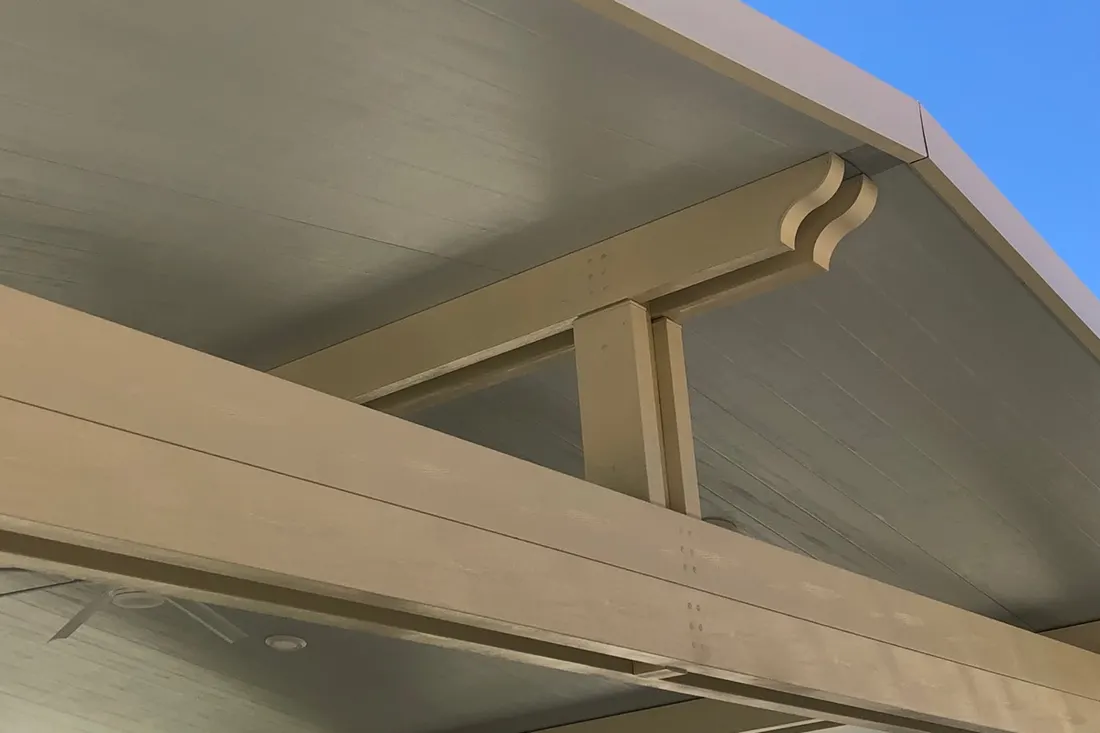
We build solid and insulated covers and custom pergolas. A solid cover keeps off sun and rain, and an insulated cover also cuts heat and noise. A louvered pergola lets you adjust shade through the day. See our insulated patio covers and pergolas pages. Our post on patios and pergolas explains the difference. A fixed structure is something your city may want to review, so ask before you commit.
A family company out of Arlington, we have worked in Dallas–Fort Worth since 1984. You can book a free in-home estimate and we will look at where the sun hits your patio at the hours you use it. For heat on the hottest days, the National Weather Service keeps heat safety guidance.
Questions we get asked about this
Combine overhead cover with a side screen. Low western sun comes in at an angle, so a roof alone leaves the open side lit. Outdoor curtains, a screen or a louvered section on the west side can complete the shade.
An umbrella or a few large potted plants can go up the same day, but they work on small areas and do not last in strong wind. A shade sail or curtains take a little more work. Compare the short-term fix with how often you replace it, since a fixed roof takes planning and lasts longer.
They can, on a frame such as a pergola, but they take seasons to fill and need regular water. Check your city’s irrigation hours, because some cities limit watering during the day. Choose plants suited to heat, and expect gaps in winter.
A pergola gives filtered shade and lets some sun through. A louvered pergola can be adjusted to give more shade when the sun is high. For strong shade and rain shelter, a solid or insulated cover blocks more.
Yes. We build solid patio covers, insulated covers and custom pergolas, and American Eagle Builders offers free in-home estimates where we look at your sun before we suggest a roof.