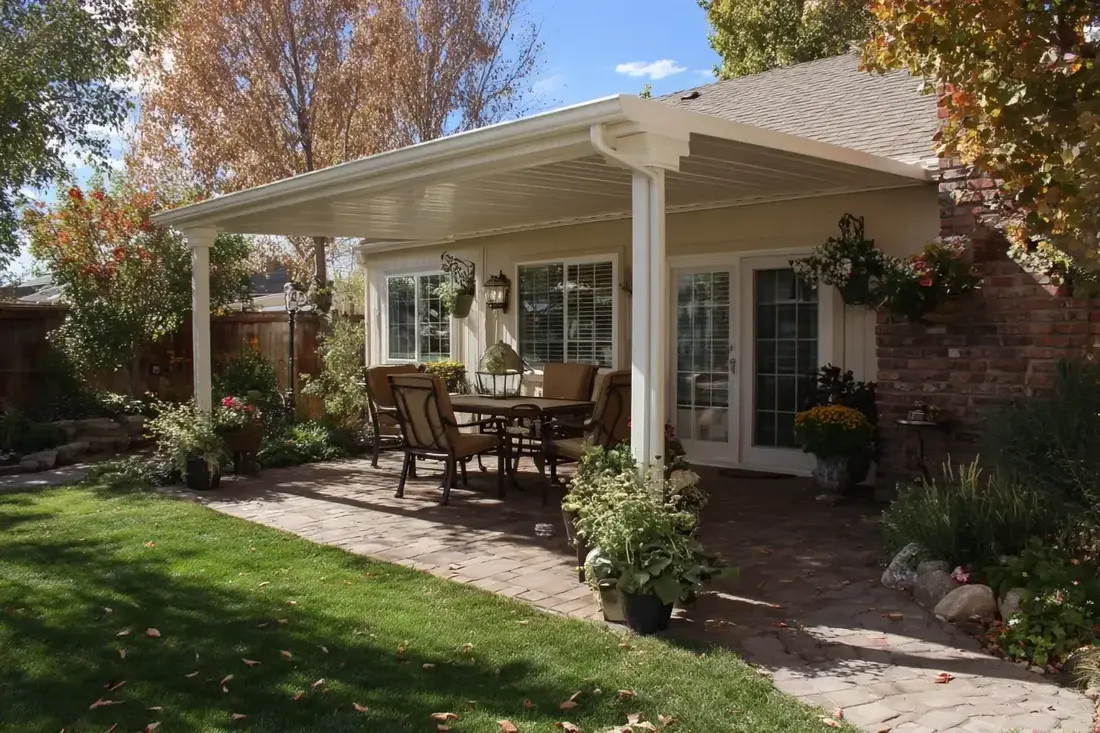
An outdoor office is a work spot on a covered patio, with shade, power and an easy walk back to the house. A patio cover makes one workable in North Texas, but heat, glare and wind decide how many hours a day you can use it. Here is what to plan before you move your desk outside.
The short answer
- An outdoor office works for part of the day in North Texas, mainly mornings, evenings, spring and fall.
- Shade, power, light and wind control matter more than the style of the roof.
- Have a licensed electrician run outlets and fixtures, and ask your city about permits.
- A solid or insulated cover with a fan suits most outdoor offices.
- Skip the patio office if you need quiet calls or have only a sunny west wall to work against.
Plenty of people now work from home, and some of them are tired of the spare bedroom. A covered patio offers fresh air and daylight a few steps from the kitchen. It also offers glare on your screen, a breeze that lifts your papers and a slab that is warm by two o’clock. Plan for those, and the patio becomes a place you want to work.
Can you work outside in a Texas summer?
For part of the day, yes. Mornings and evenings are workable even in July, while the middle of an August afternoon is not, even in shade. Spring and fall are the best seasons. Treat the patio as a place for some of your hours, not all of them, and keep an indoor desk for the rest.
Heat is a safety matter as well as a comfort one. The National Weather Service heat guidance covers how to stay safe in hot weather. Laptops and phones also slow down or shut off when they overheat, so a screen in direct sun is a poor idea. Shade, a fan and plenty of water solve most of it. The summer of 2023 showed how long a hot stretch can last in North Texas.
What does a patio cover need to work as an office?
It needs shade where you sit, power you can trust, light you can read by and a way to keep wind from taking your papers. Those four things matter more than the style of the roof. Decide them before the cover is drawn, because they are far easier to build in than to add.
- Shade where the desk sits. A north or east side of the patio keeps the sun off your screen for most of the working day.
- Power. Run outlets to the spot with the structure, rather than a cord across the slab.
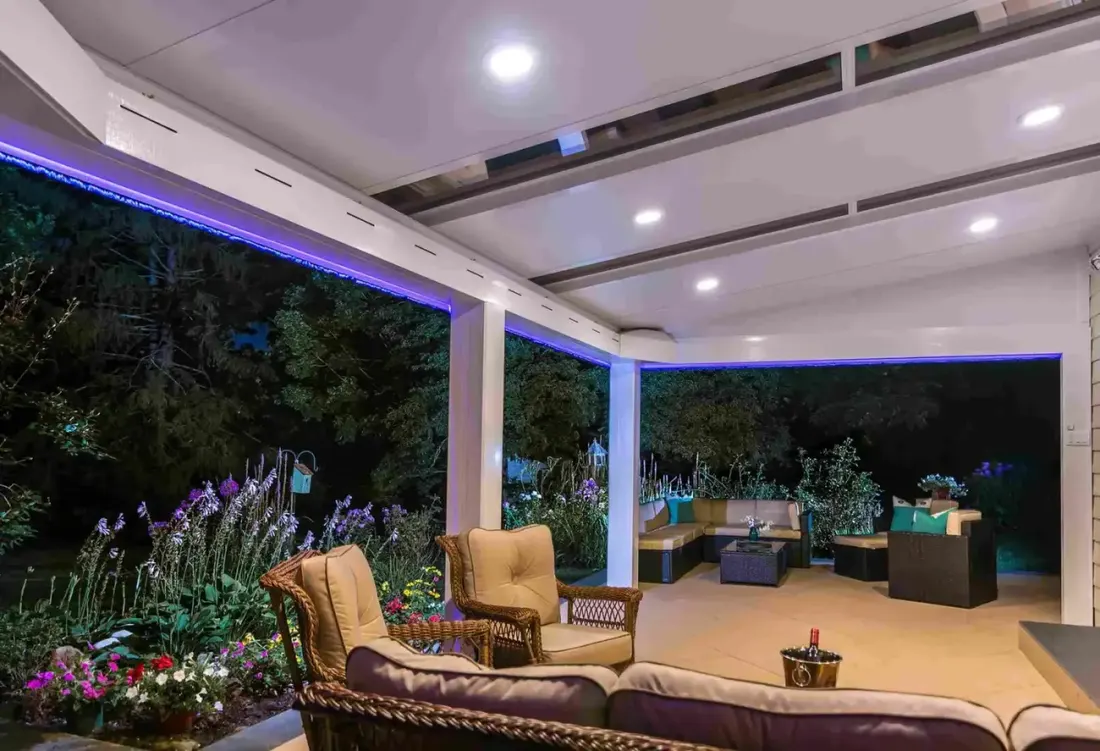
- Light. Plan fixtures over the desk, so a gray afternoon or a late evening does not end your day.
- Wind. A screen or a panel on the windy side stops paper and cups going over.
- Connection. Check that your Wi-Fi reaches the spot, or add an access point on the patio wall.
Wiring is a licensed trade in Texas. The Texas Department of Licensing and Regulation licenses electricians, so hire one for any outlets and fixtures, and ask your city about permits. Our post on protecting outdoor electronics covers what a roof does and does not do for gear you leave out.
How do you handle glare and wind at an outdoor desk?
Turn the desk so the sun falls behind or beside you, never in front. A shaded wall behind the screen helps too, because a bright background makes a screen hard to read. For wind, use a panel, a planter wall or a screen on the side the breeze comes from.
Spring is the windy season in North Texas, and storm fronts can arrive fast. Bring the laptop in when a front is coming, and clip down anything loose. A cover built for local wind and load is part of the answer, but nothing replaces common sense with a cup of coffee and a stack of paper.
Where should the desk go under the cover?
Put it against the shaded wall of the house, facing out toward the yard, with the sun behind or beside you. That spot keeps the screen out of direct light and keeps you close to power and the Wi-Fi inside. The middle of the slab is the worst place, because it gets sun from every side.
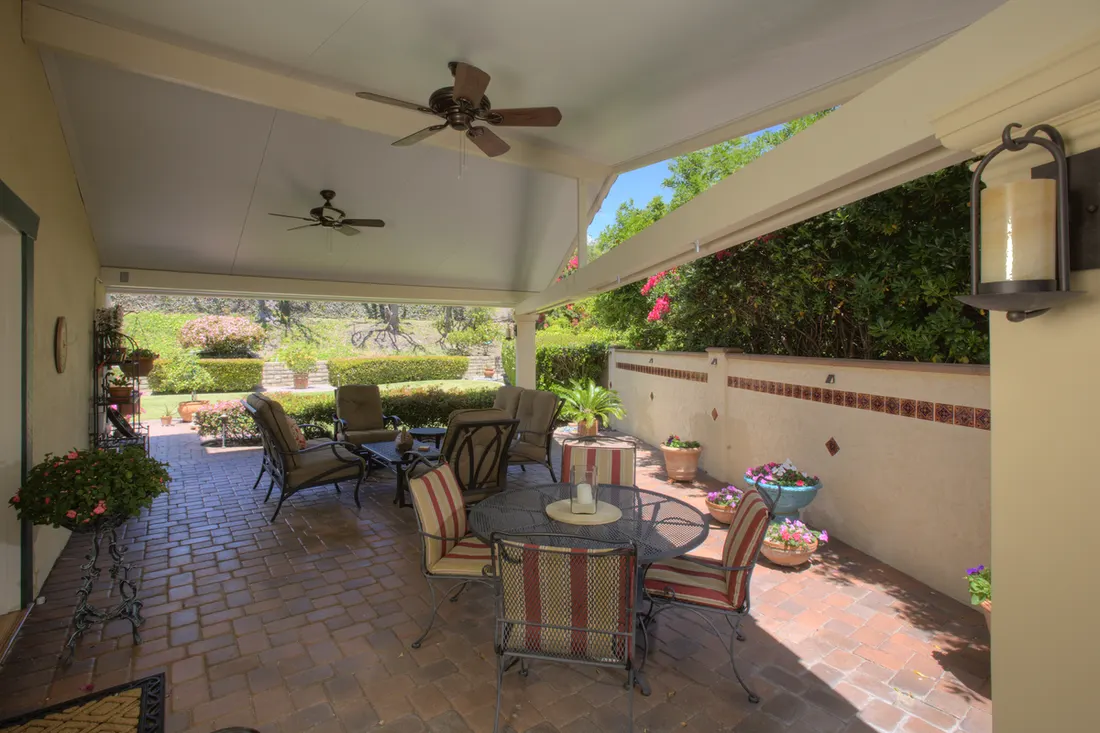
Leave room around the desk. You need a chair that rolls, a place for a second screen or a printer, and a path to the house that does not cross your cables. A small cover can hold one desk. If you want a desk and a seating group, look at a larger span, and read our post on attached or freestanding covers to see which tie-in suits your house.
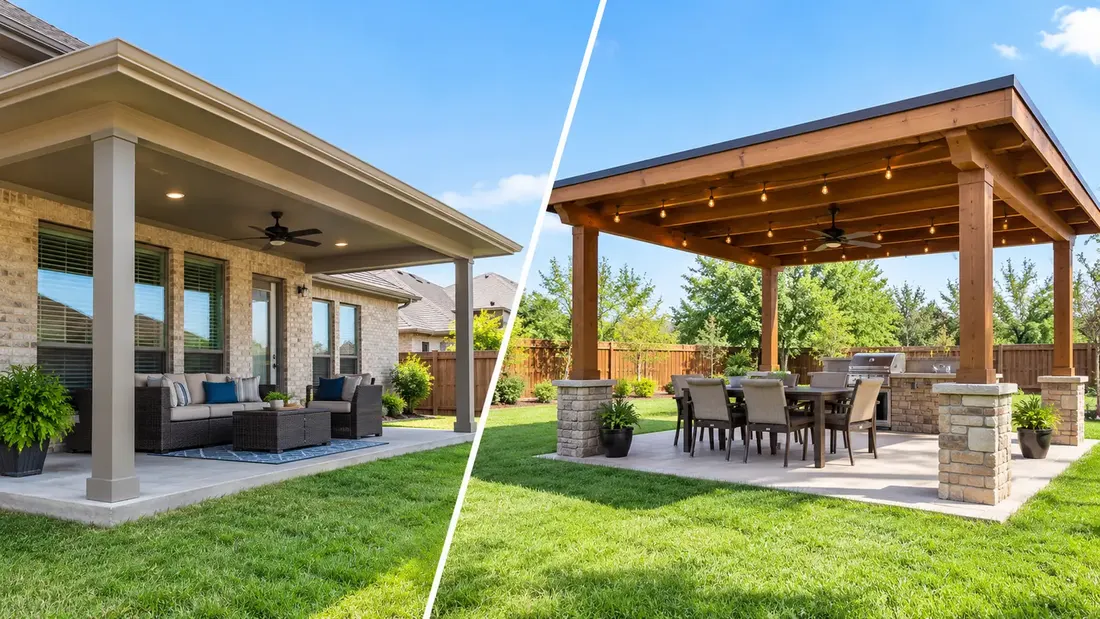
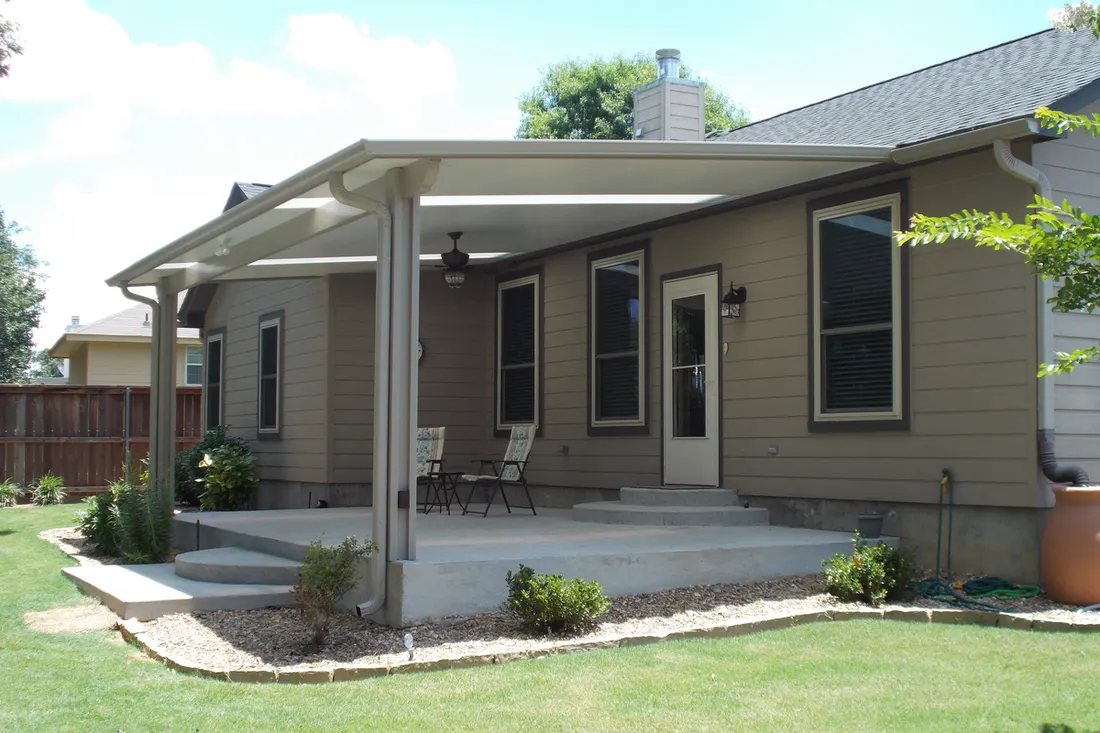
An attached cover shares a wall with the house, so power and Wi-Fi are close. The photo below shows a compact cover tied into the wall of a house, with a small slab beneath it. That size suits a single desk and a chair, not a full meeting space.
Which cover suits an outdoor office?
A solid or insulated cover with a fan suits most people best. It shades the screen and keeps rain off. A pergola gives filtered light, which can flicker across a laptop, and a louvered roof lets you close the shade for the afternoon. The table sorts out the options.
| Cover | Good for work | Weak spot |
|---|---|---|
| Solid cover | Steady shade and a dry desk | Less sky and light |
| Insulated cover | Coolest underneath and quieter in rain | Fans and lights must be planned in |
| Louvered pergola | Adjustable shade through the day | Moving parts and the power to run them |
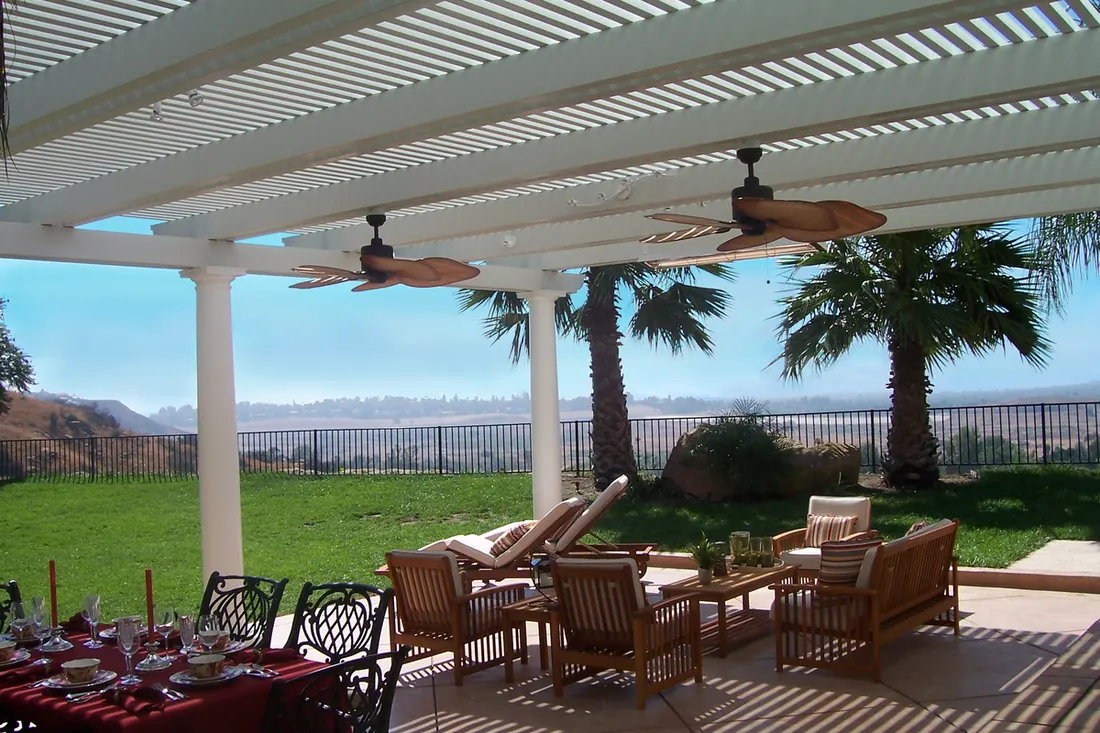
| Open pergola | Light and sky, on a north or east side | Flickering light on screens and no rain cover |
| Screened enclosure | Keeps out bugs and wind | Still warm in summer without cooling |
If you want to work out there all year, a cover alone will not do it. A screened or glass enclosure, or a sunroom with its own heating and cooling, is a different project. Read about the options on our patio enclosures page. We will tell you honestly if a plain cover is enough for how you work.
When should you not set up an outdoor office?
Skip it if you take video calls all day, handle private documents or need quiet. A patio has traffic noise, lawn crews and neighbors. Skip it too if the only spot for a desk is on a west wall with no shade. A good indoor room will serve you better in that case.
If it does suit you, start small and test it for a season before you build. Set up a table in the shade and see how it works in March and in July. Then plan the cover around what you learn. American Eagle Builders designs patio covers across Dallas–Fort Worth, and a free in-home estimate is a good moment to walk the patio together. Book one here. If you are weighing attachment, attached or freestanding covers is worth a read first.
Questions we get asked about this
For part of the year and part of the day, yes. Spring, fall and summer mornings and evenings work well under a cover with a fan. Midday in July and August is too hot to work comfortably, so keep an indoor desk for those hours.
A solid or insulated cover with a fan suits most people. It shades the screen and keeps off rain. A louvered pergola lets you adjust the shade through the day, while an open pergola gives filtered light that can flicker on a laptop.
Yes. Wiring in Texas is done by licensed electricians, and outdoor circuits need weather-rated parts. Ask your city about permits as well. We plan fan and light wiring into the structure, but outlets and circuits should be run by a licensed professional.
Place the desk so the sun is behind or beside you, not in front. Use a shaded north or east side of the patio, and add a screen or louvers on the sunny side. A matte screen and a hood help in bright light.
Yes, with an enclosure or a sunroom. A screened enclosure keeps out bugs and wind, while a conditioned sunroom adds heating and cooling. American Eagle Builders installs both, and a free estimate shows which fits how you work.