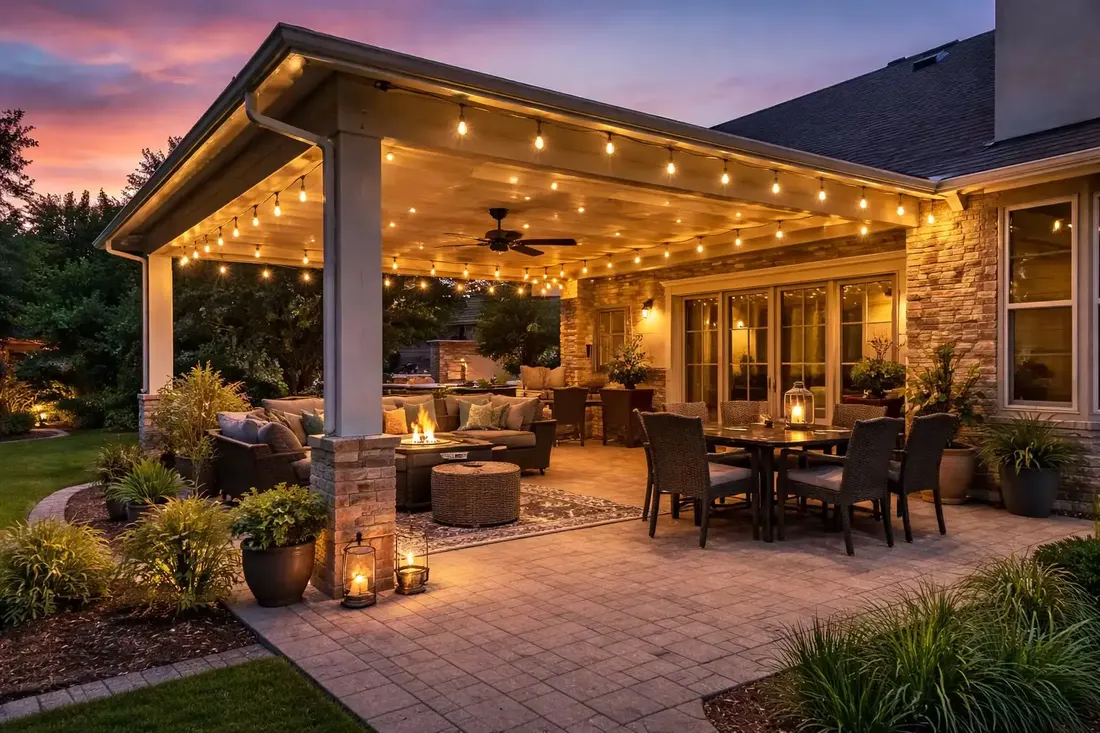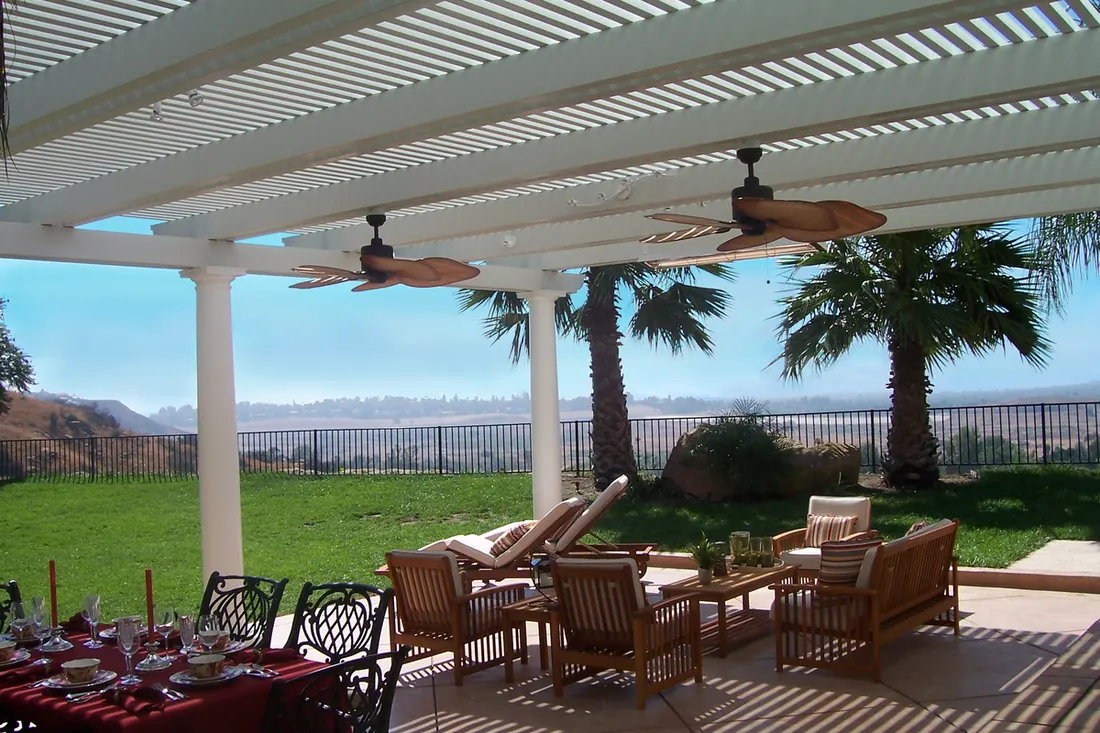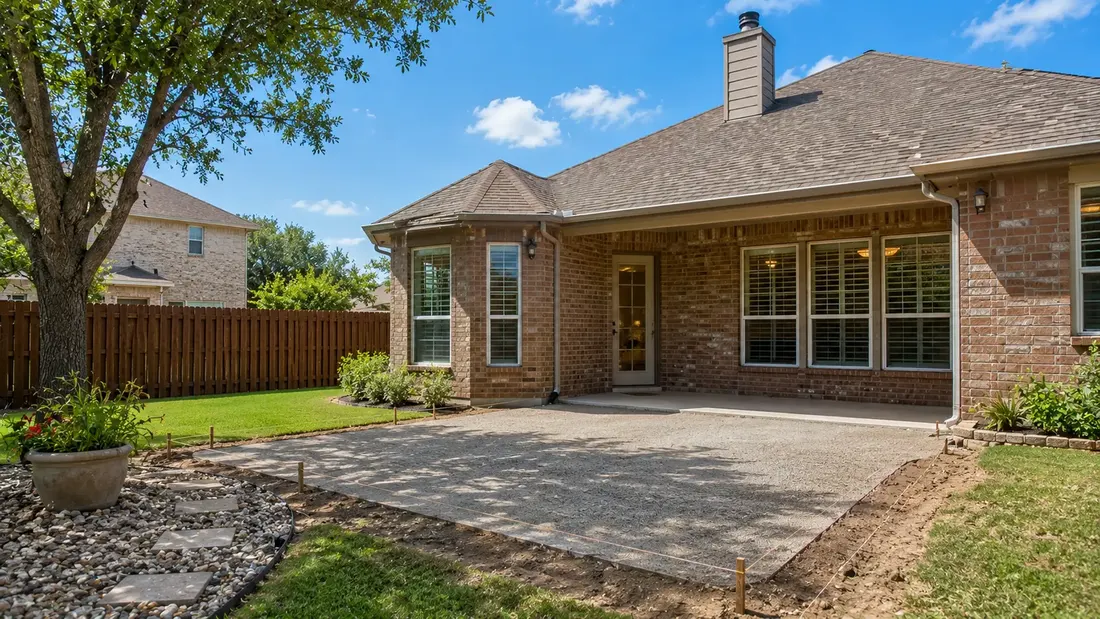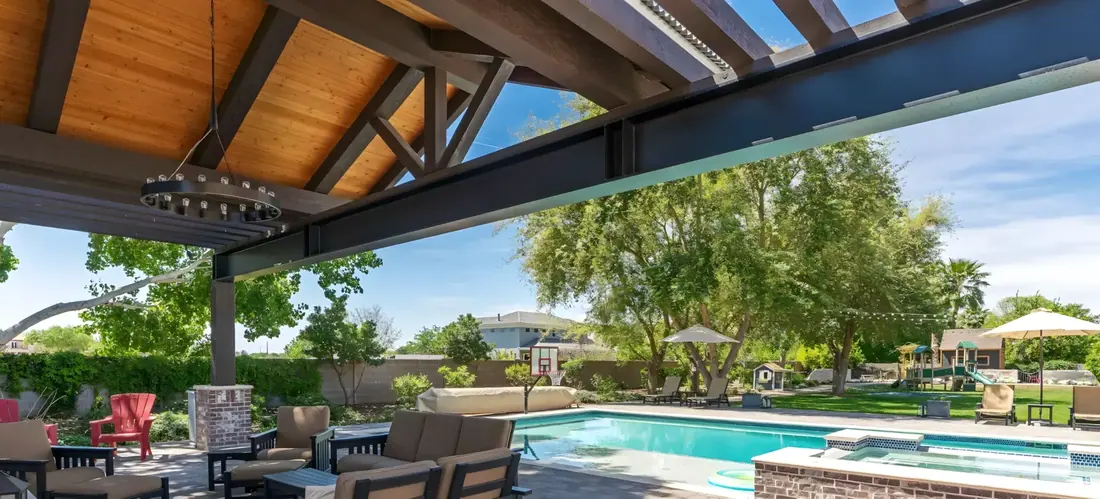
Patio cover features are the extras built into or onto a cover, such as wiring, fan support, drainage, screens and mounts. Some are simple to add later. Others are hard to fit once the roof is on. This guide sorts them into build now, add later and skip, so the cover does not box you in.
The short answer
- Build in what is hard to reach later: wiring, fan support, drainage and solid mounting backing.
- Anything that plugs in or clips on can be added later, as long as outlets are planned.
- Ask who supports an app-run or motorized feature before you pay for it.
- The roof type shapes the other features, so choose it first.
- Keep a short list of features you will use rather than building in everything.
The best patio cover features are the ones you will use every week, not the ones that look good on a list. A cover is built once, and some choices are fixed once the roof is on. So the useful question is not what is available. It is which of these things you want to be able to do in three years, and what has to happen now to allow it.
Which patio cover features should you build in from the start?
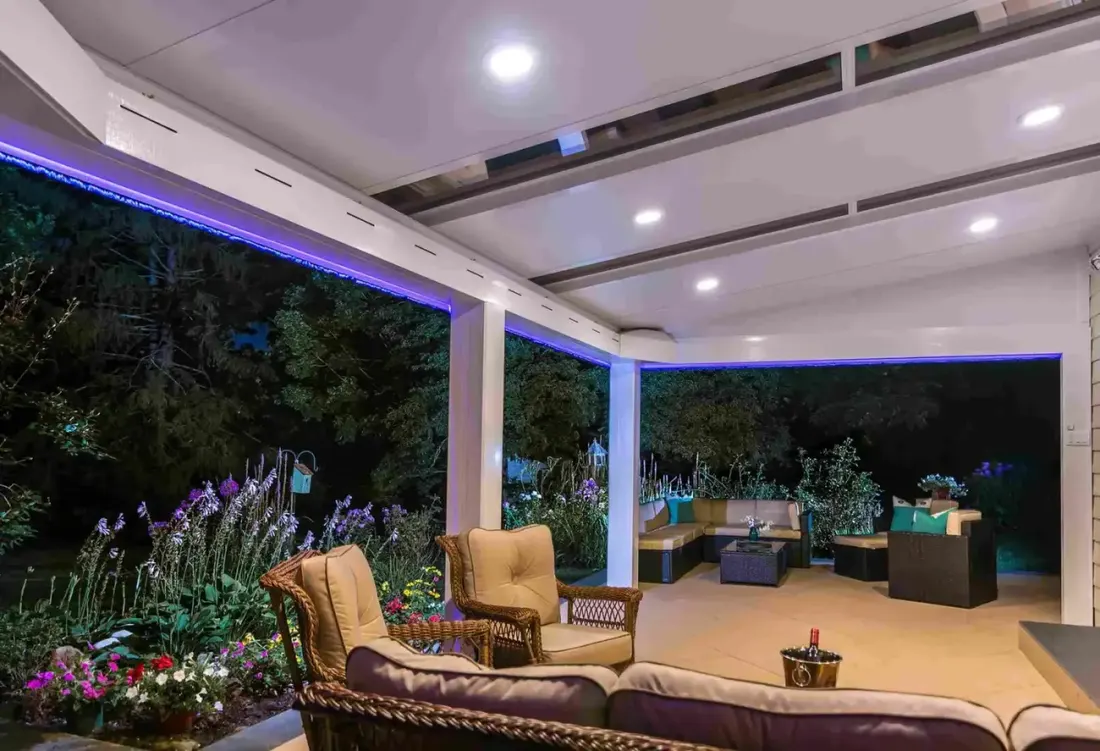
The ones that live inside the structure or are hard to reach later: wiring runs and boxes, fan support, drainage, and solid backing for anything you may mount. These cost little while the frame is open. After the roof is closed, each one means opening something up.
- Wiring runs and boxes for lights, fans and outlets, installed by a licensed electrician.
- A fan box and framing rated to carry a ceiling fan.
- Gutters and downspouts that send water away from the posts and the house.
- Solid backing in the roof or posts where a TV, heater or speaker may be mounted.
- Switches placed where you reach them from the door.
Texas licenses its electricians through the Texas Department of Licensing and Regulation, so it is fair to ask who will do the wiring and whether they are licensed. Our post on patio cover lighting goes through the light layers in detail.
What can you safely add to a patio cover later?
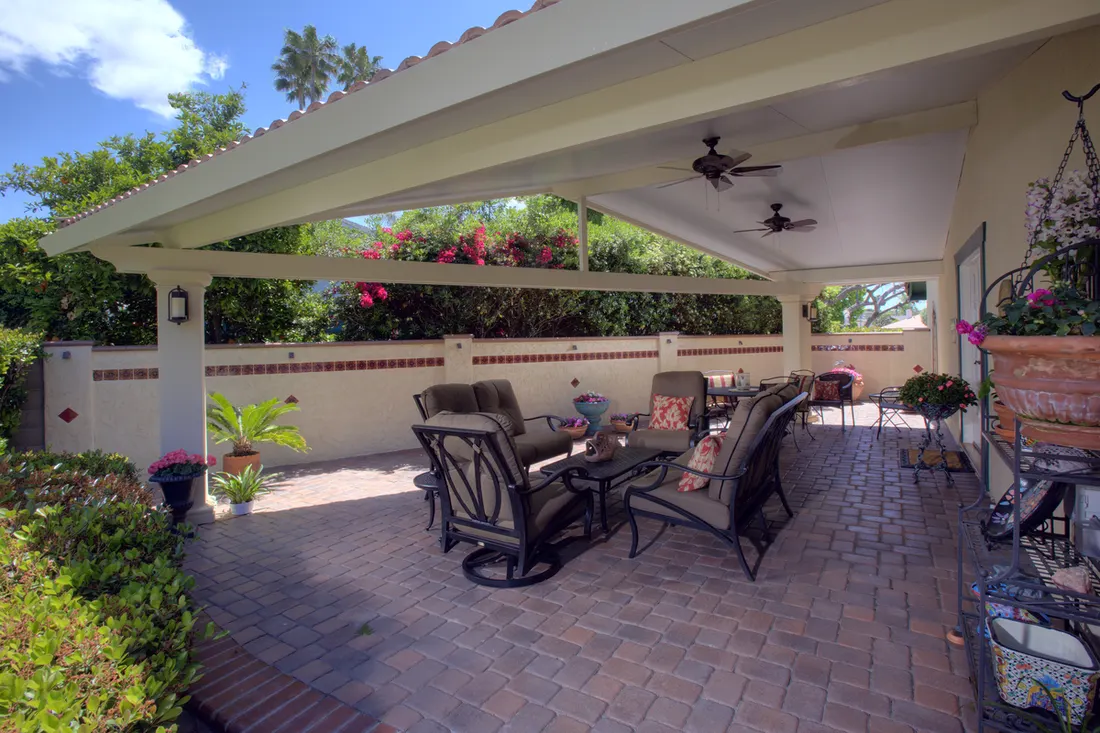
Anything that plugs in or clips on: string lights, free-standing heaters, curtains on a rod, a portable speaker, planters and outdoor rugs. These do not touch the structure, so they can come and go. The catch is that they still need an outlet, which is why the outlets belong in the first group.
| Feature | Plan it now | Add it later |
|---|---|---|
| Wiring and boxes | Yes, while the frame is open | Hard once the roof is closed |
| Ceiling fan | Plan the box and support | The fan itself can come later |
| Gutters and drainage | Yes, with the roof | Awkward to retrofit |
| Curtains or side screens | Plan where the track can hang | The fabric can change any season |
| String lights and lanterns | Only the outlets | Easy at any time |
| Motorized or app-run controls | Only if you will truly use them | Possible, but ask about support |
Screens and curtains
Side screens and curtains stretch the use of a patio on the low sun side. Plan where they would hang so the posts and beams can take a track or a cable. If bugs are your main complaint, a screened patio enclosure is a stronger answer than curtains, because it is built into the structure. Curtains also catch wind like a sail, so the frame has to be ready for that pull, and they need taking down before a storm.
Which smart patio cover features are not worth it?
Those you will not use. Motors, sensors and app-run controls add parts and ways to fail, and the app or hub that runs them can change. A hard freeze like December 2022 is rough on anything with batteries or moving parts outdoors. Ask what each feature does that you would not do by hand today. If the answer is nothing, skip it.
If one does appeal, check that it works with the devices you already own and ask who supports it if the maker stops. Keep manual controls as a backup. A fan that works on a wall switch is better than one that only works from a phone that has run out of battery.
Does the roof itself count as a feature?
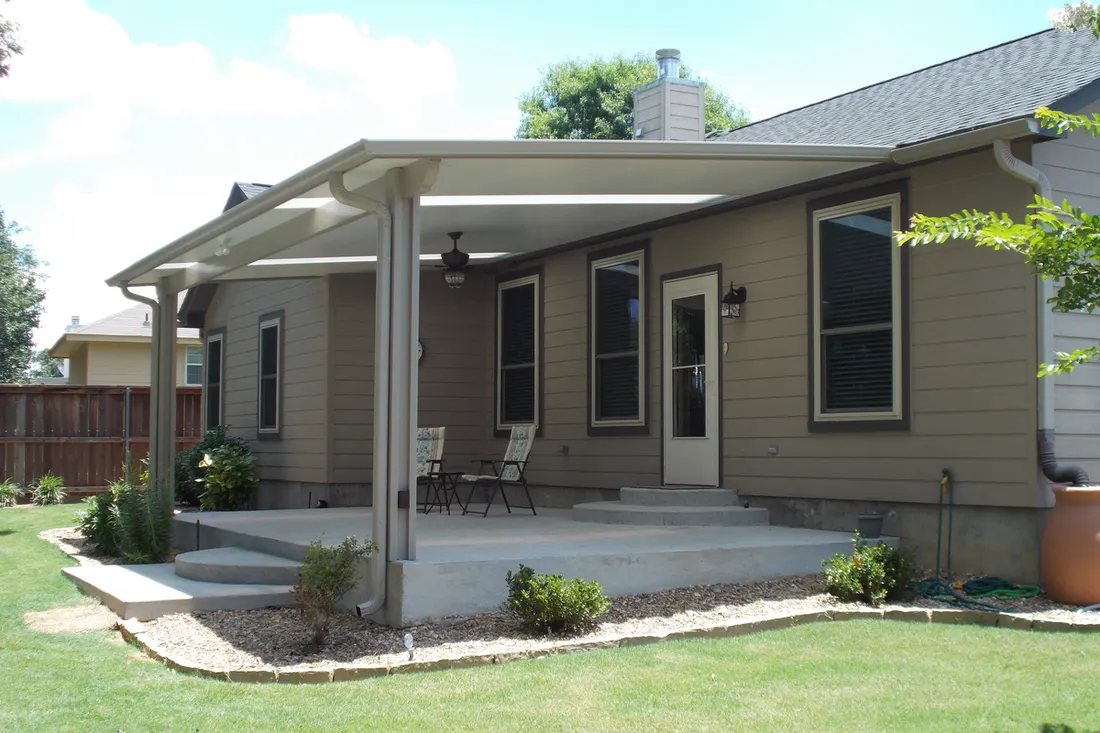
Yes, and it is the one that shapes the rest. A solid roof holds recessed lights and fans neatly. An open pergola leaves them exposed on the beams. An insulated panel roof, which has foam between two skins, runs cooler and quieter under heavy rain, so it often changes what else you need. Our insulated patio covers page explains how it works.
Frisco yards are newer and flatter than most and easy to over-build. The same goes for features. A big cover with every extra eats lawn and budget, and then some of them go unused. Pick a few that suit how you live and let the rest wait.
Do added features change what your city needs to see?
They can. Fixed wiring, fans and gas lines are often covered by permit and inspection rules, and the rules differ from city to city. Frisco posts its residential permit page, and our permit guide lists others. If an HOA reviews exteriors, as in Southlake, ask whether fans and fixtures need approval too.
Heaters deserve extra care. Gas and electric patio heaters have clearance rules in the maker’s instructions, and a low roof can put you inside them. The National Fire Protection Association publishes fire safety information, and the manual that came with the heater is the first thing to read.
Is it safe to put a TV or electronics under a patio cover?
It can be, with planning. Covers keep rain off, but wind can drive it in and heat builds up under a roof in summer. Use weather-rated gear, protect it from direct sun, and bring it in during storms. Our post on how patio covers protect outdoor electronics goes through the risks.
American Eagle Builders is an Arlington-based, family-owned exterior remodeler, working in Dallas–Fort Worth since 1984. Bring your wish list to a free in-home estimate and we will sort it into what to build now and what can wait.
Questions we get asked about this
The ones you will use every week and that are hard to add later: wiring and boxes, support for a ceiling fan, good drainage and solid backing for anything you may mount. Lights, curtains and furniture can be added at any time without touching the structure.
Sometimes, but it is easier if you plan the support during construction. A fan needs a box and framing rated to hold its weight and movement. Ask the builder what the cover can carry before you buy a fan.
Only if you will use them. They add parts that can fail, and the app or hub may change over time. Ask what the feature does that you would not do by hand, and keep manual controls as a backup if you do choose one.
Yes. Wiring is far easier while the frame is open, and outlets let you add string lights, heaters or speakers later without opening the roof. Have a licensed electrician place them and check with your city on permit rules.
Yes. American Eagle Builders is an Arlington family business that serves 90 DFW cities. We offer free in-home estimates and can help you sort a wish list into what to build in now, what to add later and what to skip.