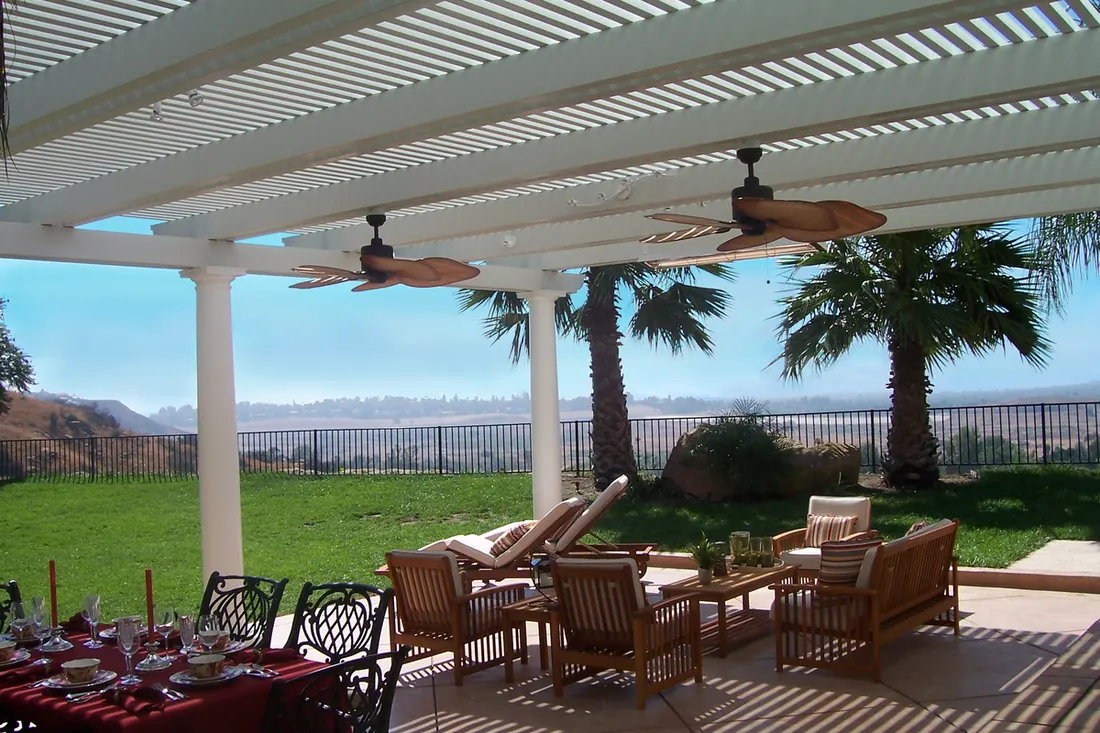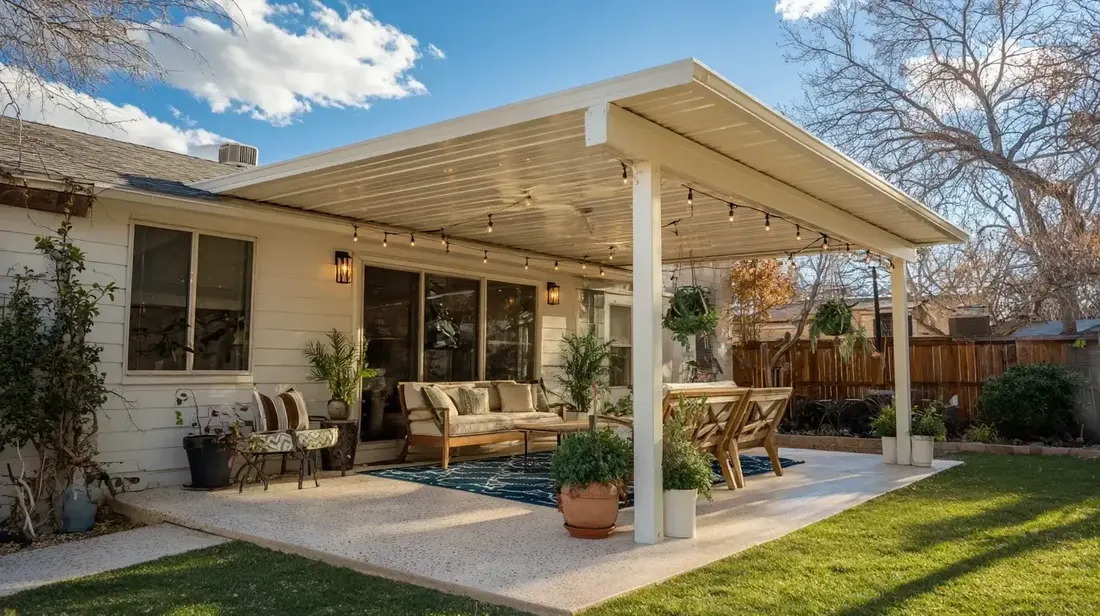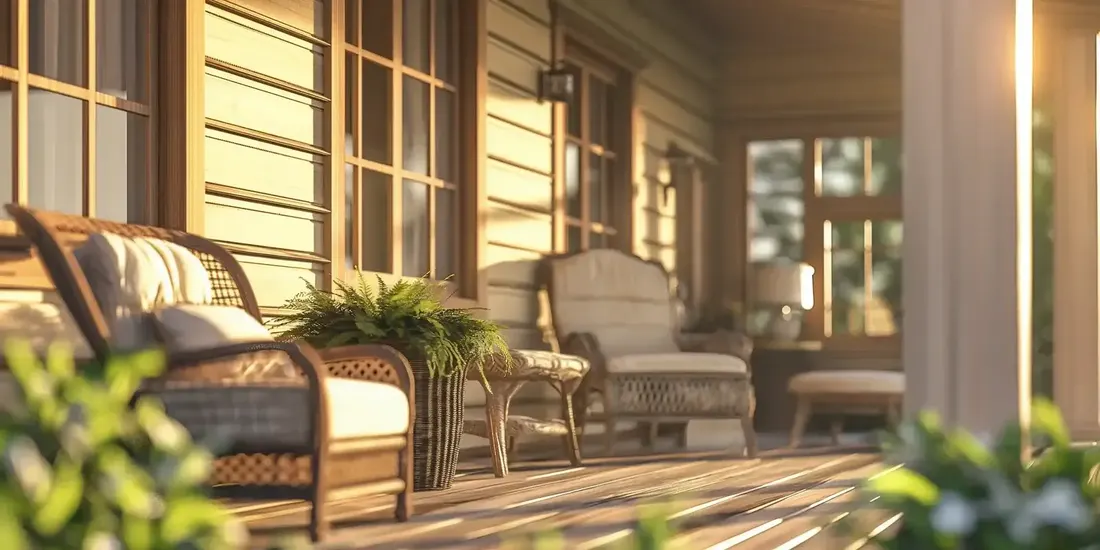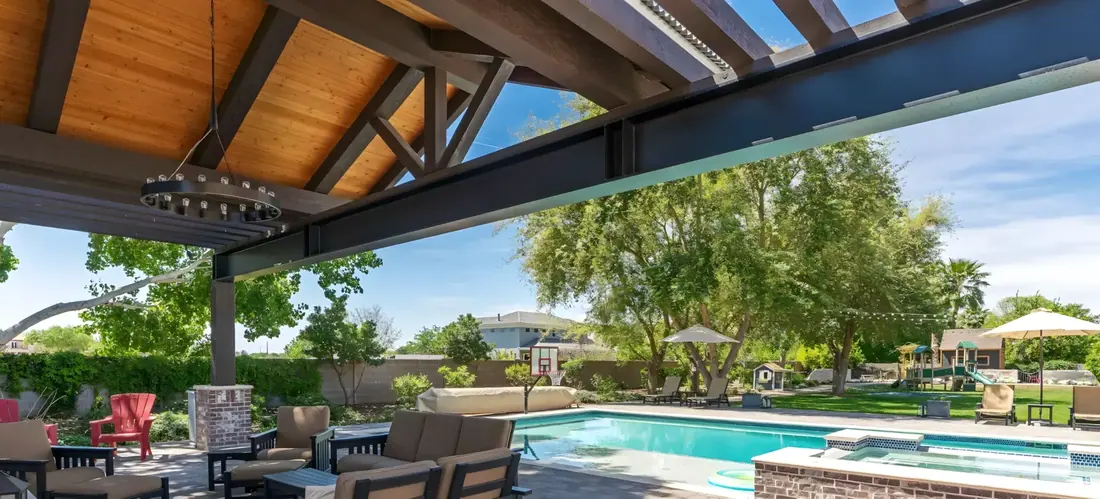
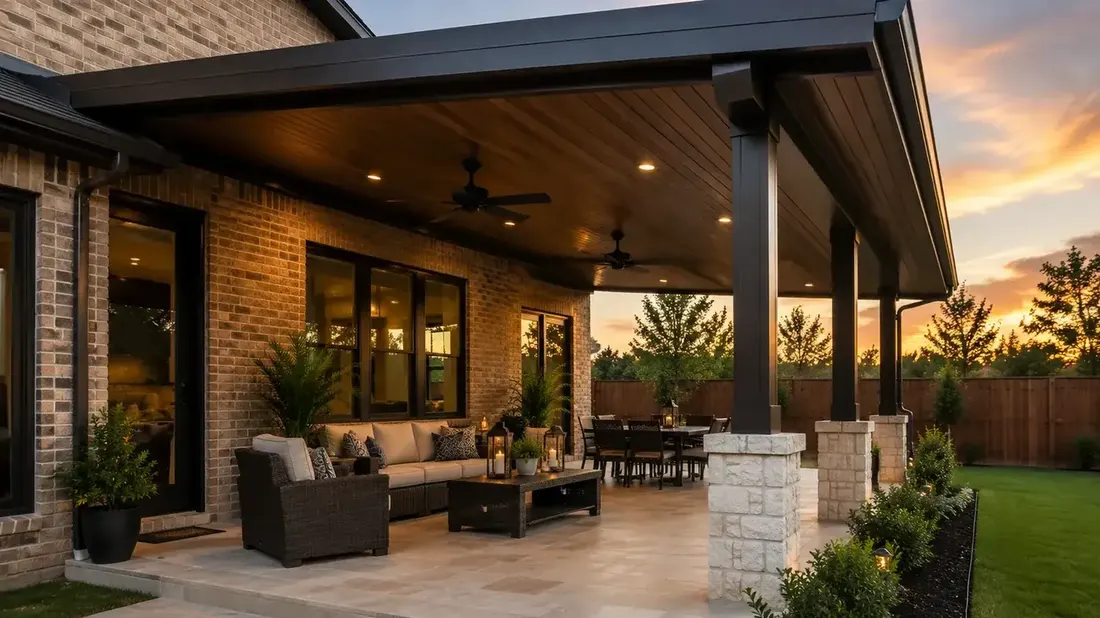
A patio cover is a roof over your seating area, and it helps protect outdoor furniture from direct sun and rain. How much it helps depends on the material, because wood, fabric, metal and wicker each wear out in a different way.
The short answer
- A patio cover keeps direct sun and rain off furniture, but it does not stop humidity or wind-blown rain.
- Fabric, wood and wicker gain the most from a cover, while steel and aluminum gain less.
- Set furniture back from the open edge, where low sun and side rain reach first.
- Bring cushions indoors before a freeze like December 2022 or a long storm, even under a roof.
- A cover is worth buying for the shaded room itself, with furniture protection as a bonus.
Furniture is the first thing people want a cover to save, and a cover does save it from some things. It does not save it from everything. The useful way to think about it is by material, because the same sun that fades a cushion barely bothers a steel frame.
Does a patio cover protect outdoor furniture?
Yes, from direct sun and direct rain, which are the two biggest sources of wear. A roof keeps cushions from soaking and fabric from fading in full sun, and it keeps standing water off wood and metal. It does not stop humidity, and it does not stop rain that blows in from the side.
| Material | What wears it out | How much a cover helps | What you still do |
|---|---|---|---|
| Cushions and outdoor fabric | Sun fade and soaking | A great deal | Store them before a freeze or a long storm |
| Wood and teak | Dry-out, cracking and moisture | A great deal | Seal or oil it as the maker says |
| Powder-coated aluminum | Chips in the finish, then corrosion | Some | Touch up chips and keep it clean |
| Steel | Rust where the finish breaks | Some | Keep water from pooling at the feet |
| Wicker and resin | Sun brittleness and mildew | A great deal | Wipe down when it feels damp |
| Glass table tops | Little, aside from stains | Little | Wipe off bird droppings and pollen |
Which season is hardest on furniture in North Texas?
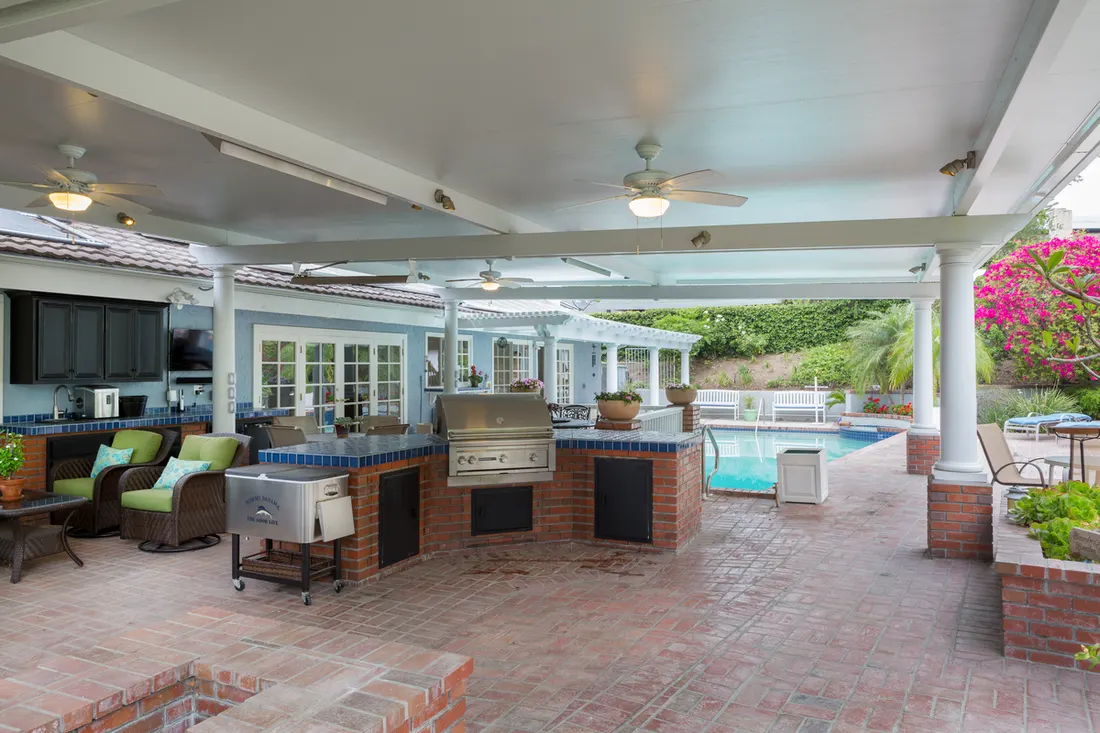
It depends on the material, but each season has its own culprit. Summer takes a toll through sun and heat. Spring brings storms. Fall is mostly leaves and damp. Winter is about water that freezes in joints and seams. A cover helps in every season but one job changes each time.
- Spring: storms and wind-driven rain. The roof keeps the first soaking off, but pull cushions in when a storm is forecast.
- Summer: sun and heat. In a hot summer like 2023, sun fades cushions and makes plastic brittle faster. Shade slows both.
- Fall: leaves, pollen and damp. A roof keeps most of it off, though it collects at the edges.
- Winter: frozen water. Rain that freezes in seams and joints does damage, and a freeze like December 2022 is why cushions should come indoors.
The National Weather Service in Fort Worth posts forecasts and storm alerts for North Texas. A glance before a front arrives takes a minute and gives you time to bring the cushions in.
Where should furniture sit under the roof?
Back from the open edge, with a little space from the wall. Wind-blown rain and low sun both reach in at the edge. Pulling the set toward the center keeps it dry, and a gap behind it lets air move so damp does not sit against the wall.
Low sun is the part owners miss. In late afternoon the sun can reach under a roof from the west, so the seats nearest the open side take light that the roof does not stop. Rotate cushions through the season so they fade evenly. Our post on protecting outdoor electronics covers a similar placement rule.
How can you test your own patio before you buy a cover?
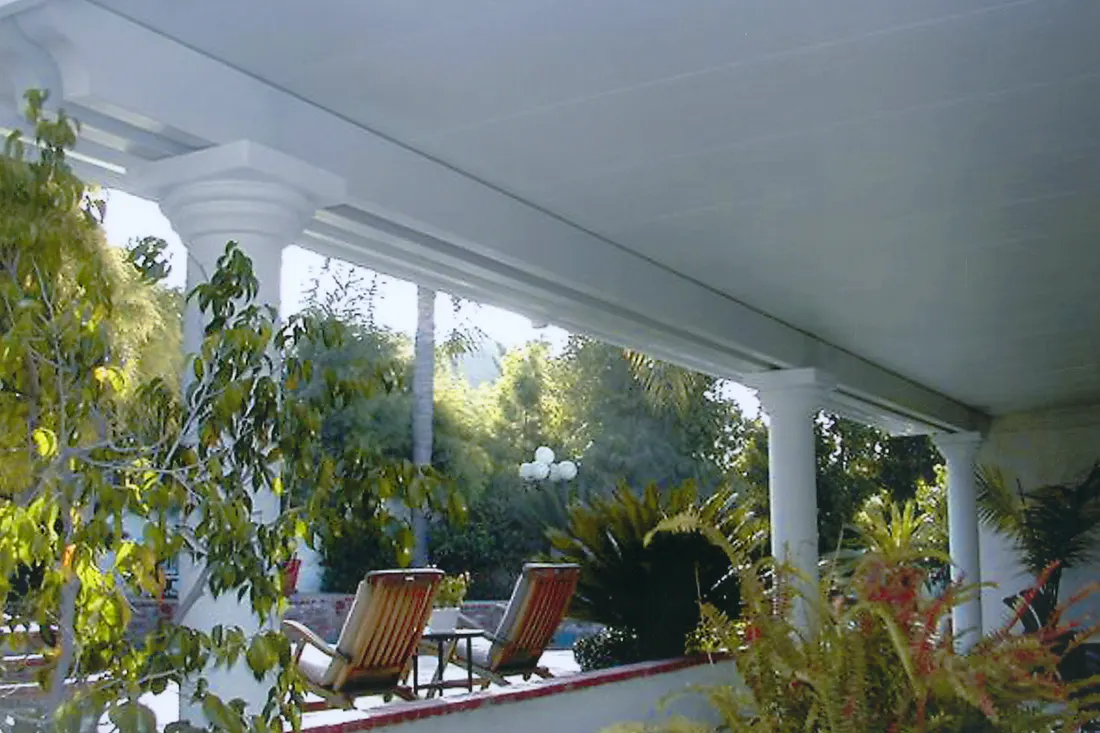
Watch it for a week. You will learn more from your own slab than from any catalog, and the test costs nothing. Use the steps below and write down what you see.
- Look at the patio at four o’clock on a sunny day and note which seats are in direct sun.
- Walk out after a rain and see where water pools or where the wind pushed it.
- Check the underside of your cushions and the feet of your chairs for damp, mildew or rust.
- Note which pieces of furniture you already bring in, and why.
If the answers point to sun and rain on the seating, a cover fits. If they point to poor drainage on the slab, fix that first. A roof will not cure a patio that holds water.
What should you still do once you have a cover?
Maintain it, but with less effort. A roof lowers how often you scrub, restain or replace, and it does not remove the chore. Match the care to the material and keep a short routine.
- Wipe cushions and frames after pollen season and before storage.
- Store cushions indoors or in a sealed box before a freeze or a long wet week.
- Keep feet and legs off standing water, and watch where the roof drains.
- Check wood and metal finishes each spring for chips and cracks.
Mildew deserves a word. Furniture that stays damp can grow it, even under a roof. The EPA’s mold pages explain how moisture feeds it, which is why airflow matters as much as the roof. Our seasonal patio cover checklist has a fuller routine.
Is a patio cover worth buying just for furniture?
Usually not on its own. If two chairs and a table are all you own, fitted covers and a storage box may do the job. A patio cover earns its place when you want the space itself, a dry, shaded room for dining, with furniture protection as a good side effect.
Roof type matters here too. A solid or insulated roof keeps rain off furniture, while a pergola gives filtered shade and lets rain through. Furniture under a pergola still needs fitted covers or storage, and it will fade more slowly than in open sun but not as slowly as under a solid roof. Decide which problem you are solving before you pick.
Our patio covers page shows the roofs we install across Dallas–Fort Worth, and you can book a free in-home estimate to see which one suits your seating area.
Questions we get asked about this
It slows fading by keeping direct sun off, but it does not stop it completely. Low afternoon sun can reach seats at the open edge. Place furniture back from the edge and rotate cushions during the season so they wear evenly.
In mild weather, usually yes. Bring them in before a freeze, a long storm or wind that blows rain from the side, because a roof does not stop moisture getting in from the edges. Cushions that stay damp can grow mildew.
Cushions, fabric, wood and wicker gain the most, since sun and moisture are their main enemies. Powder-coated aluminum and steel gain less, because their main risk is a chip in the finish. A cover helps those only by keeping water off the damaged spot.
Yes, but less often. Wipe frames and cushions, check finishes each spring, and keep feet out of standing water. The cover reduces wear and does not remove the need for care.
Yes, and the visit is where we look at where you sit, which way the patio faces and what will go under the roof. American Eagle Builders suggests a cover only after that, and the estimate is free.