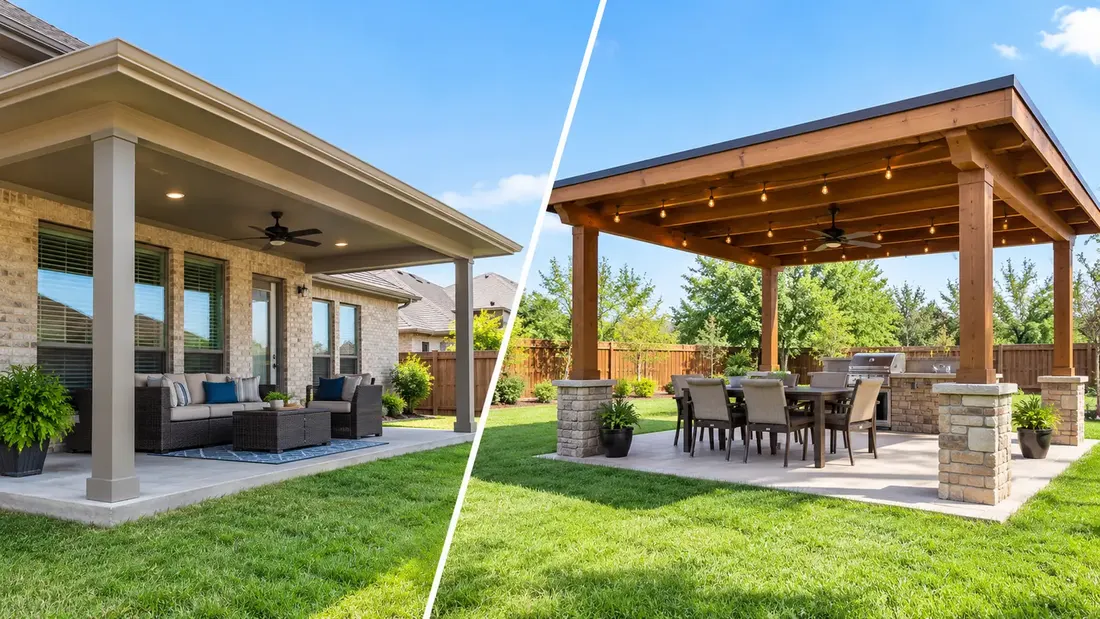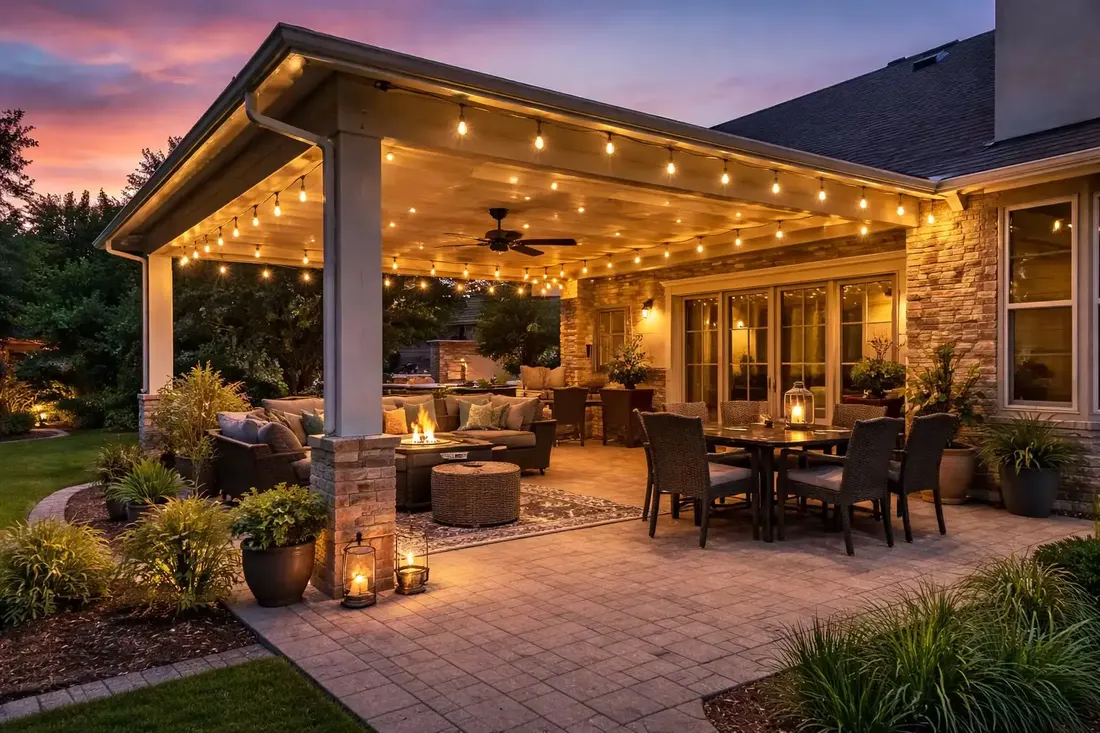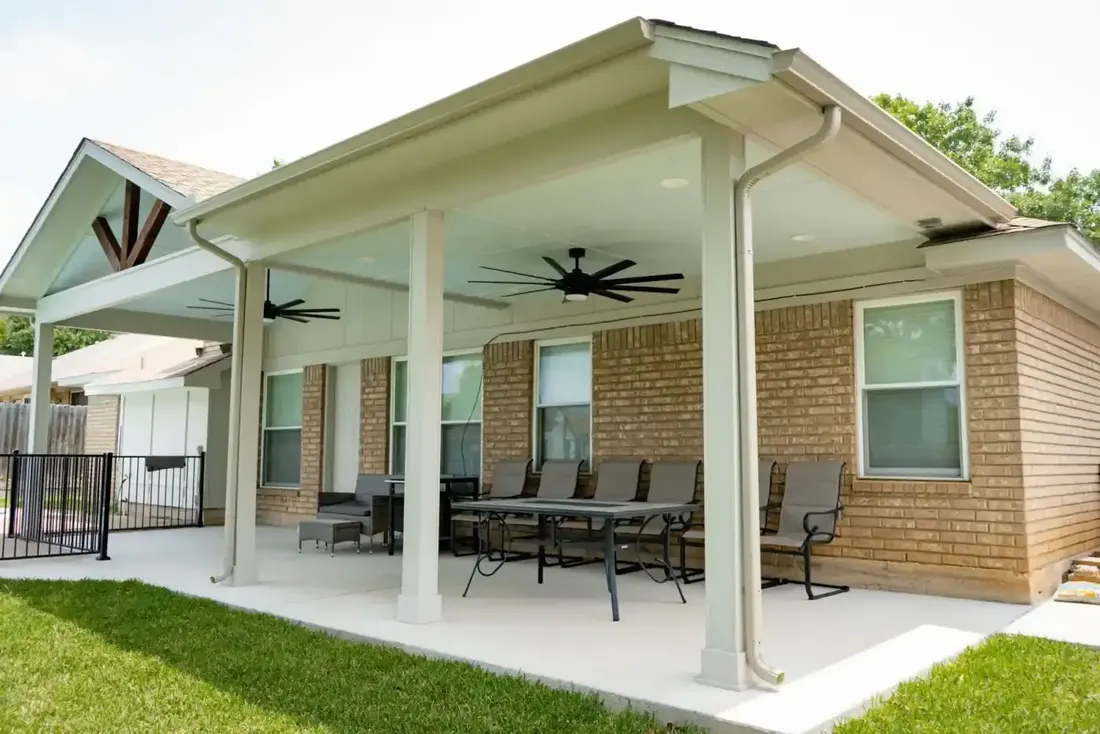
A poolside covered patio is a roofed seating area next to a pool, built to give shade and shelter without blocking your view of the water. The best ones cover the lounge and dining spots, stay clear of the pool shell, and send roof water somewhere other than the deck.
The short answer
- Cover the seating beside the pool, never the water, and keep a clear line of sight to swimmers.
- Choose the roof style by afternoon sun and rain shelter, using the table to compare solid, insulated and pergola options.
- Plan roof runoff, slick concrete and metal finishes before you pick a style, not after.
- Footings near a pool should stay clear of the shell and buried lines, so call 811 and share your pool plans.
- Check your city’s permit office and your HOA first, because rules for roofs near pools differ across the metroplex.
American Eagle Builders does not build pools. We work on the roof beside yours. That is the part of the yard where design mistakes are easiest to make, because water, sun and concrete all meet in a small space. The ideas below are about getting that meeting right.
Where should a poolside covered patio go?
Put it where you sit, not over the water. Cover the lounge chairs and the table, leave the pool open to the sky, and keep a clear line of sight from the shade to the water. Place it on the side that takes the late afternoon sun, since that is when an open deck gets hardest to use.
In a hot North Texas summer like 2023, a pool deck with no shade can be too hot to stand on by mid-afternoon. Watch your own yard for a day before you decide. Note where the shadow of the house falls at four o’clock and where it does not. The gap between those two spots is where a roof earns its place. Frisco lots tend to be newer and flat, which makes it easy to build a cover too large and swallow the lawn or the deck, so size the roof to the seating and stop there.
Which cover style suits a pool deck?
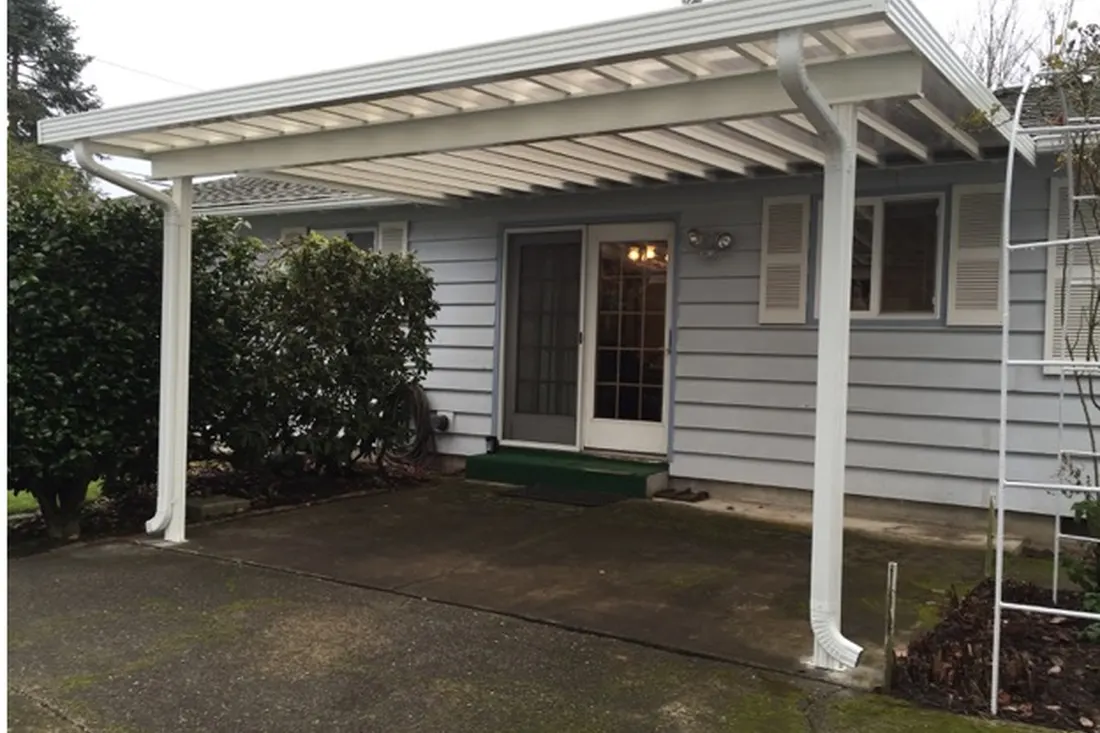
It depends on what you want overhead. A solid cover keeps off sun and rain. An insulated cover does the same and cuts the heat and noise underneath. A pergola gives filtered shade and keeps the sky. A louvered pergola lets you adjust the shade through the day.
| Style | Works best when | Watch for |
|---|---|---|
| Solid attached cover | Seating sits beside the back wall and you want rain shelter | Roof runoff reaching the pool deck |
| Insulated cover | The deck faces west and afternoons are the problem | A finished ceiling that fans and lights must be planned into |
| Fixed pergola | You want filtered shade and a frame for lights or plants | Rain still reaches the seating |
| Louvered pergola | You want shade by day and open sky at night | Louvers add moving parts and motors |
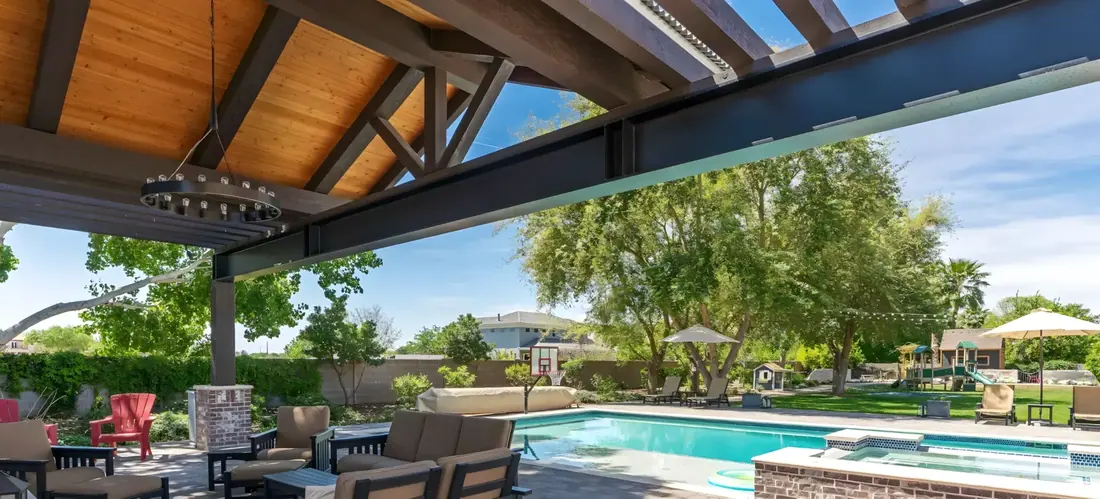
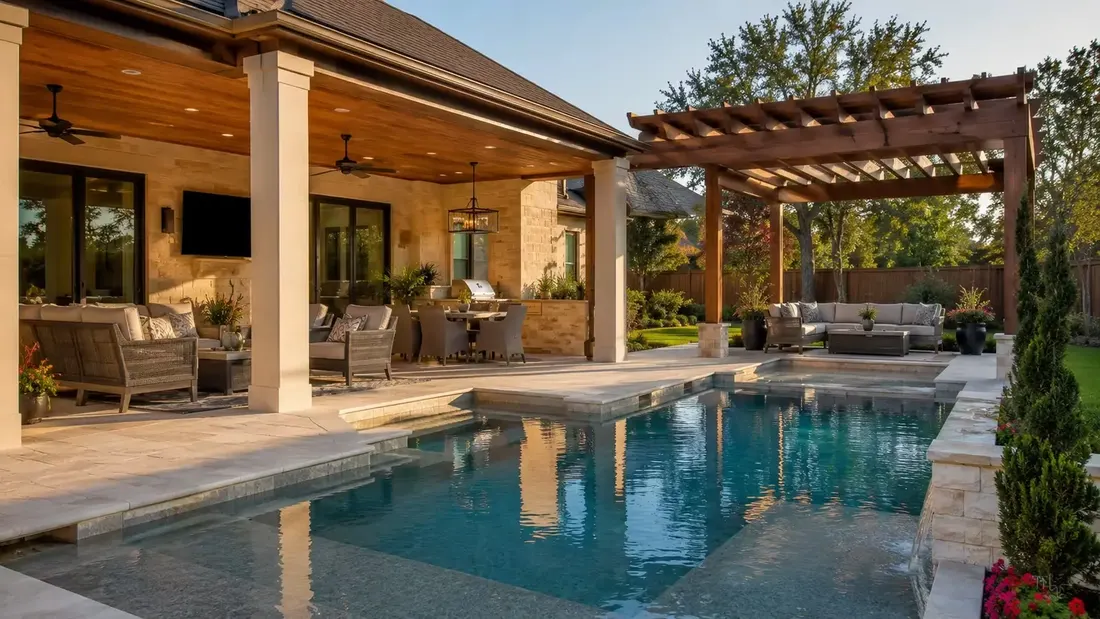
A pergola at the far end of the pool, like the one in the photo above, works as a destination away from the house. For the insulated option, see our insulated patio covers page, and for open roofs our pergolas page.
How do you keep a roof and a pool from fighting each other?
Plan for water, glare and footing before you pick a style. A roof sheds rain into one place, and beside a pool that place matters. Most poolside problems come from skipping one of the checks below.
- Roof water. Ask where the gutters and downspouts will send rain, so it does not run across the deck or into the pool.
- Slick concrete. A roof keeps rain off the deck, but wet feet still make concrete slippery, so plan a finish with some grip.
- Metal finishes. Splash and pool chemicals can wear on posts and trim. Ask what finish is on them and how to rinse it.
- Posts and the pool shell. Footings should stay clear of the shell and any buried plumbing or wiring. Call 811 before anyone digs, and share your pool plans if you have them.
- Fans and lights. Water and electricity need a licensed electrician and fixtures rated for damp or wet places.
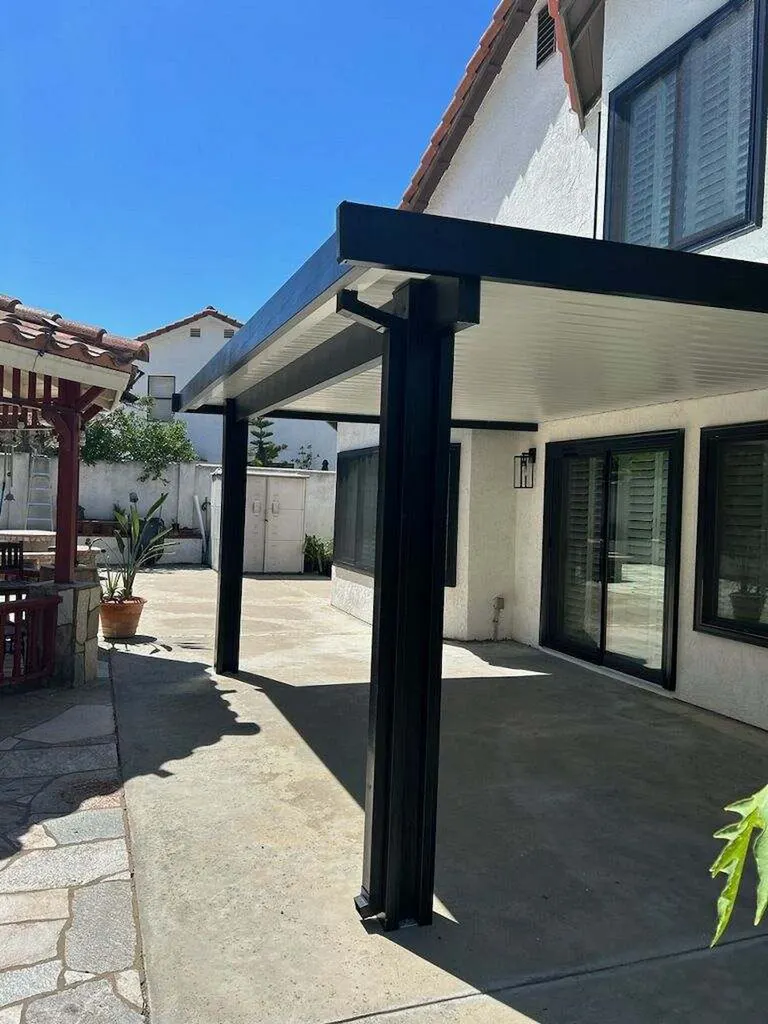
A dark frame like the one above looks sharp against stucco. It also shows water spots and holds more heat, so ask how the finish ages in sun. Our post on patio cover lighting covers the evening side of a pool deck.
Should the cover be attached to the house or stand alone?
Either can work. An attached cover keeps the pool-side seating one step from the kitchen. A freestanding cover can sit at the far end of the pool and make a second spot to gather. Our post on attached versus freestanding covers compares the two.
Pool yards add a wrinkle. Dallas, Plano and Frisco sit on clay that swells and shrinks with the weather, and a pool deck sits on that same ground. A new footing near the shell has to be set so it does not disturb what is already there. That is a reason to measure on site and ask for the pool plans, not to guess from a photo.
Do you need a permit for a cover beside a pool?
Often, yes, for any roofed structure, but rules differ by city. Cities may also review how close a structure can sit to a pool and to property lines. Ask your city’s permit office first, and your HOA if you have one, before you finalize a design.
Start with Frisco’s residential permits page, Plano’s or Arlington’s. They are three examples, and your city may differ. Heat is the other thing to plan for on a pool deck, and the National Weather Service keeps heat safety guidance you can read before the summer starts.
What should you not do beside a pool?
Do not roof over the water itself, and do not hide the pool from the seating. A cover that blocks the line of sight makes it harder to watch swimmers. Do not set a fan or light low enough to reach, and do not let a roof drain onto the deck. If a plan needs any of those, change the plan.
When you are ready, we measure the deck, the sun and the slab in person. You can book a free in-home estimate and we will talk through placement before style.
Questions we get asked about this
No. Cover the seating beside the pool and leave the water open. A roof over the water blocks the view of swimmers, traps heat and moisture, and is a different kind of structure than a patio cover. Plan the shade around the lounge and dining areas.
It depends on the sun and how you use the deck. A solid or insulated cover gives rain shelter and strong shade. A pergola gives filtered shade and an open feel. A louvered pergola lets you change the shade during the day. Pick by exposure first.
Yes, when they are planned from the start and rated for damp or wet locations. Keep fixtures out of reach and have a licensed electrician do the work. Water and electricity need extra care, so ask about the wiring route during design.
No. Pools are not something we build. American Eagle Builders, a family-owned remodeler based in Arlington, works on patio covers and pergolas beside pools that homeowners already have. Free in-home estimates are available if you want a second opinion on placement.
Often a roofed structure needs one, and cities may review its distance from the pool and lot lines. Rules differ across Dallas–Fort Worth, so check with your city’s permit office and your HOA before work begins.