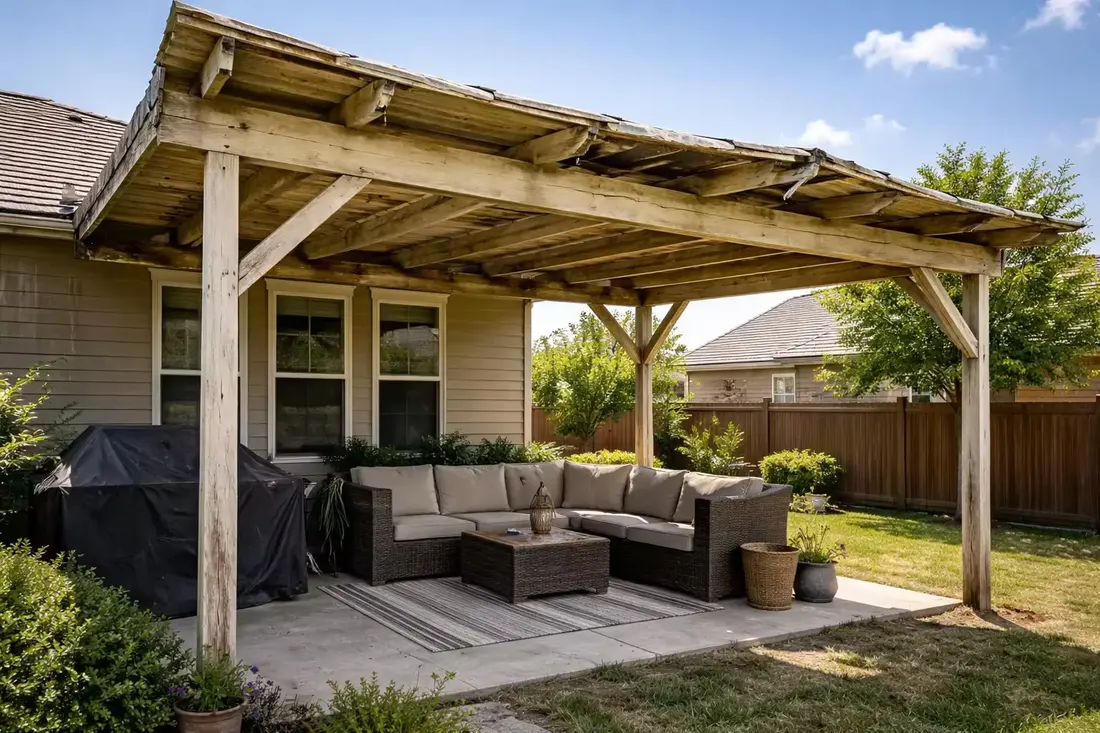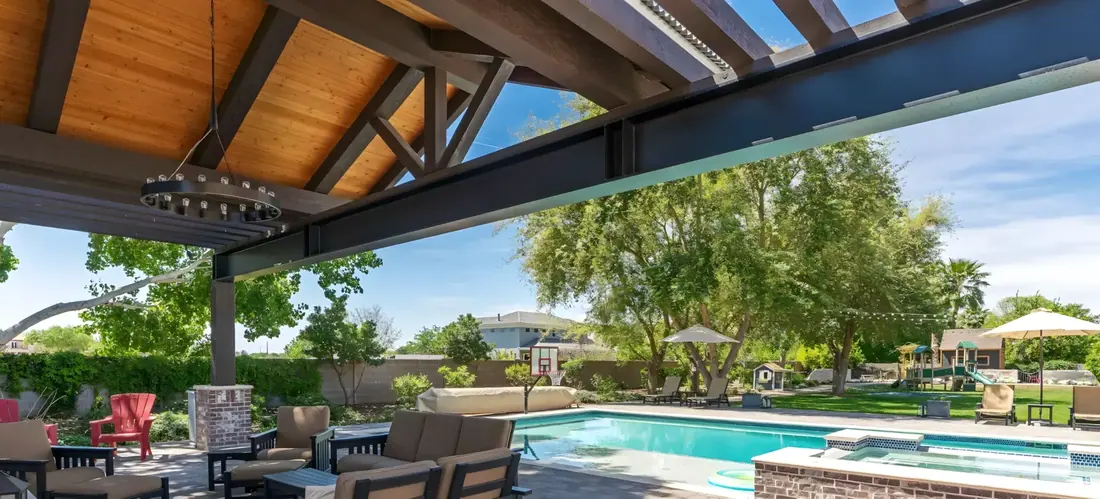
A patio cover is a roof on posts, and it needs the same attention as a house roof. To maintain a patio cover in Texas, rinse it, check it from the ground after every big storm, keep the drains clear, and call a pro before anyone climbs on it.

The short answer
- Maintain a patio cover in three rhythms: a regular rinse, a check after storms and a closer look each season.
- Look from the ground after a storm for sagging, gaps at the wall, dents and drains that no longer work.
- Clean with a hose, mild soap and a soft brush, and skip the pressure washer.
- A gap at the wall can be seasonal movement on clay, but one that keeps growing needs a call.
- Leave roof work, structural repairs and wiring to a professional, and never climb on the roof to look.
Most patio cover trouble starts small. A loose fastener, a drain full of leaves, a stain on the wall near the joint. In Texas, weather finds those small things quickly. This post is built around the storms, because the storms are when a cover tells you what it needs.
How do you maintain a patio cover?
With three rhythms: a regular rinse, a quick check after every big storm, and a closer look once or twice a year. None of it is hard, and none of it needs a ladder. The table puts the jobs in order.
| When | What to do | Who |
|---|---|---|
| Every few weeks in pollen and leaf season | Rinse the roof edge and posts with a hose, and clear leaves from the gutters you can reach | You |
| After every hard storm | Walk around the cover and look for damage from the ground | You |
| Each spring | Look at the finish, the caulk lines and the joint where the cover meets the house | You, then a pro if you find something |
| Each fall | Trim back branches and clear the drains before leaf drop ends | You |
| After a hard freeze | Look for new stains, drips or loosened trim | You |
| Any time you see damage on the roof | Have it looked at before it spreads | A pro |
The Texas calendar sets the pace. Water that freezes in a seam can open it, so a quick check after a hard freeze, like the February 2021 winter storm or the December 2022 freeze, is worth the few minutes it takes. Summer heat is the other stress. A long hot stretch like 2023 makes metal and finishes expand and contract daily, which is why loose trim shows up in late summer.
What should you check after a Texas storm?
Walk the outside edge and look up from the ground. You are looking for anything that has moved, bent, stained or come loose. A cover that looks the same as before the storm is usually fine, and anything that looks different is worth a photo.
- A beam or the roof edge that sags or no longer looks straight.
- A gap at the wall where the cover meets the house, or a fresh water stain on the wall near it.
- Dents, bent panels or panels that lift at the edge.
- A gutter that has pulled away, or a downspout that no longer drains.
- A post that leans, or a crack in the slab near its base.
Take the gap at the wall seriously. Much of Dallas and Plano sits on Blackland Prairie clay that swells in wet months and shrinks in a dry August, so a post or the house can shift by a small amount through the year. A gap that opens in late summer and closes in spring may be normal movement. A gap that keeps growing is not, and it deserves a photo with the date and a call.
For storm timing, the National Weather Service office in Fort Worth posts forecasts and alerts, and Ready.gov’s severe weather page covers preparing your home. Do not climb on the roof to look. Roof panels can be slick, and a fall costs more than any repair.
How should you clean a patio cover?
Gently. Use a hose, mild soap and a soft brush or cloth, and work from the top down. Check the maker’s care instructions for your finish, since wood, painted metal and insulated panels each have their own rules. Rinse well, and let the cover dry in shade if you can.
- Do not use a pressure washer. It can force water behind flashing and strip a finish.
- Do not use harsh chemicals or abrasive pads, which can dull or scratch the surface.
- Do not scrub while the metal is hot from the sun, since soap dries before you rinse it.
- On wood, follow the sealing or staining schedule the maker gives.

What records should you keep about your cover?
Keep a simple file. A few dated photos and the paperwork from the build are the most useful things to have when something goes wrong. They help a contractor see what changed, and they help you remember what you did.
- Photos of the whole cover each spring, taken from the same spots.
- A photo of any stain, gap or dent the day you find it.
- The care instructions and warranty papers for the roof and the finish.
- The name of whoever built it and a note of what the permit paperwork says.
Read the warranty before you need it. Warranties often ask for certain upkeep, and some exclude damage from a storm or from cleaning with the wrong tools. Knowing the terms before a storm is far better than learning them after one.
Which maintenance jobs should you leave to a pro?
Anything on the roof, anything structural and anything electrical. Those jobs carry a fall risk or a safety risk, and a bad repair can hide a leak. A pro can also tell the difference between a cosmetic mark and a sign that the structure has moved.
- Re-sealing or replacing flashing at the house wall.
- Replacing damaged roof panels or sections.
- Straightening or reinforcing posts and beams.
- Any fan, light or outlet wiring problem.
When is maintenance no longer enough?
When the same problem returns after you fix it, or when the damage is structural. A sagging beam, a leaning post or a leak that keeps coming back is not a cleaning problem. Our posts on repair or replace signs and on a seasonal checklist go further.
Our patio covers page explains how we build them, and you can book a free in-home estimate if you want a second opinion on a cover you already have.
Questions we get asked about this
Rinse the edges and posts every few weeks during pollen and leaf season, and give it a gentler wash with mild soap once or twice a year. Use a soft brush and a hose, avoid a pressure washer and follow the maker’s instructions for your finish.
Walk around the cover and look from the ground for dents, bent panels, lifted edges and gutters pulled loose. Check the wall near the joint for new water stains. Photograph anything you find with the date, and do not climb on the roof to look.
It is better not to. A pressure washer can force water behind flashing and damage the finish. A hose, mild soap and a soft brush clean most covers and are gentler on the surface and the seams.
Look for a sagging beam, a leaning post, a gap at the wall that keeps growing or a leak that returns after you fix it. Those point to a structural problem. A professional can inspect it in person and tell you whether repair is enough.
Yes, and that includes a cover you already own. American Eagle Builders offers free in-home estimates, so we can look at your cover and tell you whether it needs a simple repair or something larger.