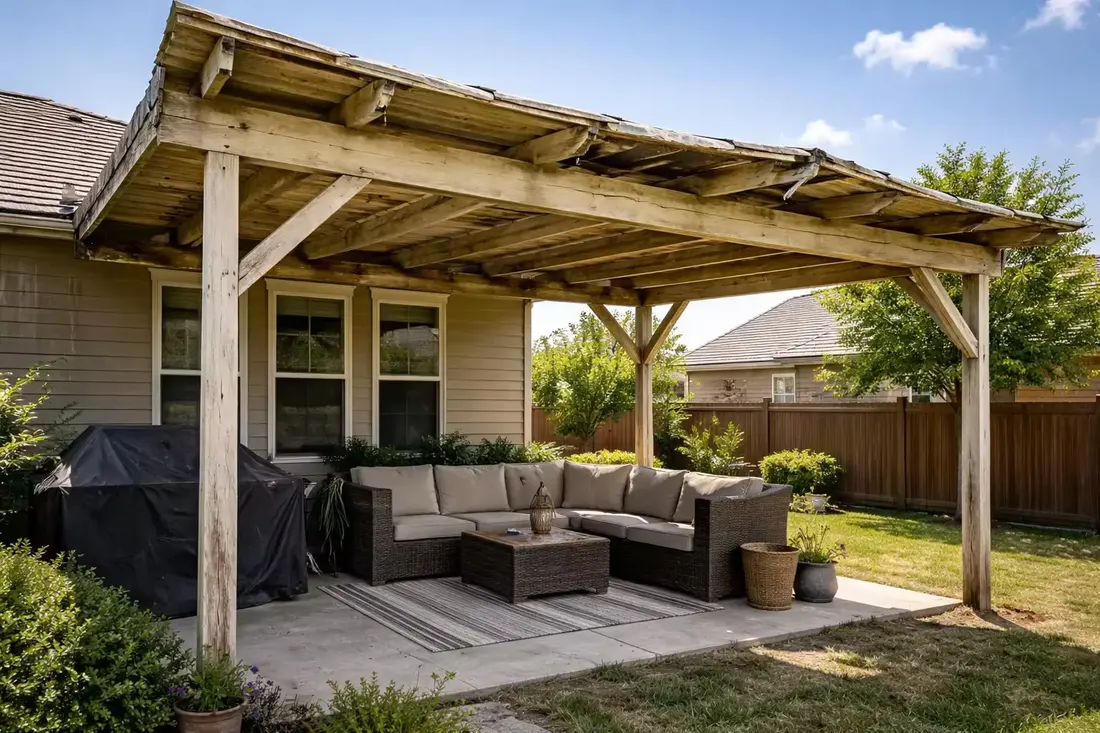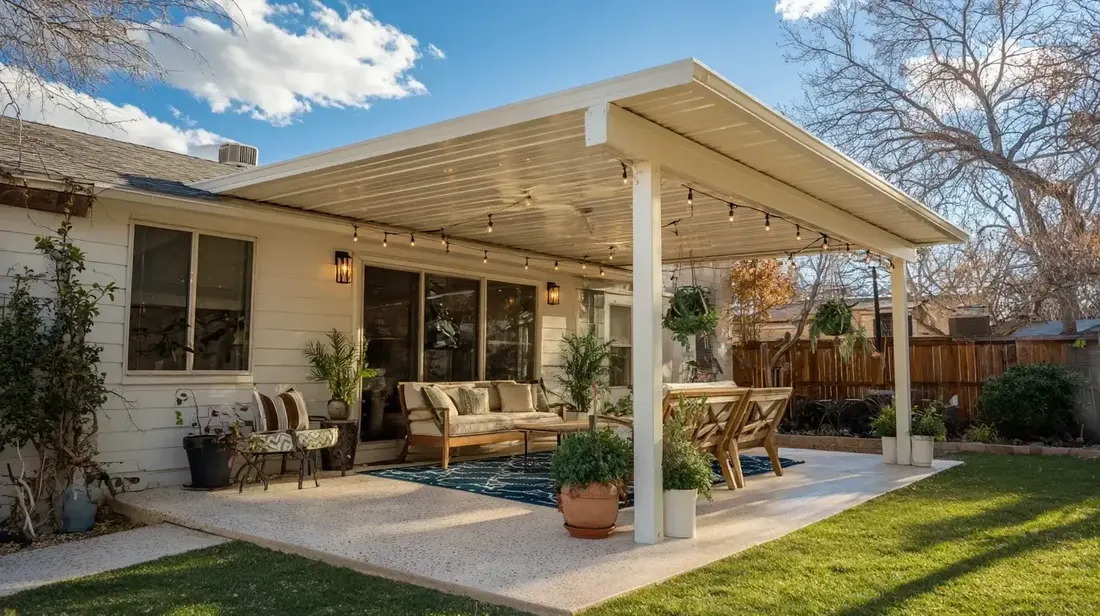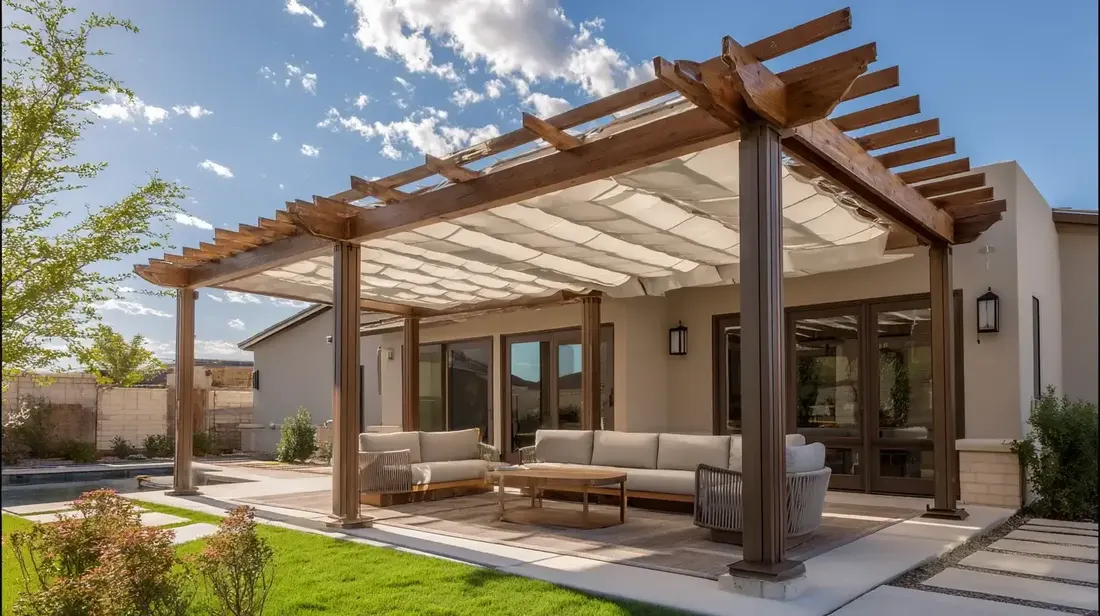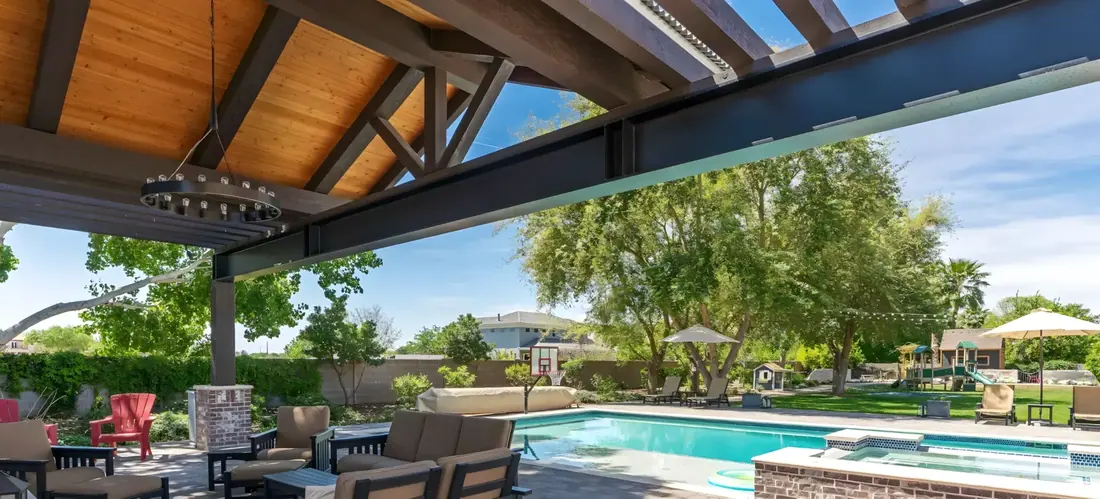
A pergola lifespan depends on three things: how water leaves the structure, how well the fasteners and footings hold, and how the finish is kept up. A patio cover is a roof on posts over a patio, and a pergola is the open-roofed version of it.
The short answer
- No honest contractor can give a lifespan in years without seeing the structure.
- Standing water, loose fasteners, a failing finish and moving footings wear out most structures.
- Check the structure each season and after every major storm, and take photos to compare.
- A leaning post or a new crack beside a footing is a job for an installer.
- Wash with a hose, a soft brush and mild soap rather than a pressure washer.
- Repair one part, refinish a failing finish, and replace what is structurally failing.
Nobody can honestly give you a lifespan in years without seeing the structure. The number depends on the material, the finish, how well it was installed and how it has been looked after. What you can do is learn what wears these structures out and slow each of those down.
What shortens the life of a patio cover or pergola?
Water that sits, fasteners that loosen or rust, a finish that is allowed to fail, footings that move and pests in wood. Wind adds sudden damage on top. Most of these start small and are cheap to fix early, so the habit of looking is worth more than any one product.
| What wears it out | How it shows up | What to do |
|---|---|---|
| Standing water | Dark stains, soft wood at joints, rust at fasteners | Clear debris and make sure water drains away from the posts |
| Loose fasteners | A wobble, a rattle, gaps at joints | Tighten them and replace any that are rusted |
| A failing finish | Chalky paint, grayed bare wood, chipped powder coat | Touch up or refinish before the base material shows |
| Moving footings | Posts out of plumb, cracks in the slab near a post | Have an installer look at it, and do not ignore it |
| Wood pests | Fine dust, small round holes in beams | Inspect, treat, and replace damaged members |
| Wind | A bent or loose member after a storm | Check after every major storm |
Our post on when to repair or replace a patio cover goes deeper into the warning signs. Use the table as a first look, and get an installer to confirm anything that involves posts or the roof connection.
How does North Texas ground affect a structure’s life?
Clay soil swells when wet and shrinks when dry, and that movement tugs at footings and slabs. If a post leans after a dry August, or a crack opens beside a post base, the ground is the likely cause. It is a reason to call an installer, not to patch the crack and move on.
The same yard can behave differently from one block to the next. Much of Dallas, Plano and Frisco sits on clay that moves with the seasons. Fort Worth has thin soil over limestone, which moves less but is hard to dig. Where the ground moves, a structure that was square at the start can drift, so a yearly look at the posts is a cheap habit.
What tends to fail first on each material?
Each material has a weak point, and knowing it tells you where to look. Wood fails at joints and end grain where water gets in. Metal fails where a coating is broken. Both fail where a bracket or bolt was set badly. The list below shows the usual first signs.
- Wood: splits near the ends of beams, soft spots at the post base and darkened joints.
- Aluminum: chipped or faded coating, loose joints and corrosion at the cut ends.
- Steel: rust that starts at a chip or a weld and spreads under the paint.
- Fabric or panels: tears, sagging and fasteners that pull out of the frame.
What should you check each season?
Walk the structure four times a year with a ladder, a screwdriver and a phone camera. Photos let you compare from one season to the next. The weather in North Texas swings from freezes to heat to hail, so each season brings a different job.
- Spring, before storm season: tighten fasteners, check the roof connection to the house, clear debris and look for winter damage.
- Summer: wash the surfaces gently, check the finish for fading or chips and look for gaps where wood has dried and split.
- Fall: clear leaves from the roof, the gutters and the base of each post, and look for pest signs.
- Winter: after a hard freeze like the one in December 2022, look for cracked caulk, split wood and loose fittings.
Wash with a hose, a soft brush and mild soap. A pressure washer can strip a finish and push water into joints. After a severe storm, look the structure over before you use it. The National Weather Service office in Fort Worth issues local forecasts and warnings, and Ready.gov has general guidance for storm preparation. Our seasonal checklist for patio covers expands on each step.
Should you repair, refinish or replace?
Repair when the problem is one part and the frame is sound. Refinish when the finish is failing but the material under it is solid. Replace when the posts, the roof connection or the footings are failing. A good installer will tell you which, and will say so even when the answer is a small job.
- Repair: one loose bracket, one cracked board, one corroded fastener.
- Refinish: chalking paint, grayed wood or chipped powder coat on a sound frame.
- Replace: soft or rotted posts, a roof that has pulled away from the house, or footings that keep moving.
- Skip a cosmetic fix if the structure is out of plumb, because paint will not make it safe.
Wood and metal age differently, and so does each finish. Our post on keeping a pergola up in the Texas summer sun covers heat. For help with a particular structure, see our patio cover page and our pergola page.
When is it time to call an installer?
When anything structural looks off: a leaning post, a gap at the house connection, a crack near a footing or a roof that shifts in wind. American Eagle Builders is a family-owned remodeler in Arlington, serving Dallas–Fort Worth since 1984, and we offer free in-home estimates. We will tell you plainly whether it needs a repair, a refinish or a rebuild.
Questions we get asked about this
It depends on the material, the finish, the installation and the upkeep, so no one can give an honest number without seeing it. Water, loose fasteners, a failing finish and moving footings are the main causes of wear. A yearly look catches most of them early.
Four times a year works well, once each season, plus after any major storm. Look at fasteners, the finish, the posts and the connection to the house. Take photos so you can compare from one season to the next.
It is better not to. A pressure washer can strip a finish and force water into joints. Use a hose, a soft brush and mild soap, rinse well and let it dry. Wash gently on wood, which can be damaged by high pressure.
Have an installer look at it. A leaning post can point to moving footings or a failed connection, which paint or a brace will not fix. If the ground is moving or the post is damaged, replacement of that part may be the right answer.
American Eagle Builders installs patio covers and pergolas across Dallas–Fort Worth, and we are happy to look at one that is already standing. We offer free in-home estimates and will tell you honestly whether it needs a repair, a refinish or replacing.