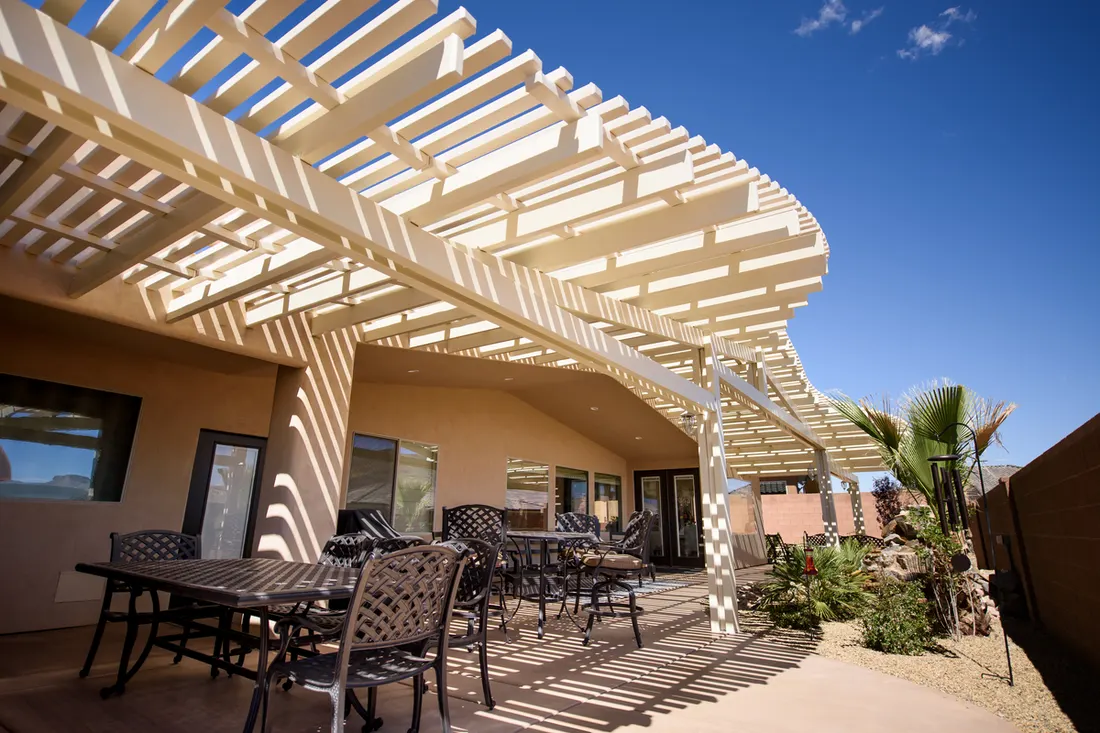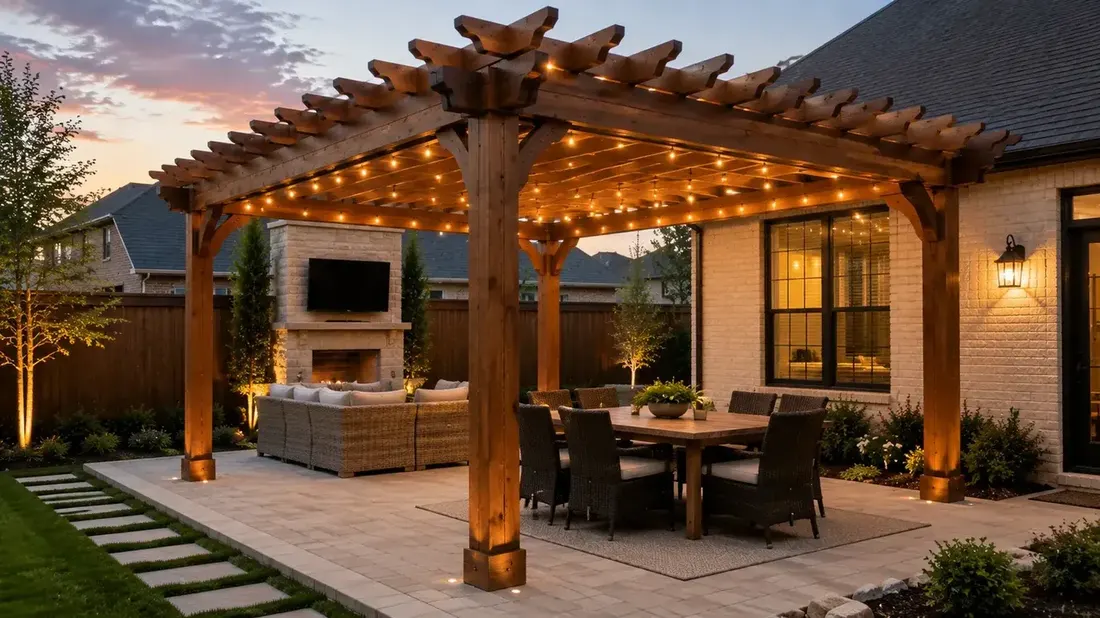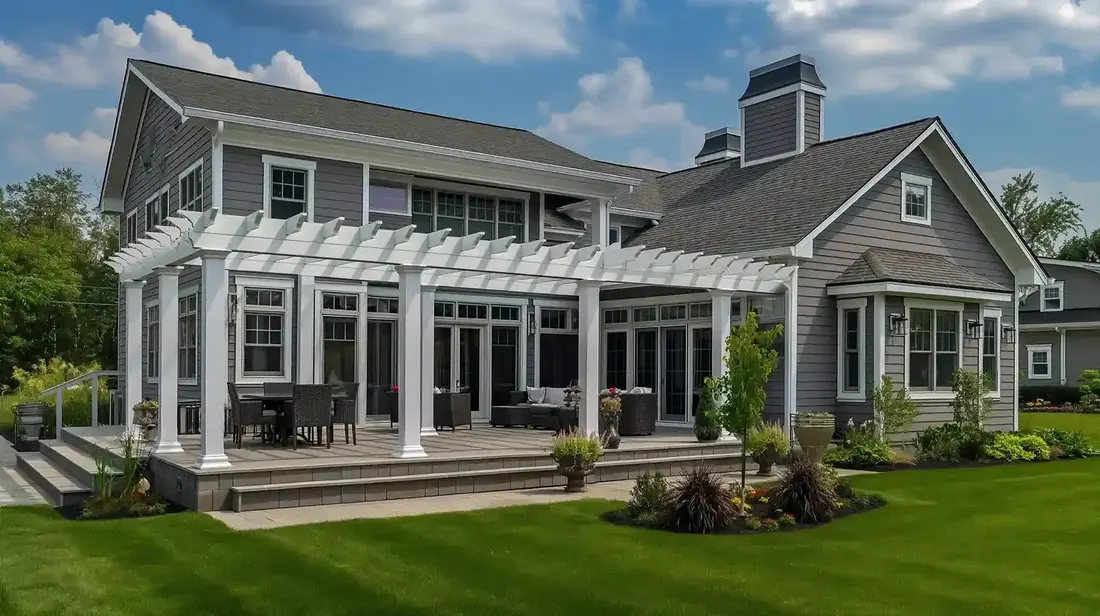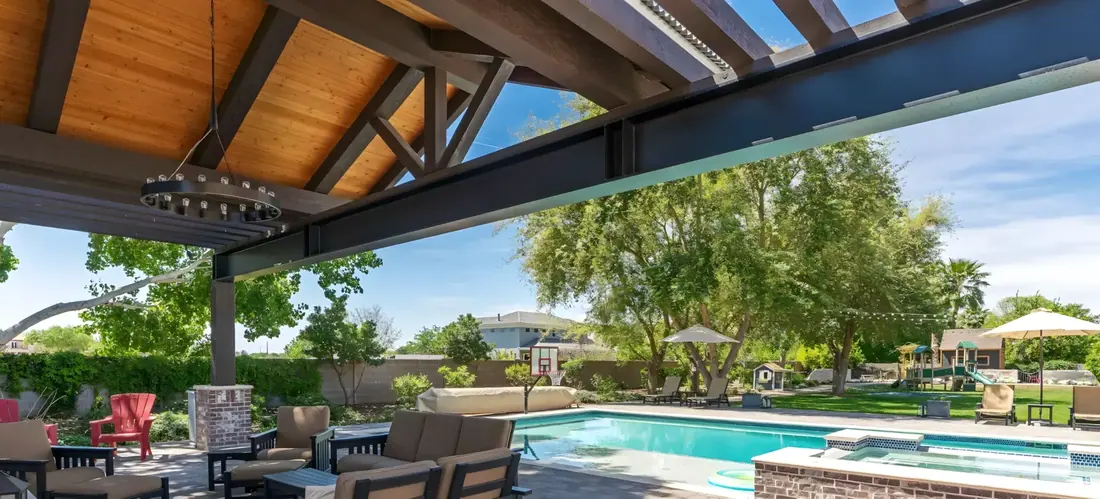
The difference in a pergola vs gazebo choice comes down to the roof and the footprint. A pergola is an open frame of posts and beams that shades a space without closing it in. A gazebo is a freestanding structure with a full roof, usually with open sides.
The short answer
- A pergola has an open roof, and a gazebo has a full roof, which is the main difference.
- A gazebo gives more shade and rain cover, while a pergola gives more light and airflow.
- A pergola usually joins the house or patio, and a gazebo usually stands alone.
- A patio cover gives gazebo-style full shade right at the back door.
- Freestanding structures face the most variation in city rules, so check with your city first.
- Decide where you want the shade before you pick the structure.
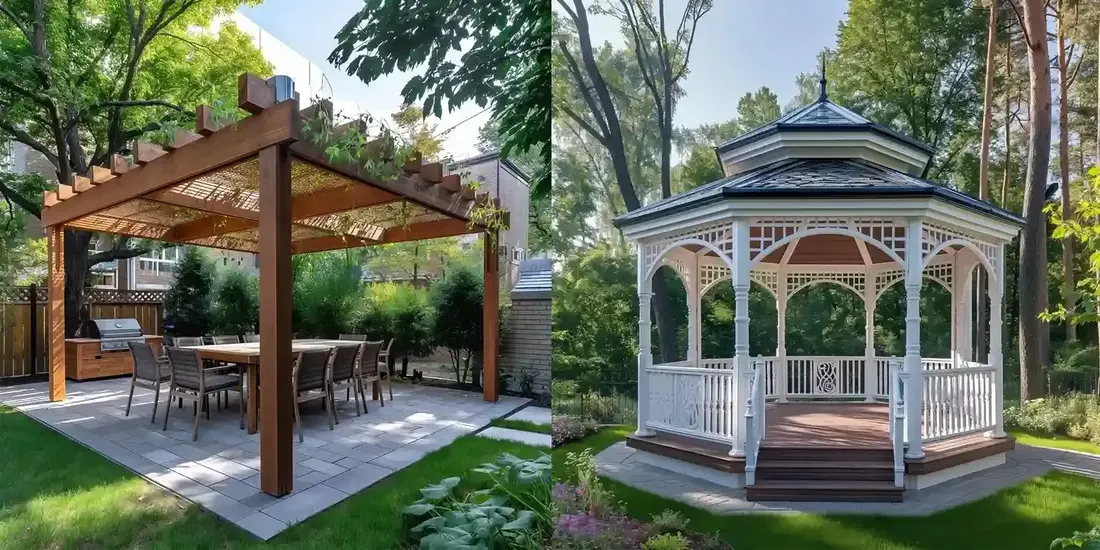
The two pictures above show the whole question. On the left is a pergola, a lattice of beams over a dining table. On the right is a gazebo, a small roofed building with railings and a peaked top. They both shade a yard, but they do it in different ways and suit different spots.
What is the difference between a pergola and a gazebo?
A pergola has an open roof of beams or slats, so sun and some rain pass through. A gazebo has a full roof, so it gives complete cover. A pergola often attaches to a house or patio. A gazebo usually stands alone as its own small destination in the yard.
| Feature | Pergola | Gazebo |
|---|---|---|
| Roof | Open beams or slats; louvers or panels can be added | Full solid roof, often peaked or domed |
| Sides | Open, with posts at the corners | Open, screened, or half-walled with railings |
| Where it sits | Against the house, over a patio, or free in the yard | Usually freestanding, away from the house |
| Shade | Partial, adjustable with louvers, fabric or vines | Full shade under the roof |
| Rain | Passes through unless the roof is louvered or paneled | Keeps rain off |
| Feel | Light, open, lets air and sky in | A defined room-like shelter |
| Best use | A dining or lounge zone beside the house | A garden retreat or a spot to gather apart from the house |
Neither one is better. They solve different problems. If the answer to “where do I want the shade?” is “right outside the back door,” a pergola or an attached cover is usually the fit. If the answer is “in the far corner of the lawn,” a gazebo starts to make sense.
Which gives better shade and rain cover?
A gazebo gives more of both, because the roof is solid. A pergola gives less, unless it has louvers that close or panels. In July and August the difference shows: an open frame lets through a lot of afternoon light. If rain cover matters, say so at the start, since it changes the whole design.
There is also a middle path. A patio cover is a solid roof attached to the house, so it gives the full shade of a gazebo right at the back door. Our post on pergola roof options shows how an open, louvered, retractable or solid roof changes what you get.
Where does each one sit in a North Texas yard?
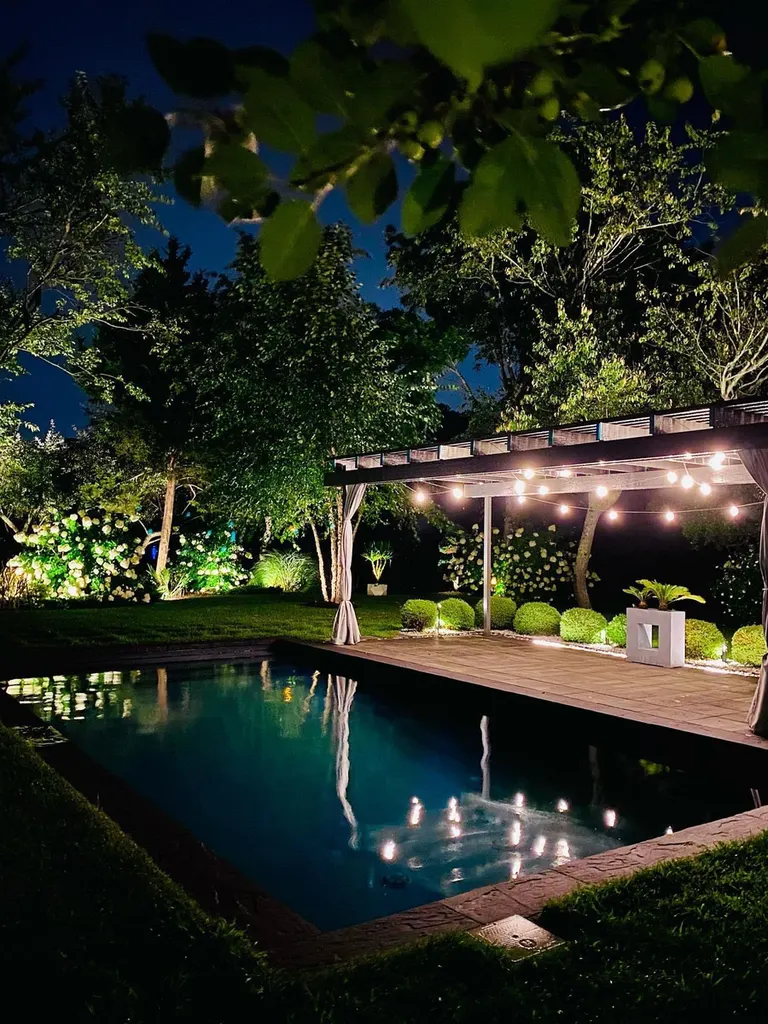
A pergola sits close to the action: over the patio, along the house or next to a pool you already own. A gazebo wants a clear patch of lawn, ideally with a path to it. Because a gazebo stands alone, it also has to stand up to wind by itself, with nothing nearby to lean on.
Freestanding structures are where city rules vary the most. Distances from the fence line, height limits and whether a permit is required can differ from one city to the next. Dallas and Plano each post their own residential permit information, and it is worth reading before you choose. Check with your city, not a neighbor.
Which should you choose for your yard?
Use a simple test. Decide first where you want the shade, then how much of it, then whether you want the structure to join the house. Your three answers usually point to one option. If they point two ways, pick the one that matches where you will really sit.
- Choose a pergola if you want light and airflow and a structure that ties into the house or patio.
- Choose a gazebo if you want a roofed spot of its own, away from the house.
- Choose a patio cover if you want a full roof at the back door and a dry place for furniture.
- Skip a pergola if rain protection is the main goal, unless the roof has louvers or panels.
We should be plain about what we do. American Eagle Builders is a family-owned remodeler in Arlington, serving Dallas–Fort Worth since 1984, and our outdoor work is pergolas and patio covers. For an attached full roof, see our patio cover page. For an open or louvered frame, see our pergola page.
When is a gazebo the wrong choice?
When it sits too far from the house to be used. A gazebo at the back of the lot is a long walk with a tray of food, and a dark, still evening in July is not the time to find that out. It is also a poor fit on a small lot, where it would eat the lawn and leave nowhere for children or a dog to play.
A pergola has its own wrong turns. A kit with thin posts will wobble in a gust, and a dark wood frame on a west wall will dry and crack without regular finishing. Whichever you pick, buy for the yard you have and the upkeep you will do, not for a picture.
What should you check about size and wind?
Measure the space for the furniture first, then add room to move around it. Our post on choosing the right pergola size walks through the clearances. Then ask how the posts are anchored, because a roof that catches wind pulls on its footings, and the ground in your part of the metroplex affects how they are set.
Free in-home estimates let us look at that ground and the sun in person. Book one on our estimate page and we will tell you which structure suits the spot.
Questions we get asked about this
The roof. A pergola has an open roof of beams or slats that lets sun and some rain through. A gazebo has a full roof that gives complete cover. A pergola often attaches to a house or patio, while a gazebo usually stands alone in the yard.
Yes, because the roof is solid. A pergola gives partial shade that can be increased with louvers, fabric or climbing plants. If you want full shade at the back door, a patio cover is another option that attaches to the house.
Usually a pergola. It can attach to the house or sit over a patio, so it takes less open lawn. A gazebo needs its own clear area and a path to it. Measure first and leave room to walk around the structure.
It depends on your city, the size and whether the structure is attached or freestanding. Rules on setbacks and height differ across the metroplex. Check your city’s permit office before you build, and read the information it posts online.
Our outdoor work is pergolas and patio covers. American Eagle Builders is a family-owned remodeler in Arlington serving Dallas–Fort Worth since 1984. If a full roof at the house is what you want, a patio cover often does the job. We offer free in-home estimates.