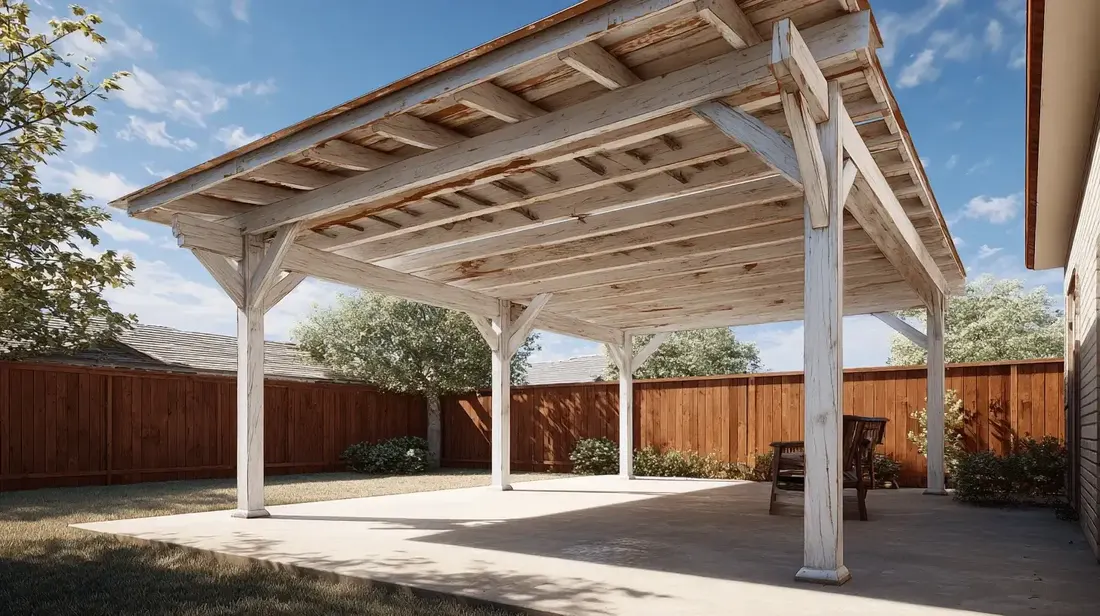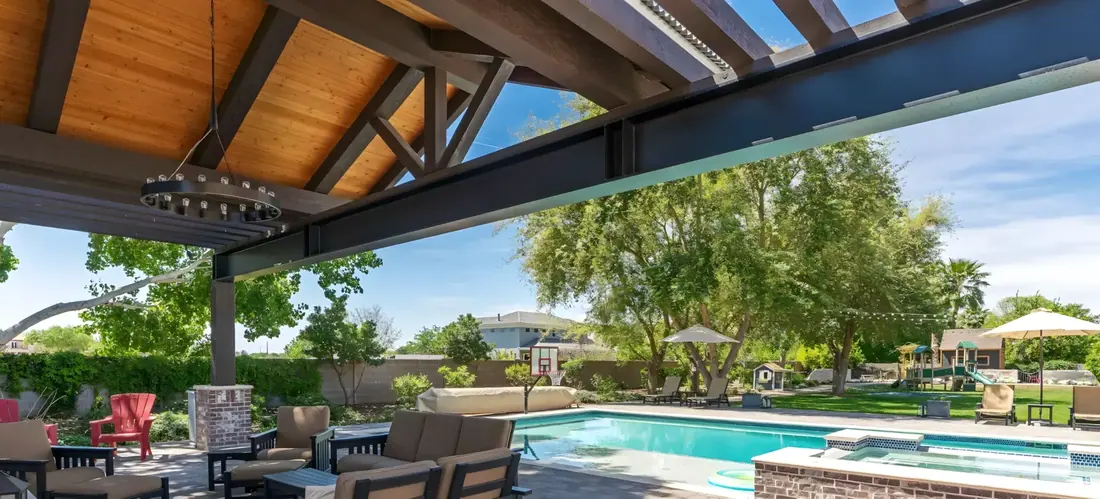
Patio cover maintenance is the short set of checks and cleaning jobs that keep a cover sound: fasteners, finish, gutters, posts and anything wired to it. In Dallas–Fort Worth the weather changes fast, so tie each check to a season and to storms. This checklist does that and tells you where to stop.
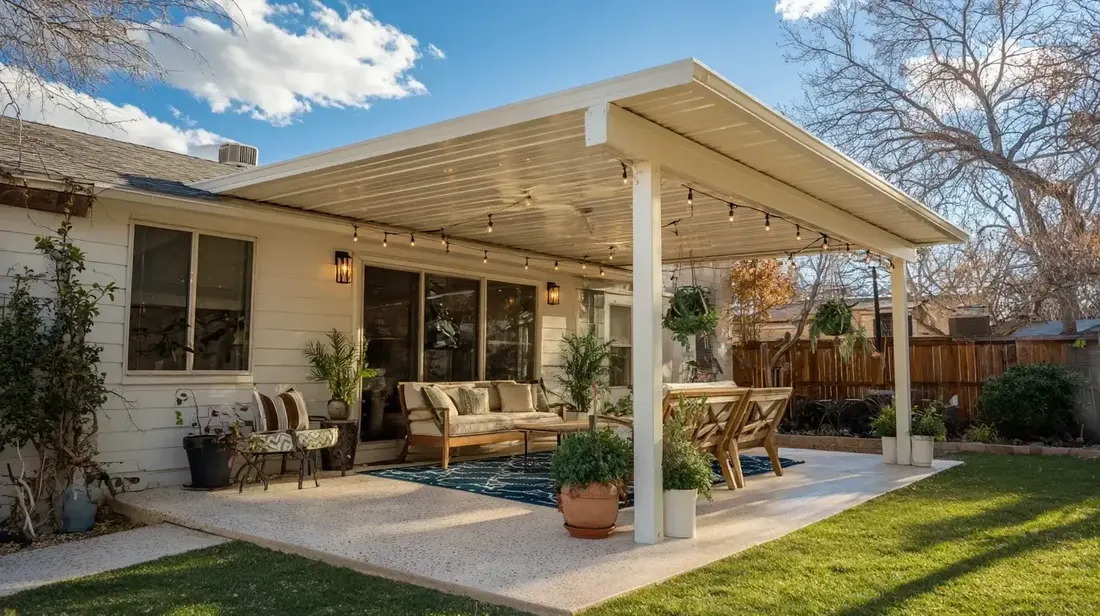
The short answer
- Tie each patio cover check to a season so the work stays small and regular.
- Wash with a soft brush and mild soap, and avoid a high-pressure jet near seams.
- Check the cover from the ground after every storm and look closely at each post base.
- Clear gutters and make sure downspouts end well away from the posts and the foundation.
- Call a pro for sagging beams, leaning posts, spreading mold or any damaged wiring.
A patio cover looks like it needs nothing, and that is why it gets ignored. Then a bolt backs out, a gutter fills, or a post base starts to stain, and a ten-minute check turns into a repair. Most of the useful work is looking. The checklist below spreads it out so no single weekend feels like a chore.
What should a patio cover checklist include each season?
Each season has its own job. Spring is for washing and tightening. Summer is for the finish and the fixtures. Fall is for gutters and leaves. Winter is for freeze prep and a check after ice. The table lists the tasks in order, and each one takes less time than it sounds.
| Season | What to do | Why then |
|---|---|---|
| Spring | Wash off pollen, check screws and brackets, clear gutters and downspouts | Winter and spring storms loosen things and fill gutters |
| Summer | Look over the finish for fading or chips, check fan and light fixtures, trim branches | Sun and heat do most of the finish damage |
| Fall | Clear leaves from the roof and gutters, check seams and caulk | Leaves hold water against the roof and trim |
| Winter | Empty anything that holds water, check fans and lights, look over the cover after ice | A hard freeze finds every weak spot |
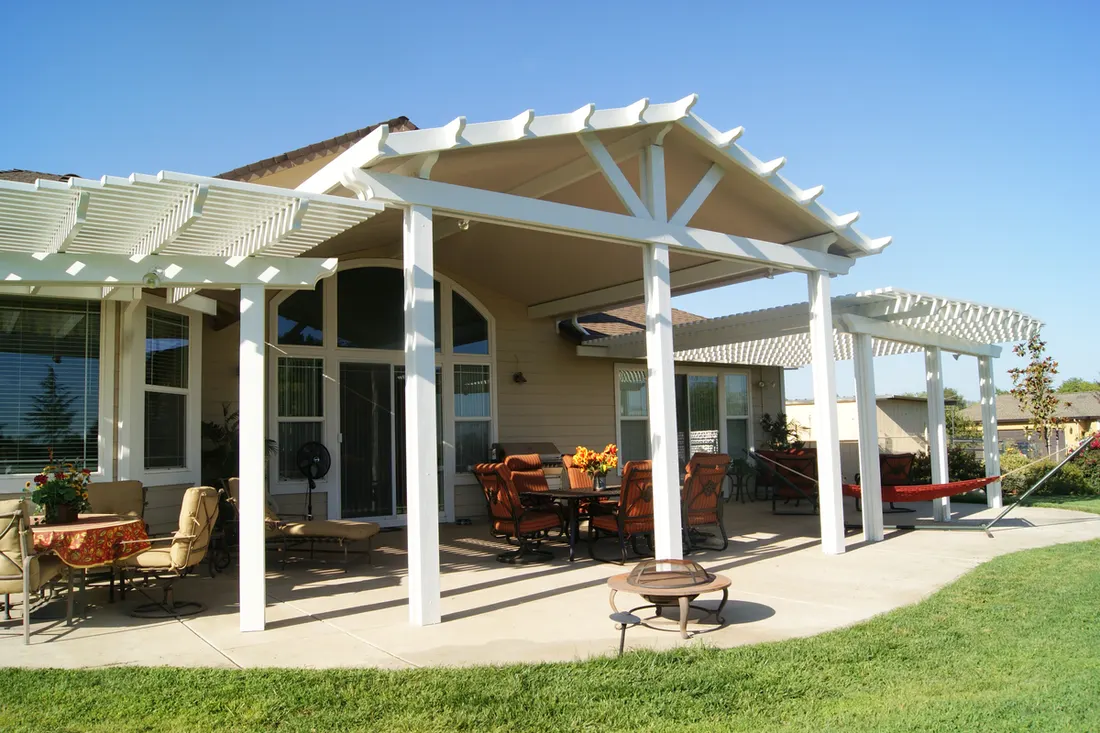
Spring: wash and tighten
Use a soft brush, mild soap and a hose. Skip a high-pressure washer, which can force water into seams and strip the finish. While you are up on a ladder, check that screws and brackets are tight, and note any that look rusty. Never climb onto the roof itself unless you know it is built to carry you.
Summer: finish, fixtures and trees
Look for faded or chalky finish, chips that show bare metal, and wood that has started to gray. Check that any fans and lights are still tight and that wiring has not been chewed or frayed. If trees are close, trim branches that scrape the roof in the wind. Colleyville and Garland yards have mature canopy, so leaves and limbs matter there.
What should you check after a storm?
Walk around the cover and look from the ground. Check for loose or bent panels, shifted gutters, cracked caulk and anything that moved. Look at each post base. If the cover tilts, creaks or rattles, call someone before the next storm, and do not hang anything from it until it has been looked at.
The February 2021 winter storm and the December 2022 freeze showed how much ice and cold can do to outdoor structures, and spring thunderstorms test them every year. The National Weather Service Fort Worth office posts forecasts and warnings, so you can plan a check around them.
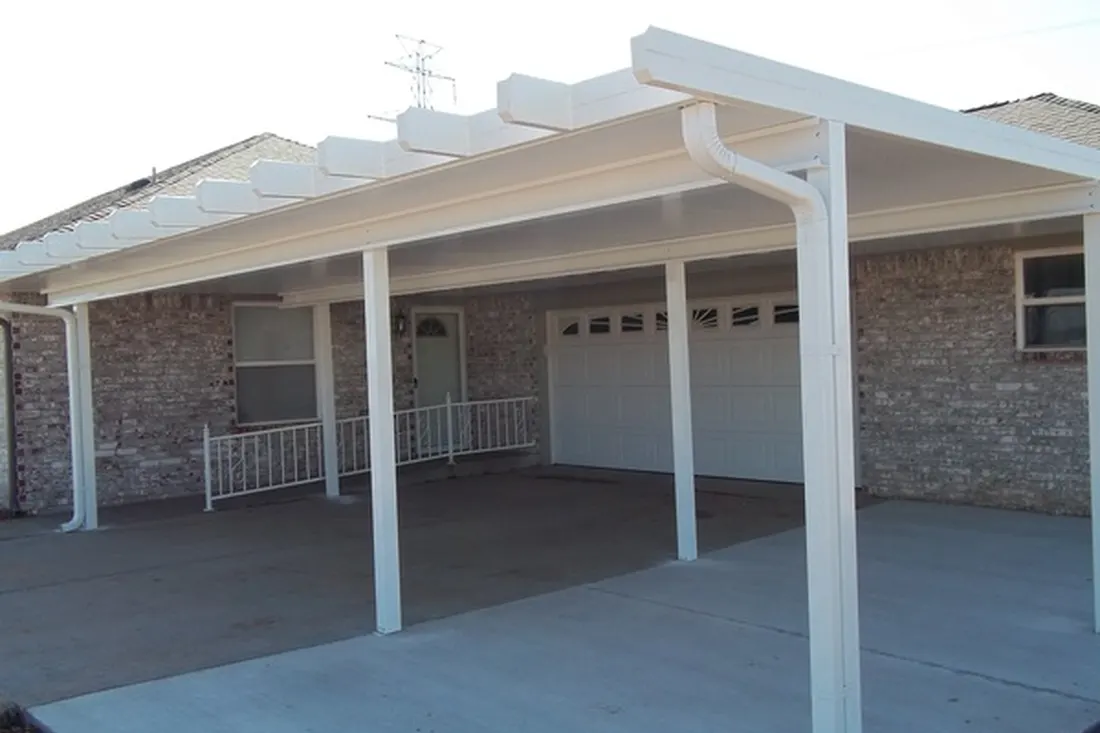
Why do gutters and downspouts matter so much?
Because water is the thing that hurts a cover most. A blocked gutter makes water spill over the edge, pool on the slab and splash up on the posts. Where the downspout empties also matters. If it runs toward the house, it can soften the ground beside the footing. Make sure it ends well away from both the posts and the foundation.
Clay soil around Dallas and Plano moves with the seasons, so a post can shift slightly over the years. When you check, look for a gap opening between the post base and the slab, or a post that no longer looks plumb. A small gap you catch early is a quick fix. A big one often means something has settled.
What do you need to run the checks yourself?
Very little. A stepladder you trust, a soft brush, mild soap, a hose, a screwdriver or driver that fits your fasteners, and a phone for photos. The camera is the most useful tool, since a dated picture shows change over time better than memory does.
- Soft brush and mild soap for the roof and frame.
- Gloves and eye protection when you clear gutters.
- A flashlight for looking into corners and under beams.
- Touch-up paint that matches the finish, for small chips.
When does a simple check turn into a call to a pro?
When you see something structural, wet or electrical. A sagging beam, a post that leans, spreading mold or a fixture that sparks is no longer a weekend job. Take a photo, stay out from under it, and call. Do not paint over rust, caulk over mold or stand on a wet roof to fix a leak.
- Beams that sag, posts that lean or gaps that widen at the footing.
- Roof panels that lift, rattle or let water through.
- Rust that has eaten through metal rather than staining it.
- Mold that returns after cleaning. The EPA’s mold page explains how to deal with small areas.
- Any wiring that looks burnt, loose or wet.
Our post on signs a patio cover needs reinforcement goes deeper on what leaning posts and sagging beams mean. For more on weather wear, see how to maintain a patio cover in Texas weather.
How can you make the checklist a habit?
Put it on your calendar when you change your smoke alarm batteries or turn the clocks. Four short checks a year beats one long one. Keep a note on your phone with dates, photos of anything odd and the name of whoever built the cover, so you know who to call.
American Eagle Builders is a family-owned remodeler in Arlington, and Dallas–Fort Worth has been our work area since 1984. If a check turns up something you cannot explain, you can ask for a free in-home estimate and we will look at it. You can also read more about our patio covers.
Questions we get asked about this
Four times a year is a good habit: spring for washing and tightening, summer for finish and fixtures, fall for gutters and leaves, and winter for freeze prep. Check again after any big storm. Each pass can be short if you do it regularly.
It is better not to. A strong jet can force water into seams, strip the finish and loosen caulk. Use a soft brush, mild soap and a hose. If you must use a pressure washer, use a wide, low-pressure setting and keep it well back from seams.
Walk around and look from the ground. Check for bent or loose panels, shifted gutters, cracked caulk and anything that moved. Look at each post base. If the cover tilts, creaks or rattles, stay out from under it and have it inspected.
A little. Empty anything that holds water before a hard freeze, check fans and lights, and look over the cover after ice. The February 2021 storm and the December 2022 freeze showed how rough cold can be on outdoor structures.
Yes. American Eagle Builders is a family-owned exterior remodeler from Arlington that serves 90 cities across DFW. We offer free in-home estimates. If your checklist turns up something that worries you, we can look at the cover and tell you what we see.