Patio cover reinforcement is the work of strengthening a cover’s posts, beams, footings or connections so it can carry its own weight and the wind. You can spot many warning signs from the ground. This walk-around shows five places to look, in order, and what each sign tells you.
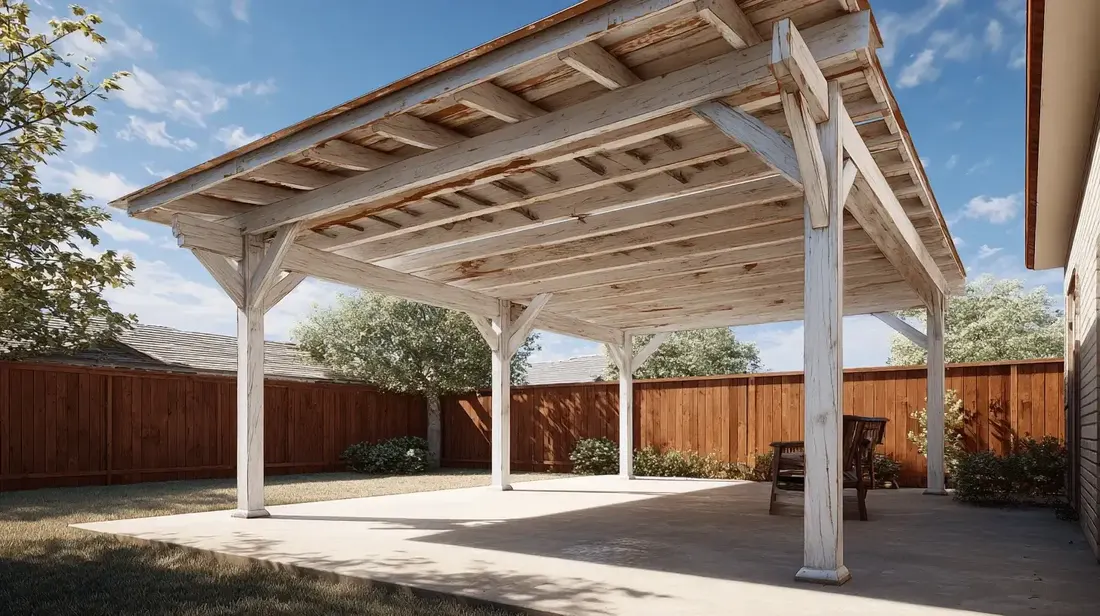
The short answer
- Walk your patio cover once a year in five stops, from post bases up to the house connection.
- Leaning posts and cracked footings usually mean the ground has moved or the footing was too small.
- A sagging beam or a roof that holds puddles is carrying more strain than it should.
- Ask what a cover was designed to carry before you hang fans, planters or a TV from it.
- Do not brace a cover yourself, and stay out from under it if you think it is moving.
A patio cover is a roof, and roofs are heavy. In North Texas they also have to stand up to straight-line wind, hail and the odd ice storm. Most covers give plenty of warning before something fails. The trick is knowing what to look at, and walking the structure once a year with that list in your head.
What does patio cover reinforcement actually involve?
It means adding or replacing the parts that carry load: larger footings, better post bases, bracing, new beams or stronger connections to the house. It does not mean bolting a board across a weak spot. A builder looks at how the weight travels from the roof, through the beams and posts, to the ground, and fixes the weak link.
What can you check from the ground?
Quite a lot. Walk the cover in five stops, starting at the bottom: the post bases, the posts, the beams, the roof panels and the connection to the house. Take photos and write down what you see. A sign that is small today is easy to compare with next year’s photo.
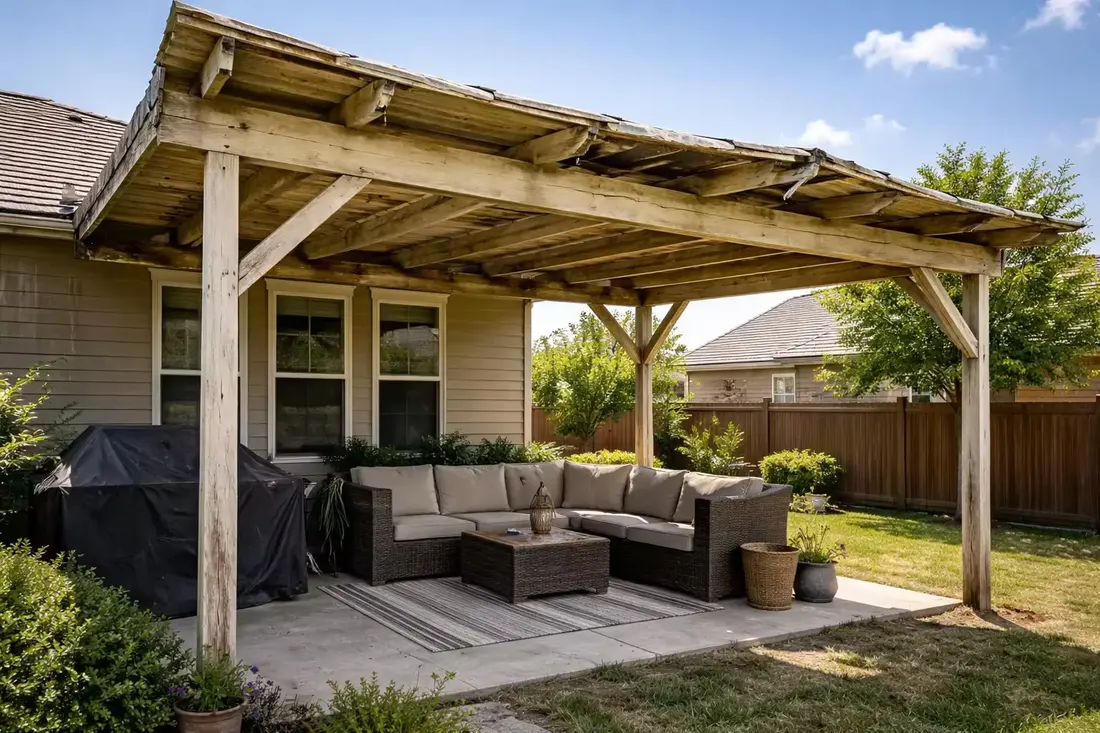
- Post bases: look for gaps, cracks around the footing, rust or rot at the bottom of each post.
- Posts: sight along each post from two directions. It should stand straight, not lean or bow.
- Beams: look along the length from the end. A beam that dips in the middle is sagging.
- Roof panels: look for waves, lifted edges, loose screws or stains that show where water gets in.
- House connection: check where the cover meets the wall for gaps, cracked caulk or pulled fasteners.
Posts and footings
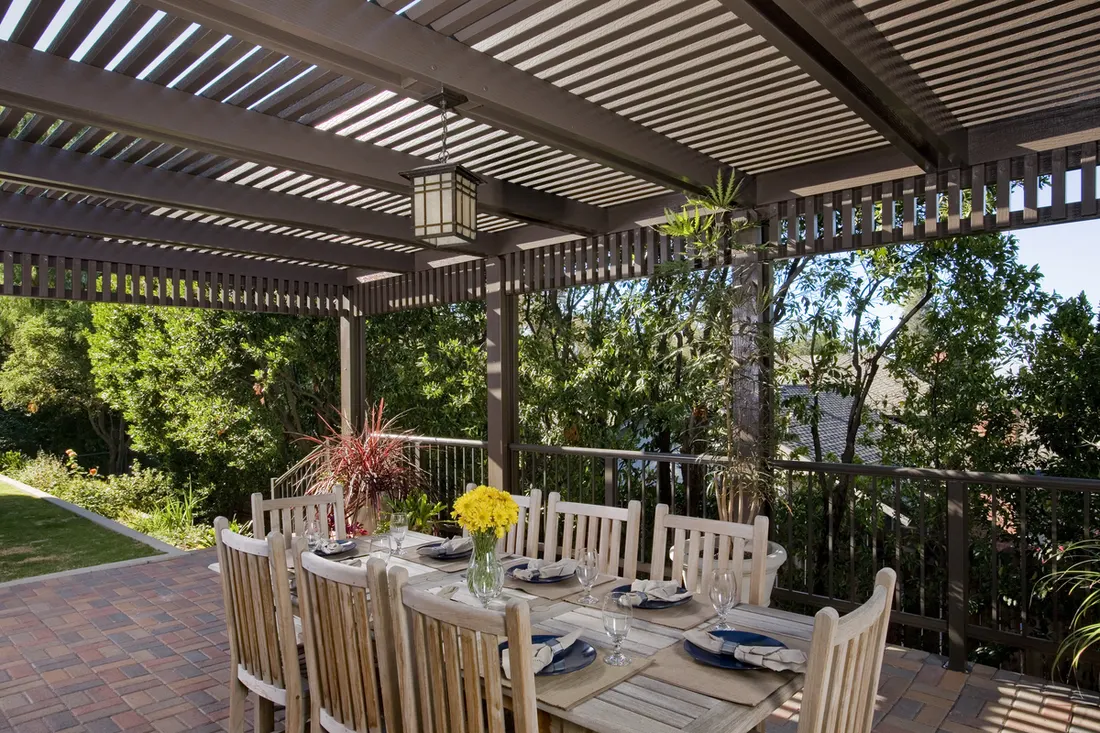
Posts tell the most. A post that leans, or a footing that has cracked or lifted, says the ground has moved or the footing was too small. Around Dallas and Plano the top layer of clay swells and shrinks, and after a dry summer like 2023 gaps can open around a slab. Near Fort Worth, rock under thin soil can leave anchors poorly seated.
Beams and panels
A beam that dips, a roof that holds puddles after rain or a panel that rattles in wind all point to a frame that is under strain. Water that pools adds weight and finds its way into joints. If you see staining on a ceiling or a beam, water is getting through somewhere and needs tracing.
Why does the connection to the house matter?
Most attached covers hang part of their weight on the house wall. If that connection loosens, the whole roof can twist or pull away in wind. Gaps, cracks in the caulk or stains along the wall are early clues. Our post on attached and freestanding covers explains how the two designs carry load differently.
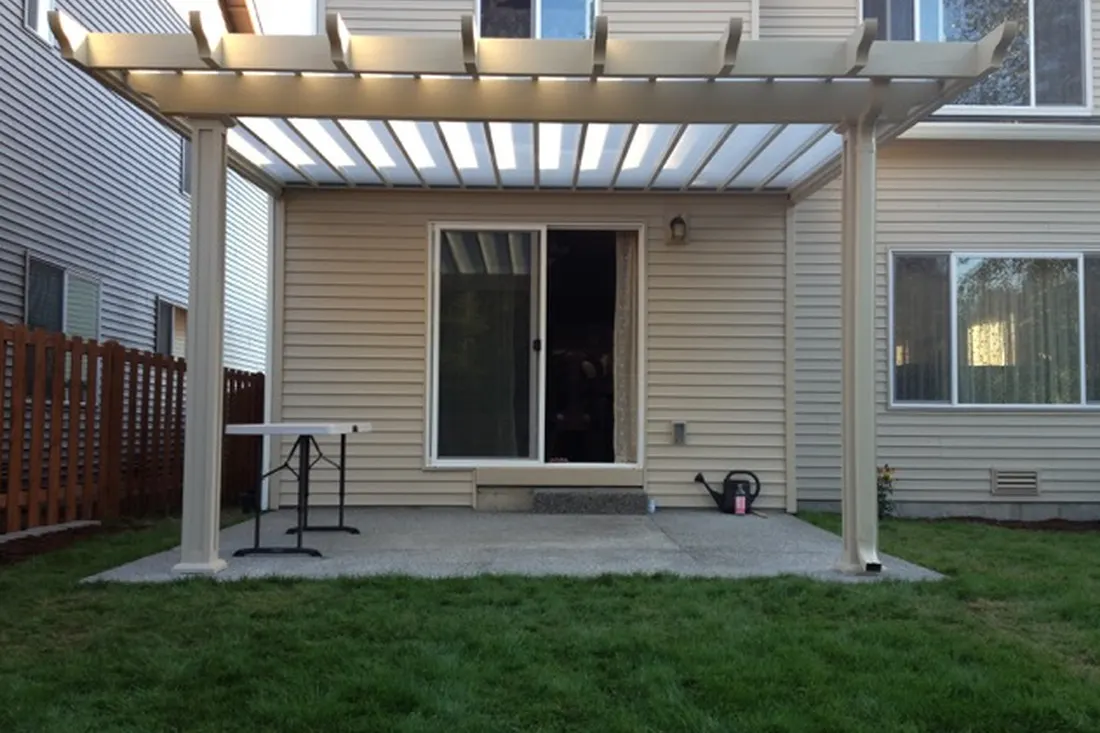
Never pull on the connection to test it, and do not stand under a cover you think is moving. Take a photo, then ask a professional to look. An attached cover also ties into your roof or wall, so repairs there can affect your house as well as the cover.
What is usually not a warning sign
Not every mark means trouble. A hairline crack in paint, a faint tick as metal warms in the sun, and surface graying on wood are normal wear. Look for change instead. A crack that widens, a post that was straight last year and leans now, or a gap that grows after each storm is the kind of change that matters.
When do added loads call for reinforcement?
Whenever you hang something heavy. Ceiling fans, speakers, large planters, a TV or a hammock all add load, and some pull sideways rather than down. A frame that was built for shade may not be built for that. Ask before you add anything heavier than a light fixture, and ask whoever built the cover what it was designed to carry.
- Ceiling fans need a box and framing rated to hold their weight.
- Hanging planters and swings load a single beam, not the whole roof.
- A TV or speaker on a post can add vibration as well as weight.
- Heavy snow or ice, as in February 2021, adds load a summer cover may not expect.
Can you brace a cover yourself?
You can tighten a loose screw or touch up a chip, but bracing a cover with a few boards and calling it fixed is a mistake. A brace in the wrong place can push load somewhere the frame cannot take it. Keep the job small, keep off the roof and leave structural changes to someone who can calculate what the frame carries.
Stay clear of the cover during severe weather. The National Weather Service Fort Worth office posts warnings, and the Ready.gov severe weather page covers basic safety. If you suspect damage after a storm, read our post on repairing or replacing a patio cover.
What happens when a builder inspects the cover?
They look at the same five places, then at how the cover is anchored, what it is made of and how it was designed to handle wind. They may measure for plumb and sag and look at the footings. Then they tell you whether the cover can be strengthened or whether replacing it makes more sense.
American Eagle Builders is an Arlington family company with roots in Dallas–Fort Worth that go back to 1984. At a free in-home estimate we can look at your cover’s frame and tell you what we see. You can also read about how we build patio covers.
Questions we get asked about this
Leaning posts, beams that dip, cracked or lifted footings, loose or rusted hardware, roofs that hold water and gaps where the cover meets the house are the main signs. Any one of them is worth a closer look, and several together mean you should have it inspected.
Sometimes. If the beam is sound and has bowed because of a missing support, adding a post or bracket may help. If the beam is cracked, rotted or overloaded, it usually needs replacing. A professional should decide, since a wrong fix moves the problem somewhere else.
Only if the framing and the box are rated to hold the fan’s weight and movement. Many covers can carry a fan if it is planned in advance. Ask the builder what the cover was designed for, and have fan support added before you hang one.
Loose fasteners, a weak connection to the house, small footings or a frame that is too light for its size can all cause it. A little movement may be normal, but a cover that creaks, lifts or rocks needs a look before the next storm.
Yes. American Eagle Builders is a family company in Arlington, and 90 DFW cities are on its service list. We offer free in-home estimates and can look at your cover in person and tell you honestly what we see in the frame, the footings and the connections.