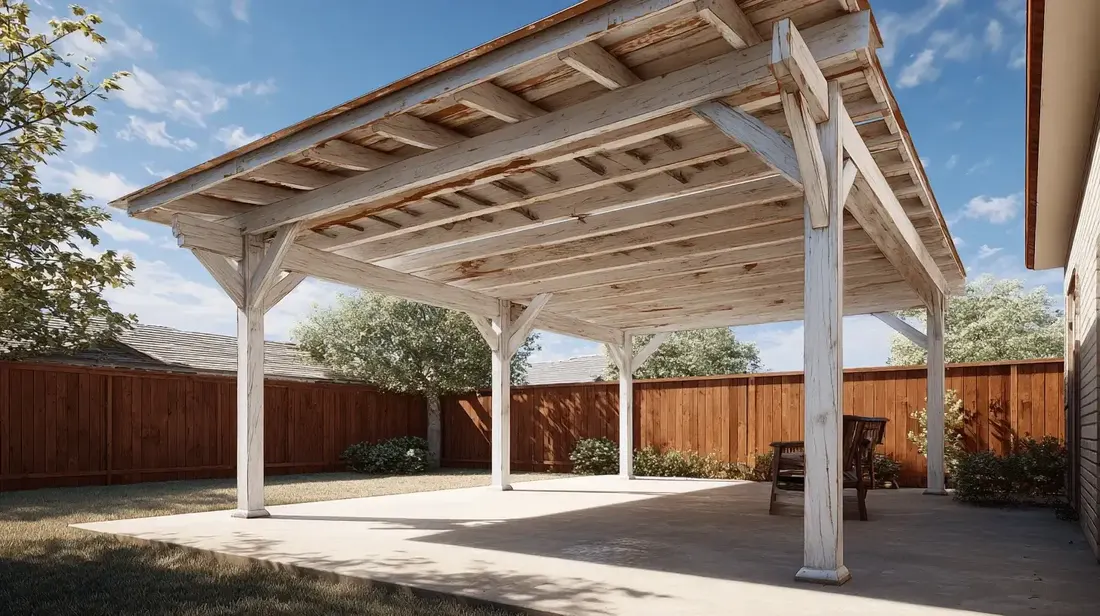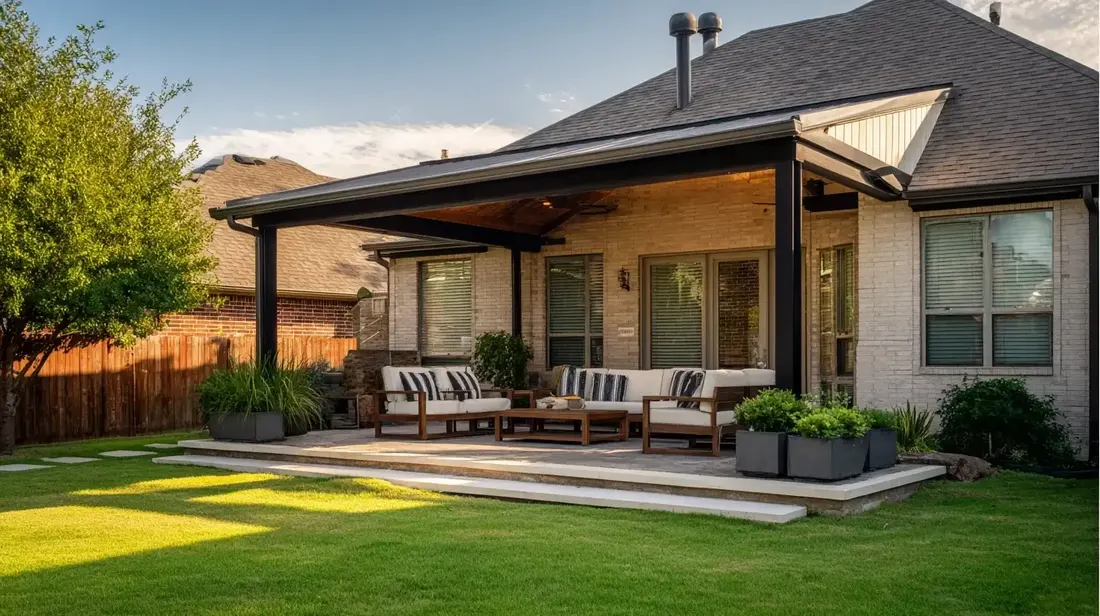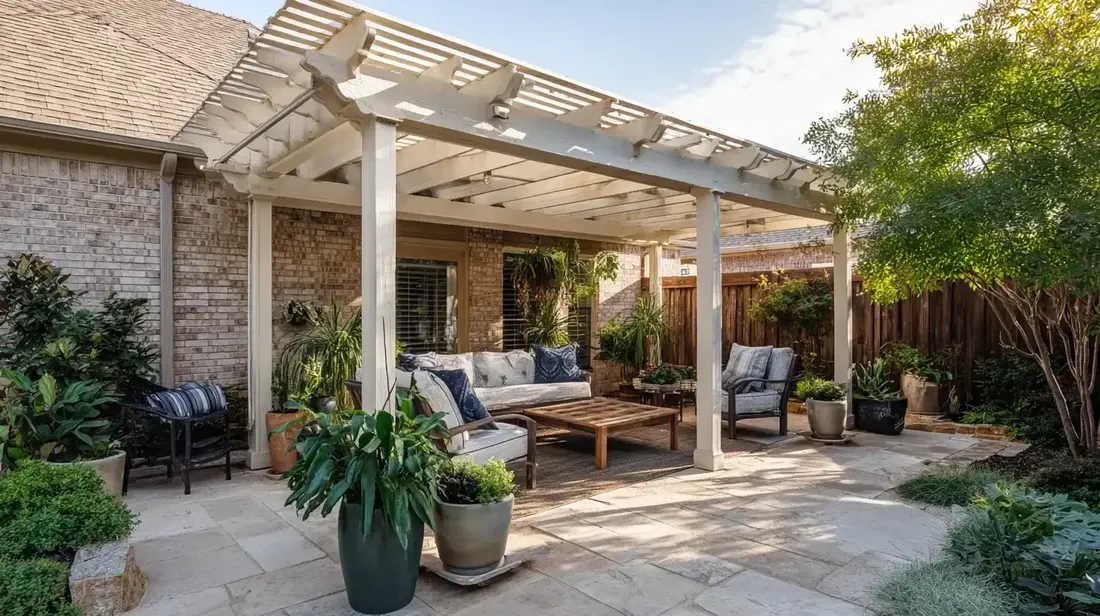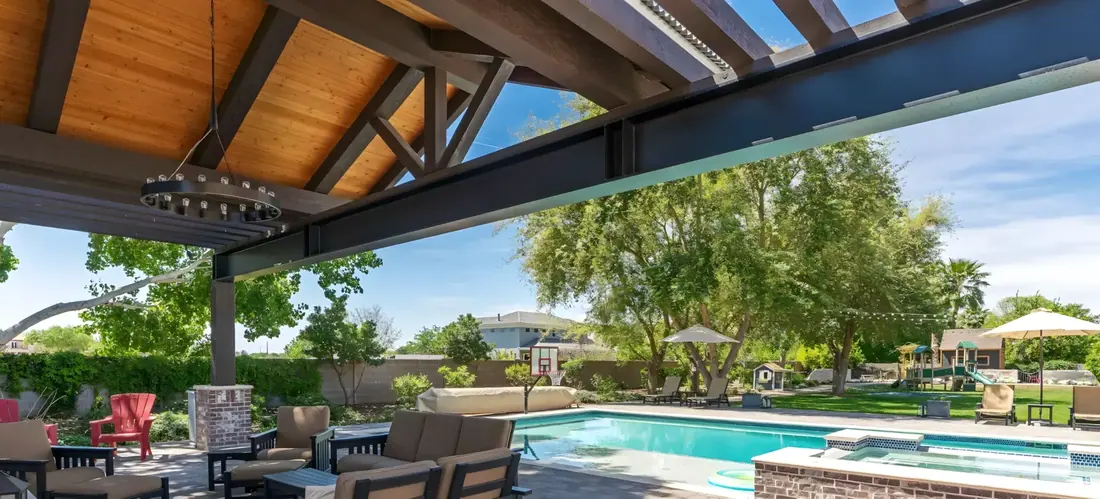
Patio cover repair means fixing one worn part, such as a fastener, a seal, a gutter or a panel, while the frame stays. Replacement means taking the cover down and starting over. The difference comes down to the frame. If it is sound, repair. If it is not, patching only delays the bill.
The short answer
- If the frame is sound and the problem is a single spot, repair is usually enough.
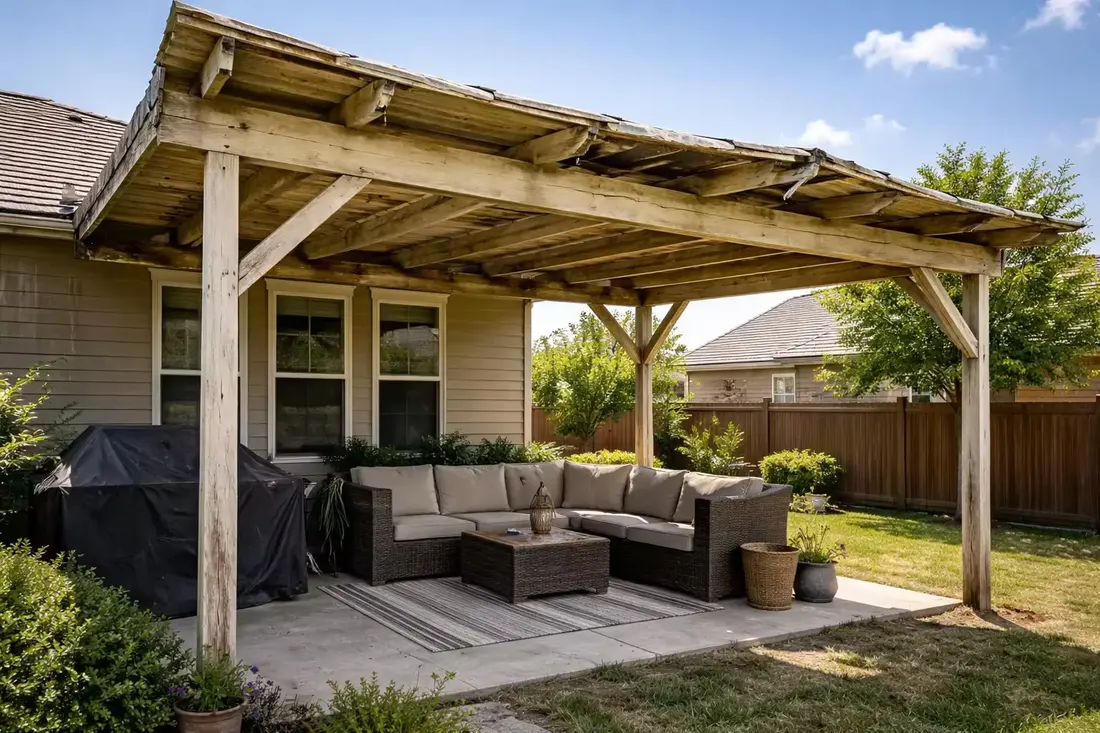
- Leaning posts, sagging beams and rot or rust that goes through mean the structure is failing.
- Ask whether the same problem will come back, because repeat failures point to replacement.
- Find out why a post leans before replacing it, since the footing is often the cause.
- Structural, roof-top and electrical problems are never a DIY job.
Patio covers wear in a few predictable ways, and most of them are not emergencies. The trouble is that a small problem and a big one can look alike from the lawn. A stain might be a dirty gutter, or it might be water getting into a beam. This post gives you a way to tell them apart before you call anyone.
When is patio cover repair enough?
Repair is enough when the frame is straight, the posts are firm and the problem sits in one place. Loose fasteners, a failed seal at one seam, a clogged gutter, a cracked panel, a stuck louver or a wobbly fan mount all fit. Fix the cause as well as the symptom, and the cover can go on for years.
A good test is to ask why it failed. A panel cracked because a branch fell on it is a one-time repair. A panel that cracks because the frame twists is a symptom of something larger. The first gets a patch. The second needs someone to look at the frame.
What signs point to replacing a patio cover?
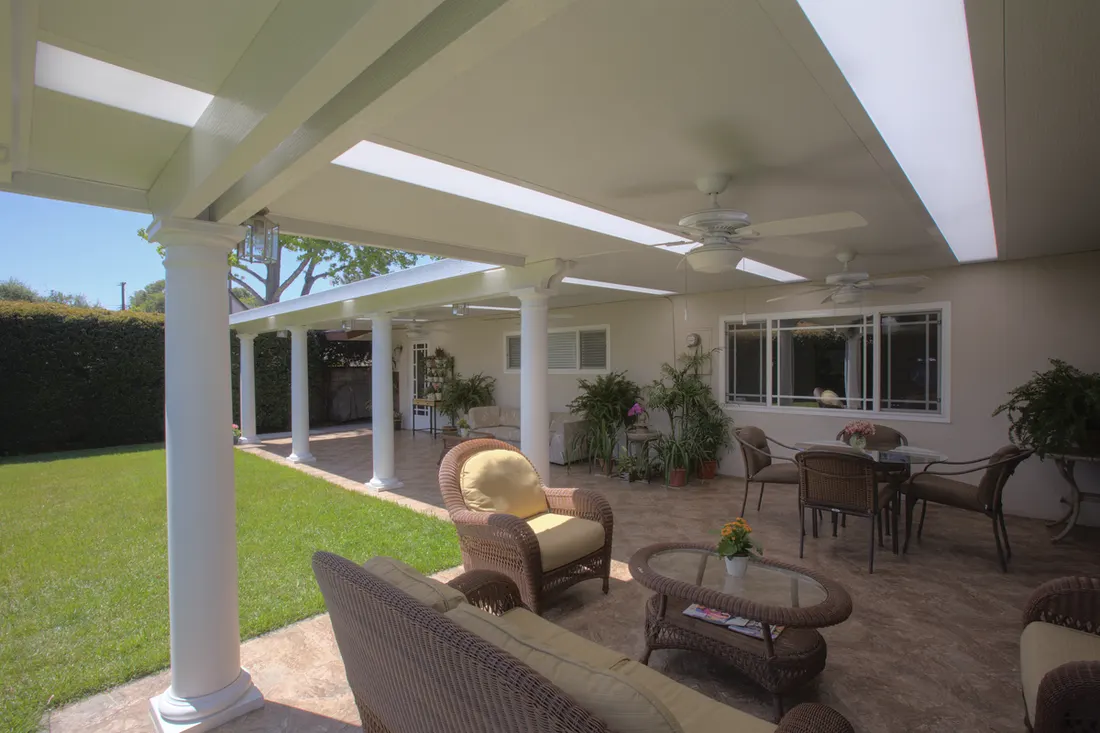
Replacement is likely when the frame itself is failing. Posts that lean, beams that sag, rot or rust that goes through the material, and leaks at many points all say the structure has run its course. So does a cover that was never built to carry the fan or lights you now want to hang from it.
| What you see | Repair is likely enough if | Replacement is likely if |
|---|---|---|
| Leak at one seam or panel | The frame is dry, straight and solid | Leaks show up in several places |
| Rust or peeling finish | It is on the surface and can be treated | Metal is flaking through or soft |
| Wood that has grayed or split | Splits are small and the wood is solid | Posts or beams are soft, hollow or rotted |
| Wobble in wind | A few fasteners or brackets are loose | Posts lean or footings have shifted |
| Sagging roof | A sagging panel can be re-supported | A beam bows or a joint has opened |
| Cover no longer suits you | Shade or lights can be added | Size, height or roof type no longer fits how you live |
The two-question test
Ask two things. First, is the frame sound? Second, will the same problem come back? If the frame is sound and the problem is a one-off, repair. If the frame is not sound, or the same problem keeps returning, replace. When the repair estimate gets close to a fresh build, the second answer is usually yes.
What if the posts lean because of the ground?
Then ask why before you replace anything. Around Dallas and Plano, dark clay swells in a wet spring and shrinks by August, and posts on small footings can tilt with it. Fort Worth’s shallow soil over limestone fails differently, often at poorly set anchors. New posts on the same footing will lean again, so the footing is the real fix.
Our post on signs a patio cover needs reinforcement covers leaning posts, cracks and loose hardware in more detail. Sometimes strengthening what you have is the middle path between a patch and a teardown.
Is a dated look a good reason to replace a cover?
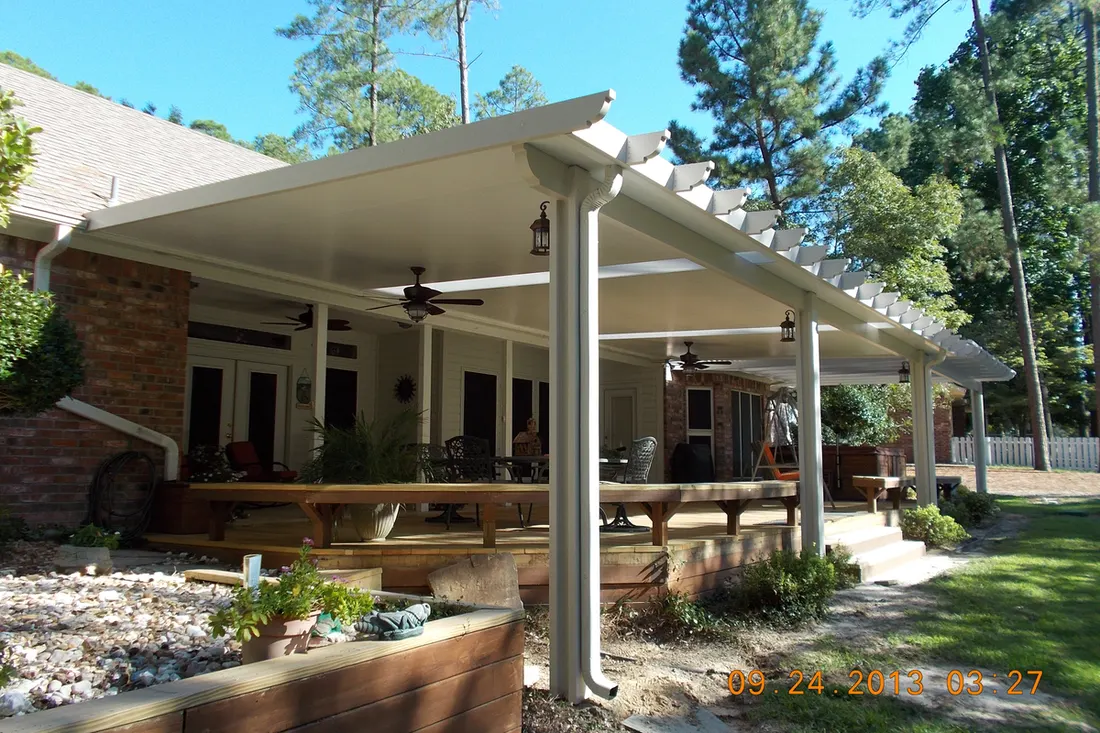
Only if the cover also no longer does its job. An old cover with a sound frame can often be refreshed with a new finish, new lights or a fan. Replace when the size, height or roof no longer fits how you live, for example when you want more shade on the west side or room for a larger table.
Energy is another reason people give. A roof that blocks sun from the wall and windows behind it can help the house feel cooler, but that is a side benefit. Do not replace a working cover on that argument alone. Replace it when the structure, the shade or the layout has stopped serving you.
What should you do after storm damage?
Stay out from under it, take dated photos from several angles and keep any broken pieces. Then read your homeowner’s policy or call your insurer to learn what applies. The Texas Department of Insurance consumer page is a good place to start. Do not climb onto a damaged roof.
After a hard hit, like the ice of February 2021 or a hailstorm, get the frame checked even if the roof looks fine. Damage to joints and fasteners is not always obvious. For ongoing alerts, the National Weather Service Fort Worth office posts warnings for the area.
Which problems should you never fix yourself?
Anything structural, anything on a roof you cannot stand on safely and anything electrical. A bowed beam, a leaning post, a fixture that sparks or a repair that needs you to climb a wet roof are all jobs for a professional. Our post on DIY versus professional patio cover work explains where the line sits.
- Do not replace a sound cover just because the finish looks tired. A new finish can refresh it.
- Do not keep patching a leaning post, because the cause will come back.
- Do not add heavy fans or hanging planters to a frame you have not had checked.
- Do not assume a new cover needs no permit. Ask your city; Arlington posts its permit page online.
What is the next step if you are still unsure?
Have someone look at the frame in person. A good builder will tell you honestly whether a repair is worth it, and why. American Eagle Builders is a family-owned exterior remodeler out of Arlington, serving Dallas–Fort Worth homes since 1984. You can see how we build patio covers, or ask for a free in-home estimate.
Questions we get asked about this
Check the frame first. If the posts are firm, the beams are straight and the problem is in one spot, a repair is usually enough. If posts lean, beams sag, rot or rust goes through the material, or the same problem keeps returning, replacement is more likely.
Sometimes, but first find out why it leans. If the footing has shifted or was too small, the post will lean again unless the footing is fixed. A professional can tell whether strengthening the base is enough or whether the structure needs replacing.
It can be, if the wood is solid and the damage is surface wear such as graying or small splits. If posts or beams are soft, hollow or rotted, patching only delays the problem. Press a screwdriver into the wood; if it sinks in easily, the wood has failed.
It is worth reading your policy and asking your insurer what applies. Take dated photos, keep broken pieces and stay out from under the cover. The Texas Department of Insurance has consumer information that can help you understand your options.
Yes. American Eagle Builders is a family-owned remodeler in Arlington and works in 90 DFW cities. We offer free in-home estimates, look at the frame in person, and give you our honest view on whether repair or replacement makes more sense.