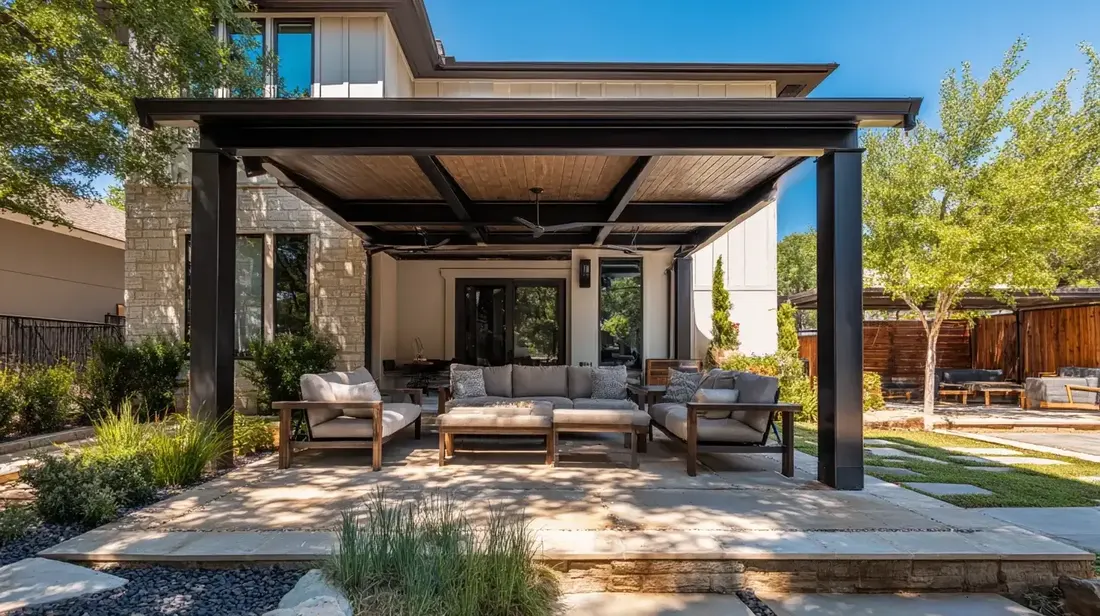
Patio cooling ideas are the changes that make a covered patio feel cooler: shade, moving air and, on dry days, mist. They do not all pull the same weight. In North Texas, shade does the most, fans come second, and misters help least. Here is the order to work in.
The short answer
- Shade does the most to cool a Texas patio, followed by airflow and then mist.
- A ceiling fan makes people feel cooler but does not lower the air temperature.
- Mist works best in dry air and does little after rain or on humid days.
- The west edge usually needs its own fix, such as louvers, a screen or a lower beam.
- A sealed patio with no air movement traps heat, so leave some sides open.
Every July, someone buys a mister or a giant fan and wonders why the slab still feels like a skillet. Cooling a patio is a stack of small jobs, and the order matters. Get the first one right and the rest can be modest. Get it wrong and no gadget will rescue the space.
What cools a patio best: shade, air or water?
Shade does the most, because it stops the sun from heating you and the slab in the first place. Moving air comes second, since it helps your skin shed heat. Mist comes last, because it only works well when the air is dry. Work in that order, and spend money in that order too.
Shade first
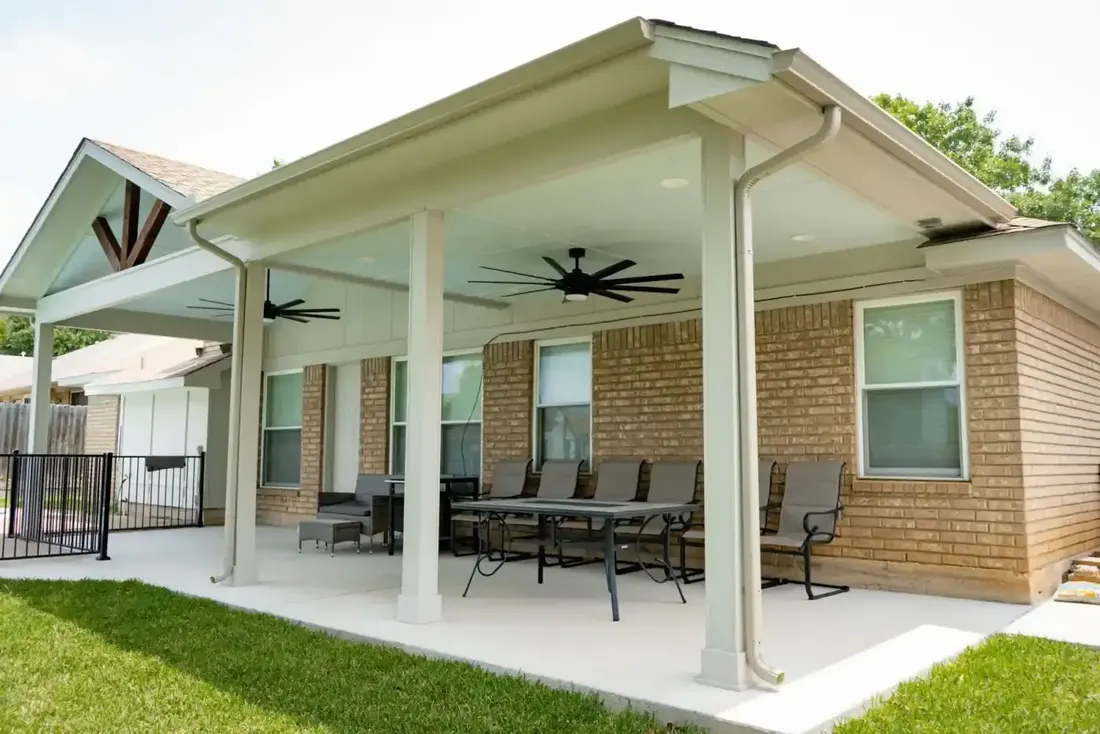
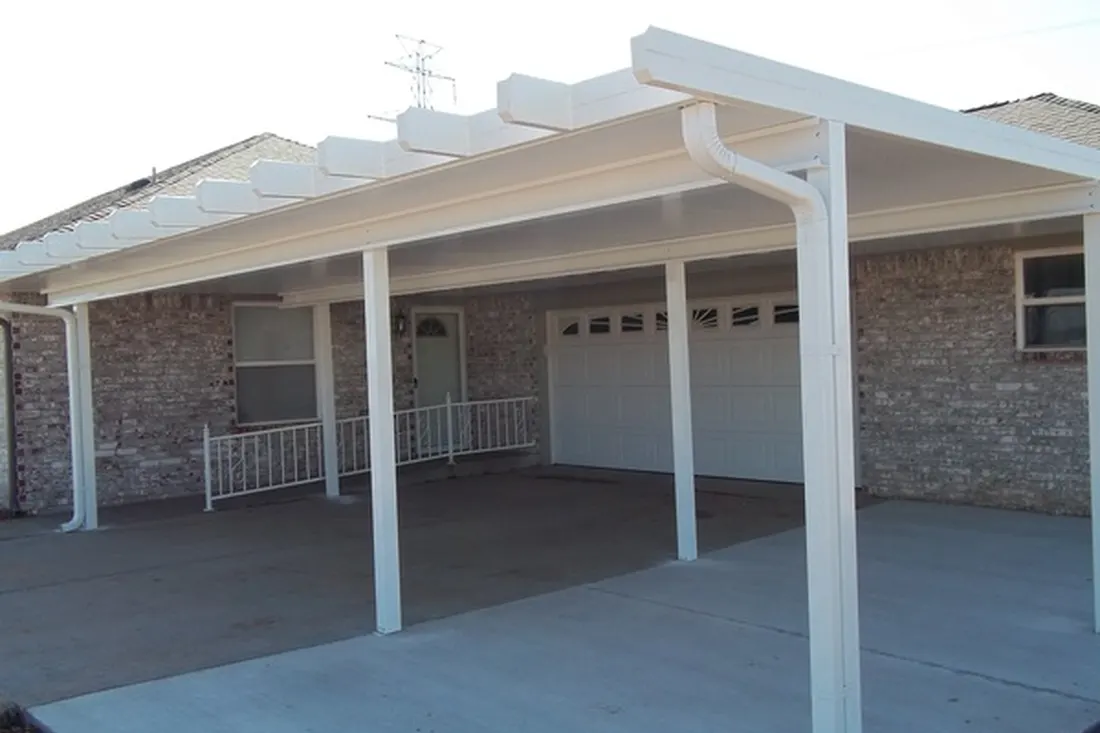
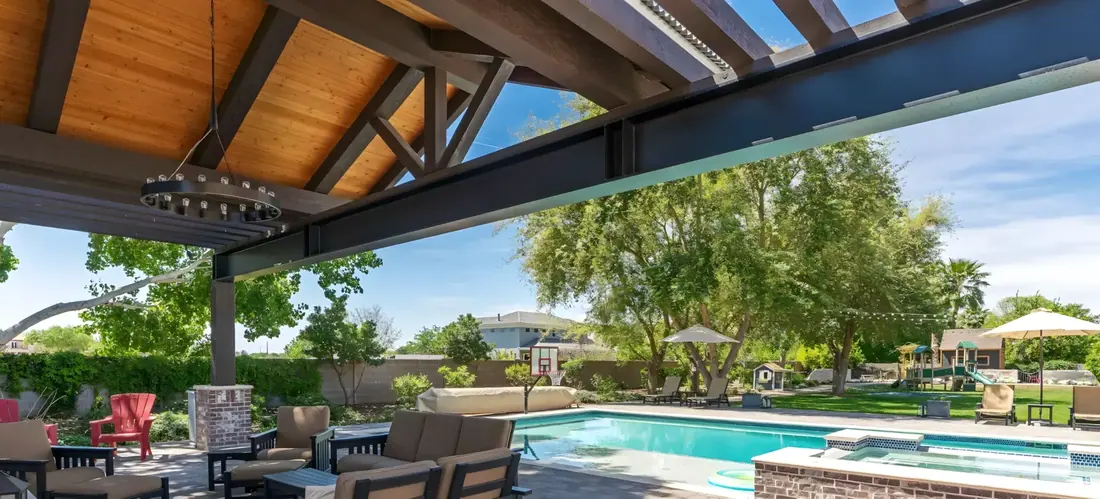
A solid roof blocks the sun overhead. The late-day sun from the west comes in sideways, so also look at the outer edge. A lower beam, a side screen or a louvered section on that side keeps the low sun off the seating. An insulated panel roof has foam between two skins, which means less of the sun’s heat comes through to the space below.
Then air
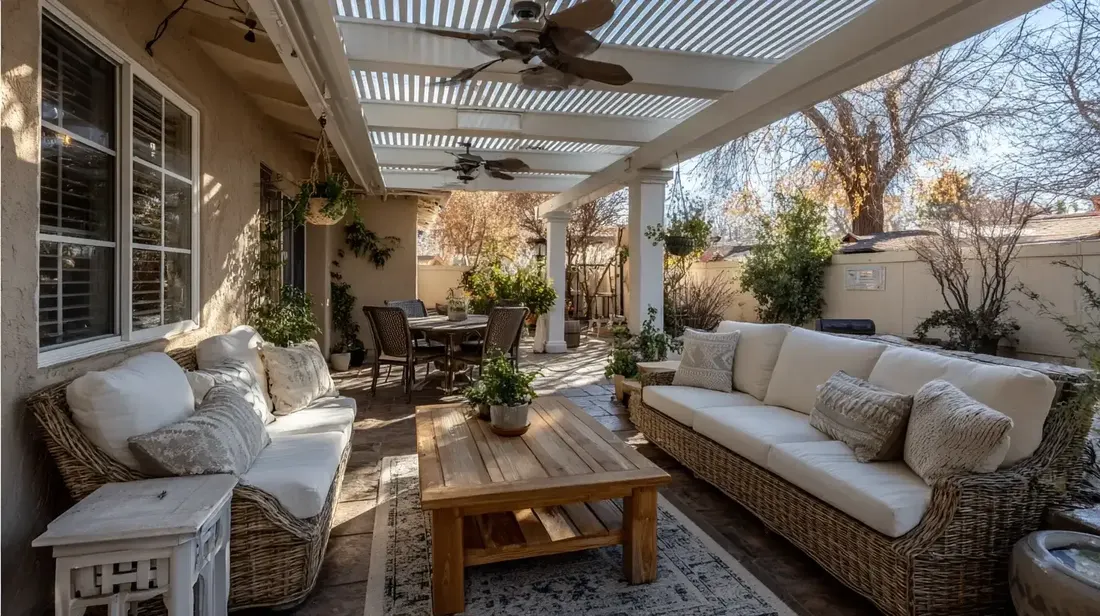
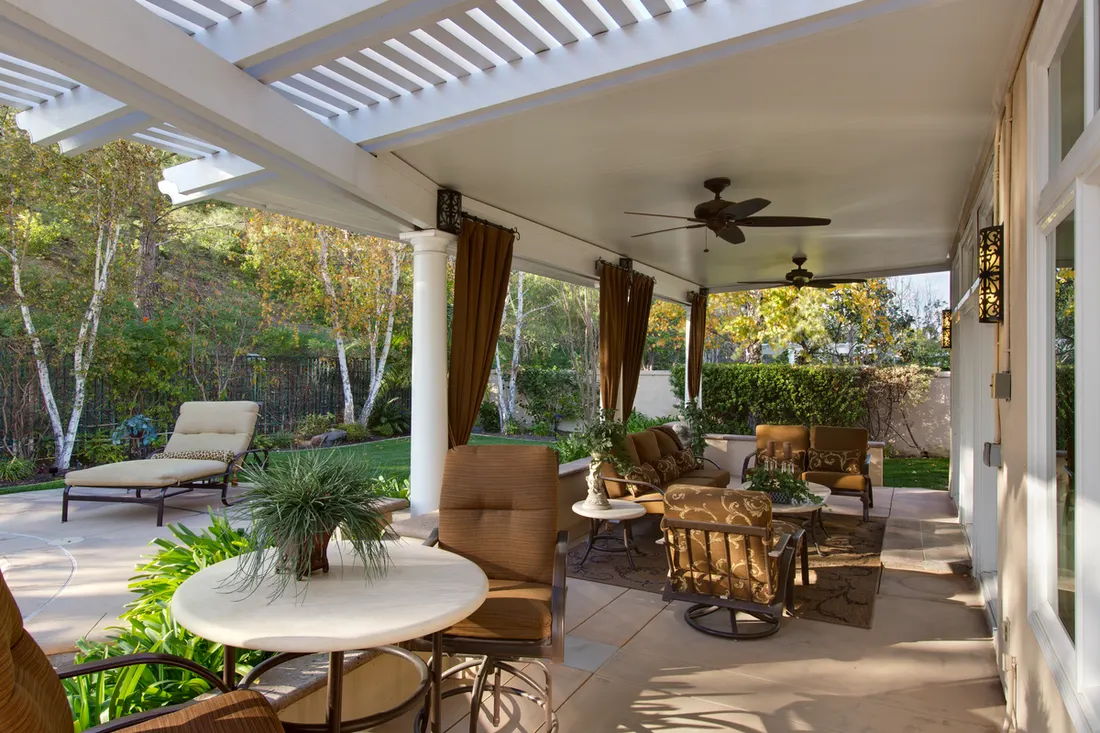
Ceiling fans do not lower the air temperature. They move air across your skin so you feel cooler. That is why a fan should be off when nobody is under it. Pick a fan made for outdoor or damp use, and plan its box and support while the roof is being built, not after.
Do misting systems work in a Texas summer?
Sometimes. A mister cools by evaporation, so it works best when the air is dry and does little when the air is already damp. North Texas has both kinds of days. After a spring rain or in a humid stretch, mist mostly makes things wet. On a dry afternoon, it can take the edge off.
If you are tempted, think about the mess too. Mist wets cushions, grows mildew on shaded surfaces and needs water lines and upkeep. Treat it as a bonus on a patio that already has good shade and fans. It is a poor way to fix a patio that has neither.
Which cooling fix suits which problem?
Use the table to match a fix to what you actually feel. If the slab itself is hot underfoot, you need shade. If the air feels still, you need a fan. If only the west side bakes, you need an edge treatment, not a whole new roof.
| What you feel | Fix to try | What it does not do |
|---|---|---|
| Sun beating down overhead | Solid or insulated panel roof | Block low sun from the side |
| Late-day sun from the west | Louvers, a side screen or a lower outer beam | Cool the air on a still evening |
| Still, heavy air | Outdoor-rated ceiling fan | Lower the real air temperature |
| Dry heat in the afternoon | Mist as a supplement | Work well on damp days |
| A slab that holds heat at night | More shade over it and lighter surfaces | Remove stored heat quickly |
Does the slab itself make the heat worse?
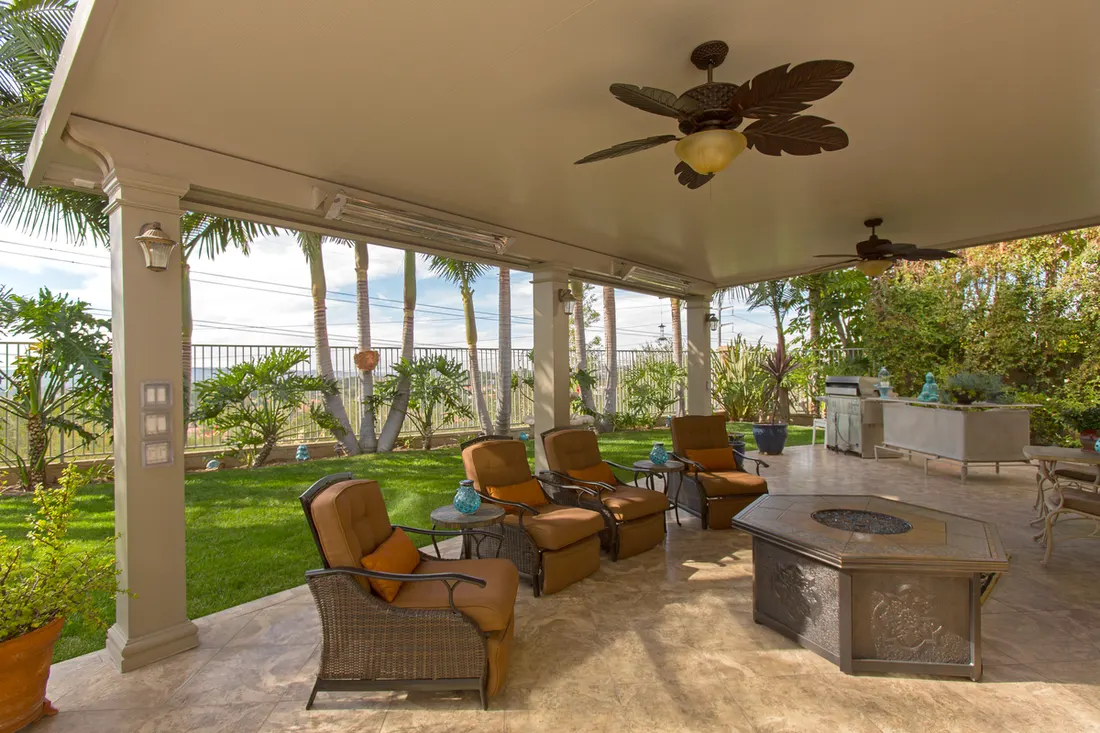
Yes. Paved surfaces soak up sun and give it back after dark. The EPA’s heat island page explains why built-up areas run warmer than open land. Shade over the slab cuts the storage, and a lighter finish reflects more of what reaches it. A dark, uncovered slab on the west side is the worst case.
Plano and Frisco yards add one more twist. Many are flat, fenced and landscaped, so a tall fence can block the breeze that would help. Opening one side of the cover toward the prevailing air, or setting a fan where the fence blocks the wind, often helps more than an extra gadget.
How can you test what your patio needs before you spend money?
Try it with cheap stand-ins on a hot afternoon. Sit on the slab in the late-day sun with a big umbrella on the west side, then again with a box fan on. Notice which one makes the bigger difference to how you feel. That tells you whether to spend on shade or on air.
- Sit out at the hour you actually use the patio, not at noon.
- Block the west sun with an umbrella or a cloth panel and note the change.
- Run a box fan and note whether the air feels better or only louder.
- Look at which surfaces are hottest to the touch.
- Bring your notes to the estimate visit so the plan fits what you found.
What should you skip when cooling a patio?
Skip anything that fights the heat without addressing the sun. A big fan under an open sky, a mister on a damp day and a dark roof on the west side all disappoint. Skip closing every side with panels unless you add air movement. A sealed patio traps heat and turns into a warm box.
- Do not run a fan when nobody is under it.
- Do not choose a roof color only for looks on a west-facing patio.
- Do not fix an unshaded slab with mist alone.
- Do not sit out through the worst of a heat wave just because you have a fan running.
The National Weather Service heat safety page is worth a read before a long hot stretch like the summer of 2023. For more shade ideas that need no building at all, see our post on blocking sun on a patio naturally. Our guide to patio covers in hot and humid climates has more on the roof side.
American Eagle Builders is run by a family in Arlington, and the company has worked around Dallas–Fort Worth since 1984. We install insulated patio covers and can plan fan boxes and shade for the side that bakes. Book a free in-home estimate and we will look at where the sun falls on your slab.
Questions we get asked about this
Start with shade, because it stops the sun from heating you and the slab. Add an outdoor-rated ceiling fan for moving air. Use mist only as an extra on dry days. If the west side still bakes, treat that edge with louvers, a screen or a lower beam.
They make you feel cooler by moving air across your skin, but they do not lower the air temperature. Turn them off when nobody is under them. Choose a fan rated for damp or outdoor use, and plan its mounting box while the roof is framed.
Only on dry days and only as a supplement. Mist cools by evaporation, so it does little when the air is humid. It also wets cushions and can grow mildew on shaded surfaces. Fix shade and airflow first, and add mist later if you still want it.
An insulated panel roof has foam between two skins, so less of the sun’s heat comes through. That makes the space below more comfortable than under a bare roof. It does not stop low side sun, so the west edge may still need a screen or louvers.
Yes. American Eagle Builders, a family-owned remodeler in Arlington, works across 90 DFW cities. We offer free in-home estimates and look at which way your slab faces, where the sun hits and where fans and shade will do the most good.