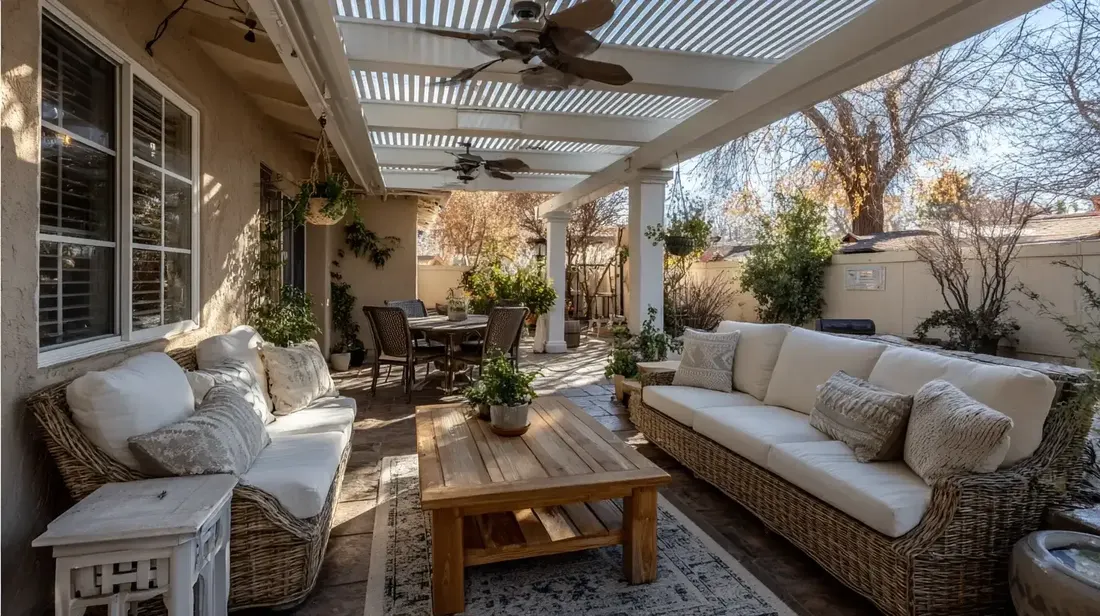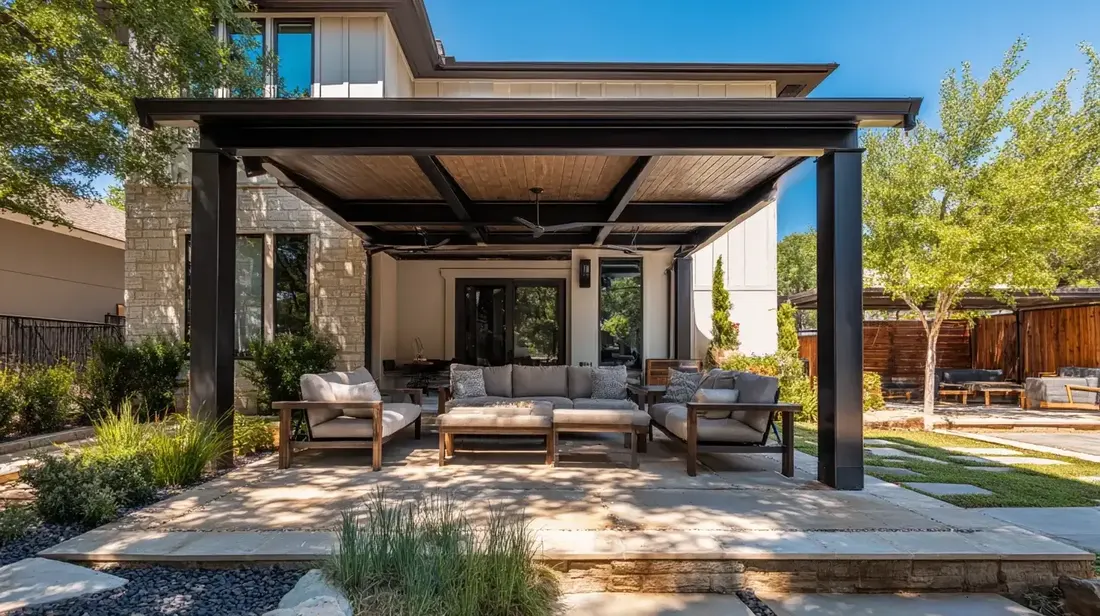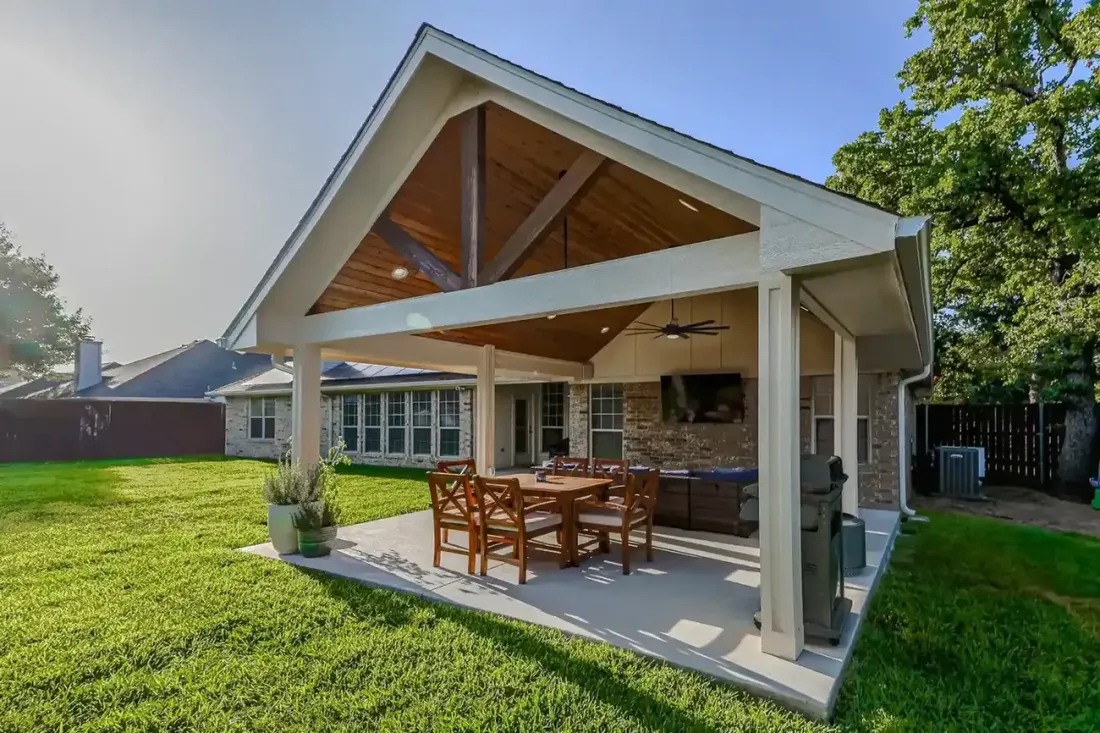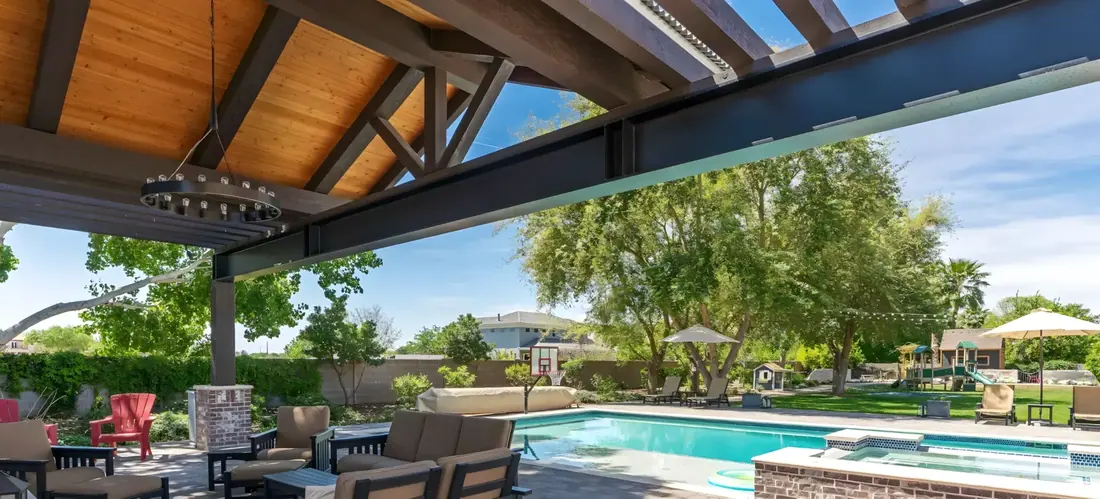
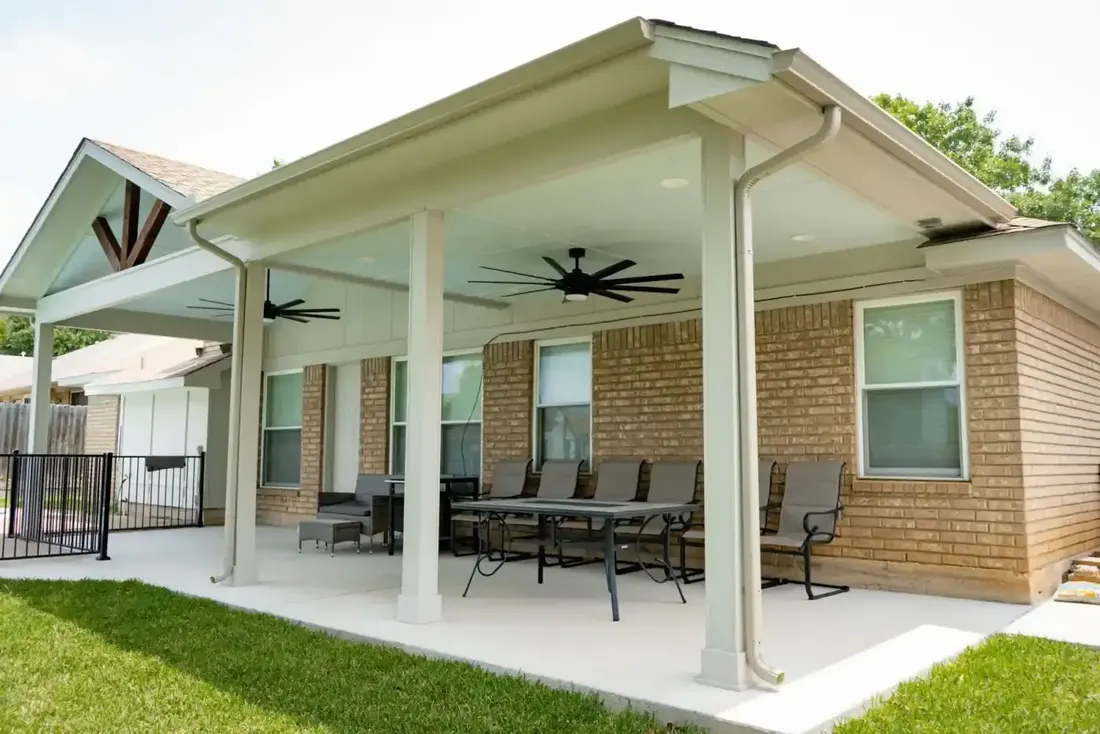
A covered patio is a roofed outdoor space with open sides, and heat can still build under that roof. To keep a covered patio cool, cut the heat coming through the roof, keep air moving across people, and reduce the hot surfaces around the seating.
The short answer
- A covered patio gets hot from the roof, the slab and wall, still air and low western sun.
- Fix the roof first, then add airflow, then screen the west side, then cool the surfaces.
- A ceiling fan cools people, not the air, so it will not cure a hot roof.
- An insulated panel roof lowers the heat that comes through, and it quiets heavy rain.
- Skip misters in muggy weather, and have a licensed electrician wire any fan.
People are often surprised that a roof does not end the problem. You are out of the direct sun, yet the patio still feels like an oven at five o’clock. That is a sign that something other than direct sun is heating the space. Find the cause first, and the fix gets simpler.
Why does a covered patio still get hot?
Four things heat it. The roof absorbs sun and gives heat off below. The slab and the house wall soak up the day and radiate it back. Air under the roof sits still. And low sun from the west comes in at the sides, where the roof does not reach.
In a long hot summer like 2023, those four add up. A patio that is pleasant at ten in the morning can be hard to use after four, because the roof, the slab and the wall have all been heating since sunrise. Cooling a patio means treating each source, not just adding one more fan.
A short check shows which source is worst. At five o’clock, put your hand on the slab and on the house wall, note which side the sun enters from, and stand under the roof to feel whether heat comes down from the ceiling. Ten minutes of this tells you more than a catalog. Write down what you find and use it when you talk to a contractor.
How do you keep a covered patio cool in July?
Work from the biggest source down. Start with the roof, then the air, then the surfaces, then the people sitting there. Each step below gives a smaller return than the one before it, so do them in order.
- Fix the roof first. A bare metal roof radiates heat down, and an insulated panel roof sends less of it through. If you are building or replacing, this is the biggest single choice.
- Add moving air. An outdoor-rated ceiling fan cools people by moving air across skin, not by lowering the air temperature. Turn it off when no one is there.
- Screen the west side. Low afternoon sun enters at the open edge, so a curtain, a screen or a louvered section on that side blocks it.
- Cool the surfaces. Lighter finishes on the slab and cushions reflect more sun than dark ones, and shade on the house wall reduces the heat it gives back.
- Add water or plants with care. Misting can feel good, but it adds humidity, and North Texas summers are often muggy. Plants help most when they shade a hot wall.
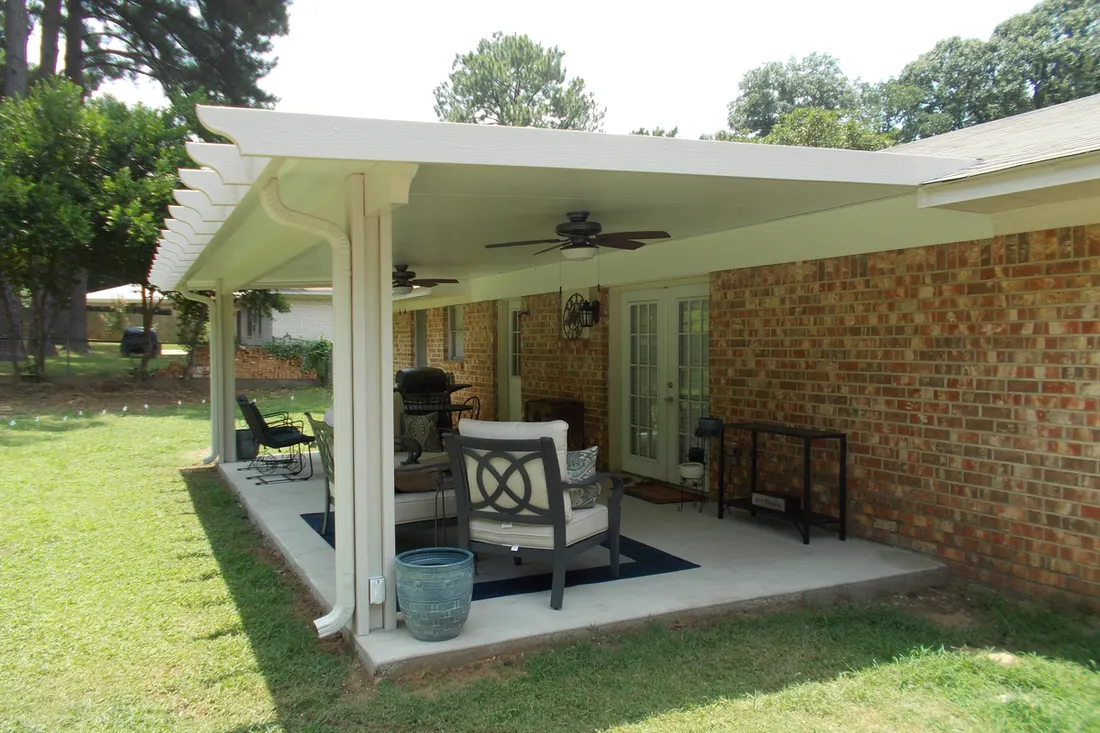
Trees you already have change the order. Older Dallas and Richardson neighborhoods often have mature canopy that shades one side of the yard, which tells you which wall needs the screen. For more ideas on shading the sides, see how to block the sun on a patio.
Which fix matches which complaint?
Match what you feel to the likely cause. The table pairs common complaints with a first fix, so you spend on the one that matters. If two rows describe your patio, start with the roof or the west side.
| What you notice | Likely cause | First fix |
|---|---|---|
| Heat pours down from above at midday | Roof absorbs sun and radiates down | An insulated panel roof |
| Late afternoon sun hits you from the side | Low western sun at the open edge | A curtain, screen or louvers on that side |
| The air feels still and heavy | No airflow under the roof | An outdoor-rated ceiling fan |
| Heat comes off the wall and slab after sunset | Hot masonry giving heat back | Shade the wall, and use lighter finishes |
| Everything feels sticky | High humidity, and added mist makes it worse | Airflow first, and skip heavy misting |
If you are building a new cover, you can design most of these fixes in from the start. A west-side screen, a fan mounting point and a roof panel choice are easier to plan than to retrofit later, and a retrofit may mean opening the finished ceiling.
Does an insulated roof make a real difference?
Yes, noticeably, on a patio that gets hot under the roof. An insulated panel has foam between two skins, so less of the sun’s heat comes through to the space below, and heavy rain sounds like rain instead of a drum. It matters most on a west-facing patio.
It will not turn a patio into an air-conditioned room, so keep your expectations in line. What it does is lower the load that fans and screens have to fight. Our insulated patio covers page explains how the panel roof goes up and what else can be built in. The EPA’s heat island pages are a good background read on how surfaces hold and give off heat.
What should you not do to cool a patio?
Do not buy a fan to fix a roof problem. A fan under a hot roof moves hot air, and it will not bring the temperature down. Do not rely on one fix, and do not skip the check of the west side.
- Do not run misters in thick humid weather and expect relief. They help most in dry air.
- Do not lay dark rubber mats or dark cushions on a slab that already bakes in the sun.
- Do not close the sides with solid sheets that trap heat. Screens and louvers let air through.
- Do not wire a fan yourself. A licensed electrician should do the outdoor wiring.
Heat is also a safety matter on the hottest days, and the National Weather Service keeps heat safety guidance worth reading. Our posts on cooling solutions for patio covers and on comfortable outdoor living spaces cover more of the picture.
We can look at your patio at the hour it feels worst. You can book a free in-home estimate and we will tell you which fix to do first.
Questions we get asked about this
A roof blocks direct sun, but the roof itself can radiate heat down, the slab and wall can give back the day’s heat, and low western sun can reach in at the sides. Air that sits still under the roof adds to the feeling. Treat each cause, not just one.
A fan cools people by moving air across skin, not by lowering the temperature. It makes a shaded patio feel cooler. Use an outdoor-rated fan and turn it off when nobody is there. It will not fix a hot roof.
On a west-facing patio or one that bakes in the afternoon, an insulated panel roof makes a noticeable difference, because less heat comes through the roof and rain sounds quieter. It will not make the patio air-conditioned.
They can help in dry air, since the mist evaporates and cools. In humid weather they add to the sticky feeling. Try airflow and shade first, and add misting only if the rest is not enough.
Yes. Free in-home estimates are how American Eagle Builders starts a project in any of 90 DFW cities. We check how the patio faces and where the heat comes from before we suggest a roof or screening.