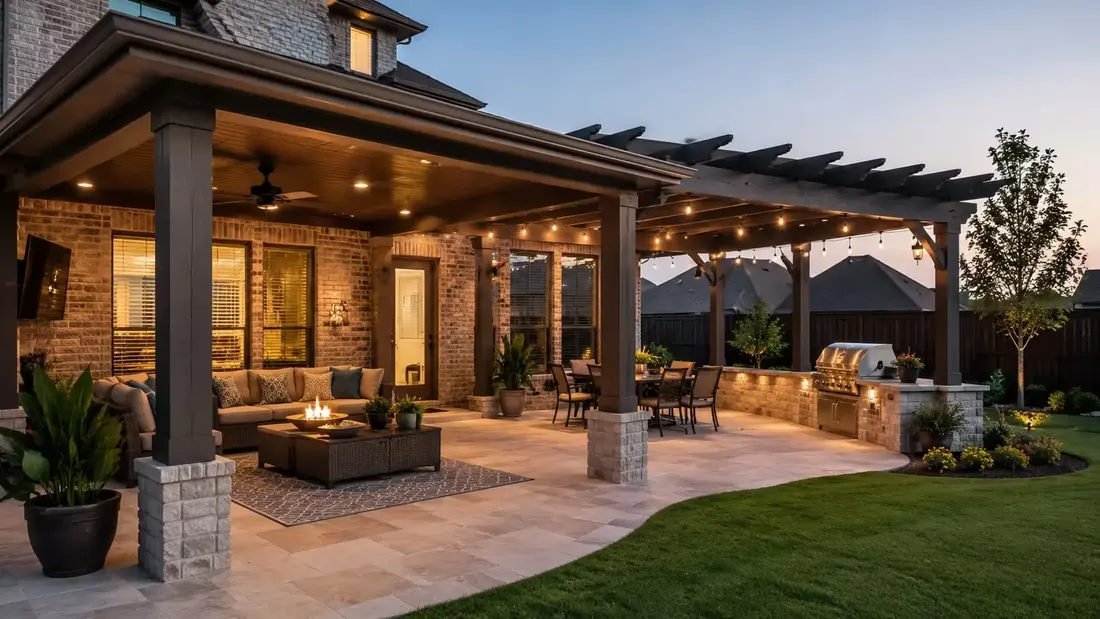
Patio cover types are the handful of roof designs a Texas patio can have: solid, insulated panel, open pergola, louvered pergola, screen room and sunroom. Each fixes a different problem. Choose by what bothers you most on a July evening, then check the trade-off before you commit.
The short answer
- Choose a patio cover by the problem you want solved, not by style alone.
- An insulated panel roof sends less heat down than a bare roof on a hot slab.
- A cover does not lower humidity, but fans and open sides make humid evenings easier.
- A cover is not the answer if what you really want is a heated and cooled room.
- Your city and your soil change how a cover is built more than which type you pick.
Most people shop for a patio cover by style. In Texas it pays to shop by problem. A cover that fixes afternoon sun does not fix mosquitoes, and a cover that fixes mosquitoes does not stop a hard rain. Start by naming what actually drives you inside, and the right type is easier to see.
Which patio cover types suit a hot, humid Texas summer?
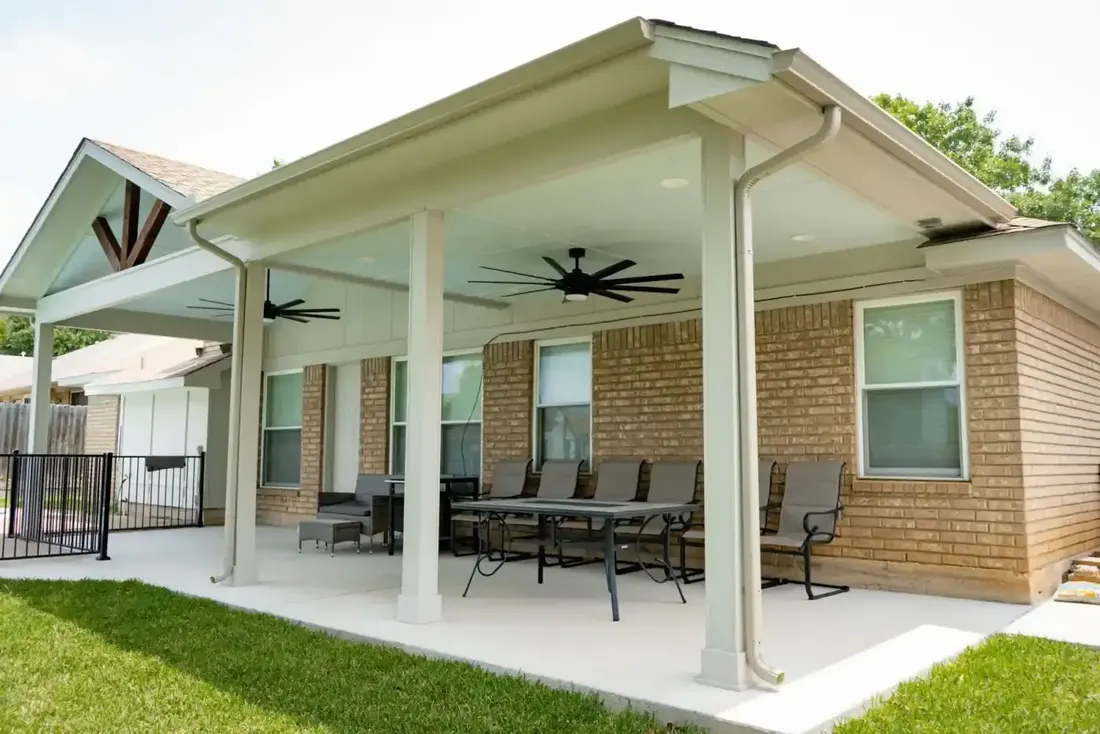
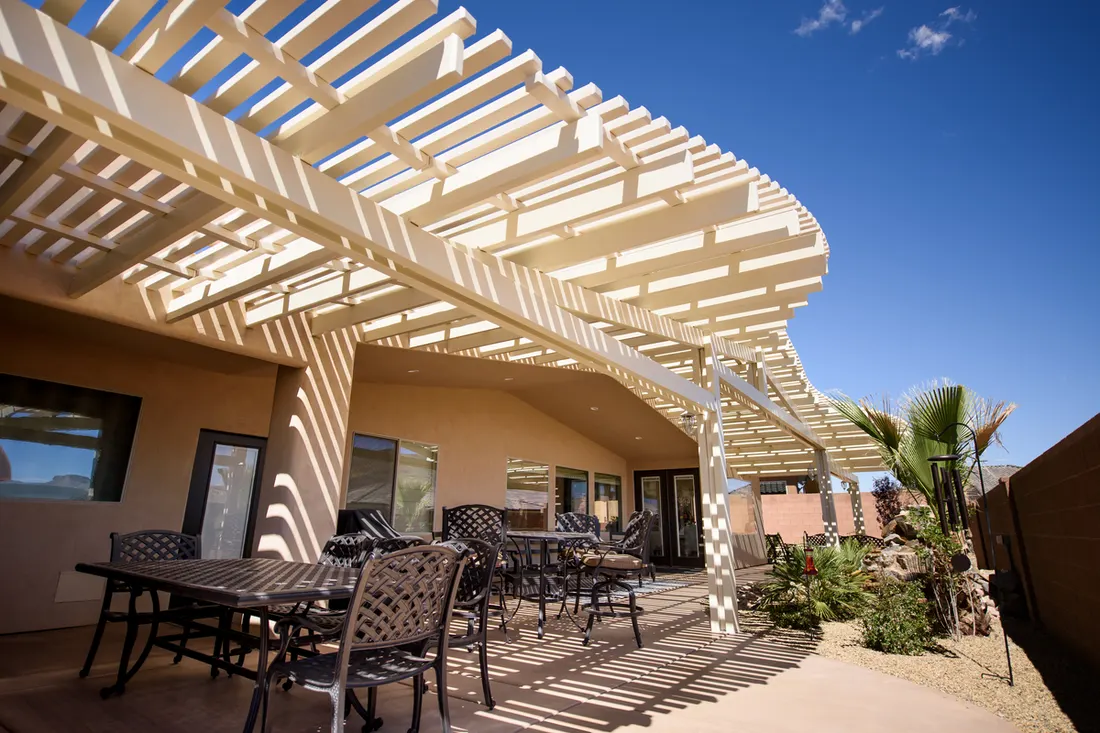
It depends on the problem. A solid roof gives shade and rain cover. An insulated panel roof adds heat control. A pergola gives light, filtered shade. A screen room keeps bugs out. A sunroom gives you a real room. The table below pairs each problem with the type that answers it and the price you pay in trade-offs.
| Your main problem | Cover type that answers it | The trade-off |
|---|---|---|
| Late-day sun heating the slab | Insulated panel roof, which has foam between two skins | A closed roof means less sky and light |
| Rain and sun, all at once | Solid attached cover | Feels more like a room than an open patio |
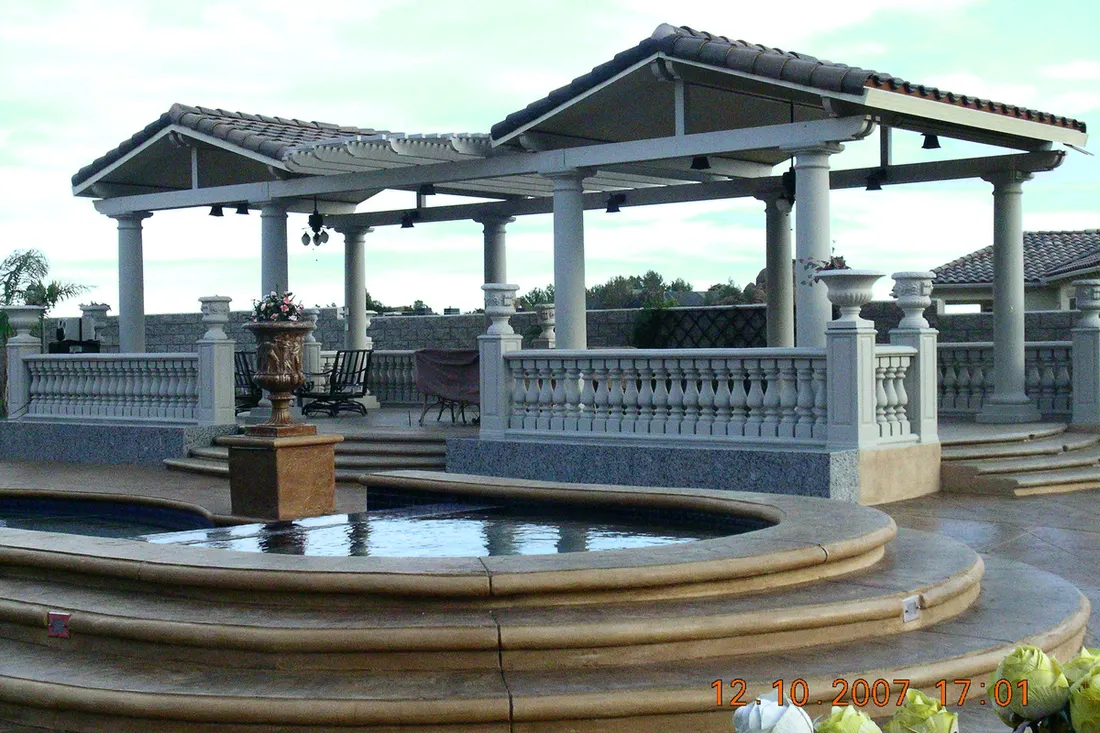
| You want filtered light and sky | Open pergola | It softens sun but does not keep rain off |
| You want shade you can change | Louvered pergola | More moving parts to look after |
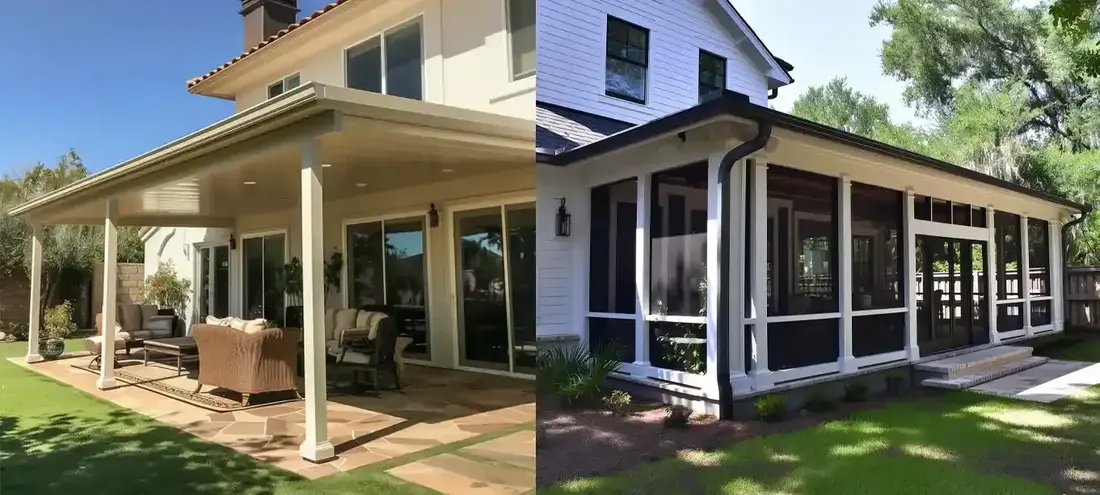
| Mosquitoes and pollen | Screened patio enclosure | Slightly less breeze than fully open |
| You want the space every month | Sunroom or all-season sunroom | The most building work of any option |
If you are weighing roof styles for an open frame, our post on pergola roof options compares them in more detail. For the heat itself, see how to keep a covered patio cool in Texas.
Does a patio cover help with humidity?
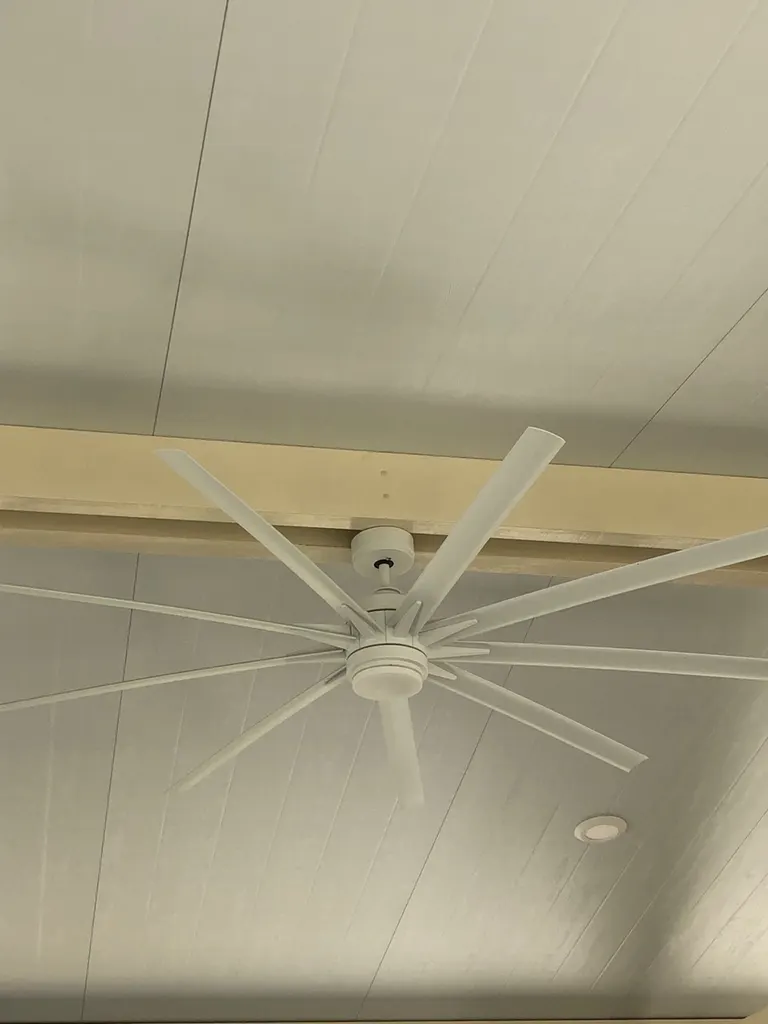
Not directly. A roof does not dry the air, and a shaded patio can stay damp longer after rain because the sun does not reach the slab. What helps with a sticky evening is moving air. Ceiling fans, open sides and a roof that lets heat rise away from you do more than any panel.
Damp areas also grow mildew. Wipe down shaded posts, cushions and the north side of the slab now and then. The EPA’s mold page explains how moisture and mold are linked and how to deal with small spots. If you see mold spreading on a wood frame, have it checked rather than painted over.
How do you match a cover to your own yard?
Look at three things: which way the slab faces, what trees you have, and how you use the space. A west-facing slab gets the hardest sun, so it benefits most from an insulated roof or louvers. A shaded back yard may need only a pergola. A family that eats outside every night needs rain cover more than sky.
If your problem is the sun
Think about roof material and direction before style. An insulated panel roof sends less heat down than a bare one. A louvered pergola lets you close the roof in the late afternoon and open it at night. On the hottest summers, like 2023, the western edge of a patio is where a cover earns its keep.
If your problem is bugs or rain
A screen room keeps out mosquitoes and pollen and gives you the patio back on evenings you would otherwise go in. For storms, remember that Texas weather swings between hail and heat. The National Weather Service Fort Worth office posts local warnings, and a sturdy frame matters more than any accessory.
If your problem is evening comfort
Heat lingers on a slab long after sunset, and a roof can hold some of it in. Fans help here, and so does a design with open sides on the breezy side of the house. Plan the fan boxes while the roof is being built, and decide which sides get screens, curtains or nothing at all.
Before you settle on a type, put these questions to every estimate you collect:
- Which way does my patio face, and how does the roof handle that sun?
- What is the roof made of, and how does it shed rain and heat?
- How are the posts anchored, and what suits my soil?
- Where will fans, lights and switches go?
- What does the city need to see before work starts?
When is a patio cover not the right answer?
When what you want is a room. A cover shades and shelters, but it is still outdoors. If you want to sit out comfortably through a cold snap, a cover alone will not do it, and a heater under an open roof only goes so far. In that case look at an enclosure or a sunroom, which is built to hold heat and cool air.
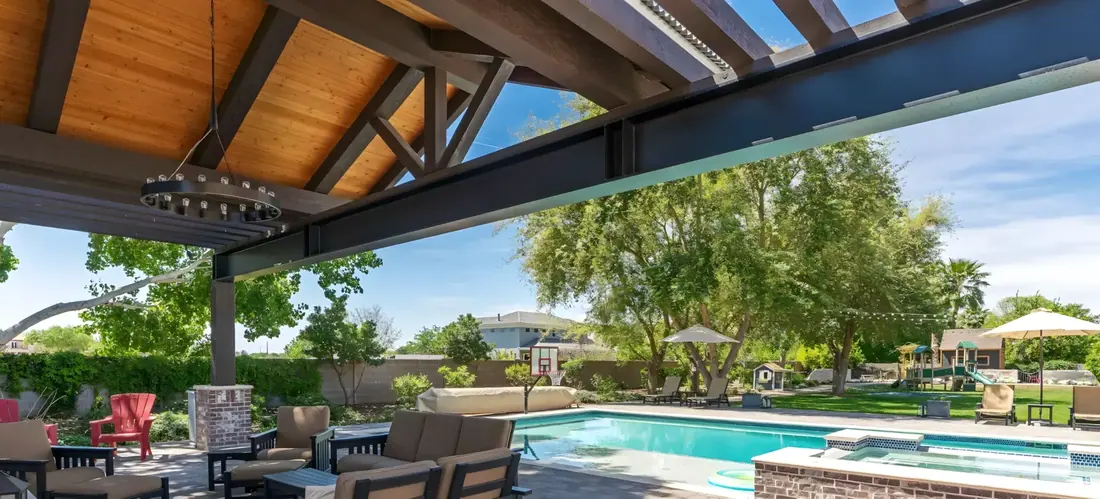
Our post on the difference between a patio and a sunroom explains how far each one goes. A cover next to a pool you already have is a fine idea too, since shade and a place to put wet towels make the pool easier to enjoy.
Does your city or soil change the choice?
It can change how the cover is built more than which type you pick. Fort Worth has shallow soil over limestone, so footings may hit rock. Colleyville lots are large and heavily treed, which gives shade but drops leaves on a roof. Check with your city about permits; Fort Worth and Plano each post residential permit pages.
American Eagle Builders is an Arlington family business, and we have worked across Dallas–Fort Worth since 1984. We install insulated patio covers, pergolas, patio enclosures and sunrooms. A free in-home estimate lets us look at your slab and the sun together.
Questions we get asked about this
An insulated panel roof is often a good fit for hot slabs, because the foam layer sends less heat down. A louvered pergola is another option when you want to adjust the shade. The right pick depends on which way your patio faces and how you use it.
It depends on the roof. An open pergola filters sun but does not stop rain or the hardest afternoon rays. A louvered or covered pergola gives more control. On a west-facing slab, most people want something more solid, or a screen or louver on that side.
It will keep direct sun off the slab and the people on it, which helps a great deal. It will not cool the air by itself. Fans, open sides and a roof that sheds heat do the rest. Insulated roofs reduce how much heat comes down.
A screen room keeps bugs out and the breeze in, so it suits mild months. A sunroom is closed in with glass and built to be a room. If you want to use the space in winter and summer, look at an all-season sunroom, which is heated and cooled.
Yes. American Eagle Builders is a family-owned exterior remodeler based in Arlington and covers 90 DFW cities. We offer free in-home estimates for patio covers, pergolas, enclosures and Four Seasons sunrooms, and we look at your slab, the sun and the house before we recommend a type.