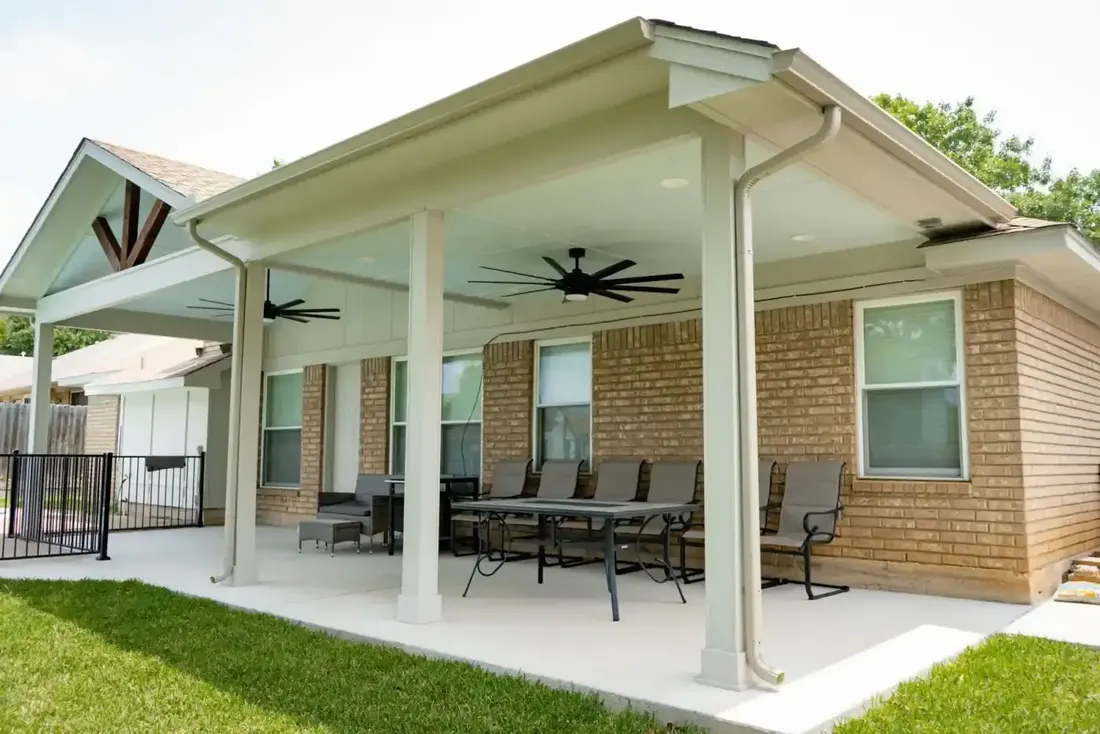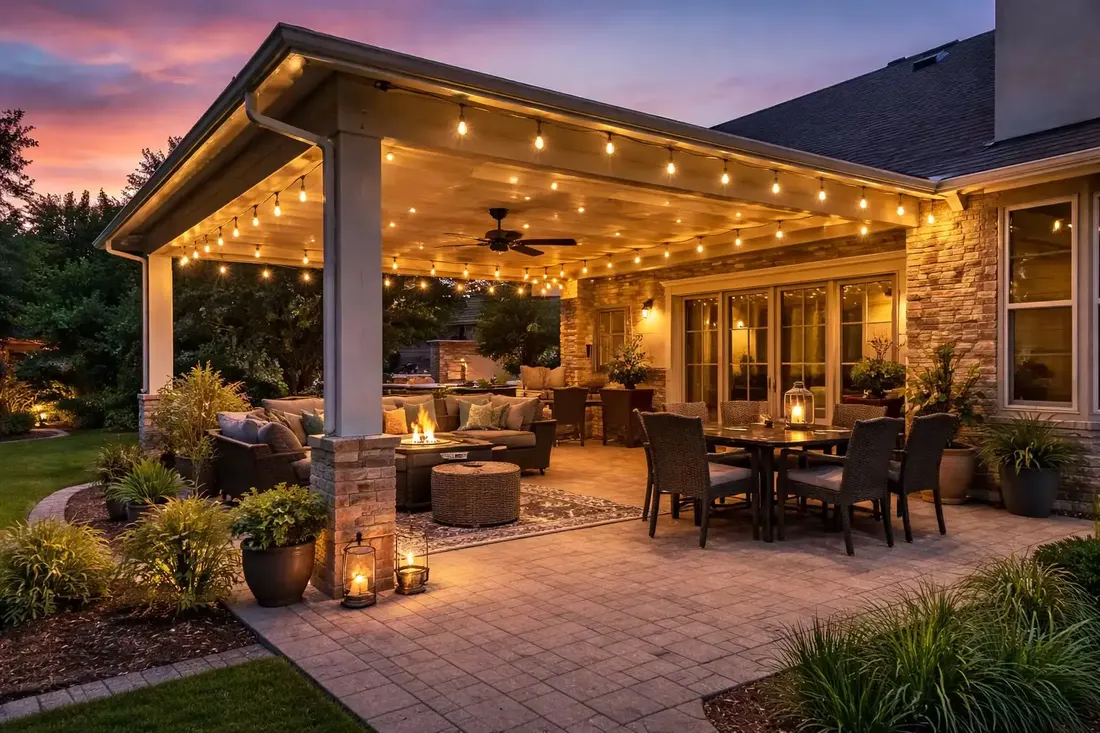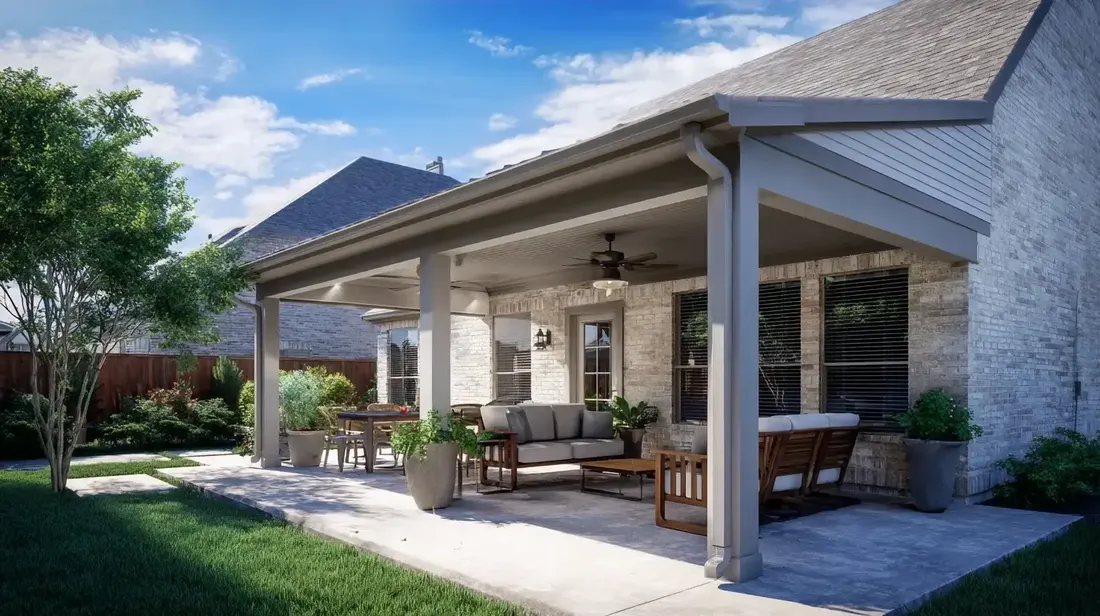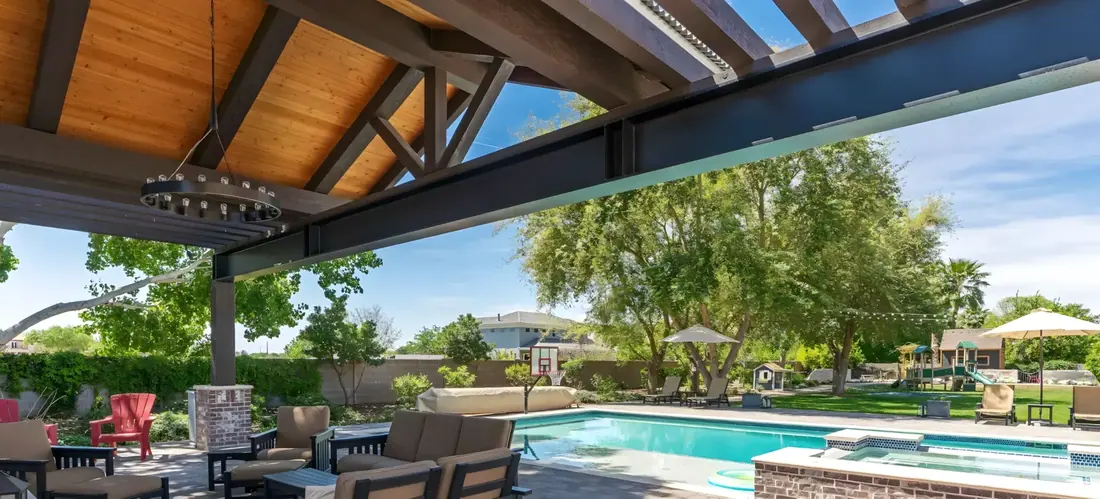
A comfortable outdoor living space is one you can sit in on a July afternoon and on a wet evening in April. A patio cover provides the shade, the shelter and the overhead frame for fans and lights. It does not provide cold air, and it is not a winter room.
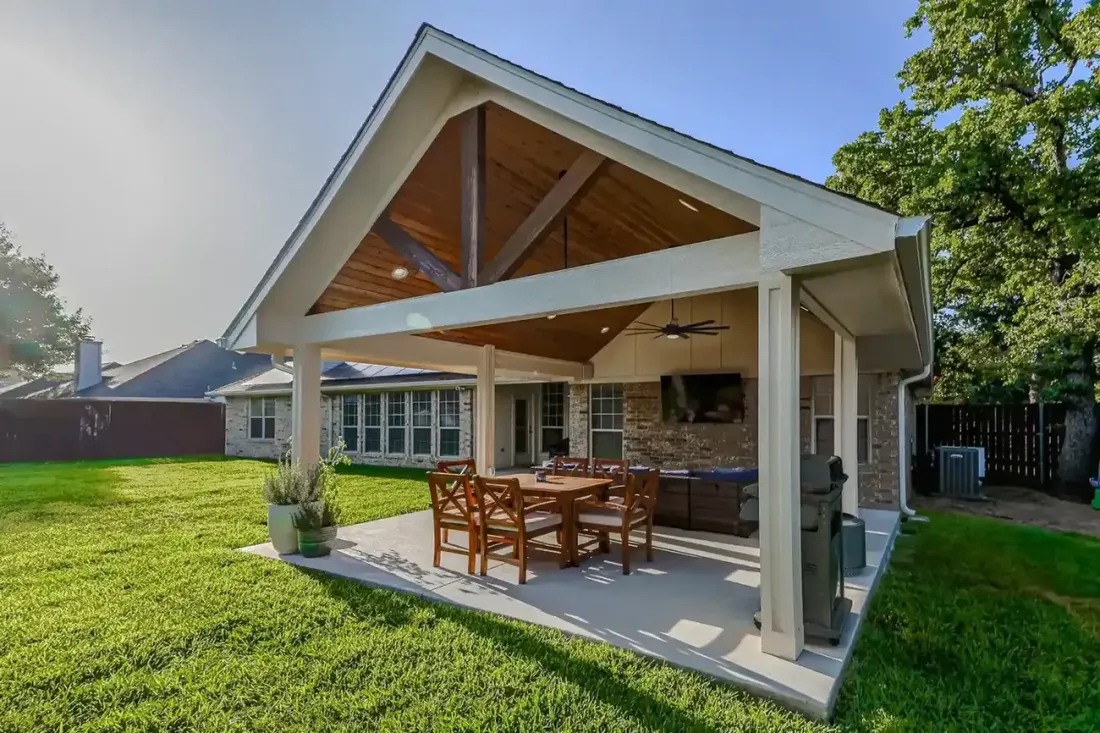
The short answer
- Comfort on a patio comes from shade, airflow, light and rain shelter working together, not shade alone.
- Choose the roof by what bothers you most: solid for rain, insulated for heat and noise, a pergola for open sky.
- Size the cover larger than the furniture so the seats stay in shade as the sun moves.
- A cover can shade glass and walls, but it is not a reason to buy on energy savings alone.
- A covered patio is still outdoors in a freeze, so plan an enclosure if you want a winter room.
Most people describe a patio cover as shade, and shade is a good place to start. But a patio that feels like a room has several things going for it at once. This post breaks comfort into its parts so you can see what a cover adds and what it leaves to you.
What makes a comfortable outdoor living space?
Six things working together: shade at the hour you use the space, moving air, light you can control, shelter from rain, a floor that suits you, and a layout that fits how you sit. A roof supplies most of the first four. You supply the rest.
| Comfort factor | What a cover adds | What it does not do |
|---|---|---|
| Shade | Cuts direct sun on seating and on the wall behind it | Lower the air temperature by itself |
| Moving air | A frame to hang a fan from, if planned in | Create a breeze on a still night |
| Light | A place for fixtures wired into the structure | Replace good fixture choices |
| Rain | A dry spot for most storms | Stop rain blown in sideways by wind |
| Sound | An insulated panel roof quiets rain overhead | Block neighborhood noise |
The last row depends on the roof, which is why the next section matters. Our post on keeping a covered patio cool goes deeper on heat.
Which roof gives you which kind of comfort?
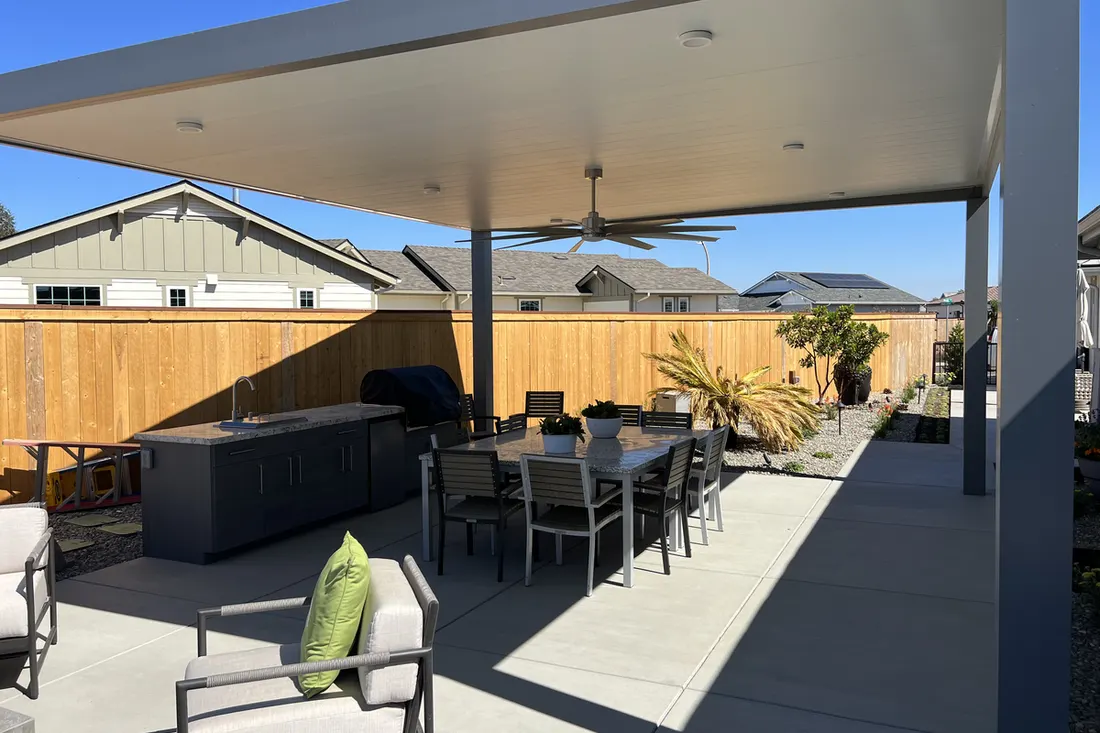
It depends on what you want overhead. A solid cover keeps off sun and rain. An insulated cover does that and also cuts the heat and noise underneath. A pergola gives filtered shade and keeps the sky. Choose by what bothers you most about your patio today.
- Solid cover: the straightforward way to get dry, shaded seating. It suits a patio that mainly needs rain shelter and shade from midday sun.
- Insulated cover: an insulated panel roof, with foam between two skins. Less of the sun’s heat reaches the patio and heavy rain sounds like rain, not a drum. It matters most on a west-facing patio. See our insulated patio covers page.
- Pergola: filtered shade with open sky, a good frame for lights or climbing plants. It will not keep you dry in a storm.
Orientation decides a lot. In a hot summer like 2023 in North Texas, a west-facing patio is the one that gets hardest to use by late afternoon. Watch your own yard at four o’clock before you pick a roof.
How large should the cover be for comfort?
Larger than the furniture. The sun moves, and a roof sized only to the table leaves chairs in light by mid-afternoon. Size the roof so the seats stay shaded as the sun drops, with room to walk around the table without stepping out from under it.
Where you live changes the problem. Frisco backyards are newer and flatter, so it is easy to build a cover that eats the lawn. Plano lots are mostly fenced and already landscaped, so the question becomes how a roof fits into an established yard. In older Dallas neighborhoods, mature trees and tight side access shape where the posts can go. We measure on site because these facts decide the design more than a catalog does.
What should you plan into the roof from the start?
Anything that has to live in or on the structure. Fans, lights and drainage are far easier to place while the frame is being designed than after the roof is up. Tell the designer how you plan to use the space, and ask what the frame needs to carry.
- A fan with a solid mounting point, and the wiring route to it.
- Light circuits for the evening, on a switch you can reach from the door.
- Gutters or another way to send roof water away from the slab and the house.
- A ceiling height that clears a tall guest with a fan overhead.
Rain is the other thing to read about before storm season. The Ready.gov severe weather page covers preparing for strong storms, and a good cover is built to be one part of that plan, not all of it.
Does a patio cover lower the load on your air conditioning?
It can help when the cover shades glass or a sunny wall. A cover over a west-facing sliding door keeps the afternoon sun off the glass, so the room behind it gets less direct heat. How much that matters depends on the house, so do not buy a cover for that reason alone.
What will a patio cover not do?
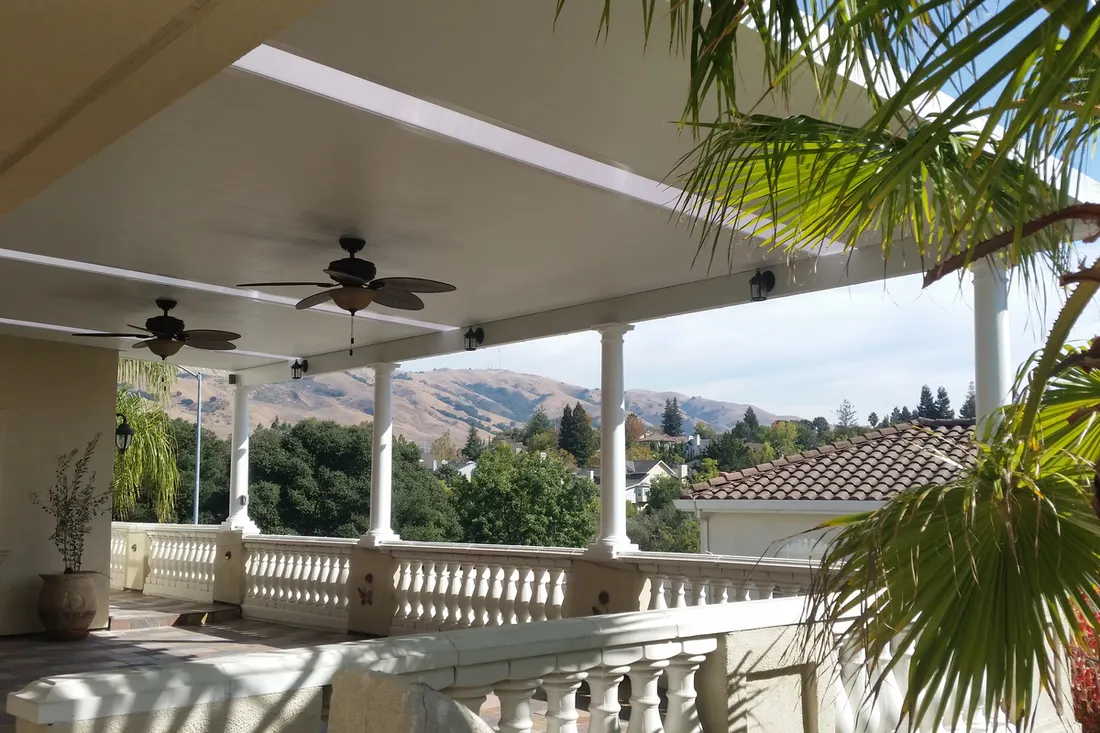
It will not turn a patio into a room you can use in every kind of weather. Set your expectations before you decide, because the cover is one part of a comfortable space and not a guarantee.
- It will not heat the space. After a hard freeze like December 2022, a covered patio is still outdoors. An enclosed room is a different project.
- It will not stop wind-driven rain on an open side.
- It will not cool the air without fans or shade from other sources.
- It will not suit every house. If your roofline is complicated or the wall behind it is weak, a freestanding cover or a pergola may fit better.
If you want a room that works in winter, look at sunrooms and enclosures. For summer comfort, the National Weather Service heat safety pages are a good reminder that shade is not the only thing that matters when temperatures climb.
A cover we build is tied into the roofline of your house and planned with fan and light rough-ins if you want them. You can book a free in-home estimate and see where the sun hits your patio. For evening use, our post on patio cover lighting is a good next read.
Questions we get asked about this
Shade at the hours you use it, moving air from a fan, light you can control and shelter from rain. A cover supplies the structure for most of these. Orientation matters too, since a west-facing patio takes the hardest sun in late afternoon.
It makes the space feel cooler by blocking direct sun, and an insulated roof cuts the heat that comes through the roof itself. It does not lower the air temperature on its own. A ceiling fan adds airflow, which makes the space feel cooler still.
A solid or insulated cover gives more shade and keeps you dry. A pergola gives filtered shade and an open sky. Pick by what bothers you most: harsh sun and rain, or a closed-in feeling. Some patios use both.
On mild days, yes, because the cover blocks wind and drizzle. In a hard freeze it is still an outdoor space, and it will not be heated. If you want winter use, ask about an enclosed room instead.
Yes. A free in-home estimate means we visit, measure the patio, check which way it faces and talk through roof options before anything is designed. American Eagle Builders makes those visits across 90 DFW cities.