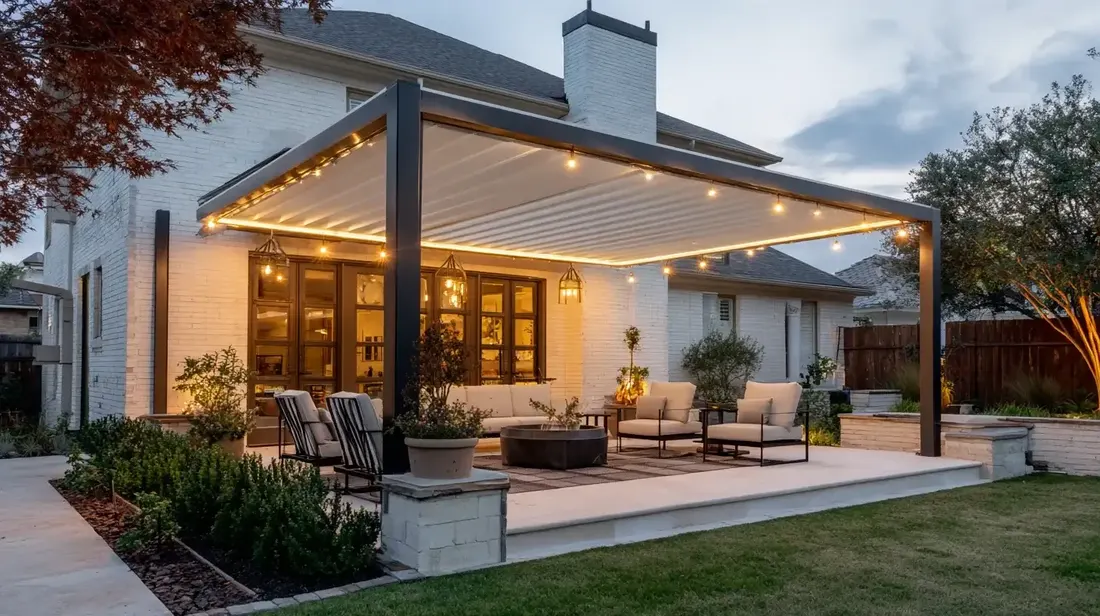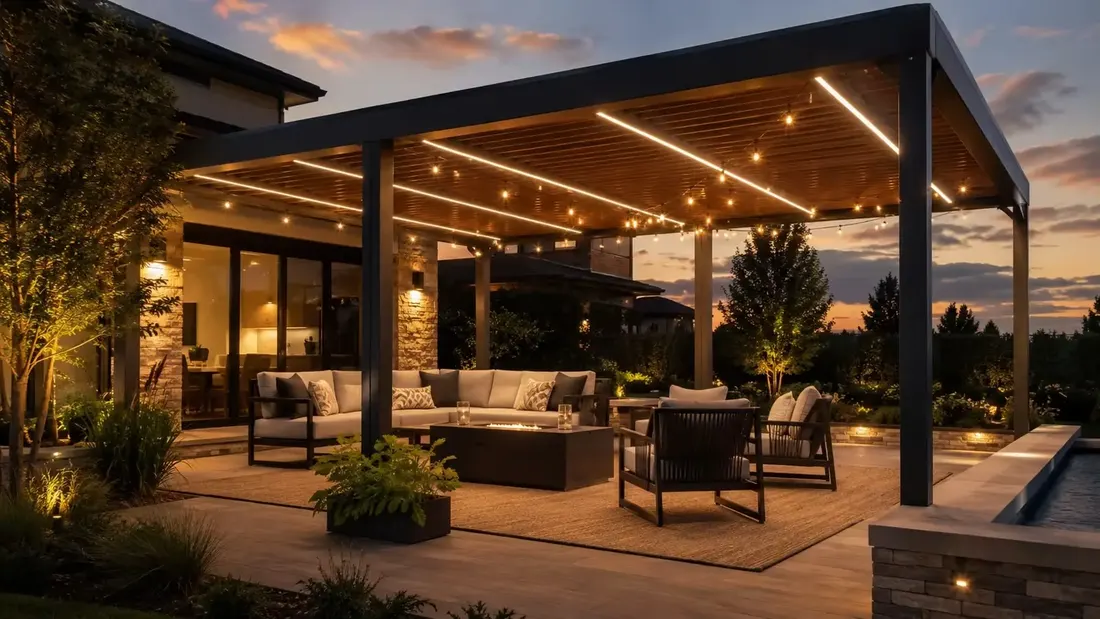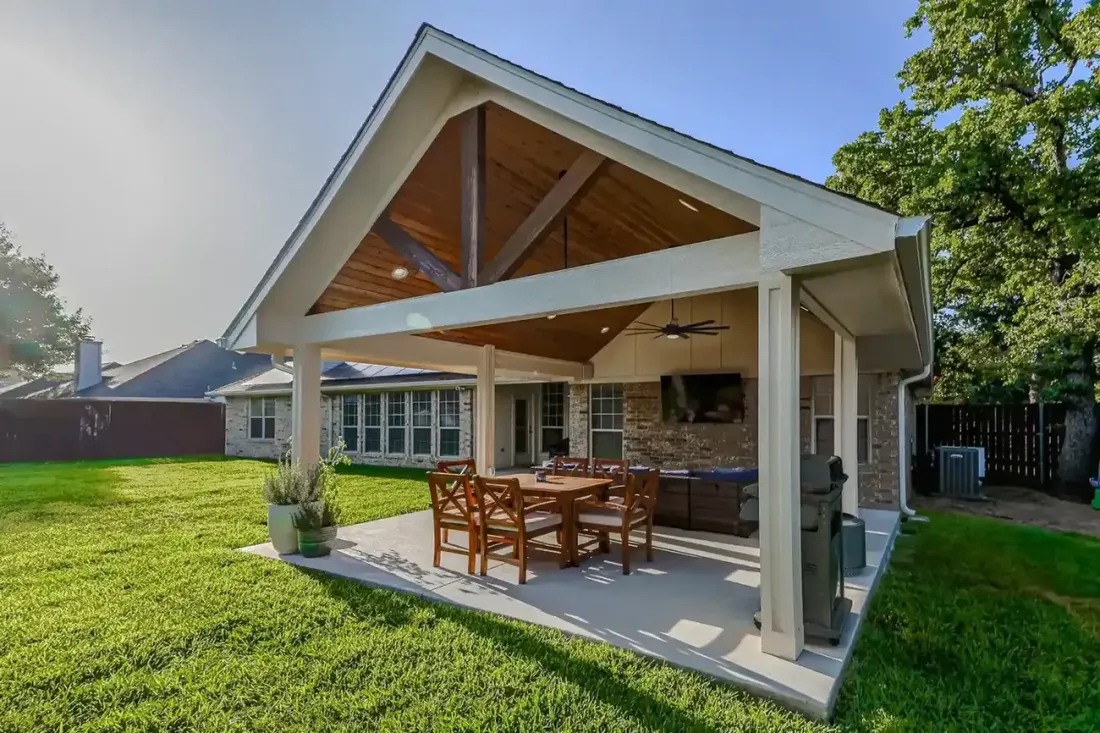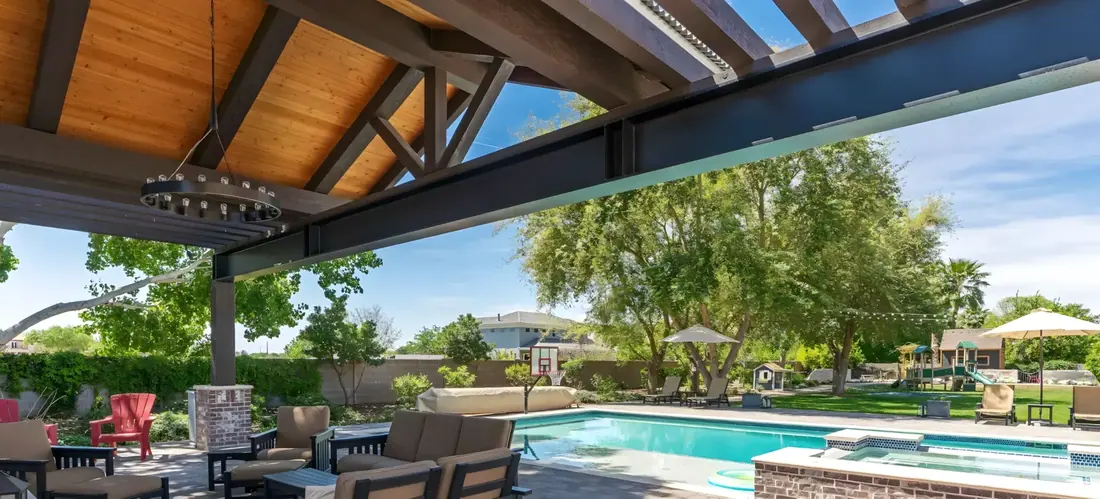
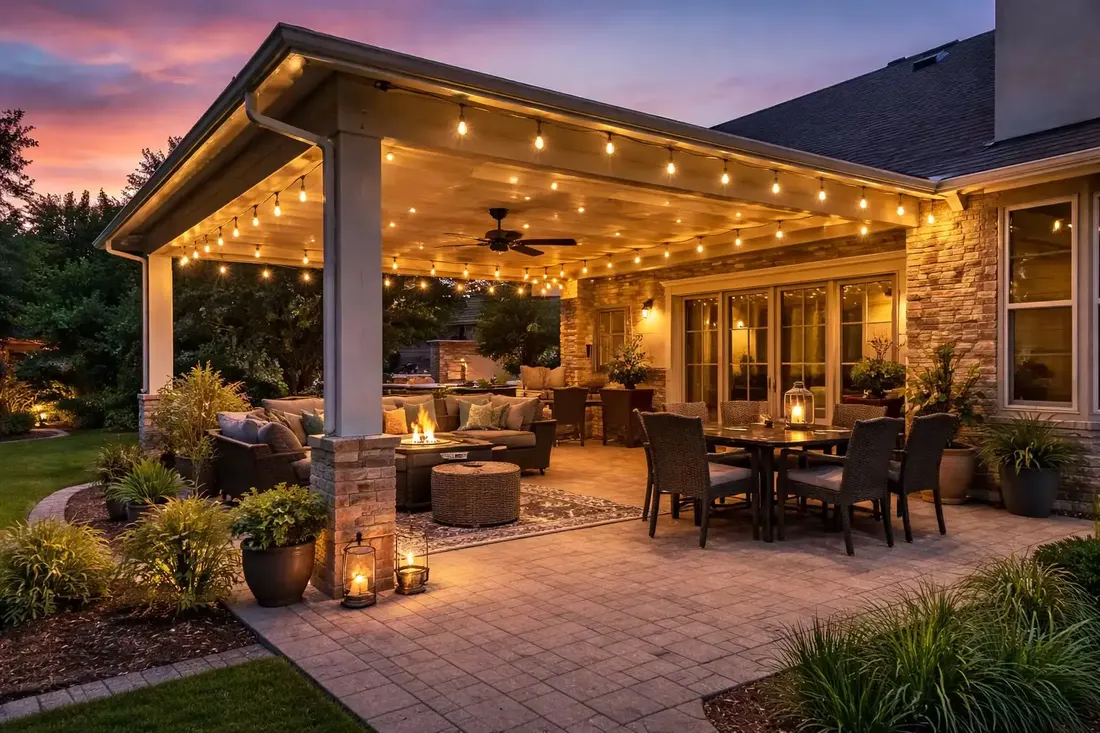
Patio cover lighting is the set of fixtures built into or hung from the roof so you can use the space after dark. In a Texas summer, evening is when most people actually sit out. Good lighting comes in layers, and the wiring is far easier to plan while the framing is still open.
The short answer
- Plan patio lighting in layers: general light, task light and a little accent light.
- Run wiring while the roof framing is open, because retrofitting recessed lights is harder.
- Match the fixture to the cover, with recessed lights for solid roofs and strings for pergolas.
- Use fixtures rated for damp or wet locations, and keep bright light low and shielded.
- Check with your city before adding fixed wiring, since permit rules differ across DFW.
In a long hot summer like 2023, North Texas patios are mostly an evening room. That makes lighting a real part of the design, not a decoration you add at the end. A plan made early is simple to build, and one made late is hard to retrofit.
What is the best lighting for a patio cover?
A mix of three layers works best: soft general light for the whole space, brighter light over the spots where you eat or cook, and a little accent light for atmosphere. One kind of fixture rarely does all three. Put each layer on its own switch or dimmer so you can set the mood to match the evening.
- General light: recessed fixtures in a solid roof, or warm string lights across a pergola.
- Task light: a pendant or a small spot over the dining table, grill side or steps.
- Accent light: low LED strips along a beam, lanterns on tables or lights tucked in planters.
Use warm white bulbs for the general layer. They flatter skin and food, and they tend to draw fewer bugs than harsh cool white. Keep the brightest light low and aimed down, so guests are not looking into a bare bulb and the neighbors are not looking into yours.
Which lights suit which type of cover?
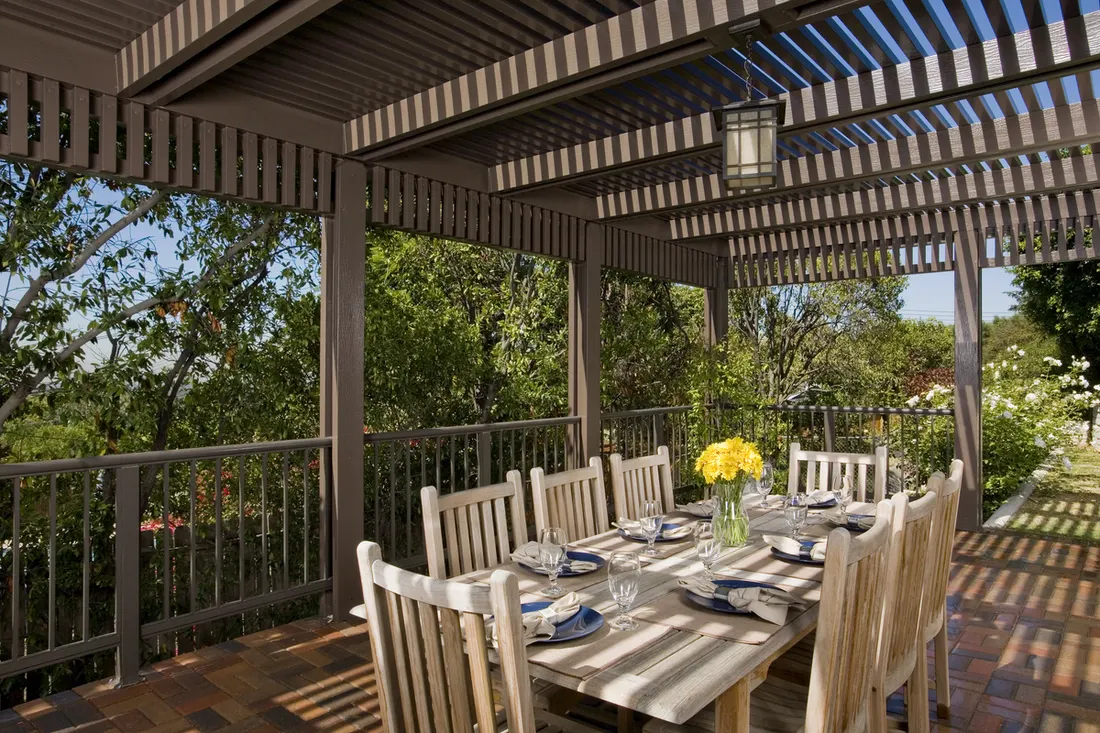
The cover decides what you can mount and where. A solid roof has a flat ceiling to hold recessed fixtures. A pergola has open beams that suit strings and pendants. A louvered roof sits somewhere between. Pick the light for the structure you have or plan, not the other way around.
| Cover type | Lighting that fits | Plan ahead for |
|---|---|---|
| Solid roof | Recessed fixtures, small wall lights | Wiring in the roof cavity before the ceiling is closed |
| Insulated panel roof | Surface-mounted or recessed fixtures | Where each fixture lands, since the panel is made to size |
| Open pergola | String lights, hanging pendants, beam strips | Outlets or a switched circuit at a post |
| Louvered pergola | Strips along the beams, lanterns on posts | Light that works with louvers open and closed |
Our posts on pergola lighting and shade for DFW evenings and lighting techniques for pergolas go further on open frames. This post is mostly about solid and insulated roofs, where the planning matters most.
Why plan the wiring before the roof goes up?
Because that is when the work is easy. While the framing is open, an electrician can run cable, set boxes and leave room for a fan. Once a ceiling or panel is on, adding a recessed light means cutting into finished work. A fan also needs a box rated to hold its weight, which is not something to improvise later.
Think about switches too. Put the fan, the general lights and the accent lights on separate controls, and put a switch where you will reach it from the door. Ask about outlets for plug-in items like heaters or speakers while you are at it. The National Fire Protection Association, at nfpa.org, publishes the electrical code that licensed electricians follow.
A word on dimmers. Not every LED fixture dims smoothly with every dimmer, and a mismatch shows up as flicker or a hum. Ask the installer to confirm that the fixtures and the controls are made to work together. It is a small question now and an annoying fix later, when the ceiling is closed and the fixtures are already glued in place.
Do patio lights need a permit?
Fixed wiring is electrical work, and many cities want a permit and inspection for it. Plug-in string lights are different. Rules vary, so check with your own city. Arlington and Frisco each post residential permit pages. If an HOA reviews your exterior, as in Southlake, ask whether light fixtures fall under its rules.
What lighting mistakes should you avoid?
Three come up again and again. The first is relying on solar lanterns as the only light. They are charming as accents, but they fade after a cloudy day and cannot light a table well. The second is aiming bright floodlights at seating. The third is buying fixtures that are not rated for damp or wet locations.
- Skip indoor-only fixtures under a roof that rain can reach from the side.
- Do not hang string lights from a fan or from anything that moves.
- Do not put every light on one switch, or you will dim the room by turning off the fan.
- Avoid glare from bare bulbs at eye level, especially near the dining table.
The ground can matter too. If you light a patio on a flat Plano or Frisco lot, your own fence and the neighbors' windows are close, so shielded fixtures and warm bulbs help. On a lot with a slope, like many in Flower Mound, lights that wash a step or a path make the change in level safer after dark.
Where should you start with your own patio?
Start by sitting out one evening at your slab and noting where you want light: the table, the steps, the grill, the seating. Draw those spots on a rough plan. Bring it to the first visit, so wiring and fixtures get placed before the roof frame is closed.
We are American Eagle Builders, a family-owned remodeler in Arlington that has served Dallas–Fort Worth since 1984. We build patio covers and pergolas, and a free in-home estimate is a good time to talk about where the light should go. You can book one here.
Questions we get asked about this
A solid roof suits recessed fixtures and small wall lights, and an open pergola suits string lights, pendants and beam strips. Whatever you choose, use fixtures rated for damp or wet locations, and plan a mix of general, task and accent light rather than one kind alone.
They work well in a solid or insulated roof, because they give even light without clutter. They are easiest to add while the roof is being built. Retrofitting them means cutting into a finished ceiling, so decide early and place them over the spots you use.
They suit accents like lanterns on a table or a path, because they need no wiring. They are weak as the main light, since they dim after cloudy days and give limited brightness. Use them as one layer, and put your main light on a wired circuit.
Yes, but it is harder. Plug-in lights are simple, while fixed wiring may mean opening the roof and needing a permit. If you are building a new cover, run the wiring and boxes during construction, even for lights you may add next year.
Yes. American Eagle Builders is a family-owned company in Arlington that works in 90 DFW cities. We offer free in-home estimates for patio covers and pergolas, and we can talk through where lights, fans and switches should go before the roof is built.