A patio maintenance checklist is the short list of jobs that keep the paved surface sound: sweeping, drainage, joints, sealing and stain care. It is separate from caring for any roof over it. In Texas, clay soil, summer heat and the odd hard freeze all push on a slab, so the checks follow what each does.
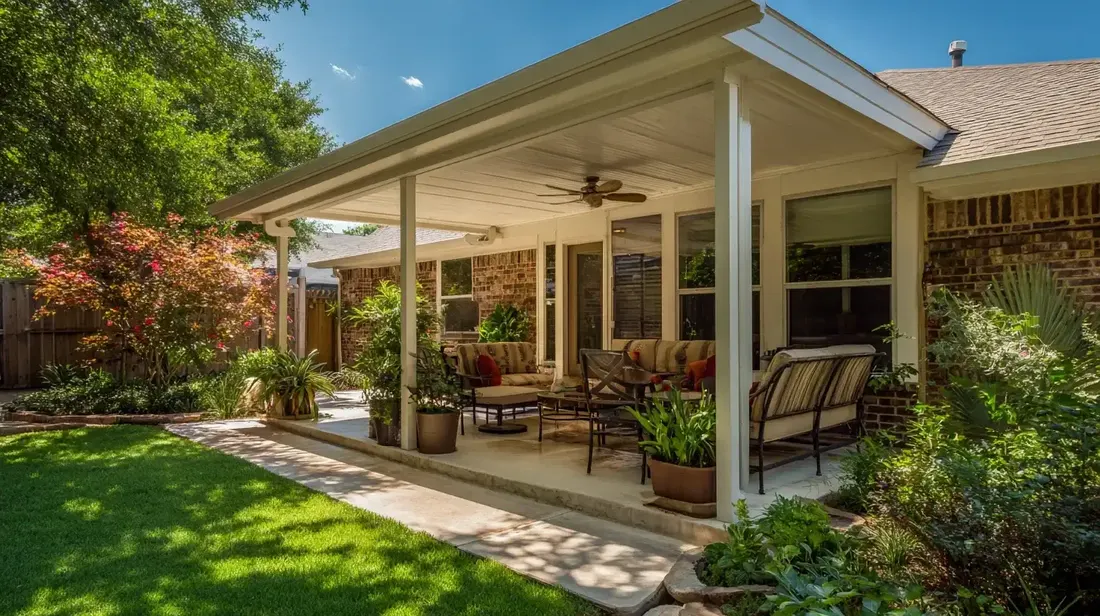
The short answer
- A patio slab moves with Texas clay, so some small change over the years is normal.
- Hairline cracks are common, but cracks that widen or step up need a closer look.
- Keep water from pooling, because it causes stains, algae and freeze damage.
- Use a soft brush and mild soap, and be careful with pressure washers on pavers and stone.
- Clear drains and empty planters before a hard freeze to keep water out of cracks.
Most advice about patios in Texas is about shade and furniture. The slab underneath gets less attention, though it moves more than anything above it. This checklist is for the surface only. If you also have a roof, our post on patio cover maintenance by season covers that side.
What does Texas weather do to a patio slab?
Heat expands it, dry weather shrinks the clay under it, wet weather swells that clay again, and a freeze turns any trapped water into ice. None of this is dramatic in a single year. Over several, small changes show up as cracks, tilted pavers, pooled water and stained surfaces.
| Season | What it does to the surface | What to check |
|---|---|---|
| Spring | Rain finds low spots; pollen and algae settle | Puddles that last after rain, green or slick patches |
| Summer | Heat bakes the surface and dries the clay beneath | New cracks, gaps at edges, fading or chalky finish |
| Fall | Leaves stain and hold damp against the slab | Tannin stains, mold in shaded corners, clogged drains |
| Winter | Water in cracks can freeze and widen them | Open cracks to seal, ice patches, drainage that backs up |
Are cracks in a concrete patio a problem?
Hairline cracks are normal in concrete. Builders cut control joints so a slab cracks along a straight line they choose. Watch for cracks that widen, step up so one side sits higher, or let water in. Those point to ground movement or poor drainage. Mark a wide crack with a pencil and a date, then check again after a season.
Clay under a slab is full of water in spring and parched by late summer, so it pushes and pulls on the concrete above. Some movement is expected around Dallas and Plano. After a dry summer like 2023, gaps can open at the edges. Fill small cracks with a flexible sealant made for concrete, and do not use rigid patch material on a crack that moves.
Pavers and stone need different care
Pavers rely on sand between the joints. Sweep it back in when it washes out, and pull weeds early, before roots lift an edge. A paver that sits low or high is a sign the base beneath it has shifted. Natural stone is uneven by nature, but loose pieces or wide gaps are worth fixing before someone trips.
How do you keep water from pooling on a patio?
Make sure the surface slopes away from the house, and keep drains, downspouts and low spots clear. Water that sits on a slab breeds algae, stains the surface and freezes in a cold snap. If puddles stay for a day after rain, the slope or the surrounding grade may need work.
Slopes and trees change the picture. Cedar Hill has real elevation change, so water arriving from higher ground can run across a patio. Garland’s older lots have large mature trees whose roots can lift an edge and whose leaves stain the surface. Look at where water comes from, not only where it lands.
What is the right way to clean and seal a patio?
Sweep often, wash with mild soap and a soft brush, and rinse well. A pressure washer can work on bare concrete if you stay back and keep it moving, but it can blast the sand out of paver joints and scar softer stone. Follow the instructions of any sealer you use, and test in a hidden corner first.
- Sweep leaves and debris before they stain.
- Treat green or black patches with a cleaner made for your surface.
- Re-sand paver joints and reseal when the maker says it is time.
- Do not use harsh acids on stone or colored concrete without testing a small spot.
- Ask the sealer or paver maker before using any de-icer in winter.
Damp, shaded corners grow mold. The EPA’s mold page explains how moisture and mold connect and how to handle small areas. Keep planters and furniture off the surface where water collects, and shift them now and then so the slab can dry.
Do nearby trees and plants cause patio damage?
They can. Roots lift edges and crack slabs over time, and leaves leave stains and keep the surface damp. Shade trees are worth having, so the fix is not to remove them. Keep new plantings a sensible distance from the slab, sweep leaves often and do not let planters sit on the same spot for months.
Watering matters too. A sprinkler that sprays the slab every morning leaves it wet, stains it with minerals and softens the soil along the edge. Aim heads at the lawn and beds, and walk the patio after a watering cycle to see where water ends up.
A simple rhythm helps. Once a month, sweep and look at drains. Each season, walk the slab with a notebook and write down new cracks, new stains and new puddles. Once a year, wash it properly and decide whether anything needs sealing. Ten quiet minutes four times a year catches nearly everything early.
How do you protect a patio from a hard freeze?
Keep water from sitting on it. Clear drains, empty planters that can hold water and cover or move anything that traps moisture against the slab. Hard freezes like December 2022 and the February 2021 storm are rare, but they expose every open crack. The National Weather Service Fort Worth office posts forecasts so you can prepare.
If you want shade or shelter over the patio, our post on preparing your backyard for a patio cover shows how the slab and ground are checked first. American Eagle Builders is a family-owned exterior remodeler from Arlington, and we have worked across Dallas–Fort Worth since 1984. See our patio covers or ask for a free in-home estimate.
Questions we get asked about this
Check it each season and after any hard storm or freeze. Sweep often, look for new cracks, watch where water sits after rain, and clear drains and leaves. Do the bigger jobs, such as re-sanding pavers or resealing, when the surface or the maker’s instructions call for it.
Hairline cracks are common and often planned as control joints. Cracks that widen, step up or let water in point to ground movement or poor drainage and deserve a closer look. Mark and date a wide crack, and check again after a season.
On bare concrete it can work if you keep the wand moving and stay back. On pavers it can blast out the joint sand, and on soft stone it can scar the surface. A soft brush with mild soap is the safer routine.
Check that the surface slopes away from the house and that drains and downspouts are clear. If puddles last a day or more after rain, the slope or nearby grade may need correcting. Standing water causes algae, stains and freeze damage.
Yes. American Eagle Builders is a family-owned remodeler in Arlington, serving homeowners in 90 DFW cities. We offer free in-home estimates for patio covers and look at your slab and drainage in person before we plan anything over it.