Patio furniture is the seating, tables and cushions you put on a slab and leave outside. In North Texas the sun, wind and a hard freeze every few winters do most of the damage. This guide sorts materials by how they behave here, and shows how a cover over the patio changes what is worth buying.
The short answer
- Choose the use of your patio first, and then pick furniture to fit it.
- Aluminum, teak and good synthetic wicker usually cope best with Texas sun and damp.
- Cushions fade and hold water long before frames wear out, so store them in bad weather.
- A cover keeps rain off, but wind and low sun still reach the open sides.
- If a table rocks, check whether the slab has moved before you replace the table.
People often shop for the furniture first and think about the slab and the roof later. In Texas that order costs you. The same chair behaves very differently in full afternoon sun than under a roof, and a set that rocks on a shifting slab never feels right. So start with the space, then pick the furniture.
What is a patio, and what should go on it?
A patio is a paved outdoor area next to a house, used for sitting, eating and visiting. What goes on it depends on how you use it. A dining table wants level ground and room to pull chairs out. A lounge group wants softer seating and a spot out of the low sun. Decide the main use first, and let that guide the rest.
Concrete, pavers, flagstone and gravel are the usual surfaces. Each treats furniture differently. Concrete is flat and easy to slide chairs across. Pavers can look beautiful but may settle and leave a table leg a little high. Gravel drains well but makes chair legs sink. Flagstone is uneven by nature, so smaller bases and a thick rug help.
Which patio furniture holds up in North Texas sun?
Aluminum, teak and good synthetic wicker tend to cope best, because they do not rust or soak up water. Plain steel needs good paint, and bare wood needs oil. Dark metal can get too hot to touch in July. Match the material to how much sun and rain the spot really gets, and to how much upkeep you will do.
| Material | Good in North Texas because | Watch for |
|---|---|---|
| Aluminum | It does not rust and is light to move | Dark finishes get hot in direct sun |
| Teak or other hardwood | Natural oils resist moisture | It still needs cleaning and a seasonal check |
| Synthetic wicker | Looks like cane and handles damp | Cheap weave can crack and fray in strong sun |
| Steel or wrought iron | Heavy, so it stays put in wind | Rust if the paint chips and water sits |
| Plastic or resin | Easy to hose off | Light pieces blow around; some fade or turn brittle |
Two honest warnings. Do not put a bare metal chair on an open west-facing slab and expect to sit in it at five o’clock in August. And do not buy a wood set unless you will oil it, because untreated wood grays and splits fast in full sun. If you will not do upkeep, buy aluminum and spend the saved effort on cushions.
Cushions fail before frames do
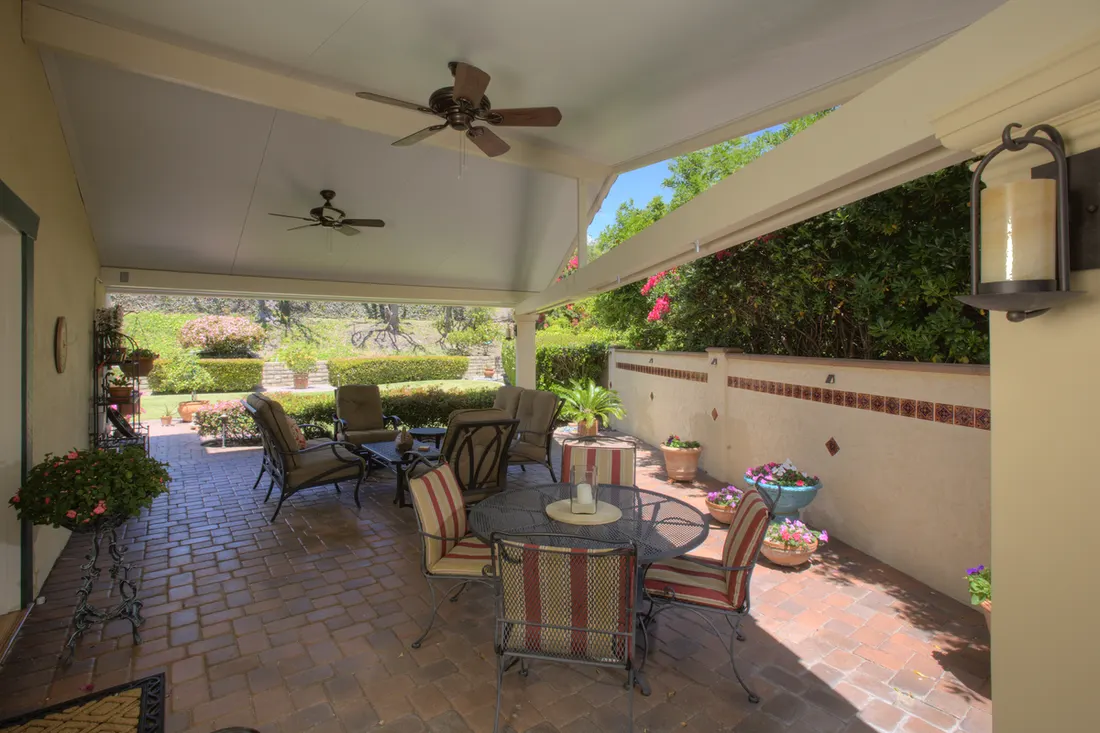
The frame of a good set can last for years, but cushions fade and hold moisture long before then. Choose fabric made for outdoor use, go for lighter colors in full sun, and keep the foam dry. A storage bench or a closet near the door makes it easy to put cushions away when a storm comes through.
Does a patio cover change what furniture you can buy?
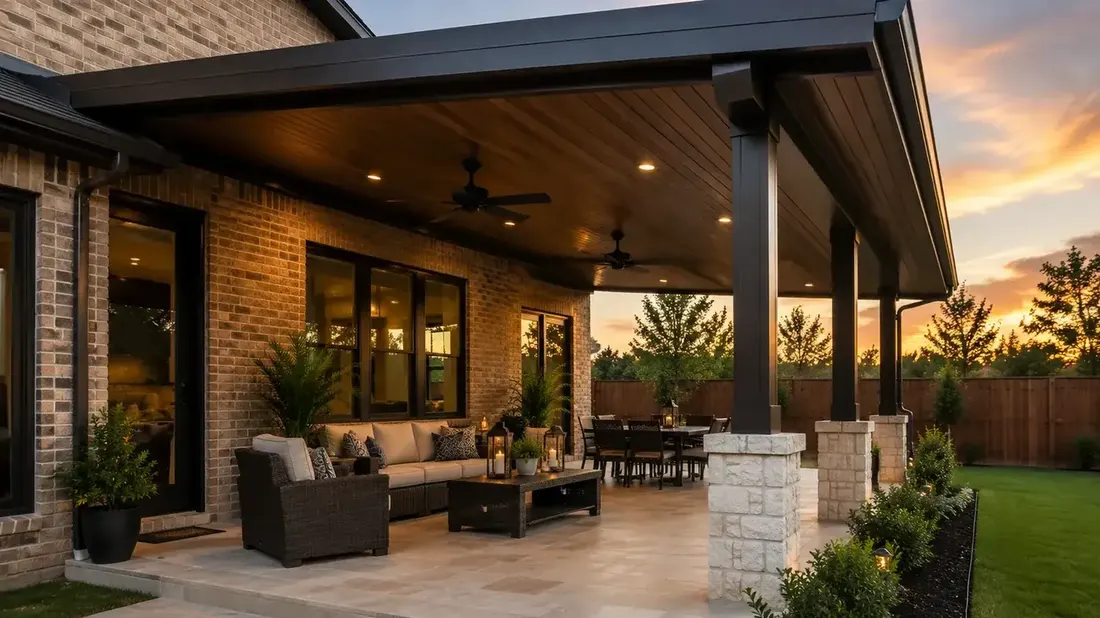
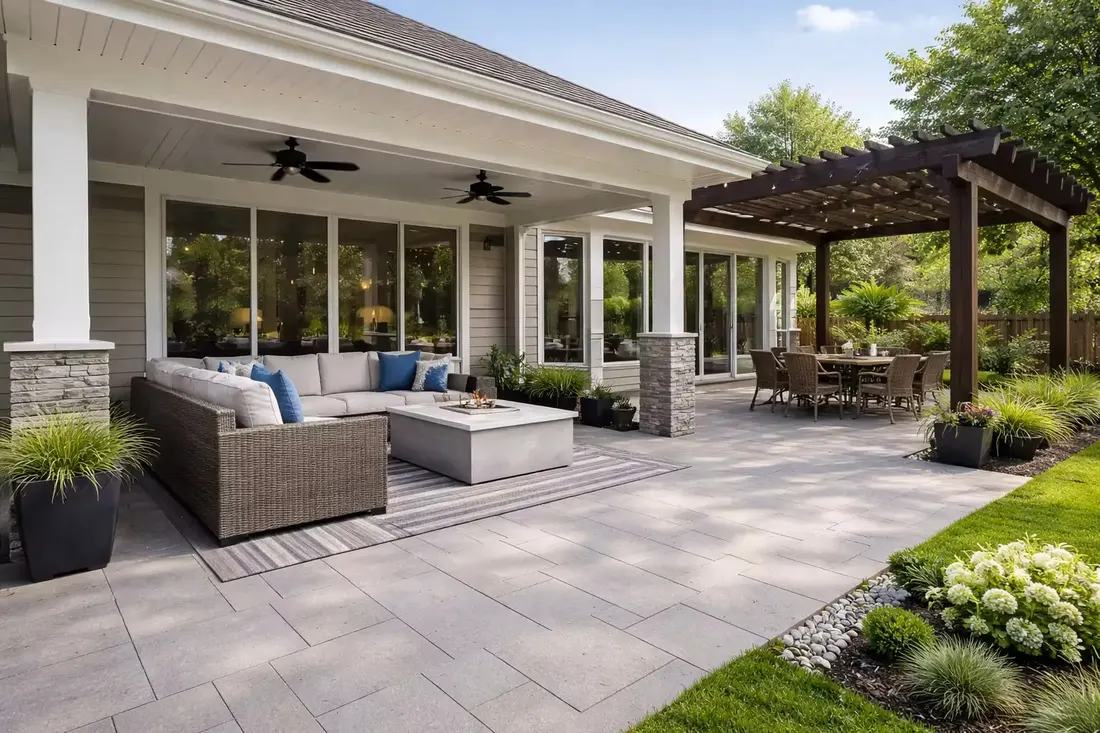
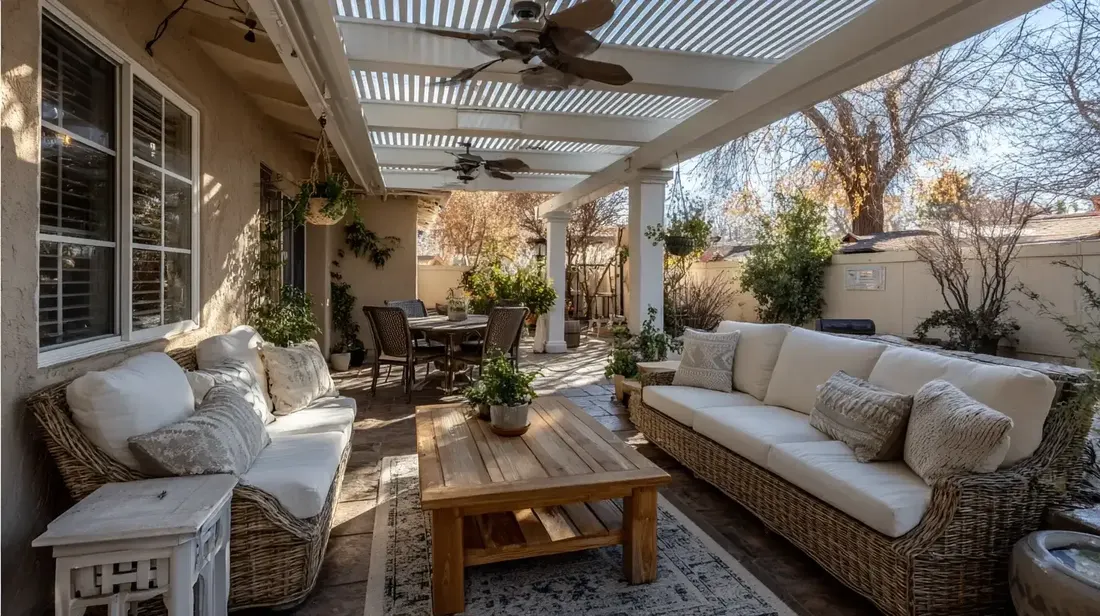
It does. A solid roof keeps rain off, so upholstery, rugs and even some indoor-style pieces last longer outside. It does not stop wind-blown rain or low afternoon sun from coming in at the sides. You can buy more comfortable furniture under a cover, but you still choose it with the open sides in mind.
Our post on how patio covers protect outdoor furniture goes through what shade and shelter do through the seasons. If you are still deciding between a roof and a pergola, read how to choose a patio style for your backyard. A pergola gives filtered shade, but it will not keep a cushion dry.
How much furniture does your patio really fit?
Less than most people think. A chair needs room to pull back, and guests need a clear path to the door. Before you buy, lay painter’s tape on the slab in the shape of each piece. Walk around it with a plate in your hand. If you bump into things, take one piece out.
- Keep a clear path from the door to the lawn or gate.
- Leave space behind dining chairs so they can slide out.
- Put seating where the shade lands in the late afternoon, not only at noon.
- Skip a big sectional on a slab that holds puddles after rain.
Why does your patio furniture rock or tilt?
Usually the surface under it has moved. Around Dallas and Plano the ground is dark clay that swells when wet and shrinks in dry months, and slabs and pavers shift with it. Fort Worth’s thin soil over limestone behaves differently, so the cause changes street to street. If a table will not sit still, look at the slab before you blame the table.
Small fixes help. Adjustable feet level a table, and a thick rug hides minor dips. A slab that slopes toward the house or holds water is a bigger job, and it is worth fixing before you buy anything expensive. A flat, well-drained slab is also what any cover should sit on.
How should you protect furniture through a Texas year?
Wash it before the summer heat, check frames for rust, and store cushions when heavy weather comes. Empty planters and any container that can hold water before a hard freeze, like the one in December 2022. The Ready.gov severe weather page is a good reminder to secure loose items before high winds, and the National Weather Service Fort Worth office posts local warnings.
American Eagle Builders is a family company based in Arlington that has worked in Dallas–Fort Worth since 1984. We build the roof over the furniture, not the furniture itself. If you are planning a patio cover, ask for a free in-home estimate and we will look at the slab and the sun together.
Questions we get asked about this
Aluminum, teak and quality synthetic wicker usually hold up best, because they resist rust and moisture. Choose lighter colors in direct sun, since dark metal and dark cushions get hot and fade faster. Under a cover you have more freedom, but wind-blown rain and low sun still reach the edges.
If a hard freeze or storm is forecast, store cushions and empty anything that holds water. Frames made of aluminum or teak can usually stay out. A fitted cover over the furniture helps against dirt and sleet, but it does not replace dry storage for cushions.
A flat, well-drained slab is the easiest on furniture. Concrete is level and simple to clean. Pavers look good but can settle, and flagstone is uneven. Gravel drains well but lets chair legs sink. Pick the surface that suits how you sit and how much upkeep you will do.
You do not need one, but a cover extends furniture life because it keeps rain and most direct sun off it. It also lets you use upholstered pieces. Even so, strong wind can drive rain under the roof, so plan for some cleaning.
No. American Eagle Builders is a family-owned exterior remodeler in Arlington that builds patio covers, pergolas, enclosures and sunrooms. We offer free in-home estimates across 90 DFW cities and can help you plan the roof so the furniture you choose gets shade where it needs it.