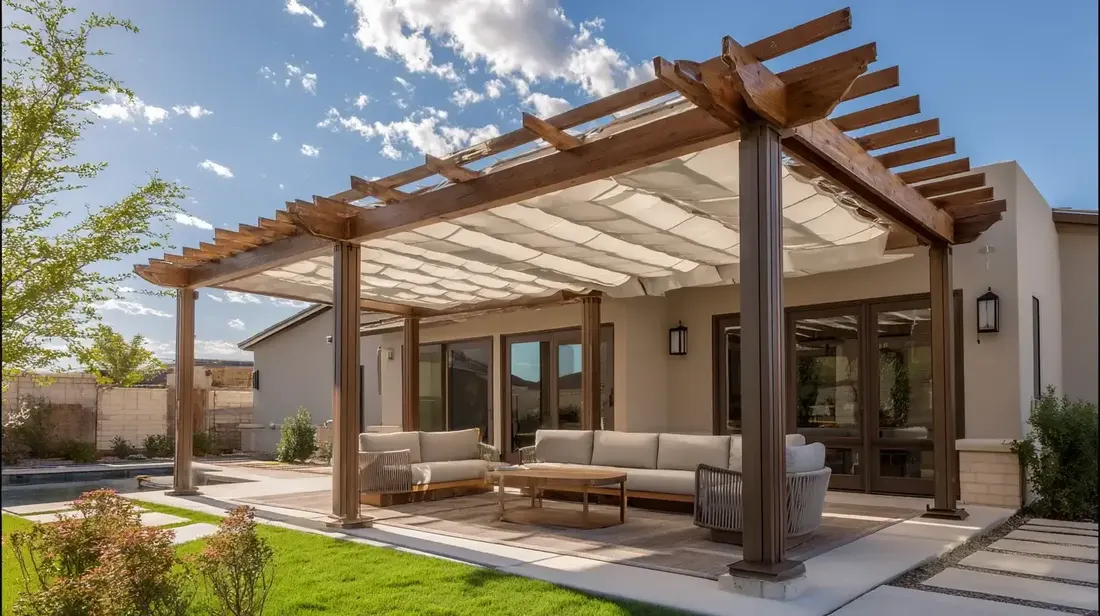
To maintain a pergola in Texas summer heat, rinse it, check the finish and fasteners before the hot months and shade the surfaces that take the most sun. A pergola is an open frame of posts and beams, and heat works on it through drying, fading and expansion.
The short answer
- Texas heat dries wood, fades finishes and works fasteners loose through daily expansion.
- Run a full check in spring so the hot months are for use, not repairs.
- The west side takes the most sun, so check that face first and most often.
- A lighter, well-applied finish usually handles heat better than a dark, thick one.
- Avoid pressure washing and avoid staining hot wood in direct sun.
- Call a professional when a post leans, a joint opens or a roof shifts.
A pergola sits in the sun all day with nothing to hide behind. In July and August a beam that is cool at dawn is hot to the touch by midafternoon, then cools again at night. That daily swing is slow work on wood, metal and finishes, and it is the reason summer is the season to look closely.
What does Texas summer heat do to a pergola?
It dries, fades and loosens. Wood loses moisture and can check or split. Paint and stain chalk and fade in the sun. Metal expands, and its coating can chip at joints. Daily expansion and contraction can also work fasteners loose over a season. None of it is sudden, which is why it gets missed.
- Wood: surface cracks, graying and splits that open at the beam ends.
- Paint and stain: chalky film, color fade and thin spots on the sunny side.
- Metal: chipped coating at joints, and hot surfaces that are unpleasant to touch.
- Fabric and shade cloth: UV wear, fading and fasteners that pull loose.
- Fasteners: bolts and screws that loosen after many hot days and cool nights.
The west side takes the worst of it. If one face of the pergola looks older than the others, that is the sun at work. Check that side first and most often. Our post on pergola designs for Fort Worth backyards compares how designs handle heat and wind.
What should you do before summer starts?
Do a full check in April or May, while the weather is kind. Wash the frame, inspect it, tighten what is loose and renew the finish if it is thin. It takes an afternoon, and it means the hot months are for sitting under the pergola, not for repairing it.
- Rinse the frame with a hose, then scrub gently with a soft brush and mild soap.
- Check every bolt, bracket and screw, and tighten or replace any that are loose or rusted.
- Look for splits, soft spots and rust, and mark each one with tape so you can find it again.
- Renew stain, sealer or touch-up paint where the finish is thin or chalky.
- Trim plants and branches so nothing rubs the beams or keeps them wet.
- Test any louvers, motors or retractable shades before you need them.
What should you do during the hottest months?
Keep it clean, look after storms and work in the cool of the morning. Rinse dust and pollen off every few weeks, and check the structure after a storm. When you do work on it, start early. The National Weather Service posts heat safety guidance that applies to anyone working outside on a hot day.
Shade protects the structure as well as you. A fabric shade, louvers or a well-placed tree take sun off the beams on the hot side, and that slows fading and drying. The EPA’s page on heat islands explains why shaded surfaces stay cooler than bare ones, and the same idea applies to your beams and your slab. Keep any tree limbs off the roof, because leaves and branches hold moisture against wood and give pests a path. Check the forecast from the National Weather Service office in Fort Worth before you plan a job.
Write the date of each job on the underside of a beam or in your phone. A record of when you last stained, tightened and cleaned tells you what is due without guessing. It also helps if an installer ever has to look at the structure, because they can see what has been done and what has not.
Which finish handles Texas heat best?
A lighter, well-applied finish tends to fare better than a dark, thick one. Light colors take up less heat, and a thin even coat is less likely to crack than a heavy one. The best finish is the one that matches the material and that you will actually keep up.
| Finish | How it handles heat | What it needs |
|---|---|---|
| Light stain on wood | Fades slowly and runs cooler | Fresh coat when the color thins |
| Dark stain on wood | Runs hot and can dry the wood faster | More frequent re-staining |
| Paint on wood | Protects well until it chalks or peels | Scraping and repainting when it fails |
| Powder coat on metal | Holds color and shape well | Wash it and touch up any chip |
| Bare wood | Grays and checks fastest | A finish as soon as possible |
What should you not do to a pergola in summer?
Do not do jobs that the heat makes worse. Finishes dry too fast on hot wood, strong chemicals strip protection and a pressure washer drives water into joints. A short list of mistakes covers most summer damage that could have been avoided.
- Do not stain or paint hot wood in direct sun, because the finish dries too fast and goes on unevenly.
- Do not pressure wash, because it can strip the finish and force water into joints.
- Do not use harsh bleach or strong solvents on a finish you want to keep.
- Do not climb onto hot beams or roof panels, and do not lean a ladder on the louvers.
- Do not ignore a small split or a loose bolt, because heat makes each one worse.
For a full picture of wear beyond the heat, read how to extend the lifespan of a patio cover or pergola. For ways to cut the sun that reaches the structure, see our post on blocking sun on a patio naturally.
When should a professional look at it?
When a post leans, a joint opens, a roof shifts or rust has eaten through a bracket. American Eagle Builders is a family-owned remodeler in Arlington, serving Dallas–Fort Worth since 1984, and we offer free in-home estimates. Our pergola page shows what we install, and we will tell you whether a fix or a rebuild fits your frame.
Questions we get asked about this
Do a full check once a year before the hot months, then rinse it every few weeks and look it over after storms. The west side takes the most sun, so check it first. A short look each season catches most problems before they spread.
A lighter stain on a clean, dry surface tends to hold up better than a dark one, which runs hotter and dries the wood faster. Apply it in the shade and in moderate weather, and follow the product’s instructions for coats and drying.
It is better not to. High pressure can strip stain or paint and push water into joints. Use a hose, a soft brush and mild soap, rinse well and let the frame dry. On wood, gentle washing keeps the finish working.
Yes, though less than wood. Wash off dust and pollen, check the coating for chips and touch up any bare spots, and check that fasteners are tight. Heat causes metal to expand, so joints deserve a look each year.
American Eagle Builders is a family-owned remodeler in Arlington serving Dallas–Fort Worth since 1984. We offer free in-home estimates and are glad to look at a structure that is already up. We will tell you plainly whether it needs a touch-up, a repair or a rebuild.