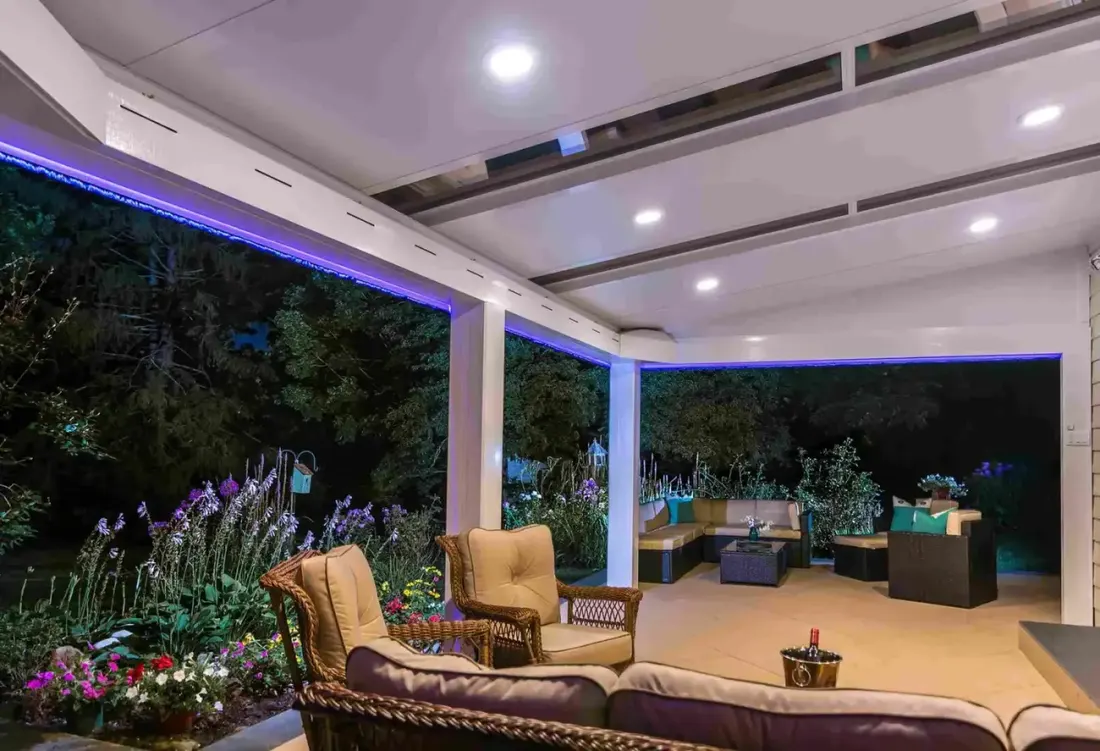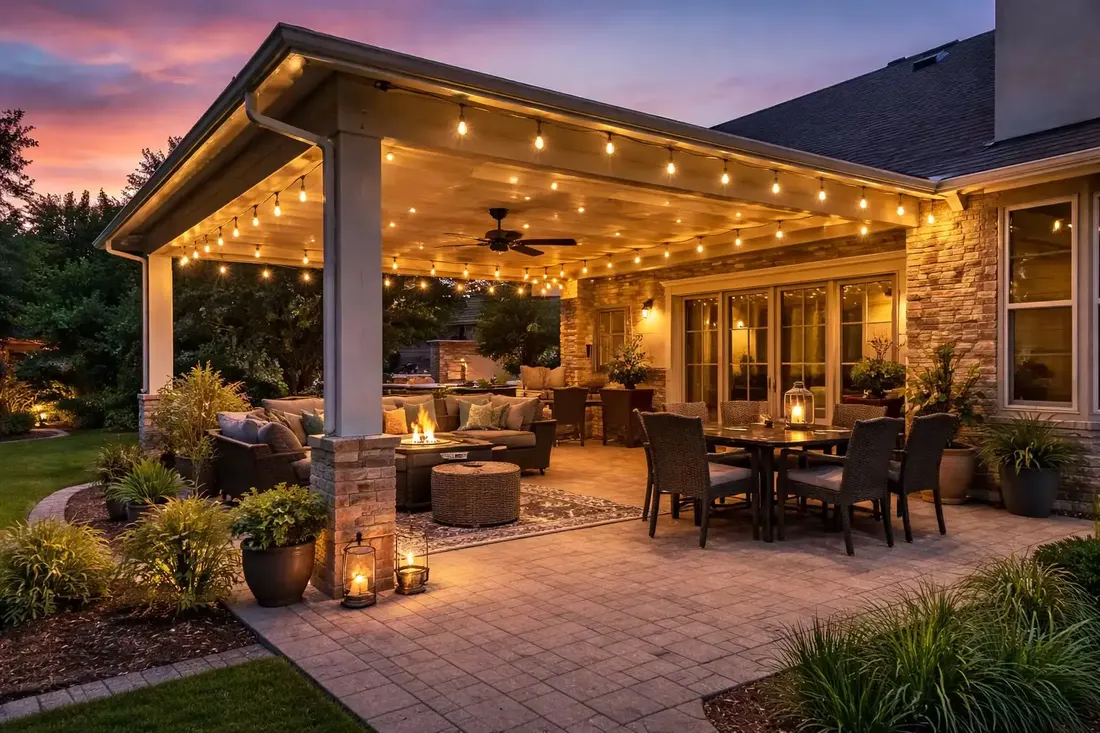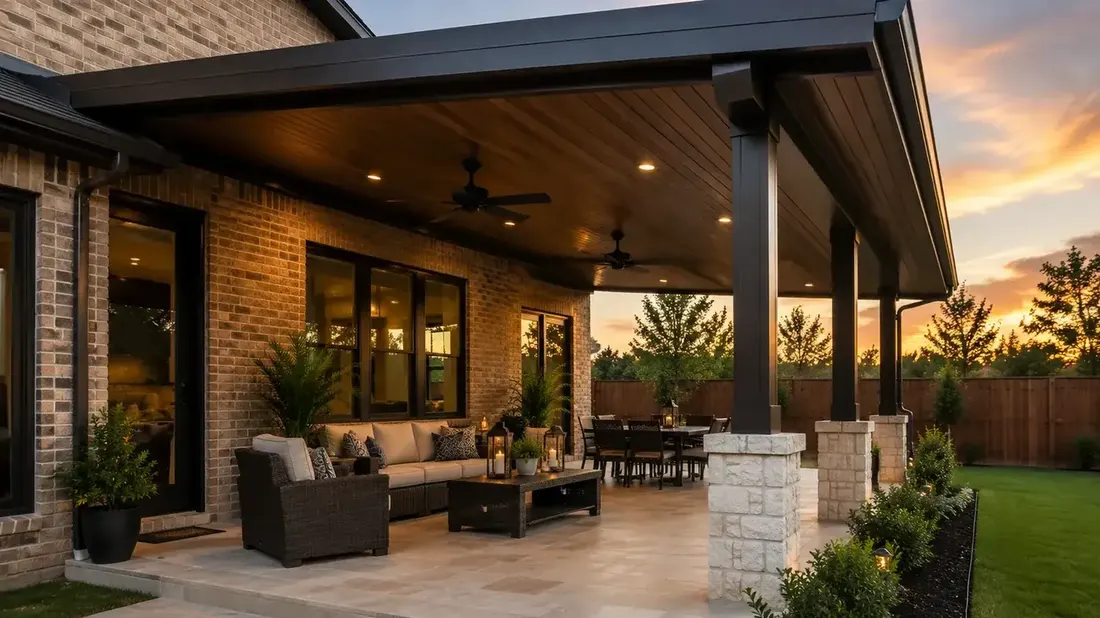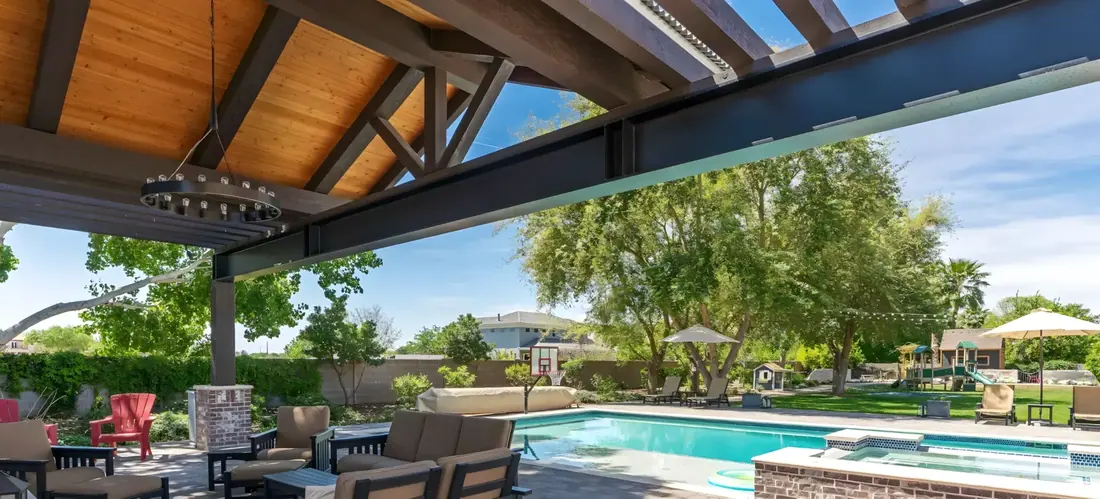
A patio cover can protect outdoor electronics from direct sun and rain, but it does not make a device waterproof. A cover turns an open slab into a shaded, damp space, and that is the setting most outdoor TVs, speakers and fans are made for.
The short answer
- A patio cover keeps direct rain and sun off your electronics, but it does not make them waterproof.
- Mount screens and speakers back from the open edge of the roof, under the deepest part.
- Match each fan and fixture to its rating: damp for a roofed space, wet where rain can reach it.
- An open pergola does not protect screens, so keep them under a solid roof section.
- Have a licensed electrician do the wiring, and ask your city whether the work needs a permit.
An outdoor TV is an expensive thing to leave in the weather. So is a good speaker. Owners often assume a roof settles the question, and a roof helps a great deal, but it is only one of several choices. This post covers what a cover does, where to put the gear under it and what to check before you plug anything in.
How does a patio cover protect outdoor electronics?
It keeps direct rain and direct sun off the equipment. Rain is what most often damages gear left outside, and strong sun heats a dark screen or a speaker housing faster than shade does. A cover also keeps dust and leaves from settling on vents and cables.
Be clear about the limits. A cover does not stop humidity, and it does not stop rain blown in sideways by a storm. It does not cool a device on a still August afternoon either. Think of the roof as the first layer of protection, with the device’s own rating and your placement as the second and third.
Where under the roof should the TV and speakers go?
Back from the open edge, toward the house wall, and out of the sun’s path. The edge of a roof is where rain and low sun both reach in. A wall under the deepest part of the roof is the safest place for a screen, and it also reduces glare on the picture.
- Mount the screen on the wall under the roof, not on a post at the open edge.
- Face it away from the low afternoon sun so the picture stays readable and the screen stays cooler.
- Keep speakers off the outer rail, where blowing rain reaches them first.
- Leave space around vents so heat can escape.
- Run cables inside conduit or the frame, not across the slab.
What ratings should fans, lights and outlets carry?
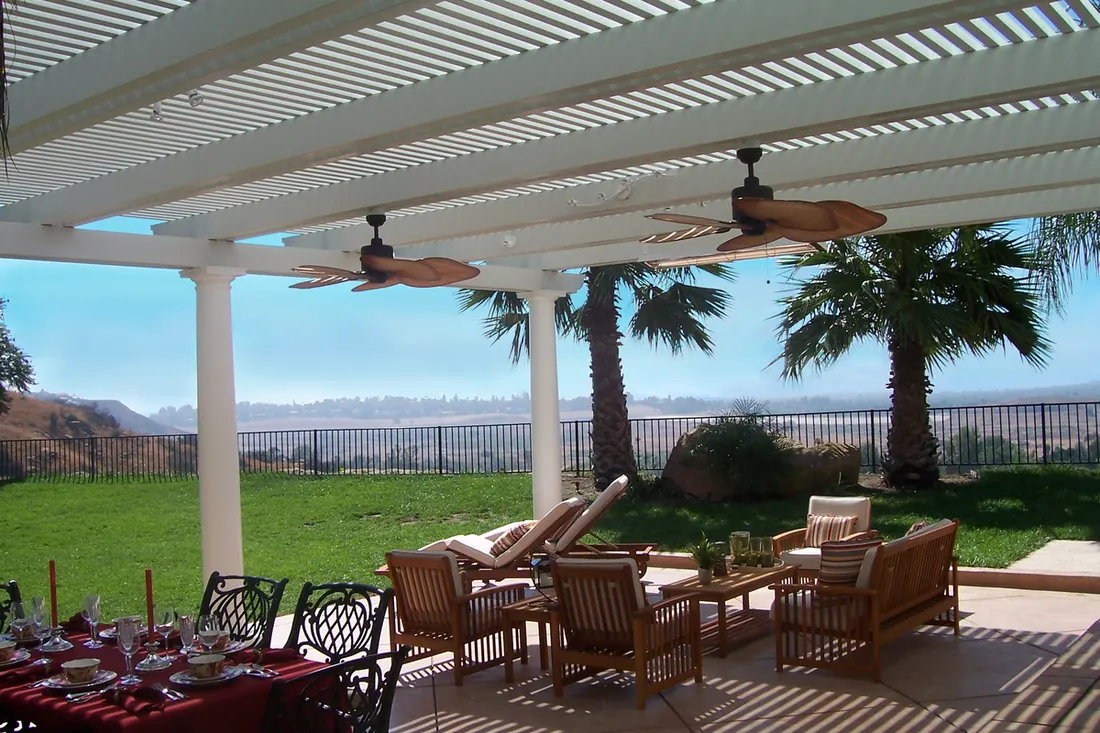
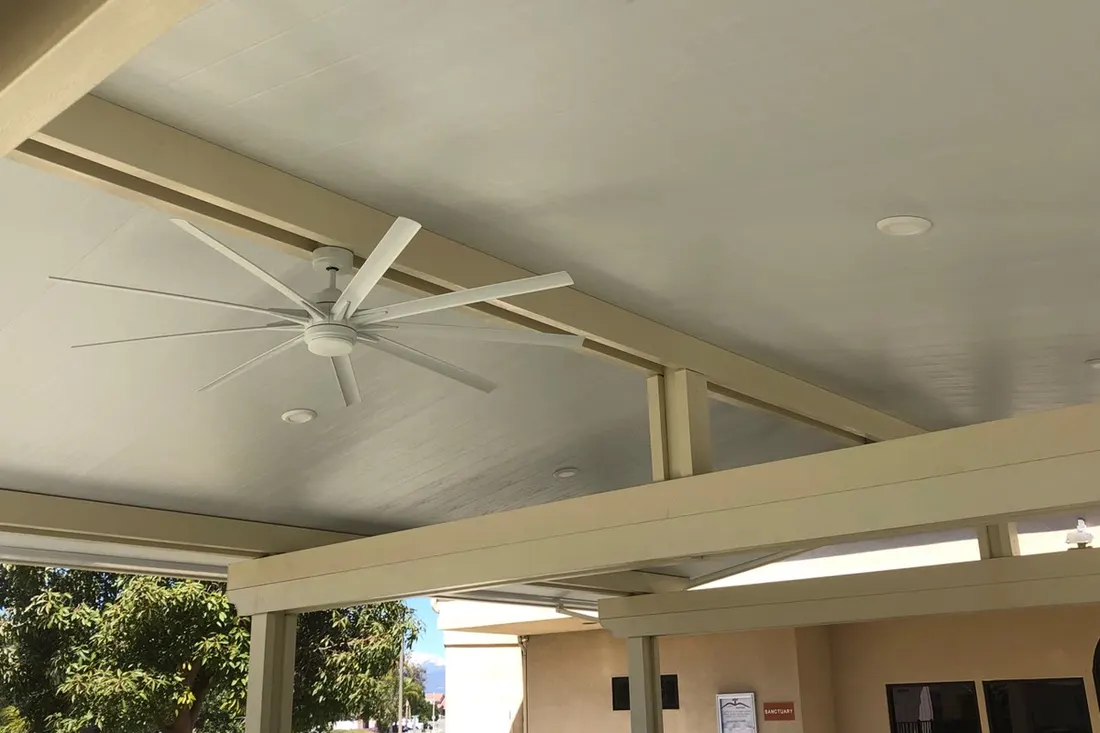
Look for the label. Fixtures and fans are rated for a damp location or a wet location. A damp rating suits a roofed space that sees humidity and some splash. A wet rating suits a place where rain can fall directly on the fixture. Use the rating that matches where the item will hang.
| Item | Under a solid roof | Under an open pergola |
|---|---|---|
| Ceiling fan | Damp-rated fan is usually the starting point | Choose a wet-rated fan |
| Light fixtures | Damp-rated, placed away from the open edge | Wet-rated |
| Outlets | Weatherproof covers and protection from shock | The same, with extra care at the open sides |
| TV and speakers | Models built for outdoor use, mounted back from the edge | Not recommended without a solid roof section |
Also read the operating temperature range in the manual. North Texas swings from a hard freeze like December 2022 to long heat like the summer of 2023, and the range on the label should cover both. A device that is rated for outdoor use can still have limits. Our post on smart patio cover features covers more of what can go under a roof.
Does a pergola protect electronics as well as a solid cover?
No. An open pergola gives filtered shade, but rain falls through the slats. A louvered pergola closes most of the gaps when the blades are shut, yet wind can still push water in at the sides. Keep screens and speakers under a solid roof section whenever you can.
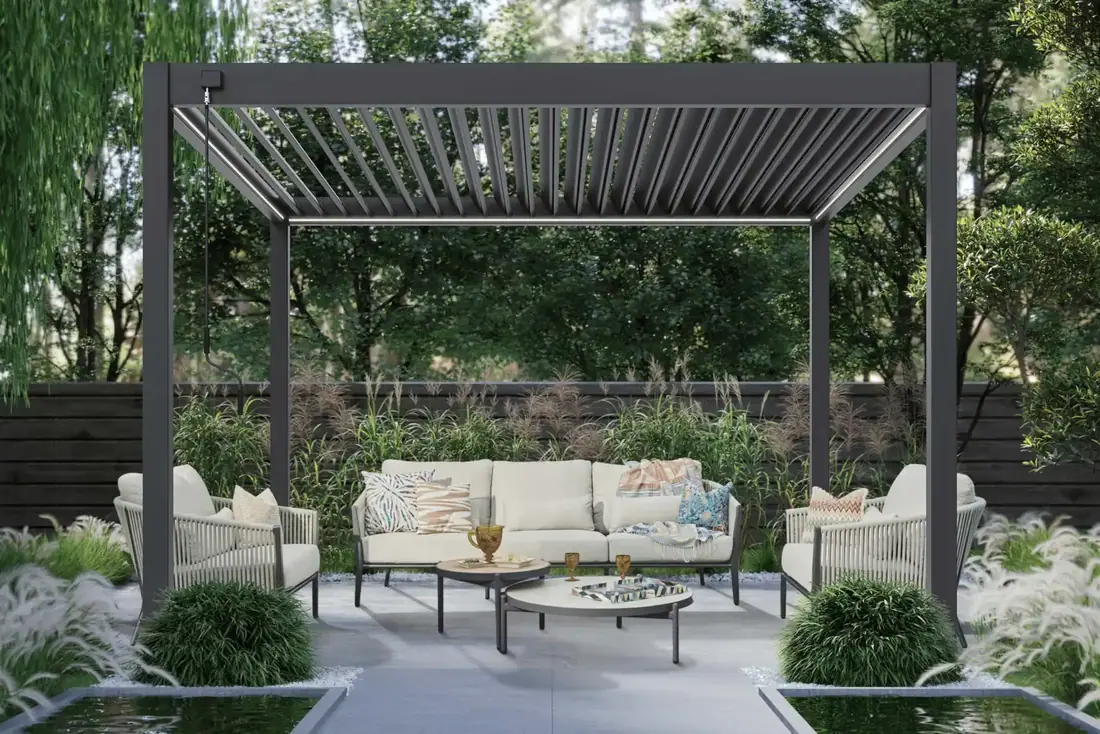
If you like the pergola look, a common solution is to pair it with a solid cover over the part that holds the gear. Our pergolas page explains the fixed and louvered options, and our patio covers page covers the solid ones.
Who should do the wiring, and what do cities check?
A licensed electrician should do all outdoor wiring. Outdoor circuits face water, heat and movement, and a mistake can cause a shock or a fire. Many cities also review electrical work on a new structure, so ask your city before the frame goes up.
Cities post their own residential pages. Arlington and Plano are two examples, and the rules in your city may differ. When we design a cover, we plan fan and light rough-ins into the frame so the wiring has a path, and the electrical work is done by a licensed trade. For storm season, the Ready.gov severe weather guidance is a useful read.
What can a roof not protect against in a storm?
Power surges, for one. A storm can send a spike through the wiring, and a roof does nothing about that. Unplug movable gear before a storm when you can, and ask your electrician about surge protection at the panel and at the outlet your devices use.
Heat is the other gap. A screen under a roof is cooler than one in the sun, but a closed, still corner of a covered patio can still trap warm air in July. Leave space behind a mounted screen, and use a fan to keep air moving across the equipment as well as the people.
What should you not leave outside, even under a cover?
Anything not made for outdoor use. A cover does not change what a device is built to handle. Treat a roof as a help, not as permission to put indoor gear outside.
- Do not hang an indoor TV on a patio wall, even a covered one.
- Do not run an extension cord across the slab for a season.
- Do not mount a screen at the open edge of the roof.
- Do not ignore the manual’s temperature range.
If you plan to add a screen or speakers, bring your wish list to a free in-home estimate so the frame is designed for it. Our post on patio cover lighting covers the lights.
Questions we get asked about this
Yes, and a cover helps a lot. Use a TV made for outdoor use, mount it on the wall under the deepest part of the roof and keep it back from the open edge. A cover does not make an indoor TV safe outdoors.
No. A cover keeps direct rain and sun off, but humidity and wind-blown rain can still reach a device. Choose gear rated for the setting and place it away from the open sides. The cover is one layer of protection, not the only one.
A damp rating is for covered spaces that see humidity and some splash. A wet rating is for places where rain can fall directly on the fixture. A solid roof usually suits damp-rated items, and an open pergola calls for wet-rated ones.
A licensed electrician. Outdoor wiring faces water and heat, and a poor connection can cause shock or fire. Plan the fan’s mounting point and the wiring path while the frame is being designed, and ask your city whether the electrical work needs review.
Yes, when you want them. Fan and light rough-ins go into the frame at design time. Tell American Eagle Builders what you plan to mount at the free in-home estimate, and the frame can be designed around it.