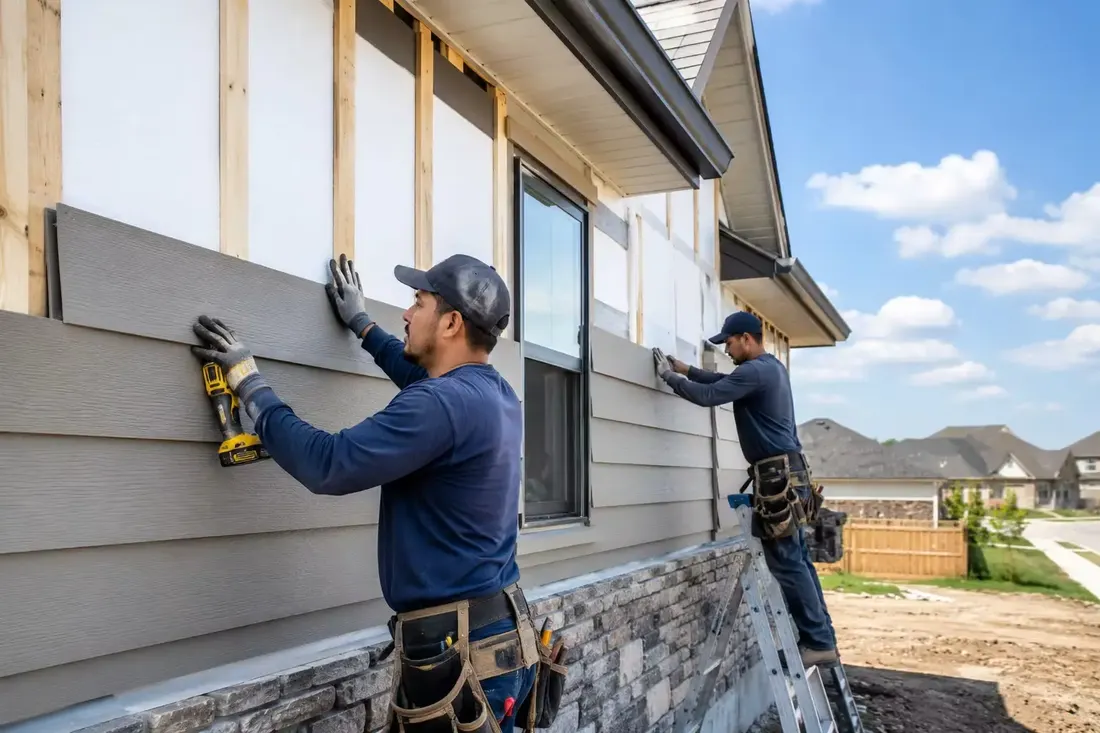
Insulated siding is a vinyl panel with a rigid foam backing bonded to it. The foam makes the job less forgiving, so insulated siding installation mistakes show up as waves, gaps and drafts. Seven errors cause most of them, and each one is easy to prevent if you ask about it early.
The short answer
- Check and repair the wall before any panel goes up, because new siding hides old damage.
- Vinyl must hang loose on its nails, since panels nailed tight buckle in summer heat.
- The thicker panel needs trim and channels sized for it from the start.
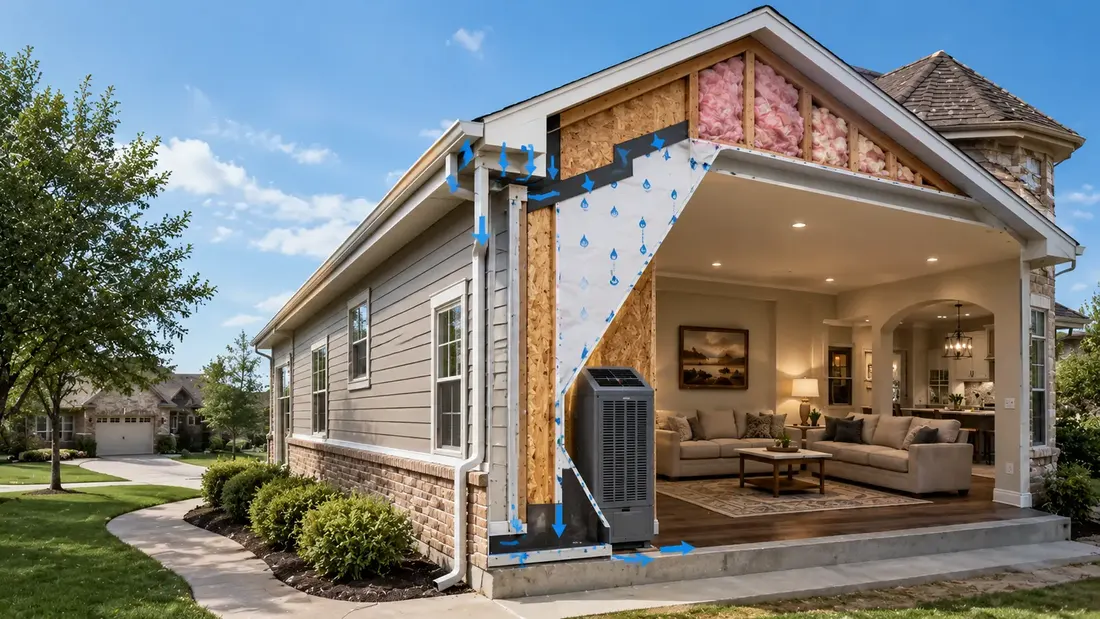
- Foam backing does not replace house wrap and flashing, which still handle water at openings.
- Insulated siding cannot be added later without removing the siding, so decide before you buy.
Insulated siding is vinyl siding with a rigid foam backing bonded to the panel. The foam is the whole point of paying more, and it is also what makes the job less forgiving. A small error with thicker, stiffer panels shows up as a gap, a wave or a draft, and it is hard to fix once the wall is closed.
What are the most common insulated siding installation mistakes?
There are seven that we see most, and they run in the order a job runs: the wall, the choice, the fastening, the trim, the water layer, the seams and the installer. Each one is easy to avoid if you know to ask about it before the crew arrives.
Mistake 1: Hanging panels on a wall nobody checked
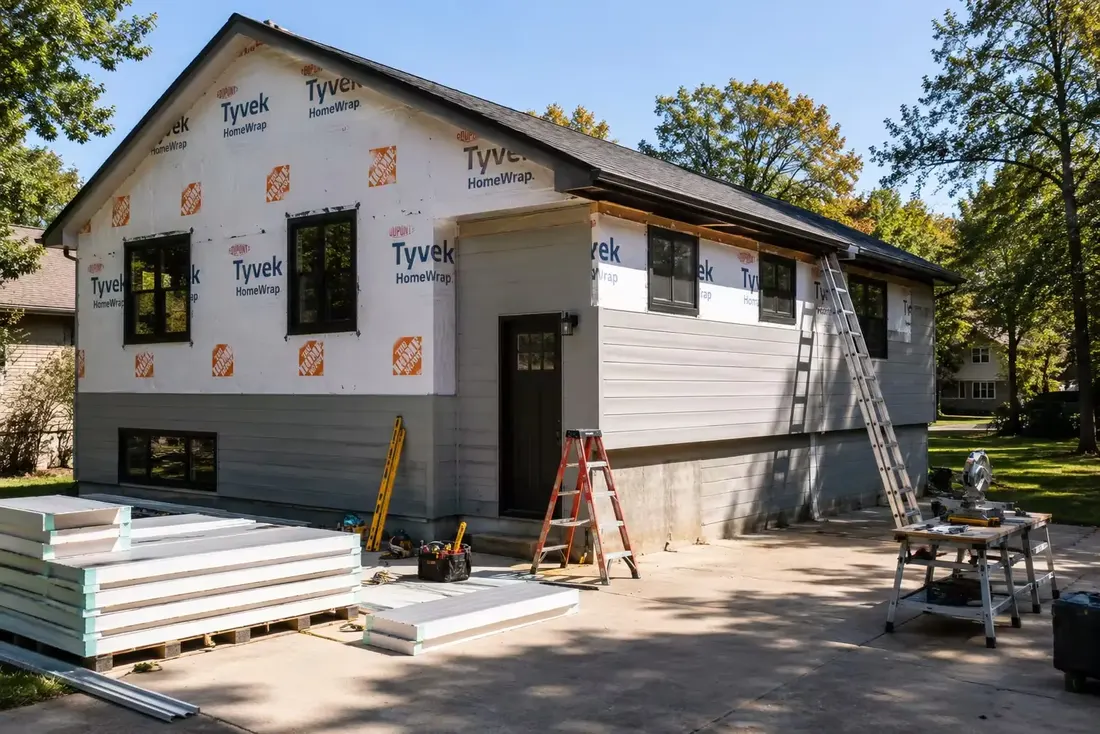
New siding cannot straighten a bad wall. If the sheathing is soft, the old panels are simply covered, and rot keeps going underneath. We strip the old cladding, look at the sheathing and repair what we find while the wall is open. Foam-backed panels do lie flatter on walls that are not perfectly straight, but that is not an excuse to skip the inspection.
Mistake 2: Choosing without thinking about the sun
Very dark colors on a wall with full afternoon sun are worth checking against the maker’s recommended color range. After a summer as hot as 2023, you do not want to learn that a deep charcoal wall is running hotter than the panel is rated for. Low-E glass on a neighbor’s house can also bounce light onto a wall. Look at the lot before you look at the swatch.
Mistake 3: Nailing the panels tight
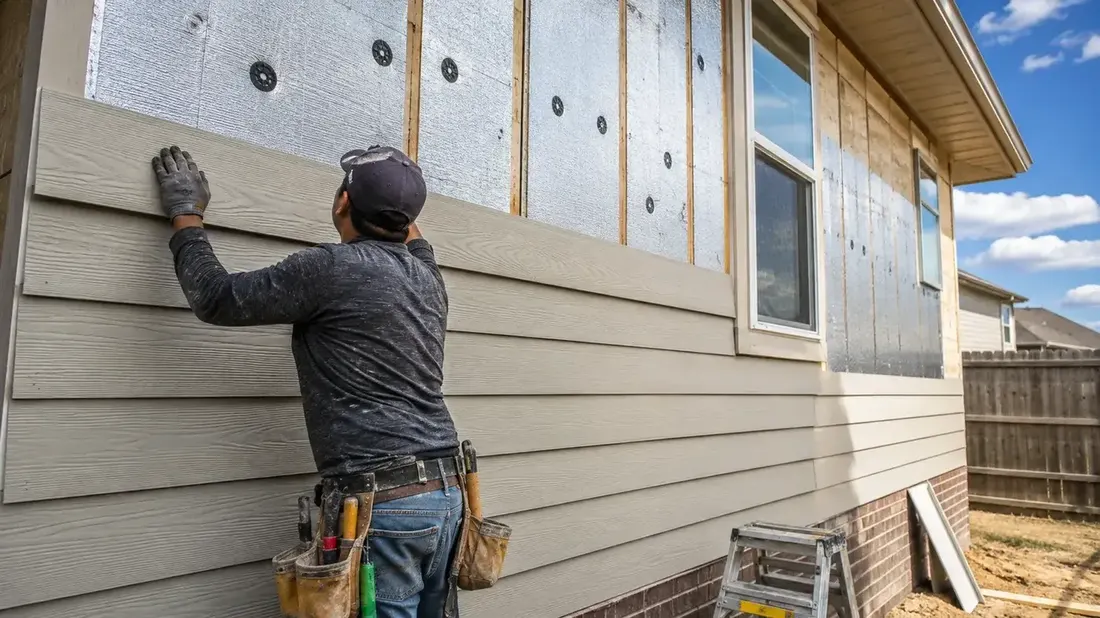
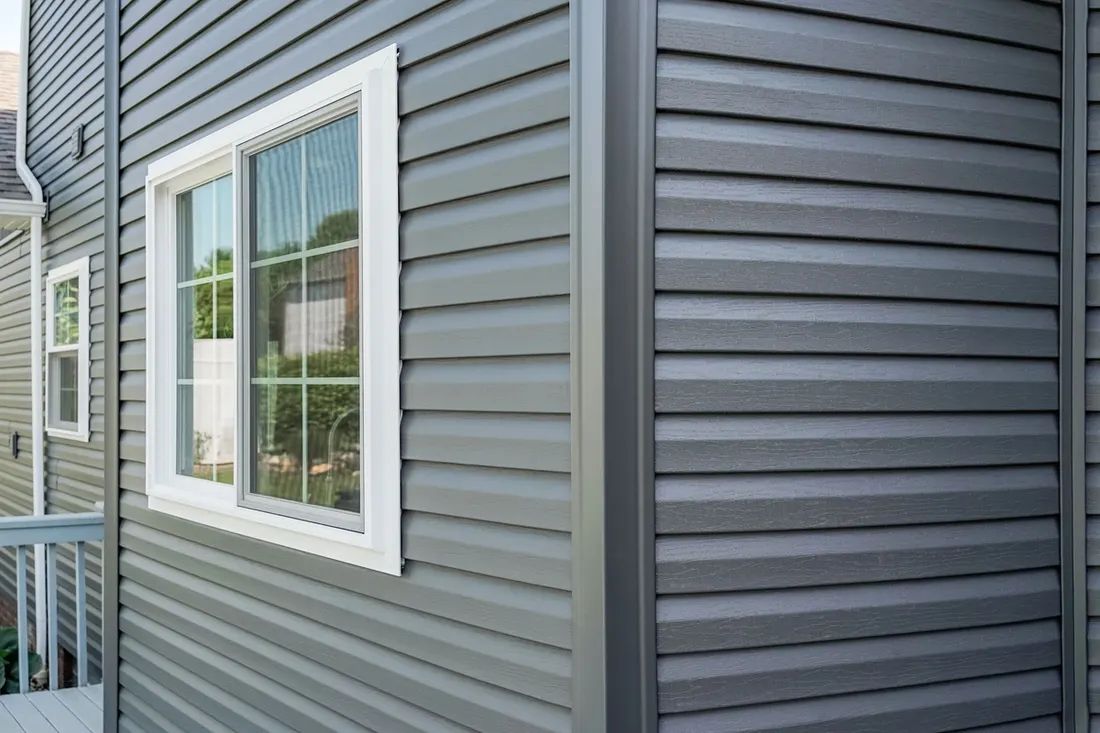
Vinyl moves. It grows in summer heat and shrinks in winter cold, so each panel has to hang loose enough to slide along its nails. Driving nails tight pins the panel in place, and the next hot week makes it buckle. This is a common cause of waves in vinyl, and a crew that rushes is the usual reason.
Mistake 4: Forgetting the added depth at trim
An insulated panel is thicker than a plain one, so the channels around windows and doors, and the corner posts, must be sized for that depth from the start. If they are not, the trim looks cramped, and gaps open where the panel ends meet the frame. Ask how the crew will finish each window and door, and look at a corner on a finished job.
Mistake 5: Treating the foam as a water barrier
The foam backing adds insulation and stiffness. It does not replace house wrap or flashing. Water that gets behind the panels still has to be shed by the wrap and flashing at every window, door and penetration. Ask the installer to explain that layer before the panels go on, because it is invisible once the job is done. Our post on siding installation mistakes that let water in covers it in full.
Mistake 6: Leaving gaps in the insulating layer
Insulation only helps where it is continuous. Voids around light fixtures, hose bibs, vents and trim let heat and air bypass the foam. Crews should fit panels snugly, cut neatly around penetrations and seal what needs sealing. Walk the finished wall in the evening, and run a hand along seams and corners to feel for drafts.
Mistake 7: Hiring on price alone
The lowest number can hide a rushed crew, thin prep or skipped steps. Ask who will be on your roof and walls, what training they hold, and whether the estimate lists tear-off, wrap, flashing and trim. The Polymeric Exterior Products Association runs a certified installer program for vinyl siding, and American Eagle Builders lists VSI Certified Vinyl Siding Installer among its accreditations. On older homes, ask whether the firm is EPA Lead-Safe Certified, because removing old painted trim can disturb lead paint. See the EPA’s lead renovation program for what the rule covers.
When is insulated siding the wrong buy?
It is the wrong first move when the real problem sits elsewhere. If your attic has thin insulation or your windows leak air, that is where heat is getting in, and the siding will not fix it. Fix the larger leaks first, or do them together. Our insulation page covers attic options.
There is a second don’t. Do not buy insulated siding with a plan to add the foam later. It cannot be added to existing siding without taking the siding off. If comfort matters, decide at the start and ask for prices on both insulated and standard vinyl.
How do you check the work before the crew leaves?
Walk every wall with the crew lead while the ladders are still up. You are looking for a short list of things, and each takes a minute.
- Panels lie flat, with no waves in the afternoon light.
- Trim and corner posts are snug, with even gaps.
- Nothing is nailed tight, and panels still move a hair when pushed sideways.
- Penetrations such as vents and hose bibs are sealed and neat.
- The yard is free of nails and cut-offs.
If something is off, say so that day and ask for the fix in writing. Our insulated siding page shows how we run a job. For the homeowner side of the prep, read how to prepare for insulated siding, and for what the foam does, see the R-value of insulated siding. American Eagle Builders offers free in-home estimates across Dallas, Fort Worth, Arlington and the rest of DFW.
Questions we get asked about this
Hanging panels without checking the wall behind them. Soft sheathing, loose trim or old damage get covered, and the problem continues underneath. A careful crew strips the old siding, inspects the sheathing and repairs it before wrap, flashing and new panels go on.
Yes. Vinyl expands and contracts with temperature, so each panel needs to slide on its nails. Panels nailed tight cannot move, and they buckle in summer heat. A well-fastened wall has panels that shift slightly when pushed sideways.
No. The foam backing adds insulation and stiffness, but house wrap and flashing still handle water at every opening. Ask your installer to explain how wrap and flashing will be done at windows, doors and penetrations before the panels are hung.
Not as an upgrade later. Once standard siding is on, adding foam-backed panels means removing the siding first. If you want the insulated version, choose it at the start. We can price insulated and standard vinyl side by side so you can compare.
Ask for credentials, a written scope and a walkthrough plan. American Eagle Builders is a family-owned remodeler in Arlington, working across Dallas-Fort Worth since 1984, with VSI Certified Vinyl Siding Installer and EPA Lead-Safe Certified Firm listed among its accreditations. Compare estimates by what each one lists, not only the total.