R-value is a rating of how well a material resists heat flow. The R-value of insulated siding comes from its foam backing, and it varies by product and thickness. It matters because it slows heat through the studs, but it does not cover the attic, the windows or air leaks.
The short answer
- R-value rates how well a material resists heat flow, and higher means less heat passes through.
- The rating on insulated siding belongs to its foam backing and varies by product and thickness.
- The foam layer helps most by covering the studs, which carry heat more easily than the cavities.
- R-value does not cover the attic, the windows or air leaks, so look at the whole house.
- Ask for the manufacturer’s spec sheet for the exact panel you are buying.
R-value is the number on an insulation label that most people nod at and few can explain. It is worth five minutes, because it is also the number sales pitches lean on hardest. Once you know what it measures and what it leaves out, a siding estimate gets much easier to read.
What is R-value, in plain terms?
R-value is a rating of how well a material resists heat flow. A higher number means more resistance, so less heat passes through. Think of it as a jacket: a thicker one slows the cold more. The rating belongs to a material, and a wall is built from many layers that each add their own.
Heat always moves from warm to cool. In a North Texas summer it moves from the hot outside of your wall to the cooler inside. In winter it moves the other way. Every layer in the wall slows that trip a little, and the R-value tells you how much.
What is the R-value of insulated siding?
It depends on the product and its thickness, and each maker publishes its own figure. We do not give a single number here because it varies by line, and a number without a product name means little. Ask the installer for the manufacturer’s spec sheet and read the rating for the exact panel you are buying.
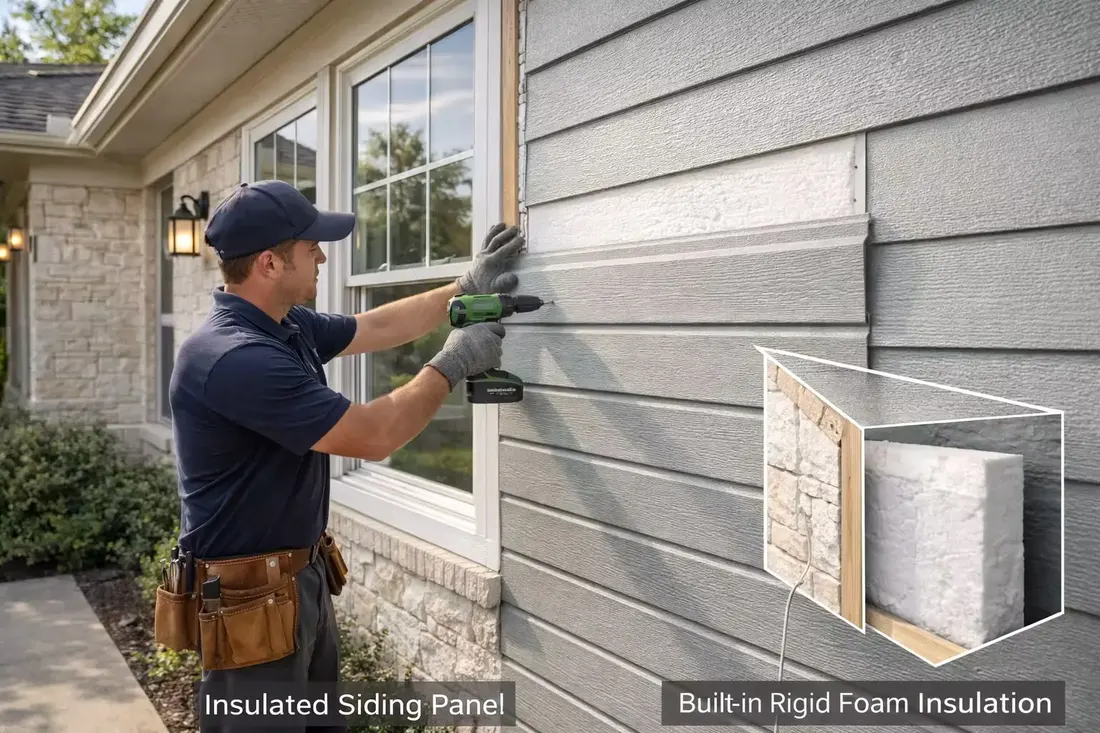
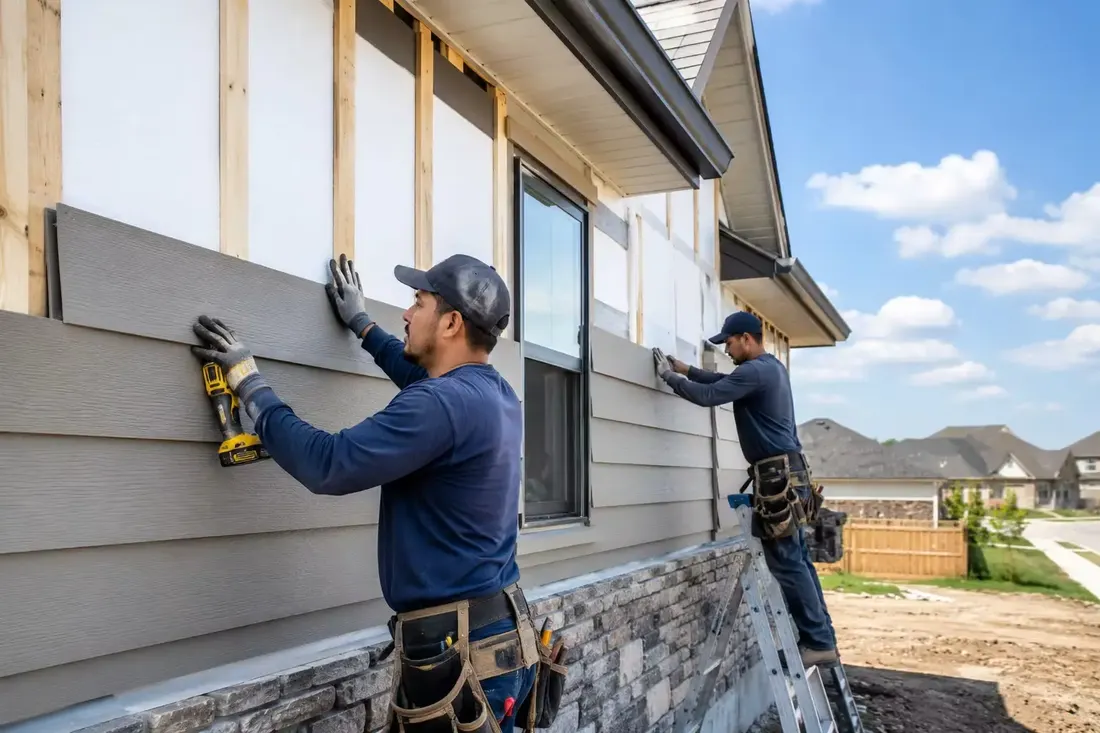
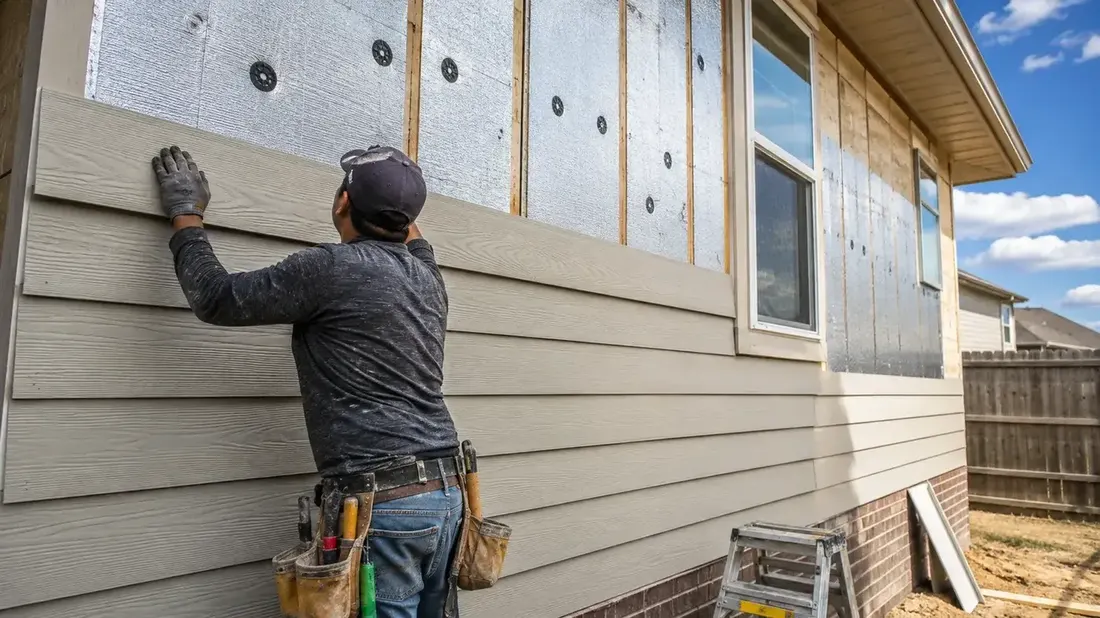
What we can say is how it works. Insulated siding is vinyl with a foam board fixed to the back of each panel. The foam is the part that has an R-value, and it adds to the wall’s resistance. Plain vinyl panels add very little, so the foam is the difference between the two.
Why does R-value matter for a siding wall?
It matters because the wall has weak spots, and siding with foam covers one of them. Studs conduct heat better than the insulated space between them. A continuous layer outside the framing reduces that path across the whole wall. That is the real benefit of the foam, and it is what the rating describes.
| Where heat or air moves | Does siding R-value help? |
|---|---|
| Through the studs and framing | Yes, a continuous outer layer reduces it |
| Through the attic | No. That is a separate layer |
| Through windows and doors | No. Glass and frames matter here |
| Through air leaks and gaps | No. Air sealing is a different job |
| Through the wall cavity insulation | It adds to it, but does not replace it |
This is why a rating alone cannot tell you how your house will feel. A leaky attic or a drafty window can undo what a high-rated wall gains. ENERGY STAR’s guide to sealing and insulating is a good place to see the whole picture, with pages on attics as well as walls.
Is a higher R-value always better?
Not always. A higher number helps, but it is not the whole story. A thicker foam layer also means a thicker panel, and the trim around windows and doors must be sized for it. Past a point, other parts of the house limit what the extra resistance can do.
The rating also assumes the panel is installed well. Gaps at corners and around fixtures let heat and air bypass the foam. A good rating on a poor install is worth less than a modest rating on a careful one. That is why our post on insulated siding installation mistakes matters as much as any spec sheet.
How do you compare two insulated siding products?
Compare the same measure on the same basis. Ratings can be stated in different ways, so do not set one maker’s figure against another’s without checking how each was found. When in doubt, ask the installer to explain the difference in plain terms, and to show the spec sheets side by side.
- Ask for the manufacturer’s spec sheet for each panel, by name.
- Check how the rating is stated, and whether it applies to the panel or to the wall.
- Ask how the trim will be sized for the panel’s thickness.
- Ask what else in the house is limiting comfort, such as the attic or windows.
- Ask for both an insulated and a standard price on the same walls.
Remember the hard rule. Insulated panels cannot be added over standard siding later without taking the siding off, so settle the question when you replace. For a view of how it plays out in Texas heat and cold, read how insulated siding works, and for the decision itself, reasons to choose insulated over standard vinyl.
Does R-value matter more in Texas heat or cold?
Both matter, but in different ways. Summers like 2023 put the load on cooling, and the west and south walls take the worst of it. Freezes like February 2021 and December 2022 put the load on heating. A foam layer helps in both. In Dallas, Plano and Fort Worth, the attic usually has more say over summer comfort than the walls. That is a reason to look up before you look at the siding, and to treat the siding rating as one part of the answer.
If you would like help reading a spec sheet, ask us. American Eagle Builders is an Arlington company that has served Dallas-Fort Worth since 1984. We offer free in-home estimates and will walk you through the numbers on a panel you are considering. Learn about our insulated siding first, or look at attic options on our insulation page. The Polymeric Exterior Products Association publishes technical resources on vinyl siding.
Questions we get asked about this
It depends on the product and the thickness, and each maker publishes its own rating. Ask your installer for the manufacturer’s spec sheet for the exact panel. Be wary of any single number quoted without a product name behind it.
It measures resistance to heat flow. A higher number means a material slows heat more, so less passes through. A wall is made of many layers, and each adds some resistance. Siding with a foam backing adds a continuous layer outside the studs.
No. Comfort depends on the whole house, including the attic, windows and air leaks. A high-rated siding on a leaky house can disappoint. Look at the full picture and fix the biggest sources of heat gain or loss first.
They do different jobs. Insulation inside the wall fills the spaces between studs. Insulated siding adds a continuous layer outside the studs, which covers the framing. Whether it pays back depends on the house, so we price insulated and standard vinyl for you to compare.
Not as an add-on. The foam is bonded to the panel, so adding it means removing the existing siding. If you want it, decide when you replace the siding. American Eagle Builders can price both options on the same walls.