Insulated vinyl is standard vinyl with a rigid foam backing bonded to each panel. Choose insulated vs standard vinyl when rooms run hot or cold, outside noise gets in or your walls are wavy. Choose standard when the house is comfortable and you want a clean new exterior at the lowest cost.
The short answer
- Choose insulated vinyl when rooms run hot or cold, noise bothers you or your walls are wavy.
- Standard vinyl is the smarter buy when the house is comfortable and cost leads.
- Insulated panels cannot be added over standard siding later without removing it.
- Ask for both prices on the same walls, with the same trim and color.
- Large hail can damage any vinyl, so fiber cement is the tougher choice for impact.
Standard vinyl is a good product, and for some houses it is the right one. Insulated vinyl costs more to buy and takes more care to install, so the question is not whether it is better in general. It is whether the difference matters on your walls. Here is how to answer that for your own house.
Who should choose insulated vinyl over standard vinyl?
Homeowners with a specific problem should. If rooms run hot or cold, outside noise gets in, or the walls are wavy, insulated vinyl solves something. If the house is comfortable and the goal is a clean new exterior at the lowest cost, standard vinyl is the smarter buy.
Both come in many colors and profiles, so the look can match. What differs is the foam layer, the stiffness of the panel and the effort needed at the trim. The five reasons below each come with a question you can ask about your own house.
Reason 1: One wall runs hot or cold
Test it. On a sunny afternoon, press a palm against the inside of your west wall, then an inside wall. If the outer wall is clearly warmer, sun heat is coming through. A foam layer slows that, and standard vinyl does not. If every wall feels alike, this reason does not apply.
Reason 2: The street is loud
A wall with a foam layer takes the edge off some outside noise. It does less for noise that comes in through windows, so listen from inside before you decide. If you hear the traffic through the glass, new windows may do more than new siding. We install both, and we will tell you which to do first.
Reason 3: The walls are not straight
Older frames can be wavy, and thin panels follow every ripple. A foam-backed panel is stiffer, so it lies flatter and the lines look straighter. Sight along a wall at a low angle to see what you have. If it ripples, a stiffer panel is a visible benefit, not just a spec.
Reason 4: Small hail is a worry
The foam supports the panel, which helps small hail leave fewer dents. Large hail can still crack any siding, so do not buy it as armor. If hail is your main fear, look at fiber cement from James Hardie, which we install as well.
Reason 5: You will not get a second chance
Insulated panels cannot be added over standard siding without taking the siding off. That makes this a now-or-later choice. If you think you may want the comfort in a few years, choose it while the crew is already stripping the wall. Waiting means paying for the wall twice.
When is standard vinyl the better choice?
Standard vinyl is better when comfort is not the problem, the budget leads, or you are preparing a house for sale. It is the lowest-cost route to a clean new exterior, it needs no paint, and it is the quickest of our three siding options to install. For plenty of houses, that is exactly right.
| Your situation | Lean toward |
|---|---|
| Hot or cold rooms, a loud street, wavy walls | Insulated vinyl |
| Comfortable house, lowest-cost new exterior | Standard vinyl |
| Selling soon, want a clean look | Standard vinyl |
| Want a painted-wood look | James Hardie fiber cement |
| Staying long term and want the stiffest vinyl panel | Insulated vinyl |
How should you compare the price of the two?
Ask for both prices on the same walls, with the same trim and the same color. The difference pays for the foam-backed panel and the extra care at windows and doors. Do not compare an insulated estimate from one company with a standard estimate from another, because the scope will differ.
It is also fair to ask what else the estimate covers. Does it list tear-off, wrap, flashing and trim? Is the trim sized for the thicker panel? A lower number often leaves something out. The Polymeric Exterior Products Association has certified installer information for vinyl siding, which is a good place to check credentials.
What should you ask your installer about the foam?
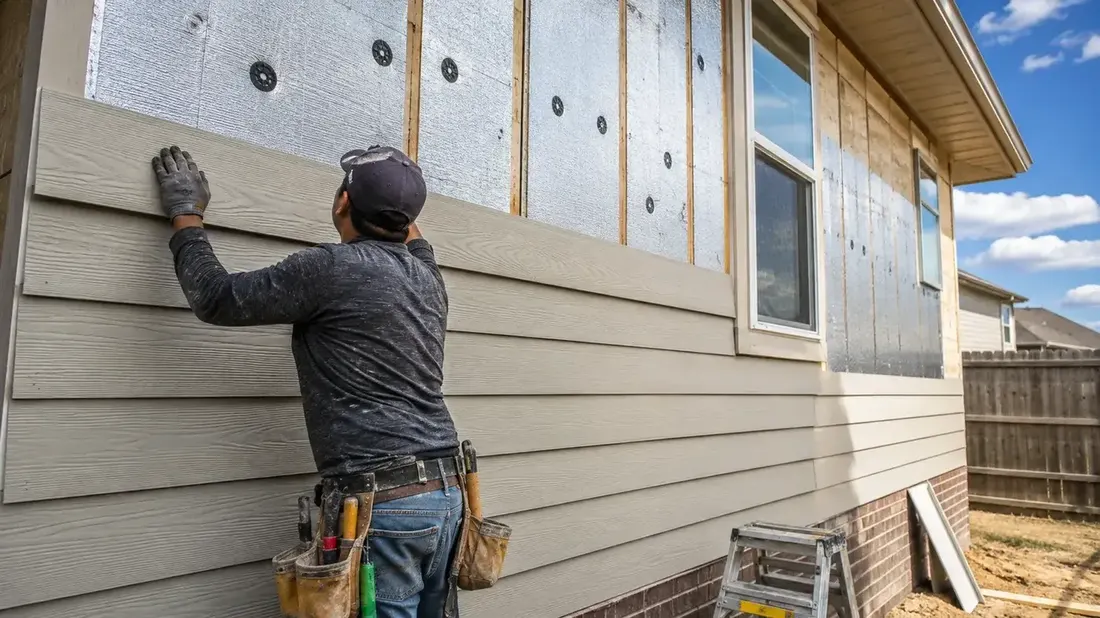
Ask how the thicker panel changes the job. A careful installer has a plain answer to each of these, and the answers show whether the foam will do its work on your walls.
- How will you finish trim around the windows and doors for the added depth?
- How do you fasten the panels so they can still move with heat?
- What happens at corners, vents and light fixtures?
- Can you show me a finished corner and window on a past job?
Does Texas weather change the answer?
A little. North Texas has a long cooling season, hard freezes such as February 2021 and December 2022, and spring hail. Insulated vinyl helps with the swing from hot to cold. It is not a substitute for a well-insulated attic, as ENERGY STAR shows in its sealing and insulating guide.
Dark colors deserve a second look on any vinyl, insulated or not. A wall that takes full afternoon sun in Plano or Fort Worth runs hot, so check the maker’s recommended color range before you choose a deep shade. Samples held against the wall at different times of day tell you more than a swatch on a table.
For more, read our comparison of insulated and traditional siding and our post on the benefits of insulated siding. See our insulated and non-insulated pages, then ask American Eagle Builders for a free in-home estimate. We will price both and show you samples.
Questions we get asked about this
It depends on your house. Insulated vinyl adds a foam layer for comfort, a quieter wall and a stiffer panel. Standard vinyl is the lower-cost route to a clean new exterior. If your rooms are comfortable, standard may be all you need.
No. The foam is part of the panel, so adding it means taking the existing siding off. That makes insulated siding a choice for the day you replace the siding. If you may want it, decide before the crew starts.
Up close, the panel is thicker and stiffer, so it can lie flatter on wavy walls. From the street, color and profile matter more. Both come in a wide range. Trim around windows and doors must be sized for the thicker panel.
Not fully. The foam supports the panel and helps small hail leave fewer dents. Large hail can crack any siding. If impact is your main worry, James Hardie fiber cement is the tougher choice, and American Eagle Builders installs it.
Ask for both prices on the same walls, with the same trim and color, from the same company. Check that each lists tear-off, wrap, flashing and trim. Differences in scope can hide in the total, so compare the lines, not only the bottom number.