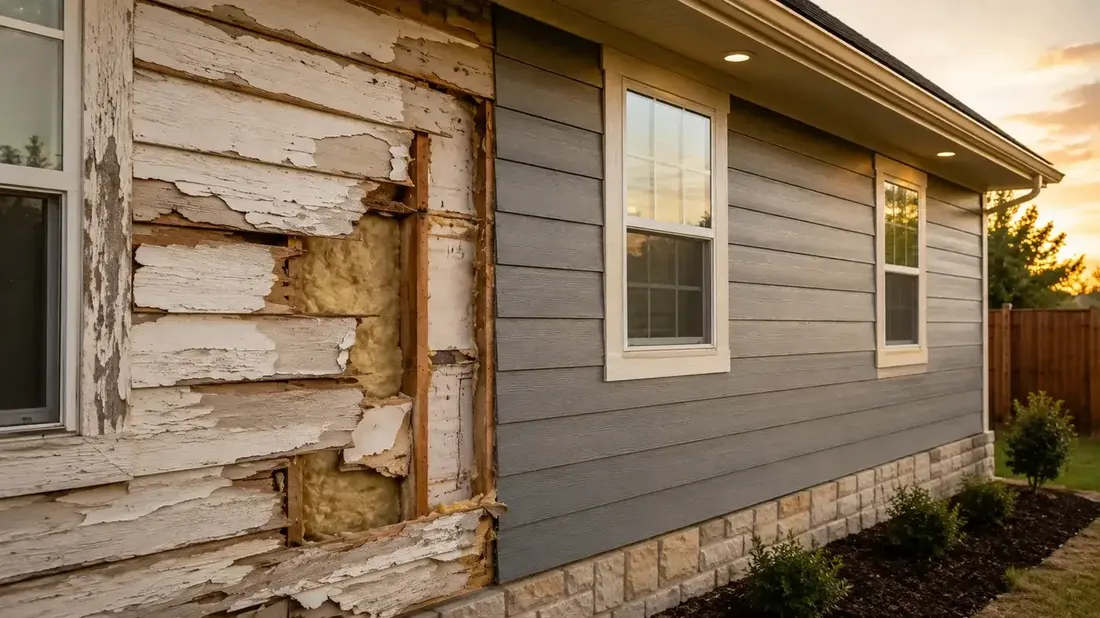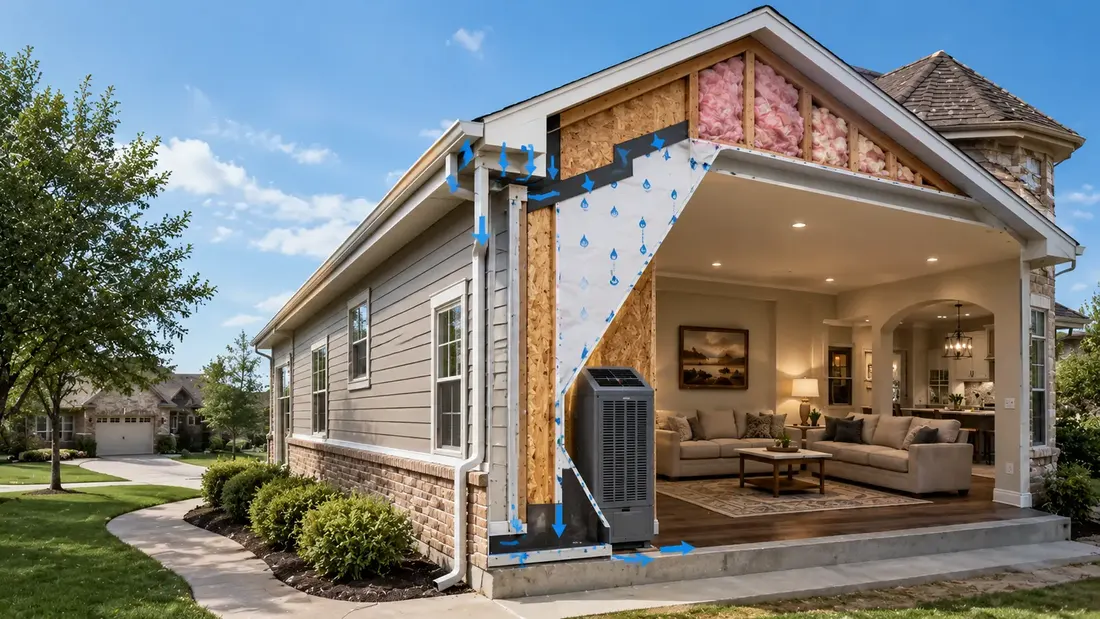
Water damage behind siding is a hidden problem: moisture that has reached the sheathing or framing under the panels. It is quiet and often hidden. Look for warped panels, soft trim, peeling paint, stains inside and musty smells, then probe suspect spots. Two or three signs together mean it is time for a closer look.
The short answer
- Water damage behind siding is quiet, so check walls even when they look fine from the street.
- Press trim and probe suspect spots with a screwdriver tip, because soft wood means damage.
- Find the source of the water before you repair, since new siding will not cure a leak.
- Do not caulk or paint over a stain, because it hides moisture that keeps rotting the wall.
- Keep soil and mulch below the siding edge and the grade sloping away from the house.
Water damage behind siding is quiet. The panels can look fine from the street while the sheathing underneath takes in moisture for a year or more. By the time a stain shows up on a bedroom wall, the damage has usually been going on a while. The good news is that the early signs are visible if you know where to look.
What are the signs of water damage behind siding?
The signs are a mix of what you see, what you feel and what you smell. No single one proves damage, but two or three together are worth a closer look. Start with the outside, then check the inside wall under the same spot.
- Panels that warp, bubble or buckle in one area while the rest lies flat.
- Soft or spongy trim and lower boards, especially near corners and under windows.
- Peeling paint on trim, or stains and blistering paint on the inside wall.
- Dark growth, green film or a fuzzy patch on the siding or the wall behind it.
- A musty smell in a room that shares the wall, or a damp feel in the corner.
- Cracked or loose panels that let water in at the edges.
One caution. Dark streaks on siding can be dirt or algae rather than moisture. A soft brush and mild soap will tell you which. If the stain washes off, it was dirt. If it comes back, or the wood underneath is soft, look further.
If your house is older, there is one more thing to know before you dig at rotten trim. Old painted wood can hold lead paint, and scraping or sanding it makes dust. Leave that work to a firm that follows lead-safe practices, and see the EPA’s lead renovation program for the rules. American Eagle Builders is an EPA Lead-Safe Certified Firm.
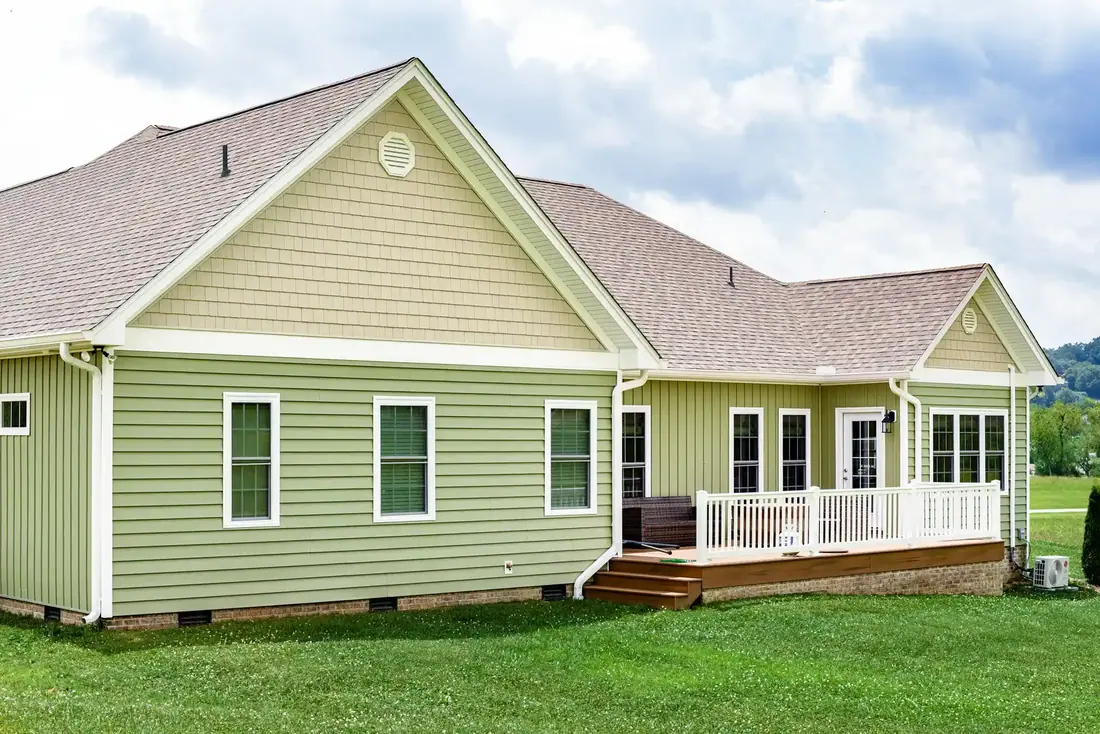
How do you check a wall for hidden moisture?
Check it yourself in dry weather, a day or two after a rain. Walk the house slowly, press and probe, and write down what you find. This takes less than an hour, and it gives an estimator something specific to look at.
- Look at each wall from a few steps back, and sight along the surface for waves.
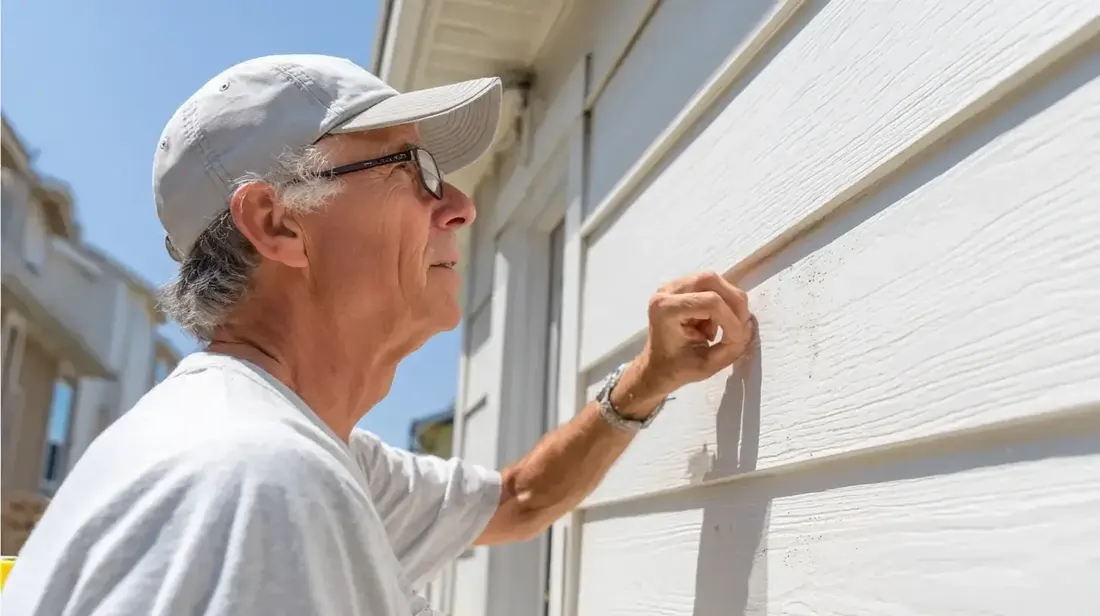
- Press the trim and lower boards with your thumb. Soft or crumbly spots are a warning.
- Gently probe a suspect spot with a screwdriver tip. If it sinks in easily, the wood is damaged.
- Check under windows, at corners and where the siding meets the roof.
- Look inside along the same wall, at the baseboard, window corners and ceiling edge.
- Take photos with a coin beside each problem, and note the date.
A moisture meter, used by a pro, finds what your thumb cannot. Do not cut into the wall yourself. If you suspect damage, we can open a small section as part of an estimate.
Where does the water behind siding come from?
It usually comes from a few repeat spots. Water gets in at openings and joints, or it is thrown at the wall from outside. Finding the source matters more than patching the symptom, because new siding will not cure a leak that starts somewhere else.
| Source | What to look for |
|---|---|
| Windows and doors | Stains below the sill, failed sealant, loose trim |
| Roof and wall joints | Streaks below a roof edge or a dormer, missing flashing |
| Gutters and downspouts | Overflow marks, a downspout that dumps against the wall |
| Sprinklers and hoses | Spray hitting the wall, a leaking hose bib |
| Soil and mulch | Ground piled against the siding, bare clay cracks near the foundation |
The ground matters here. Much of Dallas, Plano and Frisco sits on clay that shrinks in a dry August and swells in a wet spring. The cracks that open can send rain toward the base of a wall, and soil or mulch piled against the siding keeps the bottom course wet. Keep the soil below the siding edge and the grade sloping away from the house.
What should you do if you find damage?
Find the source, dry the area and fix the wall properly. Local damage on a sound wall can be repaired by replacing the affected panels and rotten boards. Widespread softness, spreading mold or damage that has reached the framing means opening the wall, and that is the time to consider replacement.
The EPA’s mold page puts it simply: the way to control mold is to control moisture. That is why we do not recommend paint or caulk over a stain. Both hide a problem that keeps growing. Do not pressure wash a suspect wall either, because it can drive more water behind the panels.
If the siding is old and the damage is spread, our post on siding repair versus replacement gives a test for the decision. If only one wall is hit, replacing siding on one wall may be an option. To see how bad installs cause this in the first place, read about installation mistakes that let water in.
When should you call a pro?
Call as soon as probing finds soft wood, you see mold growth, or an interior wall shows a stain. A wet wall gets worse with each rain. After a big storm, the National Weather Service Fort Worth posts local forecasts, which helps you time an inspection for a dry day.
American Eagle Builders will look at a suspect wall for free, in your home, as part of an estimate. We look at what is behind the siding as far as we can, show you what we find, and explain whether a repair or a replacement fits. You can read about our siding options or ask for an estimate here.
Questions we get asked about this
Look for warped or buckled panels, soft trim, peeling paint, stains on the inside wall, mold growth and musty smells. Probe suspect spots with a screwdriver tip. If the wood sinks in easily, it is damaged. Two or three signs together mean it is time for a closer look.
Dark streaks can be dirt or algae. Wash a small area with a soft brush and mild soap. If it comes off and stays off, it was surface dirt. If it returns quickly, or the wood or wall behind it is soft or stained, moisture is likely.
No. Caulk and paint hide the sign and leave the moisture. The wood keeps rotting and mold can grow behind it. Find and fix the source, dry the area, replace damaged boards and then finish. Covering a stain only delays a bigger repair.
Not always. Local damage on a sound wall can be fixed by replacing a few panels and any rotten boards. Widespread damage, brittle old siding or damage in the framing usually points to opening the wall and replacing the siding on that side.
American Eagle Builders is an Arlington family company that has served Dallas-Fort Worth homeowners since 1984. At the free in-home estimate we look behind the siding as far as we can. During a job, we show you what we find while the wall is open.