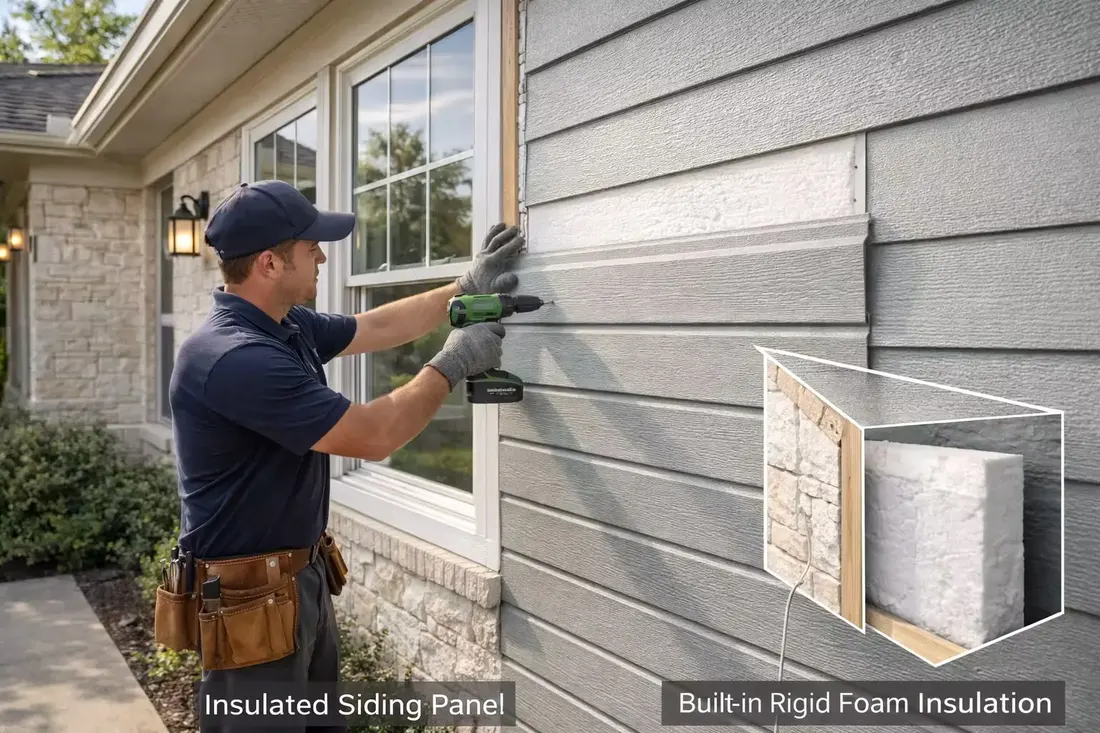
Insulated siding is a vinyl panel with a foam backing, and the benefits of insulated siding come from that foam: a more comfortable wall, quieter rooms, a stiffer panel and low upkeep. Each benefit has a limit, such as the attic and the windows, and we list them here.
The short answer
- Insulated siding adds a foam layer that slows heat through the wall in summer and winter.
- The foam supports the panel, so small dents are less likely, but large hail can still damage it.
- House wrap and flashing matter more to a dry wall than the foam backing does.
- It works with your attic and windows, not in place of them, so check those first.
- It needs only a wash and a yearly caulk check, with no paint or sealing.
Every siding brochure lists benefits. Fewer of them list the catch that goes with each one. This post does both, because a benefit you understand is one you can hold a contractor to. Seven things are worth knowing, and a few of them come with a limit that is better learned before you buy.
What are the main benefits of insulated siding?
Insulated siding adds a foam layer behind the vinyl, so the benefits come from that layer: a warmer and cooler wall, a quieter one, a stiffer panel and a cleaner look, all with the upkeep of vinyl. Each is real. None is magic, and the table shows both sides.
| Benefit | What it means in your house | The catch |
|---|---|---|
| Comfort | Less heat moves through the wall, and rooms even out | Attic and windows still matter, and the siding cannot fix leaks |
| Quieter walls | Some outside noise is softened | Windows let in more noise than walls do |
| A stiffer panel | Small dents are less likely, and walls look flatter | Large hail can still damage any siding |
| Cleaner lines | The wall lies straighter over uneven framing | Trim around openings must be sized for the thicker panel |
| Low upkeep | No paint, scraping or sealing | It still needs washing and caulk checks |
| Coverage over studs | A continuous layer outside the framing | It cannot be added later without removing the siding |
| A fresh exterior | New color and profile for the whole house | Color choice needs care on hot walls |
Does insulated siding make a house more comfortable?
It can, especially on walls that take full sun. Heat moves through a wall from hot to cold, and a foam layer slows the trip. A west wall in a summer like 2023 is where you notice it most. The layer also covers the studs, which insulation inside the wall cannot do.
The limits are worth repeating. If your attic is thin or your windows leak air, you will still feel it. ENERGY STAR explains where to start in its guide to sealing and insulating a home. Our post on how insulated siding works in Texas shows how to tell which part of your house matters most.
Is insulated siding more durable than plain vinyl?
In one respect, yes. The foam supports the panel, so it resists small dents better and holds straighter. That helps with the hail, hose bibs and stray baseballs of daily life. It does not make the wall indestructible. Large hail can damage any siding, and fiber cement is the tougher choice if impact is your main worry.
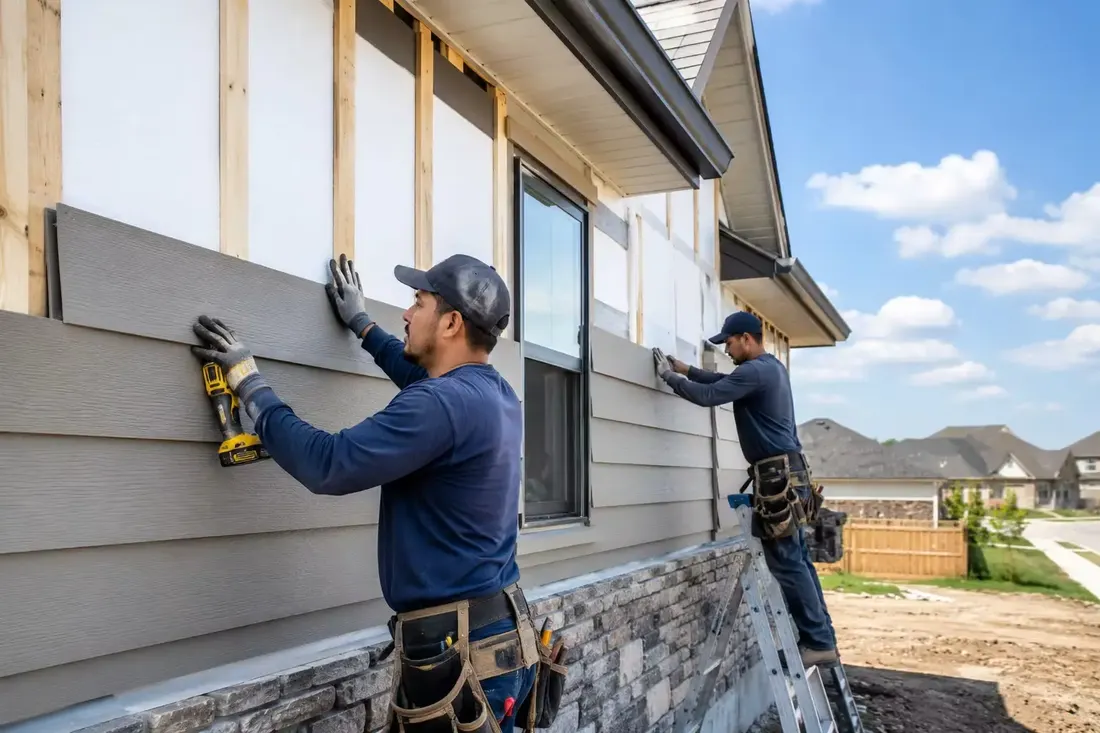
Durability is also about what sits behind the panels. House wrap and flashing keep the wall dry, and they matter more than the foam. A poorly flashed window will leak behind the best panel made. Ask how each opening will be finished, as covered in our post on insulated siding installation mistakes.
Will it change how the house looks?
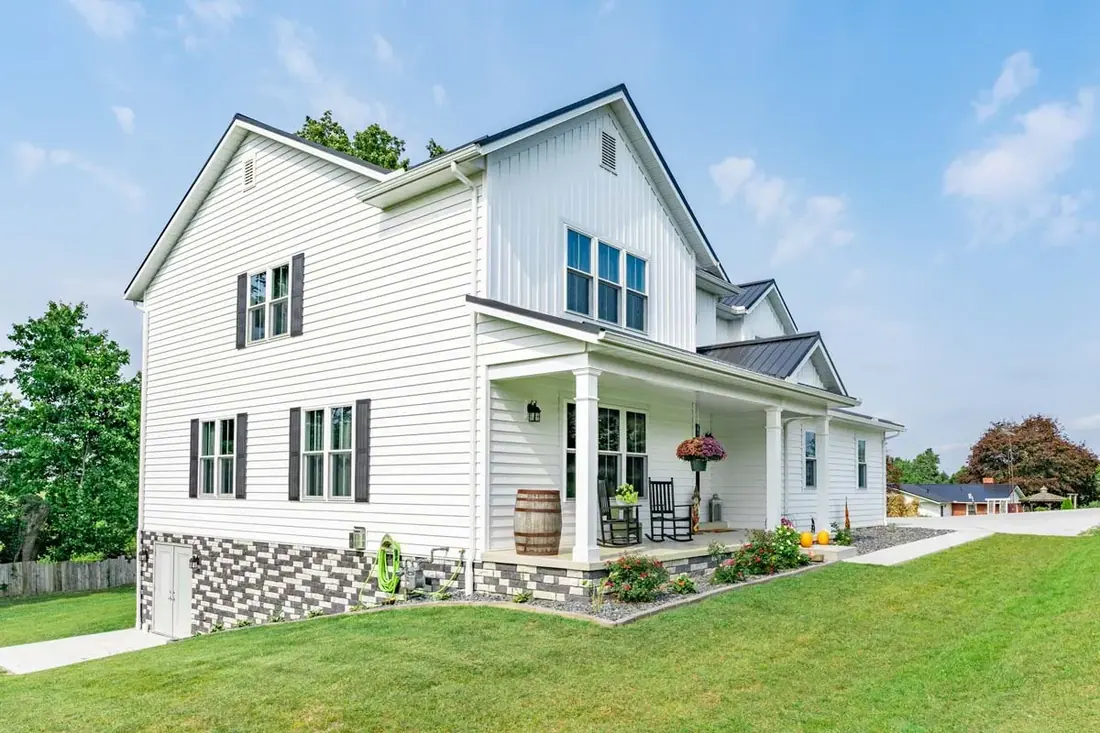
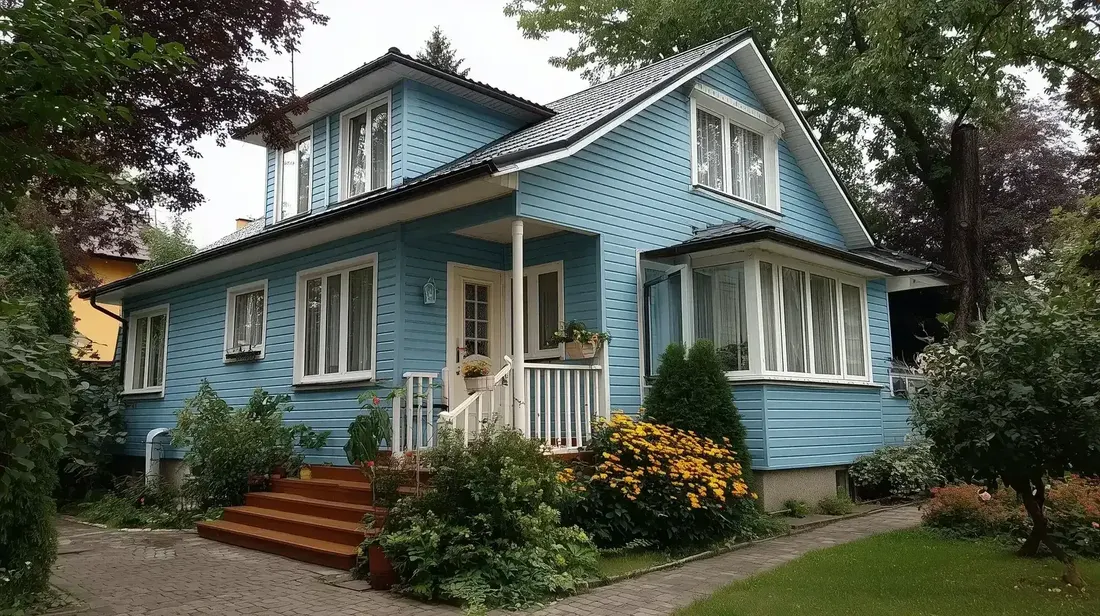
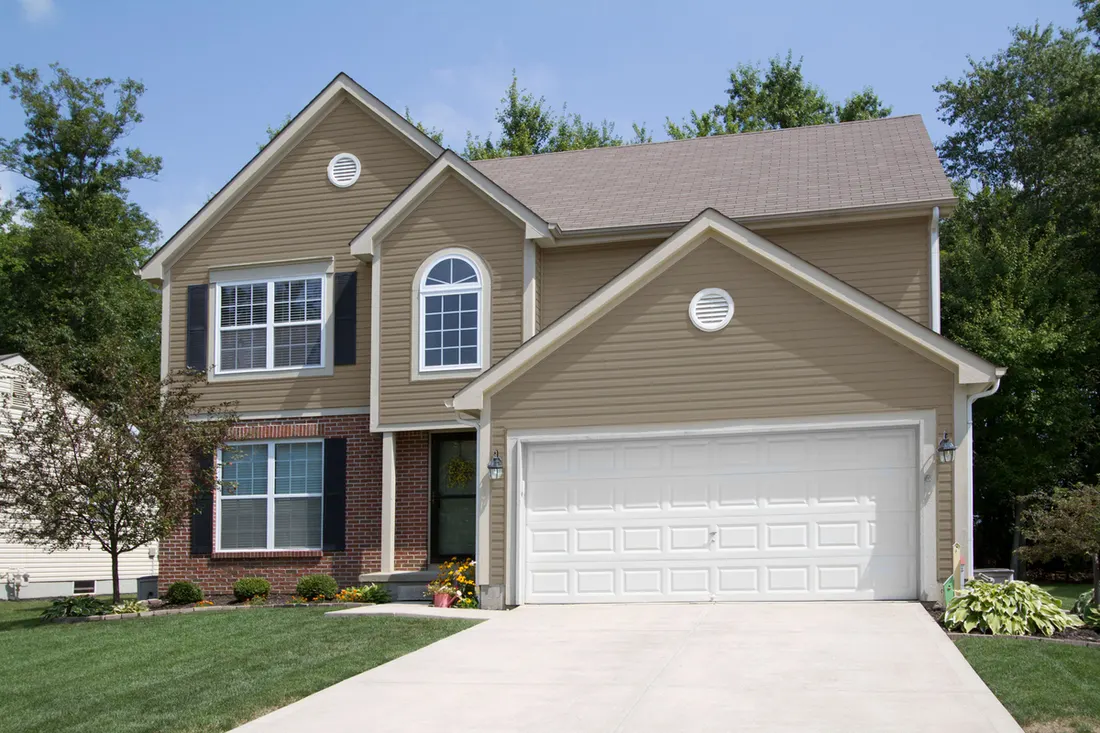
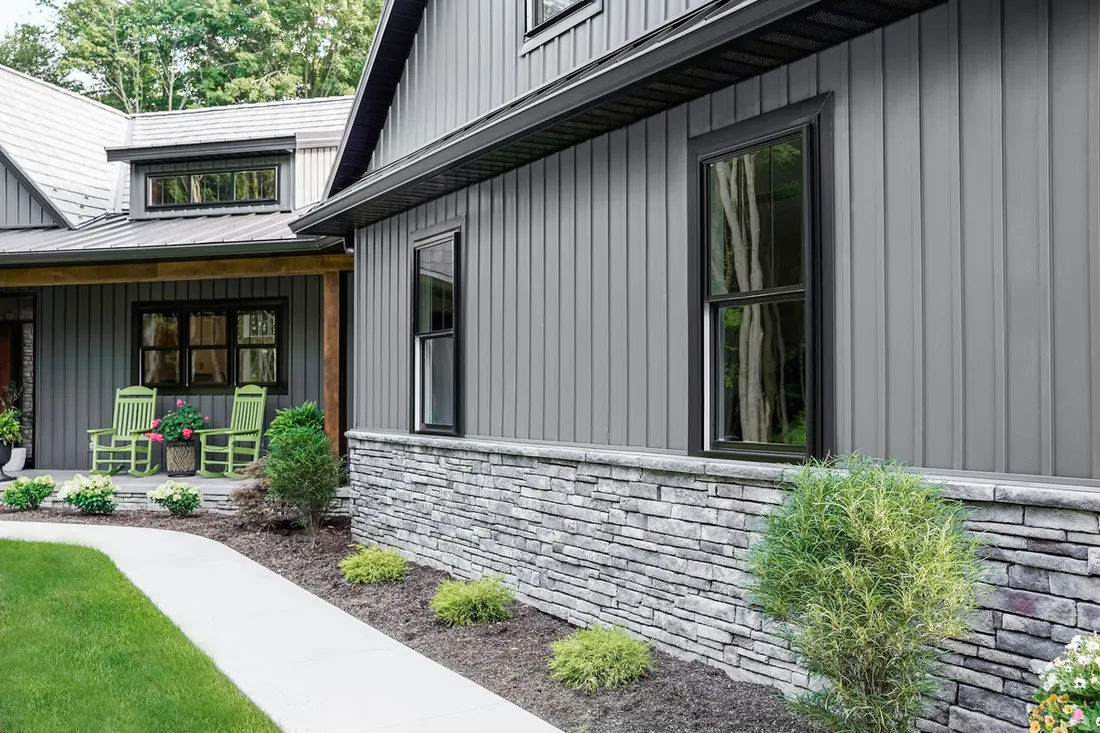
Yes, in a good way if the wall was wavy or tired. A stiffer panel lies flatter against uneven framing, so the lines read straighter from the street. Color and profile are the same wide choice as plain vinyl. The two photos here show how a lap wall, a vertical gable and a stone base can work together.
How much upkeep does it need?
Very little. It never needs paint, scraping or sealing. A hose, a soft brush and mild soap keep it clean, and a check of the caulk at windows and trim once a year catches small gaps. Keep grills and heat sources away from the walls, since vinyl softens when it gets hot.
That low upkeep is the real, daily benefit for many families in Frisco, Fort Worth and Arlington who would rather spend a weekend elsewhere. It is also why we steer people away from claims about payback. Whether insulated siding saves money depends on your house, so we price insulated and standard vinyl side by side and let you compare.
A plain don’t
Do not buy insulated siding only because a flyer promised it will pay for itself. No one can tell you that without knowing your house, and we will not guess. Buy it for the comfort, the quiet and the straighter wall. If a payback happens, it is a bonus. Also do not pick a very dark color for a west wall without checking the maker’s guidance on heat.
Who should and should not choose insulated siding?
Choose it when some rooms run hot or cold, outside noise bothers you, or you are replacing siding anyway and want the best vinyl wall. Skip it, or look at other options first, when the walls are comfortable, the budget is tight or the real problem is the attic or the windows.
- Good fit: west-facing rooms that bake, a noisy street, an uneven wall you want straighter.
- Weaker fit: a comfortable house with sound siding, or a thin attic that needs help first.
- Consider fiber cement: you want a painted-wood look or the toughest wall against hail.
If the attic is the bigger issue, see our insulation options. If you are weighing it against standard vinyl, read top reasons to choose insulated siding over standard vinyl. You can also learn about our insulated siding, and the Polymeric Exterior Products Association publishes technical information on vinyl siding.
American Eagle Builders is family-owned, based in Arlington and at work across Dallas-Fort Worth since 1984. We offer free in-home estimates, and we will tell you plainly if another upgrade should come first.
Questions we get asked about this
Comfort from a continuous foam layer outside the studs, quieter walls, a stiffer panel that resists small dents, straighter-looking walls and low upkeep. Each benefit has limits. The siding works with your attic and windows, not in place of them.
It can help, but we do not promise a figure. Savings depend on your attic, windows, air leaks and habits. We price insulated and standard vinyl side by side, so you can compare before you commit to the extra layer.
Somewhat. The foam backing and thicker panel add a layer to the wall that takes the edge off some outside noise. Windows usually let in more noise than walls, so if noise is your main reason, look at the glass as well.
Often yes for rooms with west or south walls that take full sun, since it slows heat moving through the wall. It is less worth it if the attic is thin or windows leak air. Check those first, or do the work together.
No. It needs a wash with a hose, soft brush and mild soap, and an annual look at caulk and trim. Keep grills and other heat sources away from the walls, and never aim a pressure washer at close range.