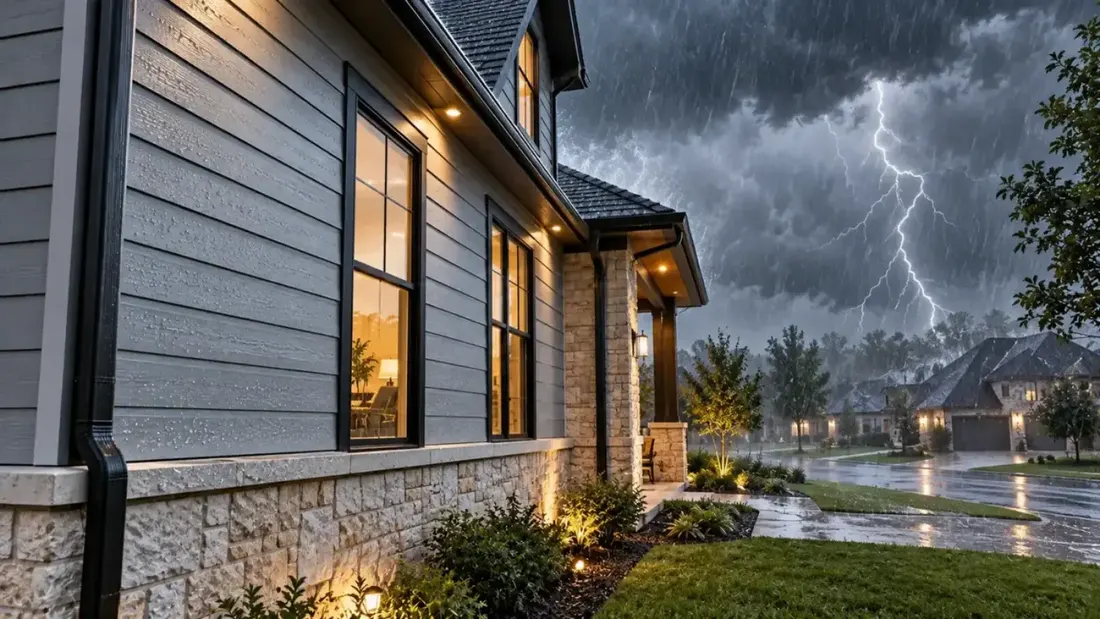
Insulated siding is a vinyl panel with a foam backing that supports it. In Texas storms it helps resist small dents and evens out temperature swings, but it is not hailproof. Large hail can damage any siding, and the wrap and flashing behind the panels still decide whether water gets in.
The short answer
- Foam backing supports the panel and helps small hail leave fewer dents.
- No siding is hailproof, and large hail can damage insulated vinyl and other materials alike.
- House wrap and flashing behind the panels are what keep wind-driven rain out.
- Walk the house in daylight after a storm and photograph damage before anyone touches it.
- Keep your color name and a few spare panels so a later repair can match.
North Texas does not have one kind of bad weather. It has several, and they come in turns. Spring brings hail and wind-driven rain, a winter like February 2021 or December 2022 brings hard freezes, and a summer like 2023 brings weeks of heat. Siding takes every one of them on the outside of your house.
How does insulated siding handle Texas storms?
It helps in a few ways and does nothing in others. The foam backing supports the vinyl panel, so small hail is less likely to dent it. It also stiffens the wall surface against wind. It does not make siding hailproof, and large hail can damage any siding, insulated or not.
That honest answer matters, because storm sales pitches tend to promise more. Insulated vinyl is a good wall for a normal North Texas year. It is not armor. What it adds is a firmer panel, a better-lying wall and a layer that evens out temperature swings. What protects the house from water is still the wrap and flashing behind it.
Hail
Hail hits the siding head-on, and a panel with foam behind it has something to push against. That support helps it resist small dents better than unbacked vinyl. Large stones can still crack or punch a panel. If your area gets big hail often, fiber cement from James Hardie is the tougher choice, and we install it.
Wind-driven rain
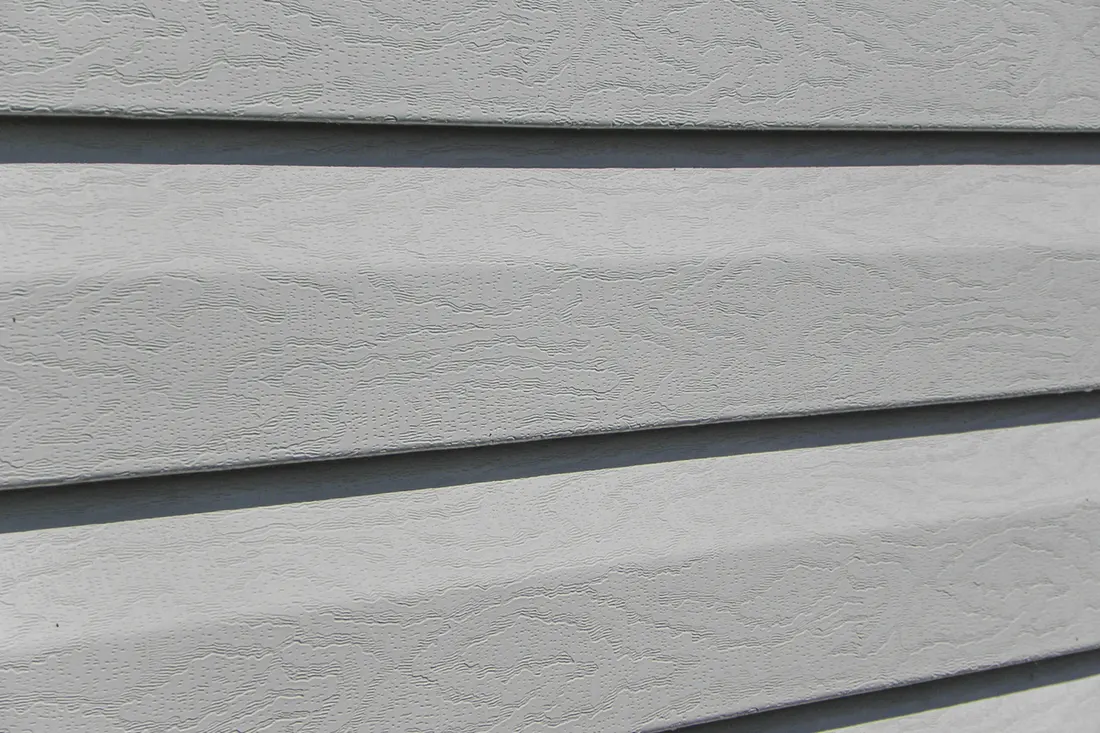
Rain pushed sideways by a storm front tests every seam, corner and window edge. The panels shed most of it. The rest is the job of the house wrap and the flashing at each opening. A tight installation at trim and corners keeps wind from lifting a panel or driving water behind it.
Freezes and heat
Freezes stress a wall in a different way, because materials shrink. Heat stresses it the other way, by making vinyl grow. Panels that were hung loose enough to slide handle both. Insulated siding also takes some of the edge off the temperature swing across the wall, and that is the one storm benefit that shows up in your rooms.
| Weather | What the foam backing helps with | What it does not do |
|---|---|---|
| Spring hail | Supports the panel so small dents are less likely | Stop large hail from cracking panels |
| Wind-driven rain | Gives a flatter, firmer wall | Replace the house wrap and flashing |
| Hard freeze | Slows heat loss through the wall | Heat the house or stop pipes from freezing |
| Long summer heat | Slows heat entering the wall | Fix a hot attic or leaky windows |
What should you check after a storm?
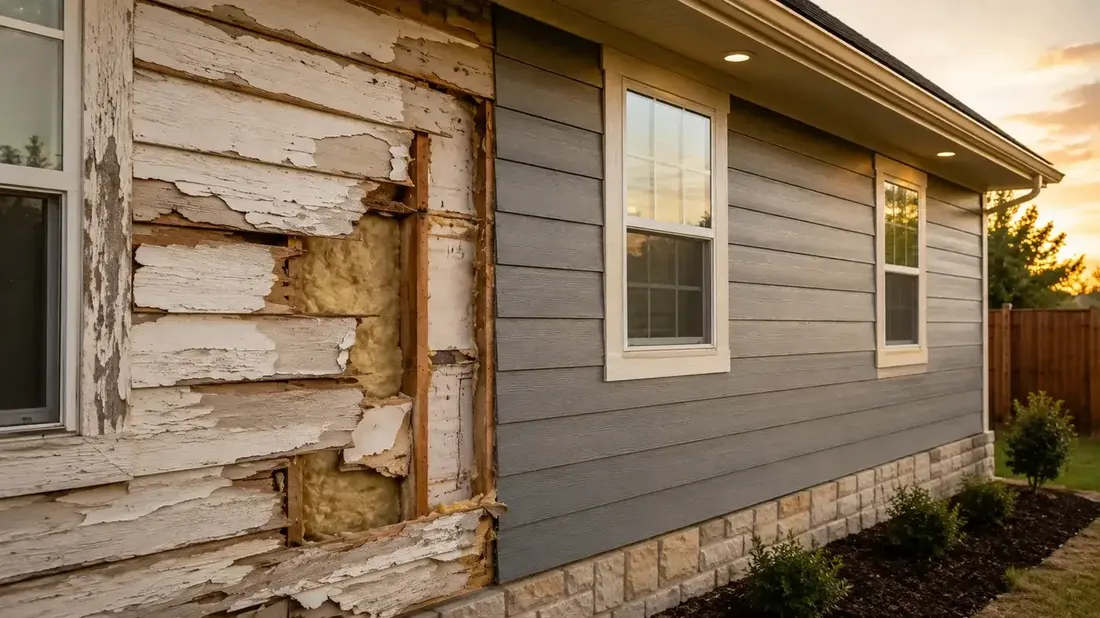
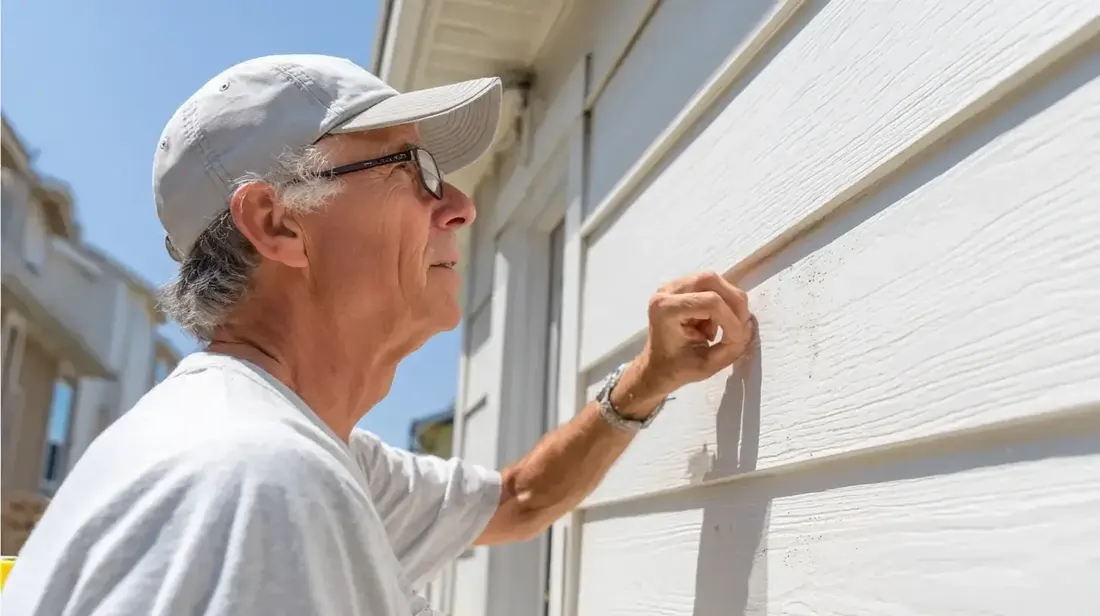
Walk the house in daylight once the weather has passed, and look at every wall from the ground. You are hunting for damage that is easy to miss until it becomes a leak. Take photos before you touch anything, with a coin or tape measure beside any dent for scale.
- Look for cracked, dented or missing panels, especially on the side the storm came from.
- Check corner posts and trim for gaps, lifted edges and loose pieces.
- Look under window sills and along the bottom course for stains or swelling.
- Check gutters and downspouts. A broken one dumps water on the wall.
- Inside, look at the ceiling and the wall corners nearest the damage for new stains.
If you find a problem, take the photos and call a siding contractor, and your insurance company if you plan to file a claim. For storm safety and preparation, Ready.gov’s severe weather pages are a good reference, and the National Weather Service Fort Worth office posts local forecasts and warnings.
A plain don’t
Do not climb a ladder onto wet siding or a wet roof to look for damage, and do not use a pressure washer to see whether a panel is loose. Look from the ground with binoculars or a phone zoom, and leave the high work to a crew. A fall costs far more than any siding repair. If a panel is hanging loose and flapping, tape it down from a safe spot and call for help.
Is a storm repair enough, or do you need new siding?
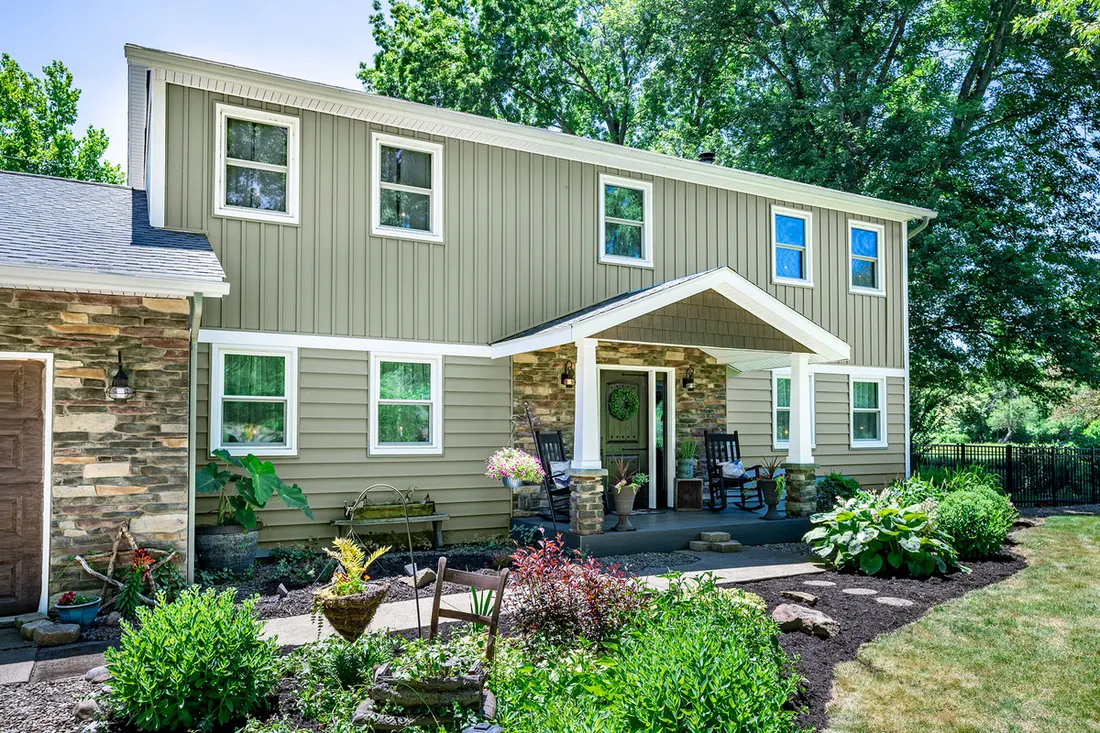
A repair is enough when the damage is local, the panels nearby are sound and a match is available. Replacement makes more sense when many panels are hit, the siding is old and brittle, or moisture has reached the sheathing. Our post on siding repair versus replacement gives a test for each.
A few small steps make a later repair easier. Keep the color name and product line. Keep a few spare panels from the same run. And keep photos from the day after the install. If hail strikes Plano, Frisco or Arlington next spring, those notes help an installer match the wall.
How should you choose a siding for storm country?
Match the siding to the risk you worry about most. If it is comfort through hot summers and cold snaps, insulated vinyl fits. If it is big hail, look hard at fiber cement. If it is budget with a new, low-upkeep look, standard vinyl does the job. Whichever you pick, the wrap, the flashing and the fastening decide how it behaves in a storm.
You can read about insulated siding and James Hardie fiber cement on our site, or see how routine care affects performance in our post on insulated siding maintenance. American Eagle Builders offers free in-home estimates across Dallas-Fort Worth, and we will tell you plainly what each material can and cannot do.
Questions we get asked about this
Better than unbacked vinyl for small hail, because the foam supports the panel. It is not hailproof, and large stones can crack or damage any siding. If big hail is your main worry, fiber cement is the tougher option, and American Eagle Builders installs both.
The panels shed most of it, but the real protection is the house wrap and flashing behind them. A tight installation at corners, trim and windows keeps wind from lifting panels or driving water behind them. Ask your installer how those layers are done.
Walk the house in daylight and photograph any cracked, dented or missing panels, loose trim and stains. Check gutters and the ceiling inside. Call a siding contractor, and your insurance company if you plan to file a claim. Take photos before anyone touches the damage.
Often, yes, if the damage is local and a matching panel is available. Matching is the hard part because old siding fades. Keep your color name and spare panels from the original job. If the siding is old and brittle, a larger repair may make more sense.
For impact, yes. Fiber cement is heavy and stands up well to hail. Insulated vinyl adds comfort and a firmer panel, but it is lighter. The best choice depends on whether you worry more about hail or about heat and cold. We install both.