Siding repair is fixing local damage, and siding replacement means new cladding on whole walls. Repair costs less when damage is local and a match exists. Replacement makes sense when panels are brittle, sheathing is soft or repairs keep returning. Ask for both prices on the same walls.
The short answer
- Repair is enough when damage is local, panels nearby are sound and a match is still available.
- Replacement fits better when panels are brittle, sheathing is soft or repairs keep coming back.
- Ask for a repair price and a replacement price on the same walls, then compare.
- Price drivers include wall area, trim, profile, color and any rot found behind the old siding.
- Do not keep patching failing siding, and do not replace sound siding only for color.
Everyone asks which one saves more money, and the honest answer is that it depends on what is wrong. We will not hand you a figure, because the price of a siding job turns on your walls, not on an average. What we can give you is a way to decide, and a list of what moves the cost.
When is siding repair enough?
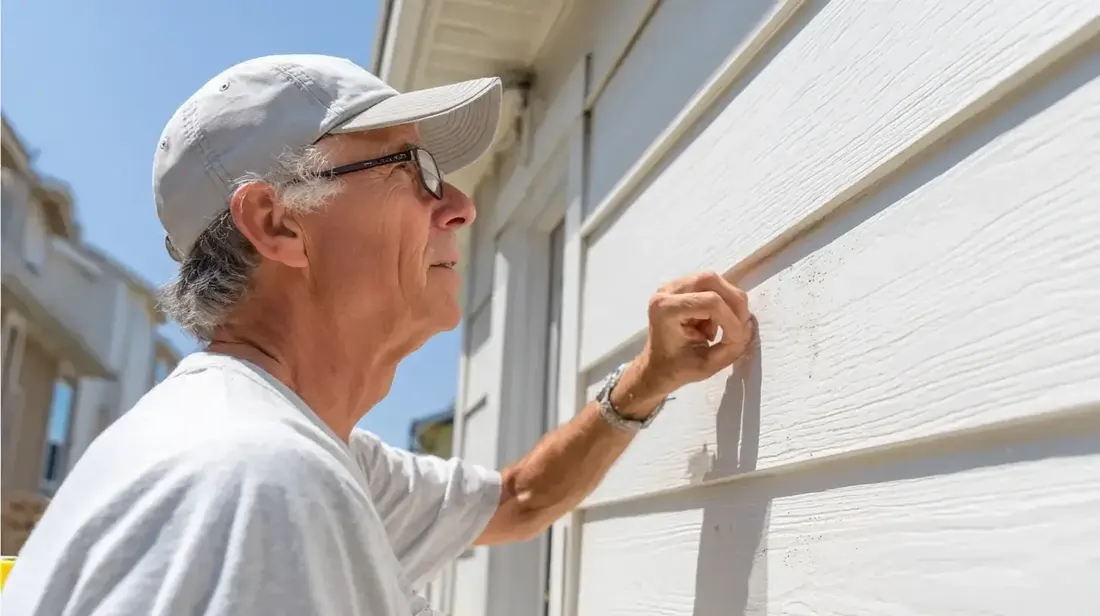
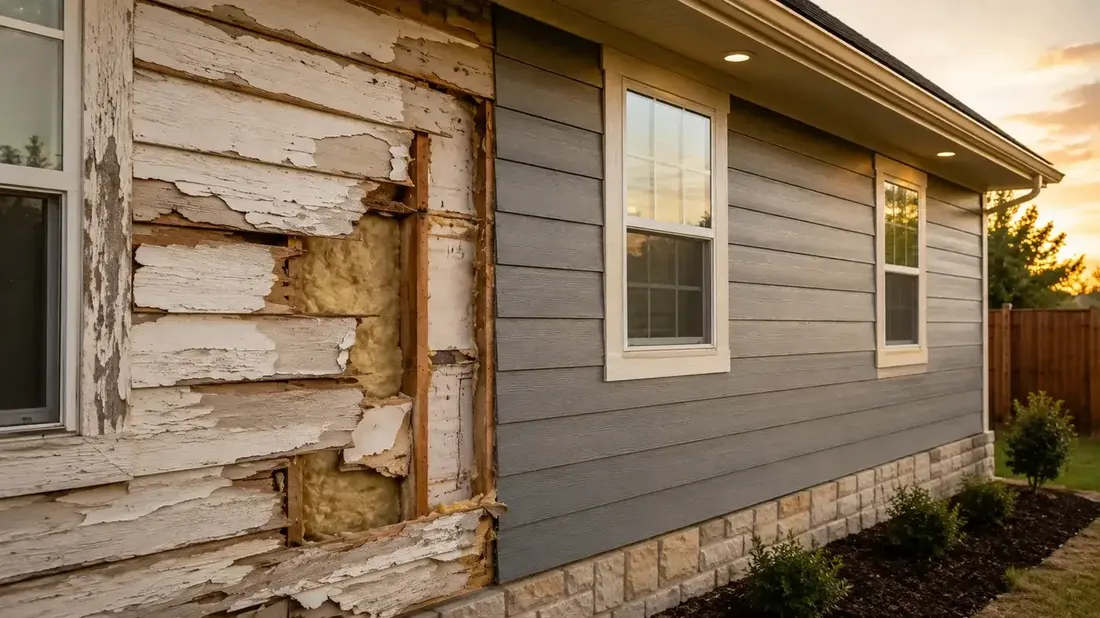
Repair is enough when the damage is local, the rest of the siding is sound and a match is available. A few cracked panels after a storm, one dented wall or a loose section at a corner are classic repair jobs. Fix the cause too, or the damage will return.
- The damage is on one or two walls, and the neighboring panels are flexible and in good shape.
- A matching panel is still made, or you kept spares from the original job.
- Sheathing and framing behind the damaged spot are dry and solid.
- The siding is not near the end of its life, with no widespread fading, cracking or buckling.
A good repair costs less today and gets you back to a sound wall. The risk is repeating it. Four repairs in four years add up to a replacement without any of the benefits.
When does replacement make more sense?
Replacement makes sense when the problem is the siding itself, not one spot. Widespread cracking, brittle panels, soft sheathing, rot at several windows, or a wall that has been patched more than once all point that way. Then each repair only buys a season.
| What you find | Lean toward repair | Lean toward replacement |
|---|---|---|
| Damage extent | One or two spots | Several walls, or damage that keeps returning |
| Condition of panels | Flexible and sound | Brittle, faded or cracking |
| Behind the panels | Dry sheathing | Soft or stained sheathing, or mold |
| Matching | A match is available | No match, or the color has faded |
| Comfort goals | Not a concern | Hot or cold rooms, noise, you want an upgrade |
| Past repairs | Few | Many, in different places |
Treat the table as a first pass. A wall can look like a repair and turn out to be a replacement once the panels come off. We tell you at the estimate what we can see and what we will only know when the wall is open.
What drives the cost of each option?
For repair, cost follows the number of panels, the access and whether a match can be found. For replacement, it follows wall area, trim around windows and doors, the profile and color, and the repair needed behind the old siding. That last item is the wild card, and it is why two houses of the same size can differ.
Ask for both prices on the same walls. A repair price for the damaged section and a replacement price for the full elevation, side by side, shows you the real choice. If a contractor will only give you one price, you do not have enough to decide. Do not choose on the lowest number alone.
Where could a new wall save money over time?
Mostly in fewer repairs and, with insulated siding, in a more comfortable house. We will not promise a savings figure. Energy use depends on your attic, windows, air leaks and habits, as ENERGY STAR explains in its guide to sealing and insulating a home. New siding is one piece of that.
Insulated siding adds a layer outside the studs, which helps rooms that run hot or cold. It cannot be added later without removing the siding, so if you are replacing, decide now. The February 2021 storm and the hot summer of 2023 showed many Dallas and Fort Worth homeowners which rooms in their houses are weak. If those rooms are your reason to call, say so at the estimate.
One more point on timing. Hail and storm season in spring is when many people discover damage, and the best move is to photograph it, get the walls looked at and decide without pressure. A repair done in a hurry on a failing wall is a common mistake.
What are the common mistakes in this decision?
There are two, and they go in opposite directions. The first is patching siding that has reached the end of its life. The second is replacing healthy siding just to freshen the look, when a wash, new caulk and a few panels would do. Both cost more than they have to.
- Do not replace sound siding only because the color is dated. A good wash, fresh trim paint and a few new panels may change the look enough.
- Do not keep patching brittle siding. Each repair is a short-term fix on a failing wall.
- Do not paint over or caulk a stain without finding the cause. Moisture keeps rotting the wall behind it.
- Do not choose based on one price. Ask for the scope in writing.
Our post on replacing siding on one wall covers the middle path. For the warning signs, read how to spot water damage behind siding, and for storm damage, how insulated siding handles Texas storms.
How do you get a clear answer for your house?
Have someone look at the walls and behind the damage. Free in-home estimates are how we start. We look at the walls and behind the damage, and we tell you what we see. We will tell you whether a repair is enough, price a replacement if it is not, and show you what we found. Look at our siding options first if you want to see what a new wall could be, including James Hardie fiber cement.
Questions we get asked about this
Repair costs less up front when the damage is local and a match is available. Replacement can make more sense when damage is widespread or keeps returning, since repeated repairs add up. Ask for both prices on the same walls so you can compare.
Look for widespread cracking, brittle or faded panels, buckling, soft sheathing, stains inside and repeated repairs. One or two of these in one spot may be a repair. Several across the house usually point to replacement. A pro can check behind the panels.
Often, but matching is the hard part because old siding fades. A panel from the same line may still look newer. Hold on to your color name and a few spare panels from the first install. We check a sample against your wall before promising a match.
It can help, especially insulated siding, but we do not promise a figure. Energy use depends on your attic, windows, air leaks and habits. Insulated siding adds a layer outside the studs, which helps rooms that run hot or cold.
American Eagle Builders is a family-owned remodeler in Arlington, and Dallas-Fort Worth homeowners have been calling us since 1984. We offer free in-home estimates, tell you whether a repair is enough, and install insulated vinyl, standard vinyl and James Hardie fiber cement when replacement is the better choice.