Custom siding options are the choices you make beyond a plain wall: the material, the profile, the color and the trim. In Dallas-Fort Worth you can mix all four. Custom means building your look from real product lines, so a damaged panel can still be matched and replaced later.
The short answer
- Custom siding means choosing material, profile, color and trim, not ordering a one-off panel.
- Hold full-length samples against your real brick and stone in daylight before you decide.
- Standard product lines are easier to match when hail or storms damage a wall later.
- Check the HOA guidelines and your city’s rules before you fall for a color.
- Cost follows wall area, trim, profile, color and the repairs hiding behind the old siding.
Most homeowners who ask about custom siding want one thing: a house that does not look like the one next door. That is a fair goal, and in Dallas-Fort Worth it is well within reach. The catch is in the word custom, so it helps to know what you are really choosing before you start looking at samples.
What custom siding options can you choose in DFW?
You can choose the material, the profile, the color and the trim. American Eagle Builders installs insulated vinyl, standard vinyl and James Hardie fiber cement, and each comes in several looks. The combination is what makes a wall yours, and few neighbors will land on the same one.
| Choice | What is on the menu | What it changes |
|---|---|---|
| Material | Insulated vinyl, standard vinyl, fiber cement | Weight, insulation value, upkeep and how much the wall looks like painted wood |
| Profile | Lap, Dutch lap, board-and-batten | How the shadow lines fall and how tall the house looks |
| Color | A wide range in each product line | Mood, heat on sunny walls, and how well it sits with your brick |
| Trim and accents | Corner boards, window casings, a stone-look base, mixed profiles on gables | The finish that makes the house look planned, not patched |
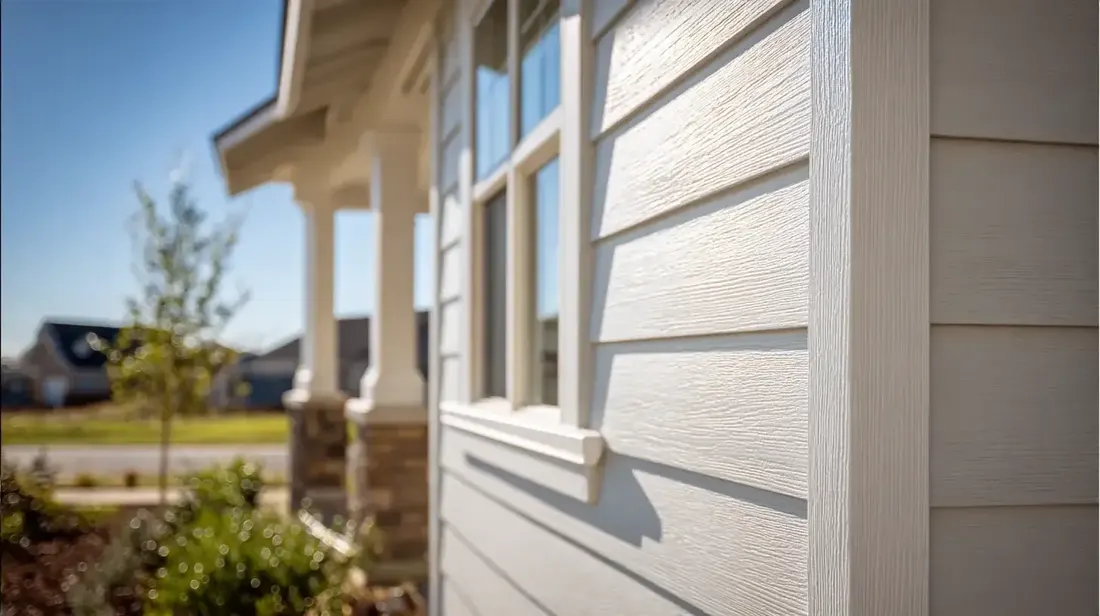
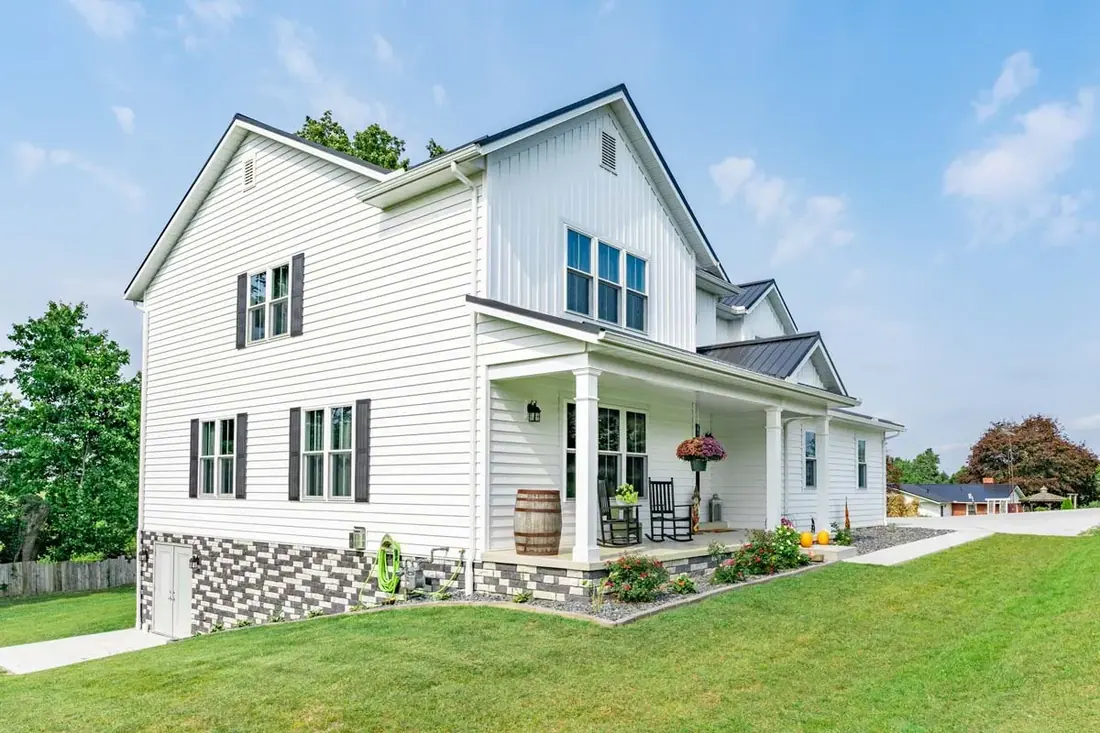
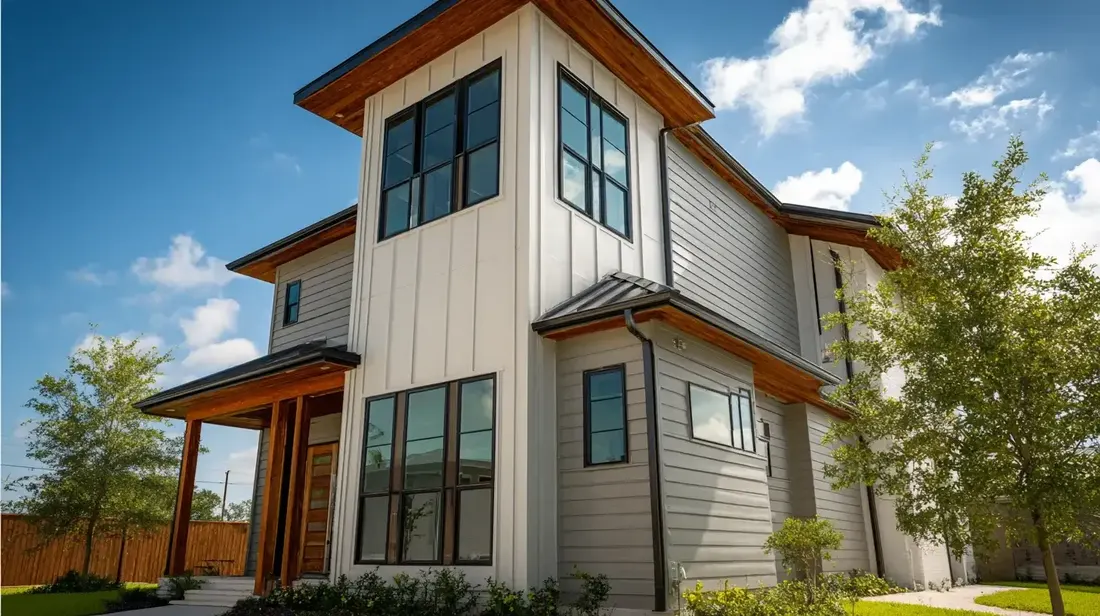
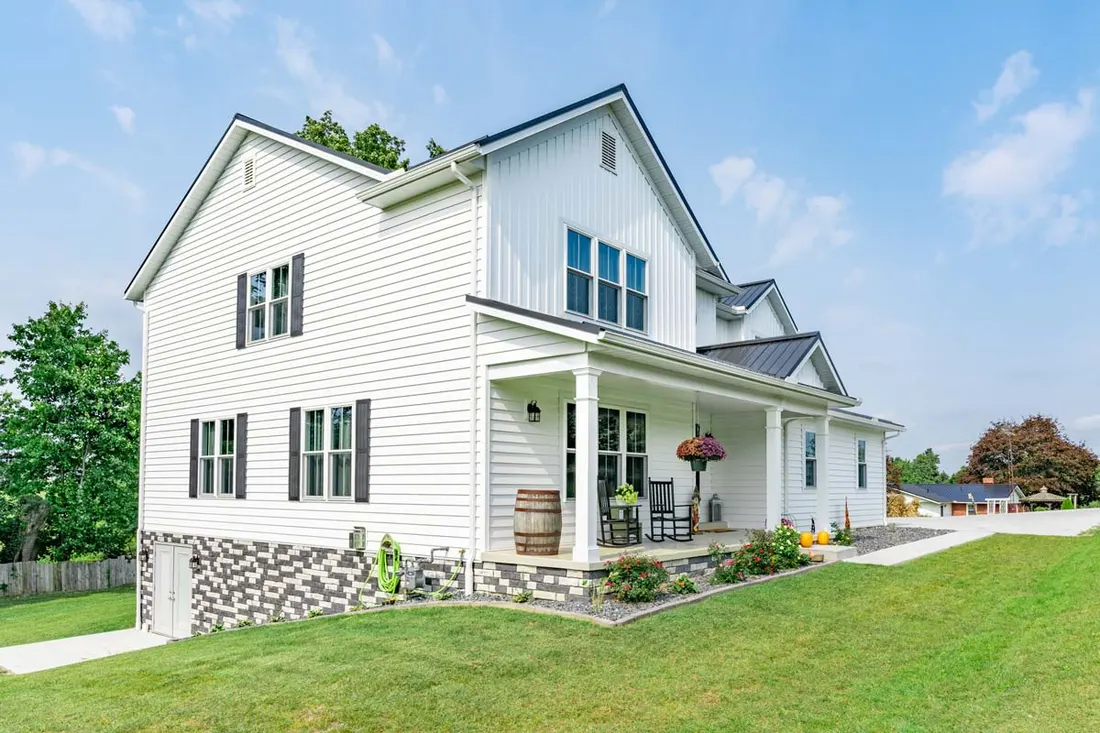
Mixing is where many good designs come from. A house can wear horizontal lap on the main walls and board-and-batten on a gable or a porch bump-out. The two photos in this post show that idea, a tall vertical gable above a lap body and a stone base below it.
Is custom siding made to order?
Usually not. Custom siding in this trade means you pick from the manufacturer’s lines and put the pieces together your way. It does not mean a one-off panel milled for your house. If a contractor promises a truly one-of-a-kind board, ask who makes it and how a damaged piece would be replaced years from now.
That second question matters more than it sounds. Hail and storms damage siding, and a repair needs a match. A standard line from a major maker is easier to match later than anything unusual. We have tracked down matches after a manufacturer changed its lines, but a common color on a current profile makes that hunt much easier. It also helps to keep a few spare panels from your own run.
How do you match siding to brick, stone and trim?
Hold full-length samples against the real brick and stone, in daylight, before you decide. Brick has undertones of red, orange or brown that can clash with a color that looked fine on a small chip. Pick a siding color that agrees with those undertones, then pick a trim shade that is a step lighter or darker, not a near match.
- Look at the samples at midday and again late in the afternoon.
- Stand where the street sees the house, not just at the wall.
- Check the roof color too. It is the largest surface up top and it will not change.
- Keep the number of colors small. Two or three tones read as planned.
Which material suits which look?
Fiber cement suits the painted-wood look, vinyl suits an easy-care wall, and insulated vinyl suits a wall you want warmer and quieter. Pick the look you want first, then check that the material can deliver it on your walls and in your sun.
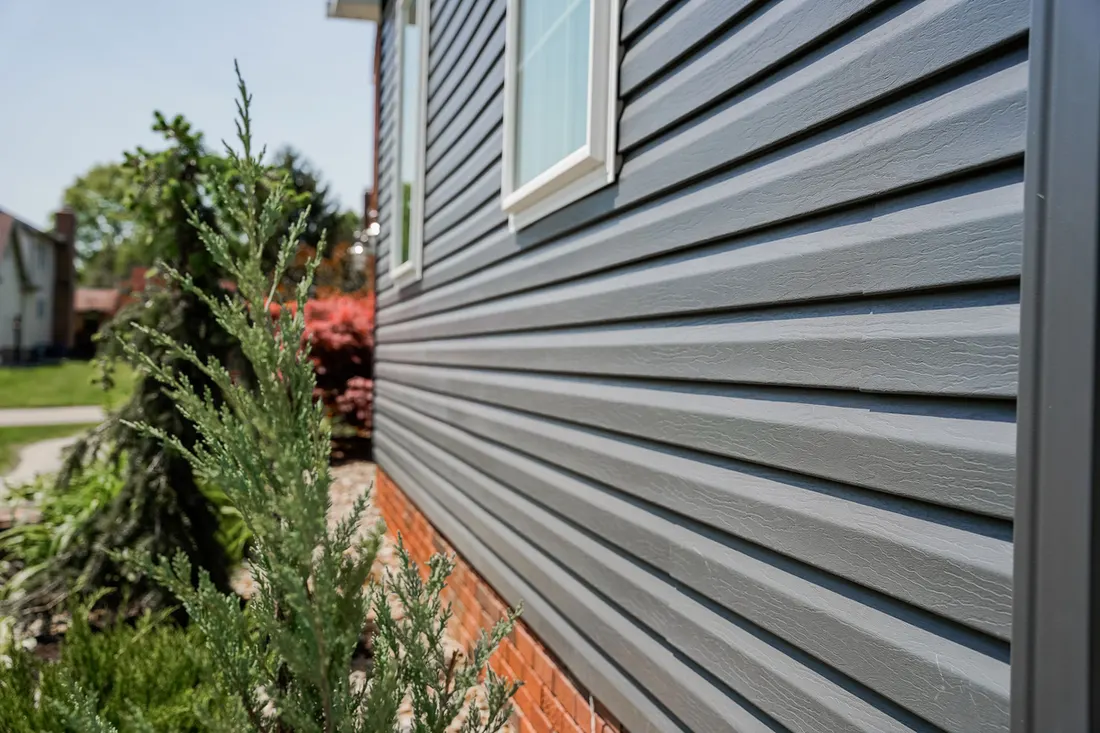
- James Hardie fiber cement is heavy and carries crisp shadow lines, so it reads as painted wood. It also accepts repainting later.
- Standard vinyl never needs paint and comes in a wide color range. It is the simplest way to a new, low-upkeep exterior.
- Insulated vinyl adds a foam backing that stiffens the panel so it lies flatter on walls that are not perfectly straight.
None of these is the right answer for every house. Older homes with wavy walls can reward the stiffer panel. A house with a strong architectural style may call for the deeper lines of fiber cement. Tell us what bothers you about the house today and we will point you to the material that fixes it.
Do neighborhood rules limit your choices?
Sometimes. Some DFW neighborhoods, including parts of Southlake, review exteriors through a homeowners association. Ask for the association’s color and material guidelines before you fall for a sample. A beautiful choice that gets turned down wastes everyone’s time.
A city can also have its own say on exterior work. Arlington posts its permit information online at the city’s permits page. Check with your own city before work starts rather than assuming the neighbor’s project tells you the rule.
What makes custom siding cost more?
Cost follows the work, not the label. Wall area, the amount of trim around windows and doors, the profile, the color and the repairs needed behind the old siding all move the number. A simple wall with one profile costs less to build than a house with three profiles and many corners. An estimate that lists each of these tells you where the money goes.
Two honest cautions. Very dark colors on a wall that takes full afternoon sun, like a west wall in a hot summer such as 2023, are worth checking against the manufacturer’s recommended range. And insulated siding cannot be added later without taking the siding off, so decide on the backing now. See our siding page for the options we install, or learn about James Hardie fiber cement if you want a painted-wood look.
If you are weighing materials, our posts on insulated siding versus standard vinyl and on insulated versus traditional siding lay out the trade-offs. The James Hardie site shows its fiber cement lines, and the Polymeric Exterior Products Association covers vinyl. When you are ready to see samples against your own house, American Eagle Builders offers free in-home estimates.
Questions we get asked about this
Yes. You can choose the material, profile, color and trim, and combine them to suit your house. Custom here means choosing from real product lines, not ordering a one-off panel. American Eagle Builders installs insulated vinyl, standard vinyl and James Hardie fiber cement across DFW.
Common profiles include lap, Dutch lap and board-and-batten. Lap gives a classic horizontal look, Dutch lap adds a deeper shadow line, and board-and-batten gives a tall vertical look. Many houses mix two profiles, for example vertical siding on a gable above horizontal lap on the main wall.
Yes, and it often looks better than a single flat color. Keep it to two or three tones, tie them to your brick or stone, and use trim to separate them. Mixing profiles on gables or porch walls adds interest without making the house busy.
If your neighborhood has an association, usually yes. Many review exterior colors and materials, and some require a submittal. Get the written guidelines first, choose within them and keep the approval for your records. Your city is a separate step, so check its permit office too.
It does not have to be. Standard lines from major makers are easier to match than unusual ones. Keep your color name, product line and a few spare panels from the same run. After a hail storm, those small steps make a partial repair look like the rest of the wall.