How often to replace windows depends on condition, not a calendar. A window is an assembly of glass, seal, frame and hardware, and each part wears at its own pace. In North Texas, sun exposure and the quality of the original installation decide more than the age on the paperwork.
The short answer
- No honest single age tells you when to replace windows, so judge each window by its condition.
- Caulk, weatherstripping and hardware wear out before frames and glass seals do.
- If the frame, the glass seal or the closing action fails, ask for a replacement estimate next to the repair estimate.
- West and south walls in North Texas take the most punishment and usually need attention first.
- A yearly walk-through with a flashlight catches small problems while they are still cheap.
- Installation quality affects how long a window lasts as much as the product does.
A window’s service life is the stretch of years in which it keeps out weather, air and heat and still opens and locks without a fight. Nobody can read that off a birth date. A house in Plano and a house in Fort Worth might have windows put in the same year and be in very different shape by now. This post shows what to check instead of counting years.
How often to replace windows: is there a set number of years?
No. Any single number would be a guess, and we do not guess. Windows are assemblies, and their parts wear at different rates. The sun on the wall, the frame material, the upkeep and the original installation matter more than the age. Plan around condition, and look at each window on its own.
North Texas works windows harder than a mild climate does. A long summer like 2023 bakes the west and south walls, while a hard freeze like the one in December 2022 makes frames and seals contract. That swing is what loosens caulk and tires weatherstripping. A window on a shaded north wall can look fine long after its west-facing neighbor has quit.
Which parts of a window wear out first?
The cheapest parts go first. Exterior caulk and weatherstripping fail before the glass or the frame does, and hardware such as locks and balances follows. The sealed glass unit and the frame usually last longest. That order is useful, because the early failures are the ones a repair can fix.
| Part | How it wears | What usually fixes it |
|---|---|---|
| Exterior caulk | Cracks and pulls away after years of sun and temperature swings | Re-caulking, if the frame behind it is sound |
| Weatherstripping | Flattens, hardens or comes loose, so the sash stops sealing | New weatherstripping |
| Locks and balances | Wear, corrode or lose spring tension | Replacement parts for that sash |
| Sealed glass unit | Seal fails and moisture shows between the panes | A new glass unit, or a new window if the frame is tired too |
| Frame | Warps, rots or flexes, depending on the material | Usually replacement of the whole window |
How do you decide between repair and replacement?
Ask three questions about each window. If the answer to all three is yes, repair is probably enough. If the answer to any one is no, get a replacement estimate alongside the repair estimate and compare them.
- Is the frame straight and solid, with no soft spots, rot or visible warping?
- Is the glass seal intact, with no fog or film between the panes?
- Does the sash still close square and lock firmly without force?
A repair that costs close to what the window is worth is a sign to think harder, not a bargain. Ask for both numbers in writing. If you want help reading the signs room by room, our post on the signs it is time to replace your windows walks through them.
How do frame material and sun exposure change the answer?
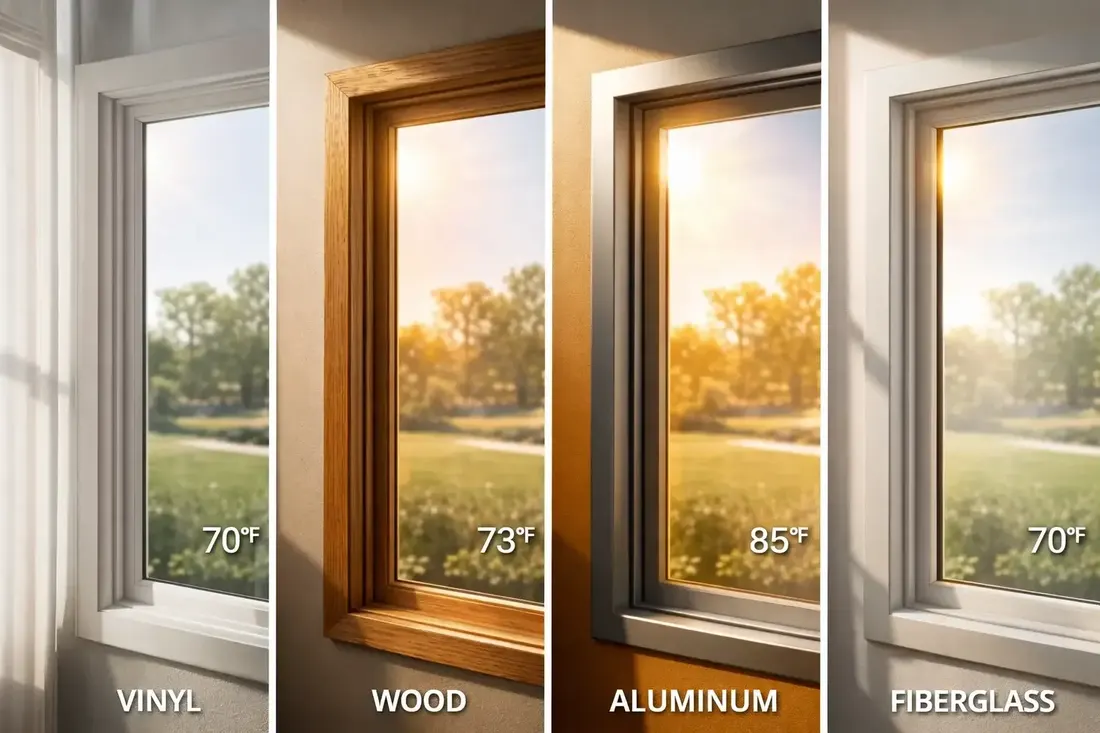
Material changes what wears and what you must maintain. Wood needs paint or stain on schedule and suffers when the finish fails. Vinyl needs little but can warp under heat if it is a poor product. Aluminum conducts heat and can corrode. Fiberglass and composite frames hold their shape well. Our post on frame materials in Texas heat compares them.
Exposure matters as much as material. The same frame ages faster on a west wall with no shade than on a covered porch. If you have a mix of exposures, expect the sunny walls to need attention first, and plan a first group of windows rather than a single date for the whole house.
How should you check your windows each year?
Pick one time a year, such as spring before the cooling season, and walk the house with a flashlight. It takes less than an hour for most homes, and it catches small problems while they are still cheap to fix. Add a check after any big storm, like the February 2021 freeze.
- Open and close every sash, and note any that stick, rattle or will not stay up.
- Lock each window and push on it. A lock that closes but gives under pressure is worn.
- Look at the glass for fog or film between the panes.
- Press a fingertip along the exterior caulk and the sill, and check for cracks or soft wood.
- Write down what you find with a date, so you can see what is getting worse.
The U.S. Department of Energy has a general page on windows if you want background on how they lose heat, and Efficient Windows Collaborative explains how the parts of a window and the ratings fit together. Keep your notes from the yearly check. If a window you flagged last spring is worse this spring, that trend tells you more than any single look.
What if you do not know how old your windows are?
Do not worry about the exact age. Some glass units carry a date or code stamped on the metal spacer between the panes, and a pro can read it. Otherwise judge by the three-question test above. Houses built in different eras across Dallas, Plano and Arlington carry very different windows, so judge each house by what you can see.
Installation counts too. A window set badly can fail early even if the product is good, which is why finding a good window installer is part of the lifespan question. For help, American Eagle Builders offers free in-home estimates, and we are happy to say a window can stay when it can. Our windows page shows the Andersen lines we install.
Questions we get asked about this
There is no fixed number of years. Windows should be replaced when the frame is failing, the glass seal has gone or the sash no longer closes and locks properly. Sun exposure, material and installation quality decide the timing more than age does, so check each window yourself every year.
Usually the cheap parts: exterior caulk, weatherstripping, locks and balances. Those can often be repaired. The sealed glass unit and the frame typically last longer, and when either one fails, replacement is more likely to make sense than another repair.
They often take the most sun and heat, so their finishes, caulk and weatherstripping are usually the first to tire. Check them first on your yearly walk-through. A shaded window on the north wall may stay in good shape much longer.
Yes. Many homeowners start with the sunniest walls or the windows that have failed. Mixed styles can look uneven from the street, so ask for an estimate on a first group and on the whole house, then compare how well the match works.
Yes. American Eagle Builders is a family-owned exterior remodeler in Arlington, serving Dallas–Fort Worth since 1984. We install Andersen windows and offer free in-home estimates, including an honest opinion when a repair is enough.