Window frame materials differ in how much heat they pass, how they move in the sun and how much upkeep they need. In North Texas, the best frame is the one that stays stable on your hottest wall and that you will really maintain, not the one a neighbor has.
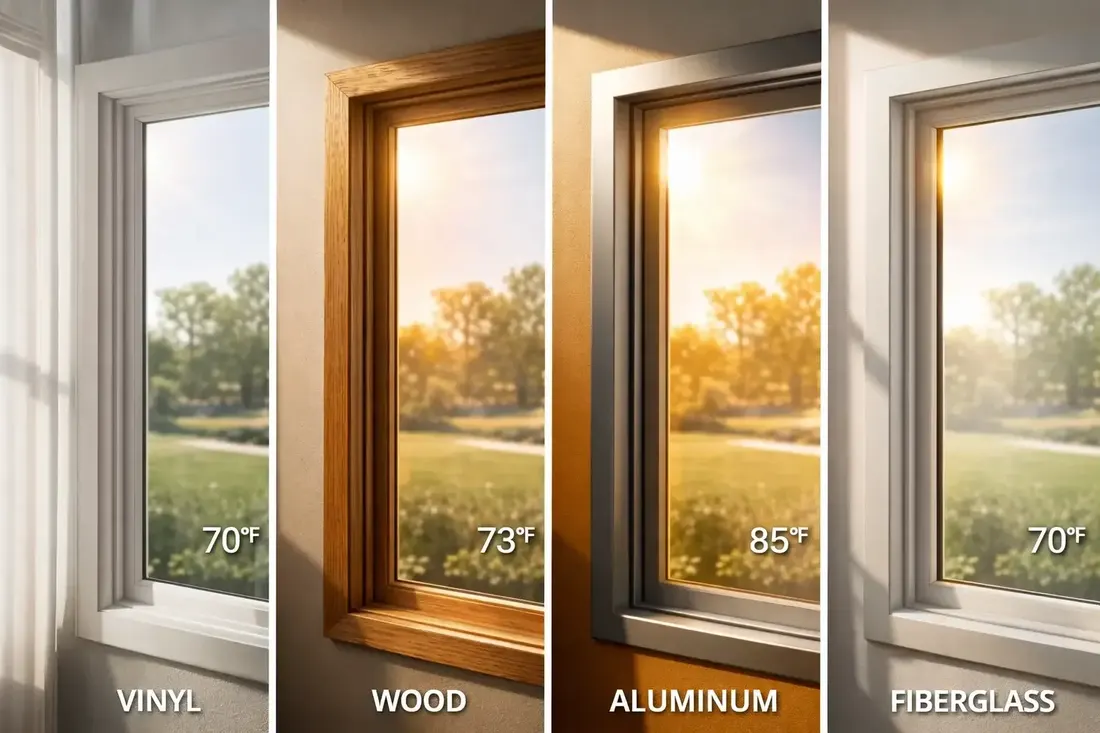
The short answer
- The frame is part of the window rating and takes the sun all day, so it deserves as much thought as the glass.
- Vinyl, fiberglass or composite, clad wood and aluminum each have a clear strength and a clear catch.
- Dark finishes absorb more sun, so they call for a stable frame and some shade on west walls.
- Small windows depend more on the frame, while large picture windows depend more on the glass package.
- Choose a frame you will maintain, not the one a neighbor has.
- Compare the NFRC label for the whole window, since the frame is included in the numbers.
A window frame is the border that holds the glass and fastens the window into the wall. Most people choose windows by the glass, but the frame is part of the rating and it takes the sun all day. In North Texas it also has to handle the swing between a long hot summer like 2023 and a hard freeze like December 2022 without bowing or leaking.
Why do window frame materials matter in Texas heat?
A frame does three jobs that heat tests. It carries heat from outside to inside when it conducts well, it moves as it warms and cools, and its finish takes the sun directly. A frame that fails at any of these lets air in, loosens the seal or looks worn long before the glass does.
On a small window the frame is a large share of the whole unit, so the choice counts for more there. On a big picture window the glass dominates, and the glass package counts for more. That is why a bathroom window and a living room window may call for different answers in the same house.
How do vinyl, fiberglass, wood and aluminum compare?
Each has a clear strength and a clear catch. Use the table to see them side by side, then match them to the wall you are working on. Ratings differ by product, so treat this as a map and read the label of each window you compare.
| Material | Heat flow | Upkeep | What to watch in North Texas |
|---|---|---|---|
| Vinyl | Conducts little heat | Low | Quality varies. Some products can soften or bow when dark finishes bake on a hot wall |
| Fiberglass or composite | Conducts little heat | Low | Tends to hold its shape in changing temperatures, but check the finish |
| Wood with exterior cladding | Conducts little heat | Interior needs care; exterior is protected | Bare wood outdoors suffers in sun and rain, which is why cladding matters |
| Aluminum | Conducts heat readily | Low | Skip it for sun-facing walls unless the frame has a thermal break |
Picture a year in Dallas or Plano. A west wall sits in direct sun for hours in July and sheds that heat after dark. In a freeze like December 2022 the same frame contracts. A frame that moves a lot can open small gaps at the corners and around the sash, and that is where air and water get in. Stability matters as much as the rating, so ask how each frame behaves through that cycle.
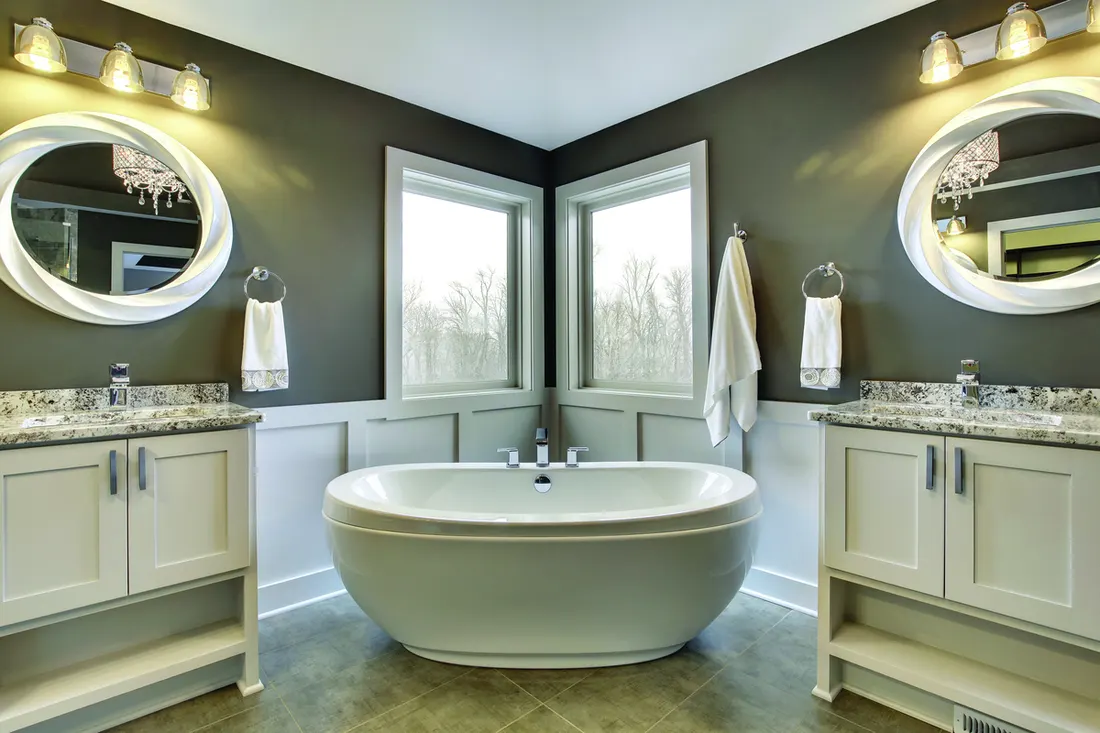
None of these is the right answer everywhere. Vinyl suits a lot of houses and keeps upkeep low. Fiberglass and composite are a good fit where you want stability on a hot wall. Wood gives the warmest interior look and asks for care. Aluminum is slim and strong, but it moves heat in a way a Texas summer will notice.
Upkeep is the part people forget to price in. A wood interior asks you to keep the finish sound and to wipe up moisture before it sits. Vinyl, composite and fiberglass mostly ask for a wash. If your current windows have thin metal frames, expect the frame to be part of what feels different after replacement, because newer frames are built to pass less heat.
Does frame color change how hot a window gets?
Yes. A dark finish absorbs more of the sun than a light one, so a black frame on a west wall will run hotter than a white frame on the same wall. That is not a reason to avoid dark frames. It is a reason to choose a stable frame material and a good finish, and to ask about the finish before you sign.
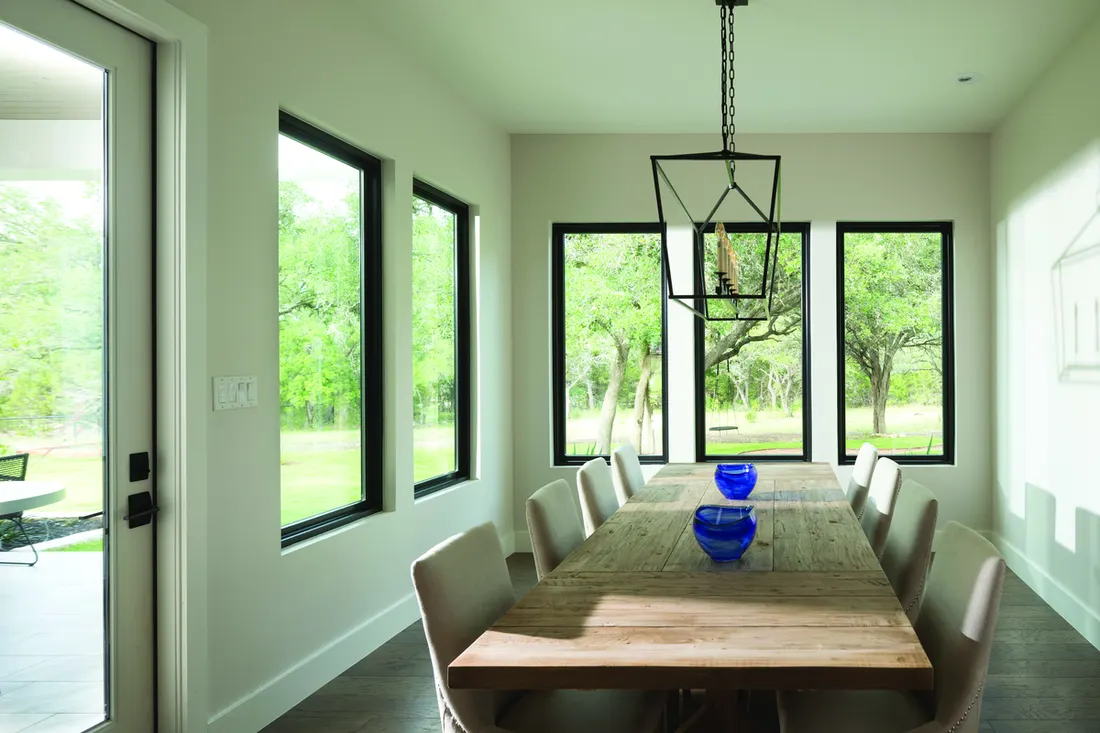
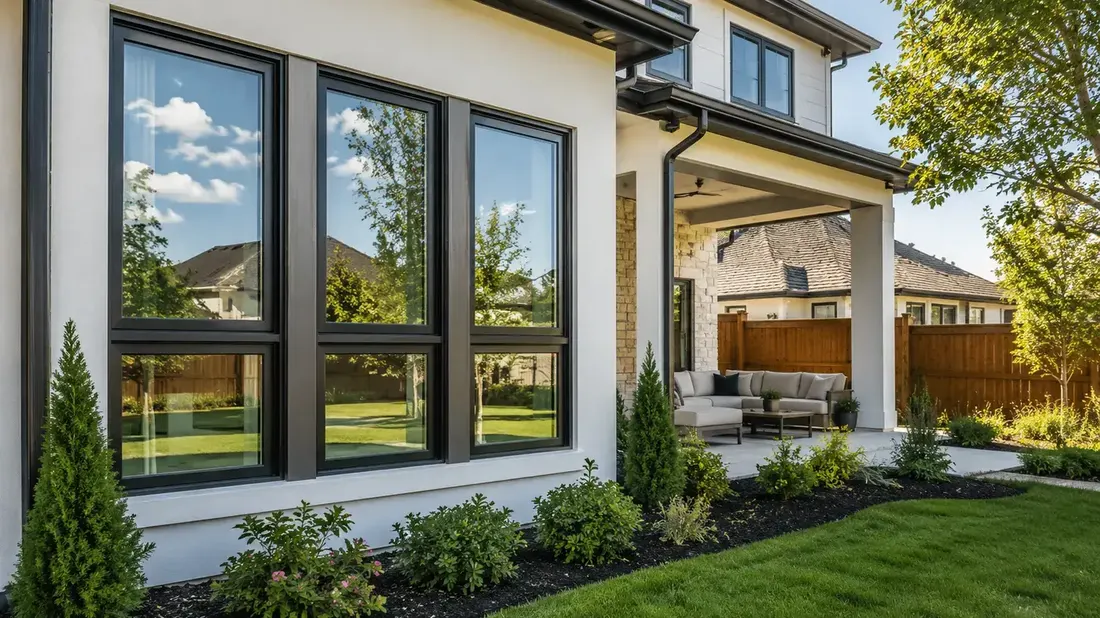
Black-framed windows are popular, and the dining room above shows why. If you want that look on the west or south side, choose a stable frame, plan some shade, and ask what the finish warranty covers. The U-factor and SHGC post explains how the glass in those windows should be rated.
Which Andersen series fits which frame?
American Eagle Builders installs Andersen windows, and the series line up with the frame types above. The 100 Series has a composite frame. The 400 Series pairs a wood interior with protective exterior cladding. The A-Series and E-Series are for styles and openings that need more configuring or made-to-order work.
Our post on window series for DFW homeowners compares the lines for common house styles. Whoever you hire, ask to hold a sample corner and see the finish next to your own siding before you decide.
How do you pick the right frame for your house?
Work through a short list and let the answers narrow the choice. Start with who will maintain the windows, and be honest about it. Then match the frame to the wall’s sun and to your neighborhood’s rules.
- Decide how much upkeep you will do. If the answer is none, lean away from bare wood and toward composite or vinyl.
- Note which walls take the hardest afternoon sun. Choose the most stable frame there, especially in a dark finish.
- Check any HOA rules for color and style. Southlake, for example, is a place where an HOA review is common.
- Decide how the inside should look. Wood interiors give a warm finish, and painted ones give a cleaner line.
- Compare the NFRC label on each window, since the frame is already included in those numbers.
You can look up how ratings work at the National Fenestration Rating Council and the Efficient Windows Collaborative. For a broader view of what new windows change, see our post on window energy efficiency. When you are ready, ask for a free in-home estimate and we will measure and talk frames in person.
Questions we get asked about this
There is no single best. Composite and fiberglass frames tend to stay stable on hot walls, vinyl keeps upkeep low, and wood with cladding gives a warm interior. Aluminum conducts the most heat. Choose by the wall’s sun and by how much upkeep you will actually do.
Some can, particularly low-quality products with dark finishes on sun-facing walls. A well-made vinyl window holds up in many North Texas houses. Ask about the specific product, its finish and its warranty before you decide, and look at the label as well as the frame.
Not necessarily. Dark finishes absorb more sun and run hotter, so they need a stable frame and good glass, and some shade helps on west walls. If you love the look, choose the frame material and finish carefully and ask what the finish warranty covers.
Yes. The NFRC label rates the whole window, and the frame is part of that. A better glass package can be undone by a frame that conducts a lot of heat or lets air in, so compare labels for the complete product, not just the glass.
American Eagle Builders installs Andersen windows in the 100, 400, A-Series and E-Series lines, which include composite frames and wood interiors with exterior cladding. We offer free in-home estimates and can talk through frame choices for each wall.