Energy-saving window replacement means choosing glass, frames and seals for the walls that take the most sun and wind, not just buying one rating for the whole house. In North Texas the long cooling season comes first. Winter still matters, as the freezes of 2021 and 2022 showed.
The short answer
- Energy-saving window replacement works wall by wall because each side of the house meets different weather.
- In North Texas the west wall in summer is usually the first problem to solve.
- Low-E glass, gas fill, a good frame and tight seals have to work together in one window.
- Outside shade and attic insulation can do as much as new glass, so check them first.
- Replace in stages if you must, and keep the series, color and style the same throughout.
A house does not use its windows evenly. The west wall sees the worst of an August afternoon, and the north wall holds the coldest glass on a January night. Treating them the same wastes money in one place and leaves a problem in another. A wall-by-wall plan fixes the worst problems first.
What does energy-saving window replacement mean in North Texas?
It means matching each window to the weather it faces. North Texas has a long, hot cooling season, and short stretches of hard cold. The best plan starts with sun control and still keeps the cold in mind, because the February 2021 winter storm and the December 2022 freeze were not small events.
Which windows should you replace first?
Start with the windows that cause you the most discomfort, then the walls that take the most sun. Replace the failed ones first, such as fogged units and rotted frames, because those lose comfort every day of the year. After that, go by exposure.
| Wall | Summer problem | Winter problem | What to ask for |
|---|---|---|---|
| West | Low afternoon sun overheats rooms, the biggest issue | Little | Low SHGC glass, smaller panes, outside shade |
| South | High sun, easy to shade with an overhang | Welcome warmth in the low winter sun | Balanced coating and a patio cover or overhang |
| East | Morning sun, usually mild | Little | Standard low-E, check seals |
| North | Little sun | Coldest glass in the house | Low U-factor, tight seals, a good frame |
The ENERGY STAR key product criteria are set by climate zone, so check which zone your county falls in before you compare windows. Each rated window also has an NFRC label with its U-factor and SHGC.
How can you tell which windows are costing you comfort?
Walk the house on a hot afternoon and a cold morning with your hand and your eyes. The tests below are rough, but they point to the windows that need attention and the walls that need shade rather than glass.
- On a hot afternoon, hold your hand near the glass of each sun-facing window. A window that radiates heat is letting the sun in.
- On a windy day, hold a stick of incense near the edges of a closed window. Smoke that streams sideways shows a draft.
- Look for fogged glass between the panes, which means the seal has failed.
- Note which rooms never reach the thermostat setting. Those are the rooms to start with.
- Check for fading on floors and furniture near one window, which points to unfiltered sun.
Which glass and frame options help in both seasons?
Four choices carry most of the weight: the coating on the glass, the gas between panes, the frame and the seals. A window with a good version of all four holds up in July and January. A window with one weak part gives back what the others gain.
- Low-E coating. A thin layer that reflects heat. The right type for a west wall differs from the right type for a north wall, so ask for the label on each window.
- Gas fill and sealed gaps. Argon between panes slows heat transfer better than air.
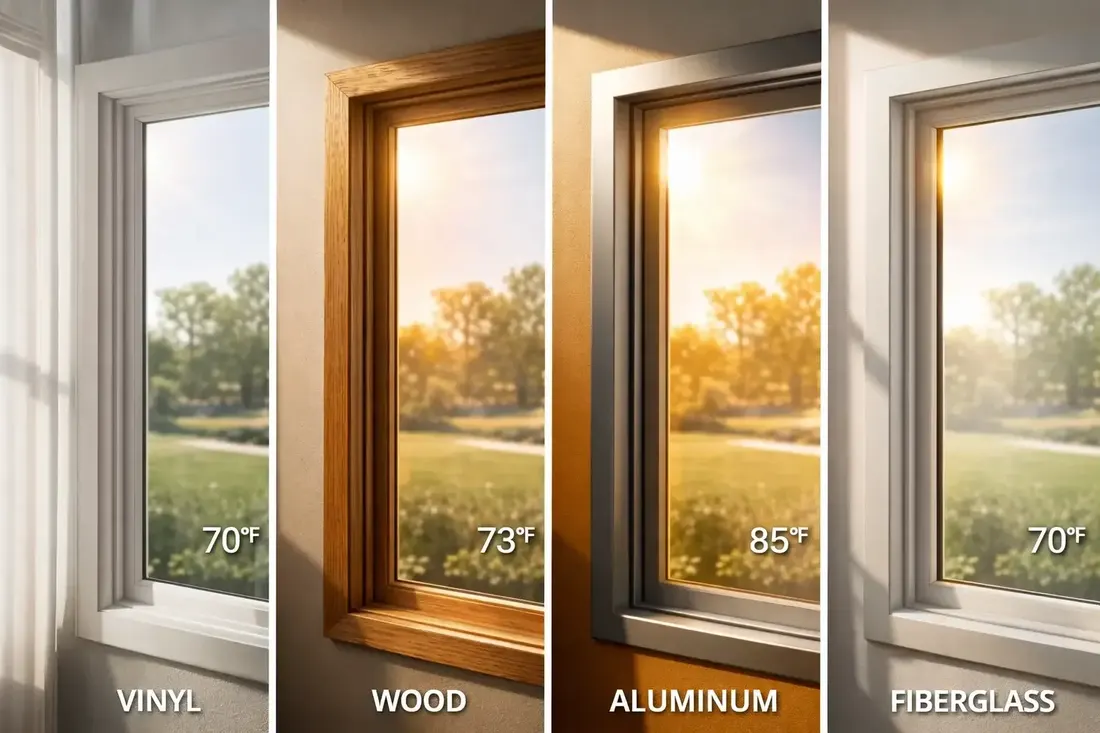
- Frame material. Vinyl, fiberglass and wood insulate well and age differently. Our post on frame materials and Texas heat compares them.
- Seals and style. Casements and awnings press tight against the frame when closed, which helps against drafts.
Our post on U-factor and SHGC for Texas heat goes into the two label numbers.
What can you do besides replacing the window?
Add shade and fix the attic. Shade outside the glass stops heat before it reaches the pane. An attic with thin insulation can make upstairs rooms hot no matter how good the windows are. Sort out what drives the problem before you spend on glass.
- A patio cover or pergola can shade a rear wall of glass and a sliding door.
- An awning or a deep overhang shades south-facing windows when the sun is high.
- Trees help on lots that have them, such as many in Colleyville and Dallas.
- Check the attic and the seals around the house. Draft sealing and insulation often cost less than windows and may deserve to come first.
Are smart or self-tinting windows worth it?
For most homes, no. Self-tinting glass and sensor-driven shades add parts that can fail, and a good coating plus outside shade does most of the same job. They can make sense on one large, hard-to-shade feature window. Ask what happens when the electronics fail, and who services them.
Can you replace windows in stages?
Yes, and it is a reasonable way to spread the work. Start with the failed windows and the west wall. Keep the same series, color and style across stages, so the house looks consistent from the street and you avoid mixing parts that do not match.
Staging has a trade-off. Each stage can mean another visit and another order. If the budget allows, doing the street-facing side together keeps the look uniform. American Eagle Builders is family-owned in Arlington and has worked in Dallas-Fort Worth since 1984. We can price a full-house plan and a staged plan together at a free in-home estimate. See our windows page or book an estimate.
What should you not pay for?
Skip the premium rating you cannot use, such as glass tuned for cold climates on a house with a hot west wall. Skip smart features you will never switch on. Skip replacing sound windows when the attic and ducts are the real problem. A better-targeted plan beats a bigger one, and our post on choosing energy efficient windows shows how to test a rating against your walls.
Questions we get asked about this
Windows with low-E glass chosen for a low Solar Heat Gain Coefficient on the sun-facing walls, in a frame with tight seals, and paired with shade outside. West-facing glass needs the most attention because the afternoon sun is lowest and hottest.
No, one window has to handle both. What changes is the choice by wall. West and south walls need heat control for summer, and north walls need a low U-factor for winter. Ask for the label numbers for each wall.
Replace the failed ones first, such as fogged units and rotted frames. Then go by exposure, starting with the west wall and any room that never feels comfortable. Keep the same series and style across stages so the house looks consistent.
It is a good starting point, because the criteria are set by climate zone. But a certified window still needs the right choice for each wall. Look at the NFRC label for U-factor and SHGC, and ask the installer to explain the numbers.
Yes. American Eagle Builders installs Andersen windows in the 100, 400, A-Series and E-Series lines. At a free in-home estimate we check each wall’s exposure, measure the openings and explain the glass options for your house.