Energy efficient windows are a pairing of coated glass, sealed insulating panes and a tight frame that slows heat moving through the opening. In North Texas the first thing most people notice is comfort next to the glass. The savings on the bill come second, and they depend on what else your house leaks.
The short answer
- Energy efficient windows change comfort, noise and fading as well as the utility bill.
- Low-E glass, sealed panes, a good frame and tight seals have to work together to get the benefit.
- In North Texas, SHGC matters as much as U-factor, especially on west-facing glass.
- If the upstairs runs hot all over and the windows are sound, fix the attic insulation first.
- Tax credit rules change, so confirm current ones with a tax professional and keep your paperwork.
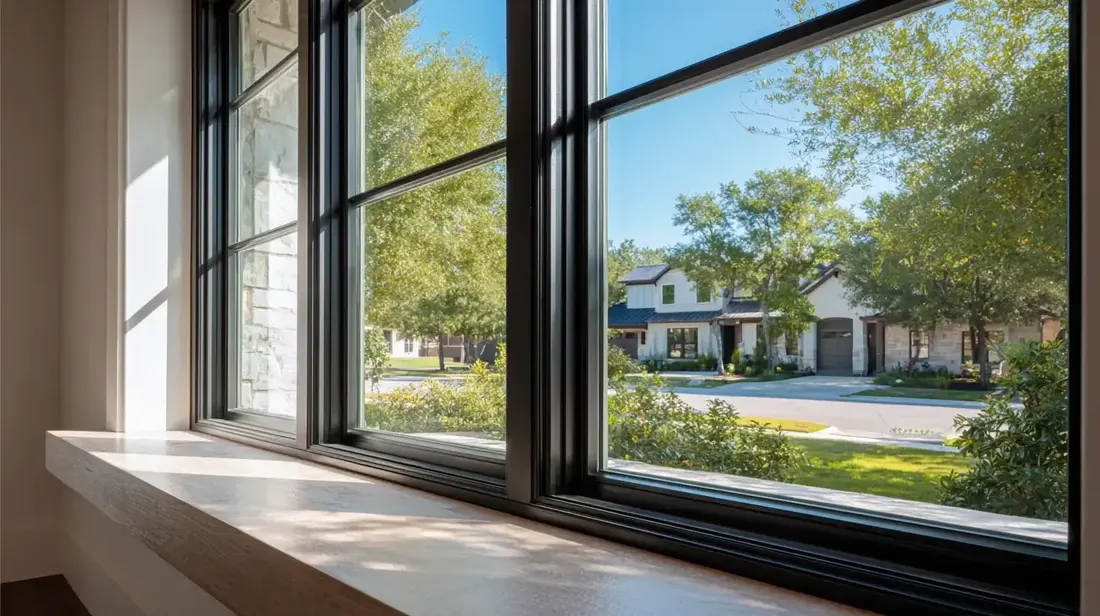
Glass moves heat far more easily than an insulated wall does. That is why the windows are where a house feels the weather first. On an August afternoon in Plano or Fort Worth the sun-facing room is the one that runs warm, and in January the same room is the one with the cold spot by the glass. Better windows go straight at that.
What do energy efficient windows change inside a North Texas house?
They change how the room feels near the glass, how much outside noise gets in, how fast the sun fades your floors and whether the panes fog up. The utility bill moves too, but it is one benefit among several and the hardest one to promise.
- Comfort at the glass. A cold pane makes you feel cold even when the thermostat says otherwise. A warmer inner pane takes away that chilled-wall feeling in winter and the radiant heat from a hot window in summer.
- Less fading. Low-E coatings cut some of the ultraviolet light that bleaches hardwood, rugs and upholstery. They slow fading. They do not stop it.
- A quieter room. Two sealed panes and a tight frame take the edge off traffic and lawn crews. Windows are not soundproofing, so expect less noise, not silence.
- Less condensation. A warmer inner surface is less likely to fog on a cold morning, which keeps the sill and trim drier.
- Lower cooling and heating load. The equipment runs less often when less heat crosses the glass. How much less depends on the house, so we don’t put a number on it.
How do energy efficient windows work?
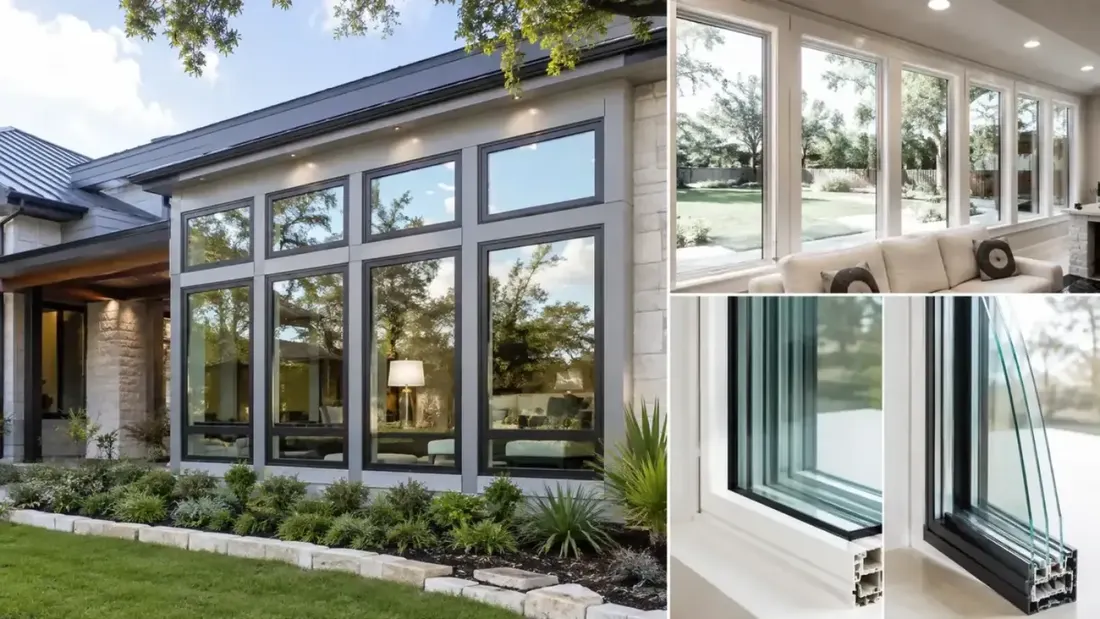
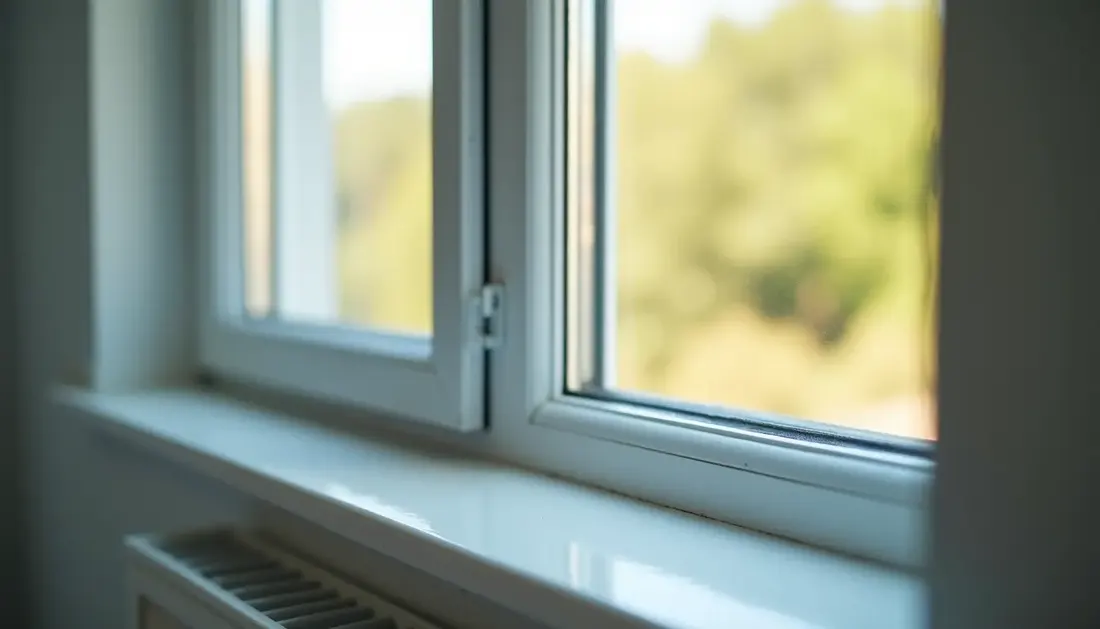
Four parts do the work together: the glass coating, the sealed gap between panes, the frame and the seals around the sash. A weak part drags down the rest, which is why a good pane in a loose frame disappoints.
- Low-E coating. A thin, nearly clear layer on the glass that reflects heat instead of passing it through. The right coating for a west wall in Texas is not the same as the right one for a north wall.
- Sealed panes and gas fill. Two layers of glass with a sealed space between them, often filled with a gas that slows heat transfer better than air.
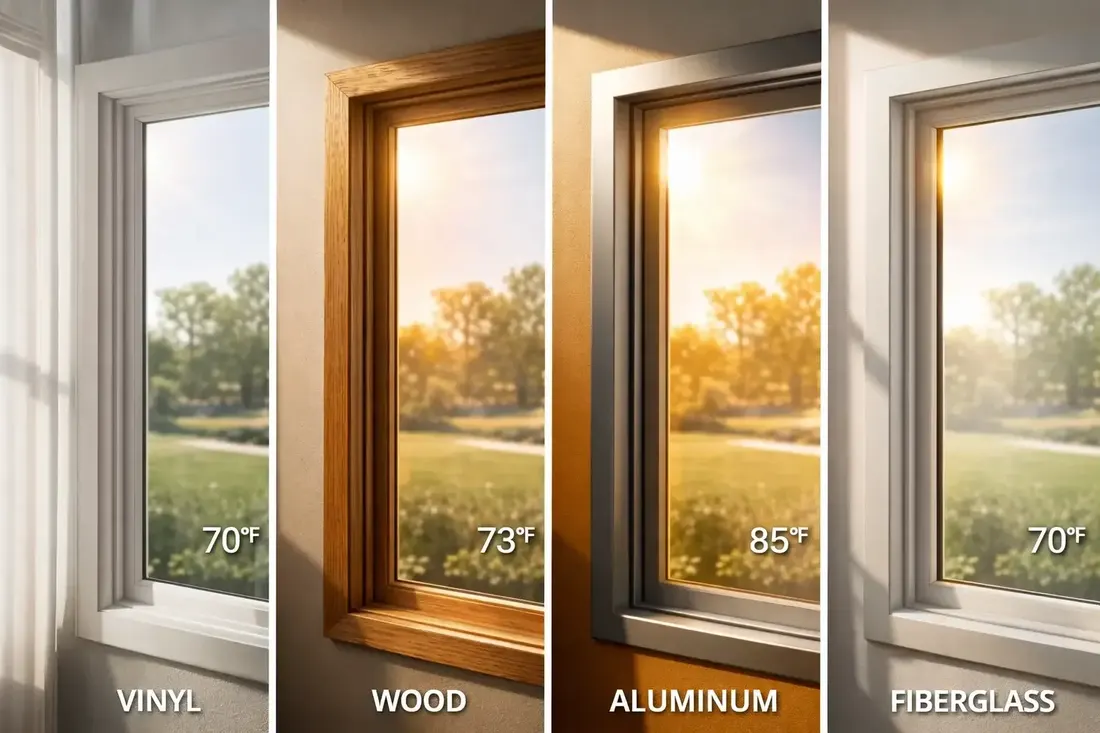
- The frame. Vinyl, fiberglass and wood all insulate better than bare metal, and each one ages differently. See our post on frame materials in Texas heat.
- Seals and weatherstripping. Air leaking around a sash can undo what the glass is doing.
The Department of Energy has a page on windows if you want a second plain-language explainer.
Will new windows cut your bill, and when should something else come first?
They can, but windows are rarely the biggest lever in an older house. If your attic has thin insulation or your ducts leak, new glass will not fix that, and money spent there often returns more comfort per dollar. Sort the whole envelope before you decide.
| What you notice | Likely cause | Look at first |
|---|---|---|
| Whole house runs hot in the upstairs rooms | Thin attic insulation or a hot roof deck | Insulation, then windows |
| Cold or hot spot only next to one window | Glass with no coating, or a leaky frame | That window |
| Drafts at closed windows but sound frames | Worn weatherstripping or a loose lock | Repair |
| Fog between the panes | A failed seal in the glass unit | That unit or window |
| Floors fade on one wall only | Sun through uncoated glass | Glass coating and shade |
If the attic is the problem, start there. Our insulation page covers the options we install. Replace windows when the glass, seals or frames themselves are the failing part.
Which numbers on the label matter in DFW heat?
Two of them. U-factor measures how much heat passes through the whole window, and Solar Heat Gain Coefficient, or SHGC, measures how much of the sun’s heat comes through the glass. For both, a lower number is better. In a cooling-dominated climate like ours, SHGC deserves real attention.
Each rated window carries an NFRC label with these figures. ENERGY STAR sets window requirements by climate zone, so a window that qualifies for the north may not for the south. Our post on U-factor and SHGC for Texas heat goes number by number.
How did the weather of recent years test these benefits?
Two events show the difference. The February 2021 winter storm and the December 2022 freeze put cold-glass and draft problems on display, because a tight window with a warm inner pane holds a room better when the heat is struggling. The hot summer of 2023 did the same in reverse: rooms on the west side of the house were the first to lose the fight.
Neither event changes the advice. It just makes the case for matching glass to the wall it sits on.
Are there tax credits or rebates for new windows?
Sometimes, and the rules change. Federal credits for windows have been adjusted more than once, and utility and city programs differ. Check current rules with a tax professional before you count on one, and keep the invoice and the product label either way.
How do you keep energy efficient windows working?
Mostly by keeping them clean and keeping the seals alive. A few minutes each season is enough, and the habits below cost almost nothing.
- Wash the glass and frames with mild soap and water, and keep the weep holes at the sill clear.
- Check the weatherstripping once a year and replace it when it flattens or cracks.
- Keep the tracks and hinges clean so each sash closes fully.
- Hang shades or blinds you will actually use on west-facing glass.
Are energy efficient windows right for your house?
They are when the old windows are failing or the sun-facing rooms never get comfortable. They are not when the windows are sound and the attic is bare. American Eagle Builders installs Andersen windows, and we will tell you if a repair or an insulation job is the better first step. Browse our windows page or book a free in-home estimate. If you are also comparing glass layers, read our post on double-pane and triple-pane windows.
Questions we get asked about this
They can, because less heat crosses the glass and your system runs less often. The amount depends on your house, your old windows and what else leaks, such as the attic or ducts. We don’t promise a figure. We look at the whole house first.
Low-E stands for low emissivity. A thin, nearly clear coating on the glass reflects heat instead of letting it pass. In North Texas, coatings tuned for the sun on west and south walls can cut the heat coming in while still letting in plenty of daylight.
Usually a little. Two sealed panes and a tight frame take the edge off traffic and lawn equipment. Windows are not soundproofing, so expect a calmer room, not a silent one. Louder streets may call for thicker or laminated glass.
If the upstairs rooms run hot all over and the windows are sound, yes, start with the attic. If one window is cold, drafty or fogged between the panes, that window is the problem. Often a house needs a bit of both.
Yes. American Eagle Builders is a family-owned company in Arlington, and we give free in-home estimates across 90 DFW cities. We measure the openings, check the condition of the frames and walk through the Andersen series that suit the house.