Window replacement mistakes mostly come from rushing three things: the ratings, the measuring and the paperwork. A window replacement is the removal of an old window unit and the fitting of a new one into the same opening. These ten mistakes are listed in the order they tend to happen, each with a test you can run.
The short answer
- Compare estimates by what each one lists, not by the total at the bottom.
- Read the NFRC label for U-factor and SHGC, and give SHGC extra weight on west-facing walls.
- Run the repair-or-replace test first, because many window problems come from worn parts rather than failed windows.
- Measure each opening on its own, since clay ground can leave older openings out of square.
- Check your city’s permit office before work starts, because the rules differ from city to city.
- Walk every window with the crew lead and read the warranties before the crew leaves.
Most window regrets show up after the glass is in, when the fix means another order and another visit. North Texas raises the stakes. A window here faces a hard freeze like the one in December 2022 and the long heat of a summer like 2023, so a weak choice gets found out. Each mistake below is one you can catch before you sign.
Which window replacement mistakes happen before you order?
Four of them, and they are the cheapest to fix because nothing has been built yet: shopping on the lowest total, reading the wrong rating, buying a look that fights your sun, and choosing a frame by habit. Catch these and the later steps get easier.
Mistake 1: Shopping on the lowest total
A low number can mean a thinner frame, a plainer glass package or a rushed fit. Lay your estimates side by side and check that each one lists the same window series, the same glass, the same number of openings and what happens to the old windows. If the lists differ, the totals can’t be compared. Ask for the list in writing.
Mistake 2: Reading the wrong rating
Every rated window carries a label from the National Fenestration Rating Council. It shows two numbers that matter here. U-factor tells you how much heat passes through the window. Solar Heat Gain Coefficient, or SHGC, tells you how much of the sun’s heat comes through the glass. Lower is better for both. North Texas has a long cooling season, so SHGC deserves as much attention as U-factor, especially on west-facing walls. ENERGY STAR publishes its window criteria by climate region, so check the one for your area. Our post on U-value and SHGC for Texas heat goes deeper.
Mistake 3: Buying a trend that fights your sun
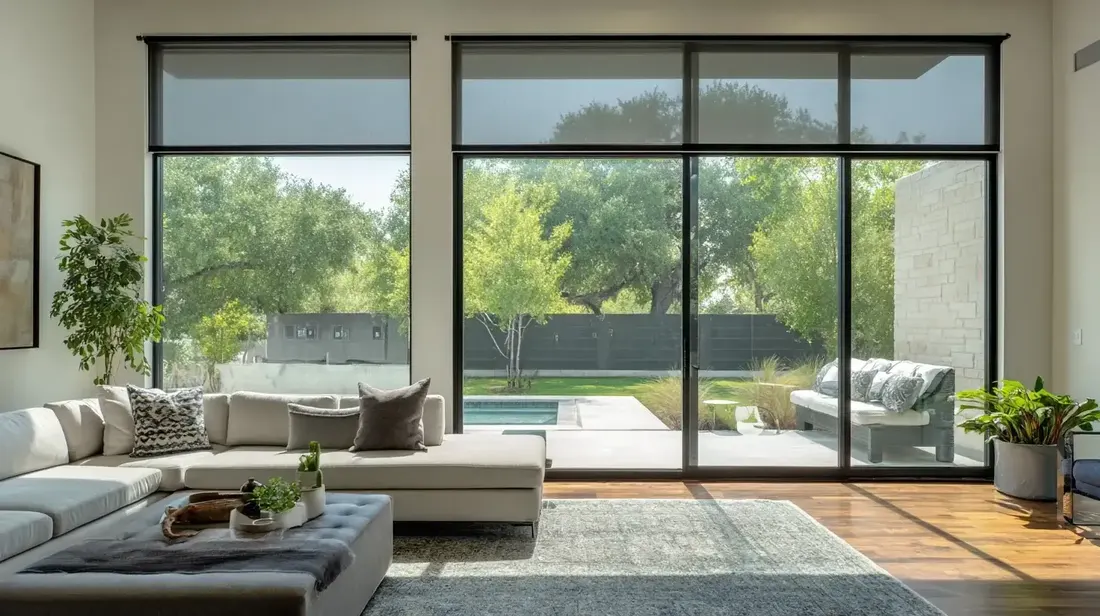
Big picture windows and glass walls look good and bring in plenty of light. They also bring in plenty of heat. On a wall that takes afternoon sun, a large panel needs a low SHGC, shade, or both. A trend is fine when the glass and the direction agree with it. Skip the big-glass look on a west wall if you won’t shade it.
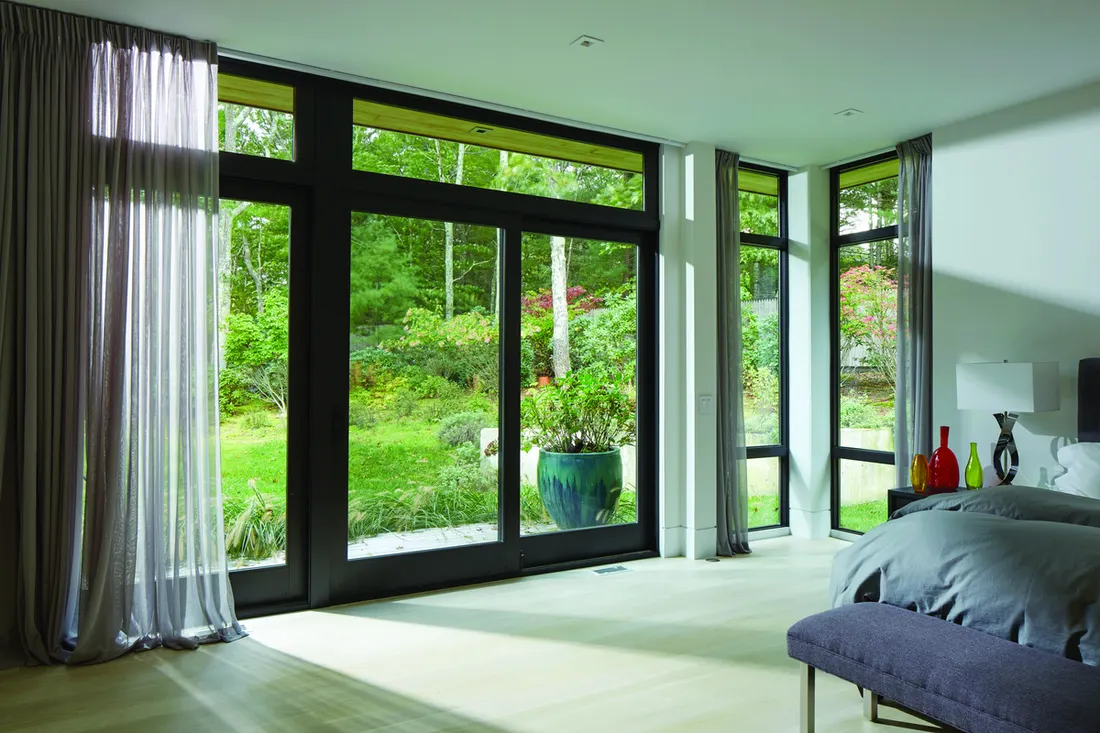
Mistake 4: Choosing a frame by habit
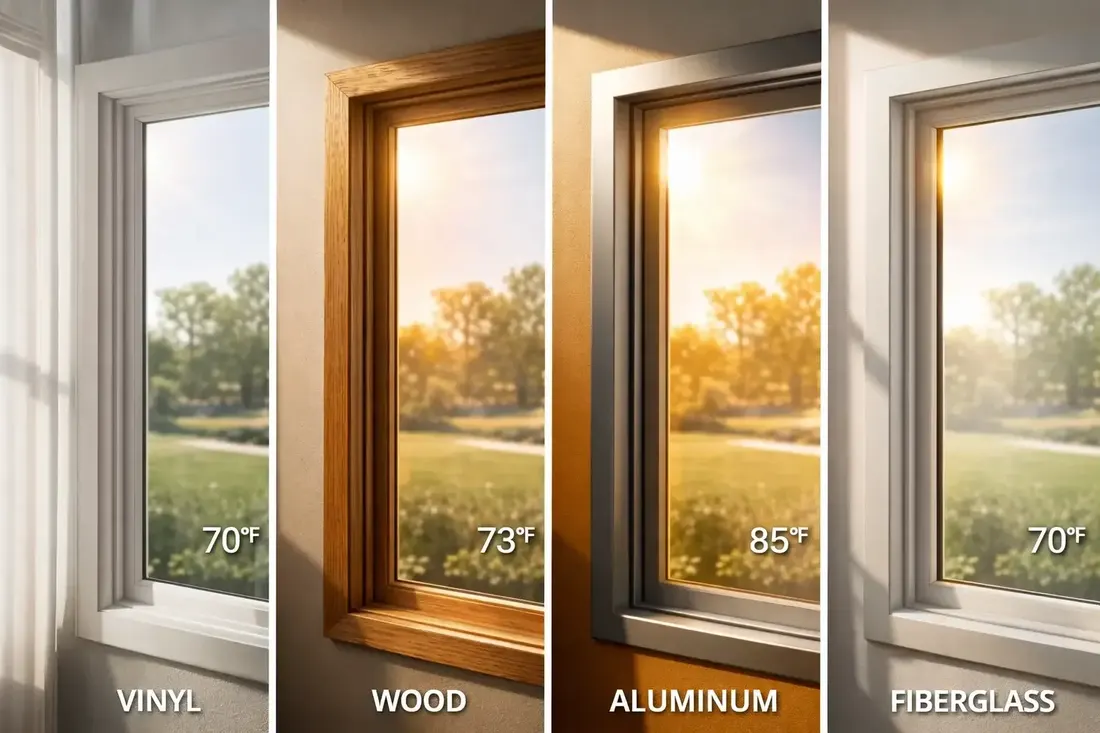
Vinyl, fiberglass, aluminum and wood each age differently in Texas sun. They differ in upkeep, in how much they flex with heat and in how slim the frame can look. Pick the one you will actually maintain, not the one the neighbor has. We install Andersen windows, so we talk frames in terms of the 100, 400, A-Series and E-Series lines. Our post on frame materials and Texas heat lays out the trade-offs.
Should you repair a window instead of replacing it?
Sometimes yes. A stuck sash, a worn lock or tired weatherstripping can often be fixed without a new window. Mistake 5 is replacing a window that only needed a repair. Use the table below as a first test, then have someone look at the window in person.
| What you see | A repair may be enough | Replacement is likely |
|---|---|---|
| Window sticks or won’t stay up | Worn balance, dirty track or swollen paint | Frame is warped or out of square |
| Draft at a closed window | Failed weatherstripping or a loose lock | Gaps around the frame that caulk won’t hold |
| Cloudy glass between the panes | Rarely, because the seal has usually failed | The glass unit or the whole window |
| Soft or rotted frame | Small, dry damage on a sound frame | Rot that reaches the structure |
| Cracked glass | One pane in an otherwise sound window | Several cracked panes or an old, failing frame |
The rule is simple. If the frame is sound and the trouble is one part, repair it. If the frame, the glass seal or the opening is failing, replace. It is fair to ask for a repair estimate and a replacement estimate on the same window.
Where does measuring go wrong in North Texas?
It goes wrong when someone treats every opening as square and the same size as the one beside it. Mistake 6 is trusting a rough measurement. Each opening should be measured on its own, in more than one place, before any window is built.
Much of Dallas, Plano and Frisco sits on Blackland Prairie ground, deep dark clay that swells in a wet spring and shrinks hard by August. A house on ground like that can shift a little with the seasons, so an opening that was square when it was framed may not be square today. Arlington’s lots have sandier loam over clay, and Fort Worth has shallow soil over limestone, so older houses differ street to street. That is why we measure every opening before we talk about styles.
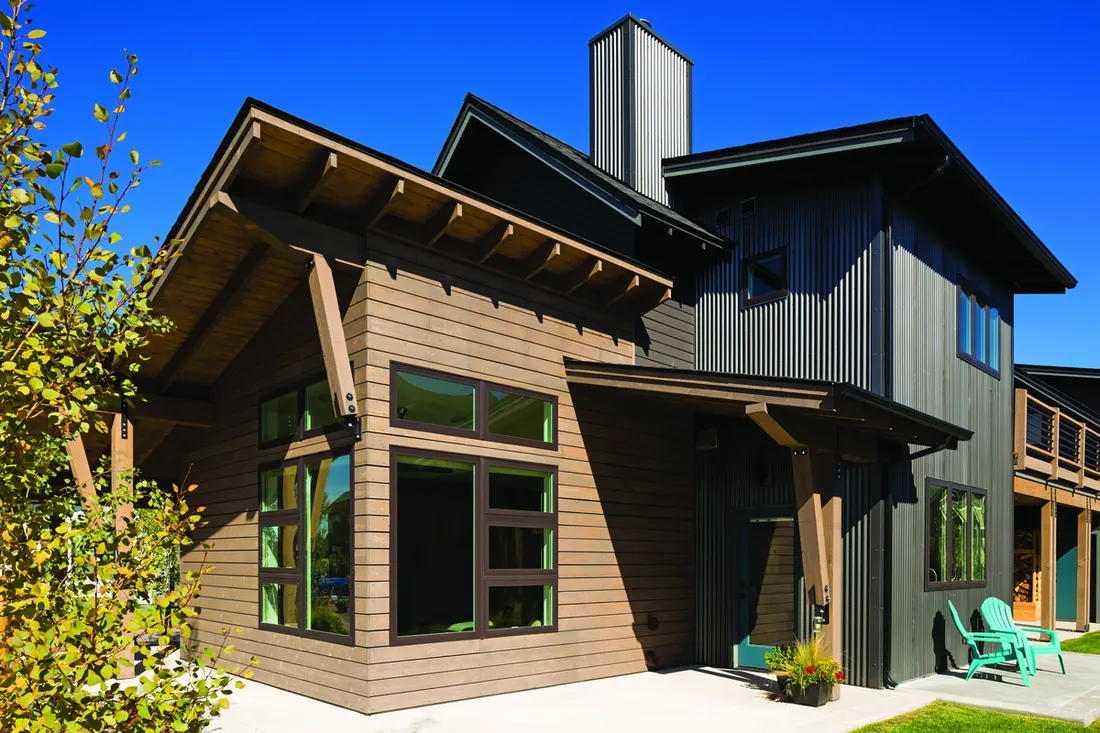
Ask for the measurements to be written on your order, opening by opening. If a window arrives that does not fit, the written sizes show where the error started.
How do you tell a careful installer from a rushed one?
A careful installer talks about the opening before the window, explains how the flashing and sealant will work, and puts the plan in writing. Mistake 7 is hiring on price or speed alone. Even a well-made window leaks air or water if it is set badly.
- Who measures, and are the sizes written on the order?
- What keeps water out at the sill and the head of each window?
- Can you show proof of insurance and written warranty terms for the product and the labor?
- Who cleans up, and what happens to the old windows?
- Is the firm EPA Lead-Safe Certified if my house is older?
That last question matters for older homes, because painted frames can disturb lead paint during removal. The EPA’s lead renovation, repair and painting program sets the rules for firms that work on older housing. American Eagle Builders is an EPA Lead-Safe Certified Firm. Our post on window installation quality in DFW shows what good work looks like.
Are smart window features worth paying for?
Only if you will use them. Mistake 8 is paying for motors, sensors and shade controls that never leave their default settings. Each feature adds parts and cost to the order. Ask what it does that you would do by hand today, and skip it if the answer is nothing you care about.
If a feature does appeal, check that it works with the devices you already own before you order, not after the windows are in. Ask who supports it if the app or the hub changes.
Do you need a permit to replace windows?
It depends on your city and on the work. Swapping a window in the same opening is treated differently from cutting a new one or changing a size. Mistake 9 is assuming the answer without asking. Check with your city’s permit office before work starts, and don’t rely on what a neighbor did in another city.
Cities post their own residential permit information. Four examples are Arlington, Fort Worth, Dallas and Plano. Our permit guide is a place to start.
Mistake 10: Skipping the walk-through and the warranty
Read the product and installation warranties before the crew leaves, including what they exclude and what upkeep they expect. Then walk the house with the crew lead and check every window. If anything is off, say so that day.
- Open and close each sash. It should move smoothly and latch without force.
- Lock each window and try the lock.
- Look for gaps, scratches or chips in the glass and frame.
- Check the interior trim and the exterior sealant lines for neat, continuous work.
- Write down anything you find and ask for the fix in writing.
What should you do before you sign?
Run the ten mistakes as a checklist against each estimate. Are the ratings listed, the openings measured, the repair options considered, the installer questions answered, the permit checked and the warranty read? If a proposal can’t answer one of those, ask before you sign.
We offer free in-home estimates across 90 DFW cities. You can book one here, or start with our windows page to see the Andersen series we install.
Questions we get asked about this
Shopping on the lowest total without comparing what is in it. Two estimates can differ because one lists a different series, plainer glass or fewer openings. Put the estimates side by side, confirm the same window, glass and scope on each, and ask for the sizes to be written on the order.
It depends on your city and the work. Replacing a window in the same opening is often treated differently from enlarging one or cutting a new one. Ask your city’s permit office before work starts. Arlington, Fort Worth, Dallas and Plano each post residential permit information online.
Both matter. U-factor measures heat passing through the window, and SHGC measures how much sun heat comes through the glass. Because North Texas has a long cooling season, a low SHGC is worth extra attention on walls that take afternoon sun. Compare the NFRC label on each window you are considering.
Not always. Replacing one wall or one floor can work, but mixed frames and glass can look uneven from the street and perform differently. Ask for an estimate for the whole house and for the part you want, then compare. Which is better depends on the condition of the windows you would leave.
Yes. American Eagle Builders is a family-owned exterior remodeler in Arlington, working across Dallas–Fort Worth since 1984. We offer free in-home estimates and install Andersen windows. We measure the openings in person so the estimate matches the house you actually have.