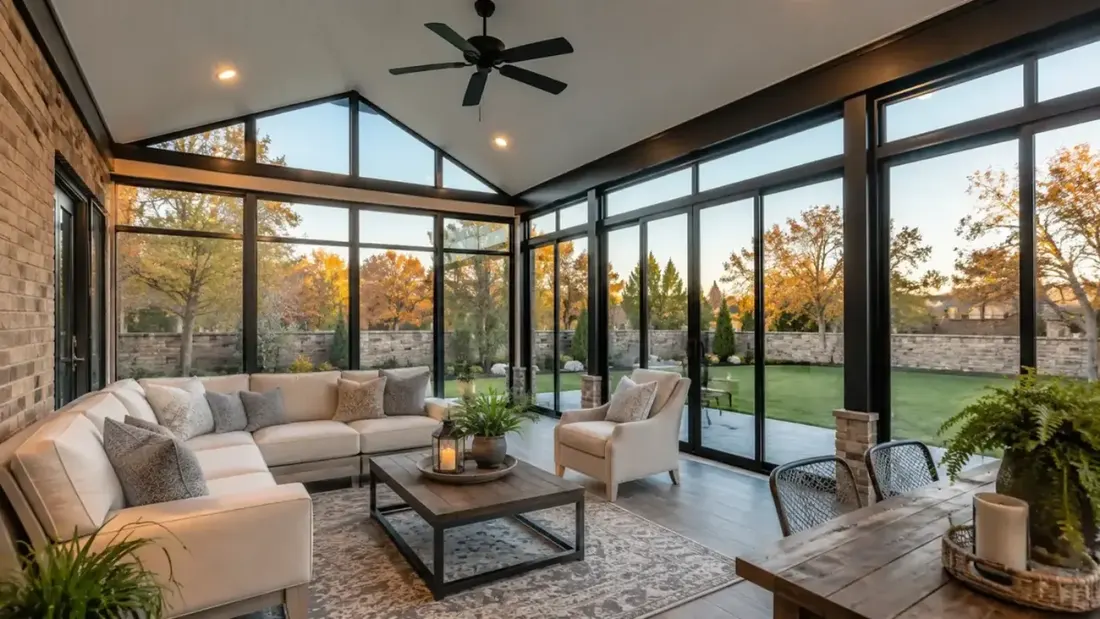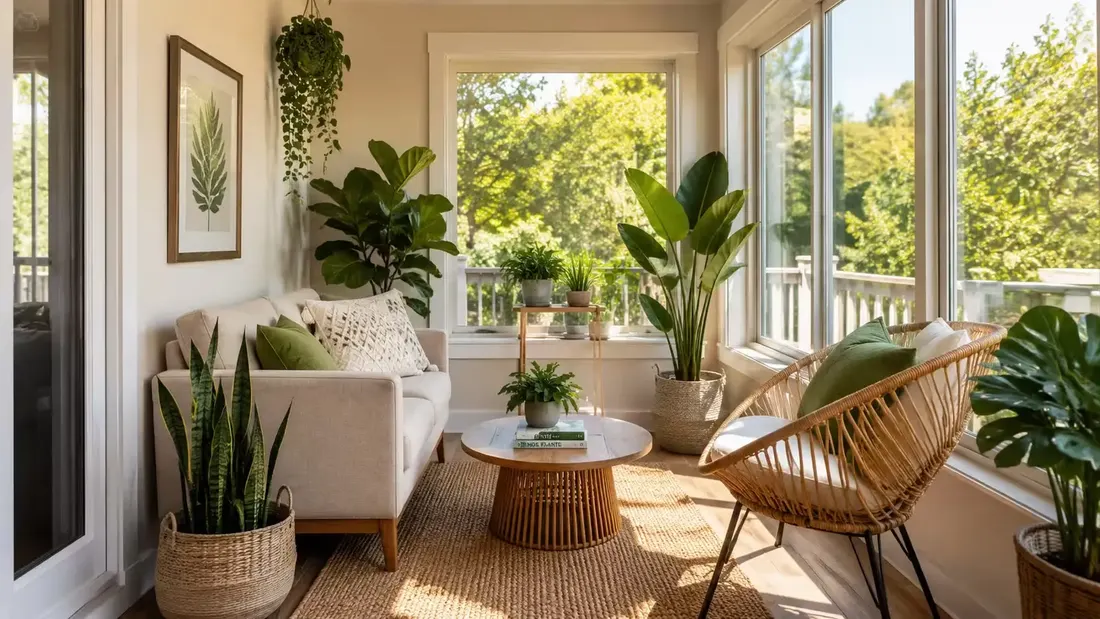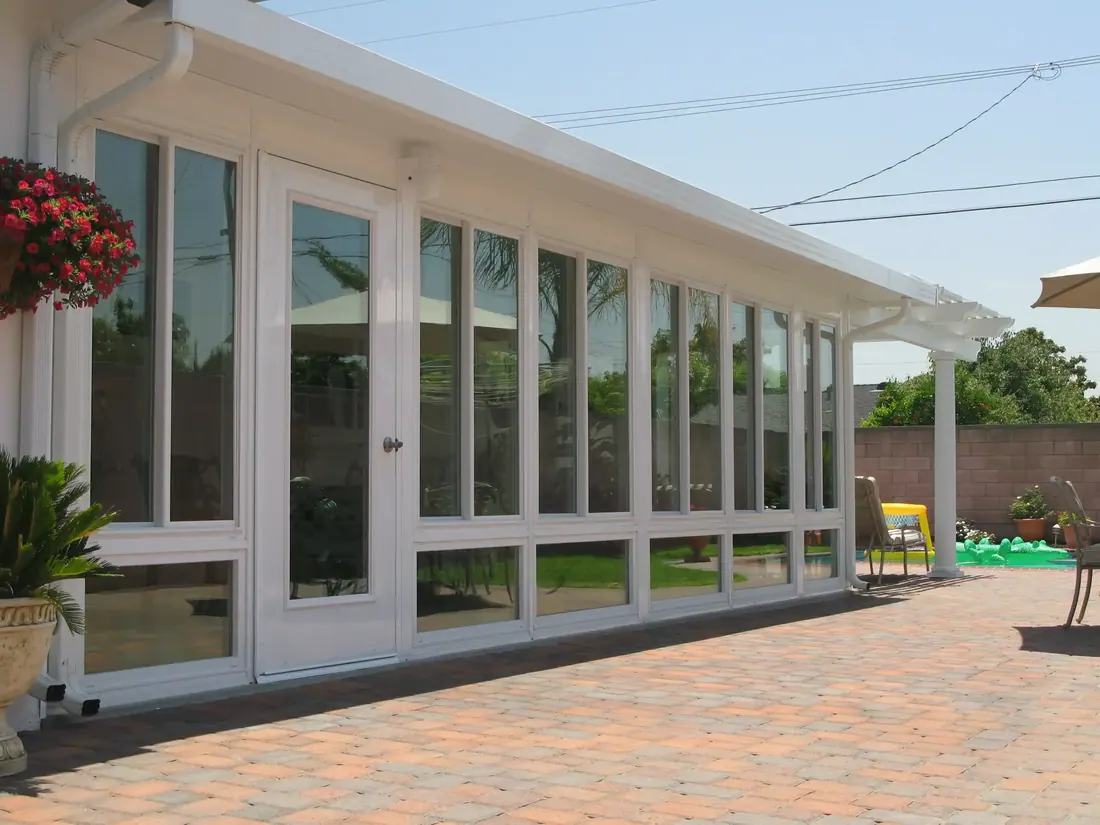
Sunroom flooring is the floor you choose for a room with a lot of glass, a slab underneath and a hard Texas sun overhead. The best choices resist sun, heat swings and moisture from below: porcelain tile, luxury vinyl plank and sealed concrete all do, while solid hardwood and carpet do not.
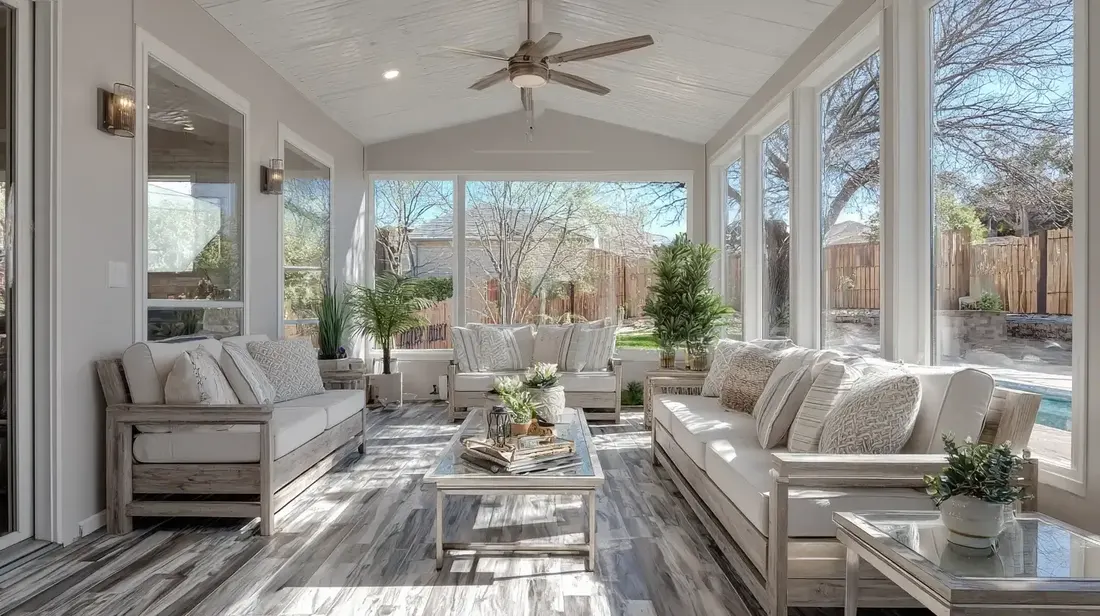
The short answer
- Porcelain tile and luxury vinyl plank are the safest floors for a sunroom.
- Skip solid hardwood and wall-to-wall carpet in a room with this much glass.
- In Dallas and Plano, clay under the slab can move, so ask about a flexible layer.
- Choose outdoor-rated furniture and solution-dyed fabric to resist sun fading.
- Sun and heat do more damage than humidity, so choose for sun first.
- Rotate furniture and rugs once a year to spread fading across the room.
A sunroom is hard on its contents. Sun comes in from several sides, the glass heats and cools quickly, and the floor sits on a concrete slab that can hold or move moisture. The old advice to plan for humidity is only part of that. In Dallas and Plano the bigger tests are sun, heat and a slab that shifts with the seasons.
What flooring works best in a Texas sunroom?
Porcelain tile, luxury vinyl plank, sealed concrete and engineered wood all hold up if the slab is sound. Tile is the toughest, vinyl plank is the most forgiving underfoot, and engineered wood suits a room that is fully air conditioned. The table shows what each does well and what to check.
| Floor | Does well | Check before you choose |
|---|---|---|
| Porcelain tile | Handles sun, spills and moisture, and stays cool underfoot | Large tiles can crack if the slab moves, so ask about a flexible layer under them |
| Luxury vinyl plank | Water-resistant, warmer to the foot, easy to clean | Some products soften or shift in direct sun, so read the maker’s limits for sunlit rooms |
| Sealed or stained concrete | Uses the slab you already have | Cracks may show, and it feels hard and cool in winter |
| Engineered wood | Looks like wood and is more stable than solid planks | Best in a fully conditioned room, and the sun can still fade the finish |
| Natural stone | Durable and cool | Needs sealing, and some stones stain |
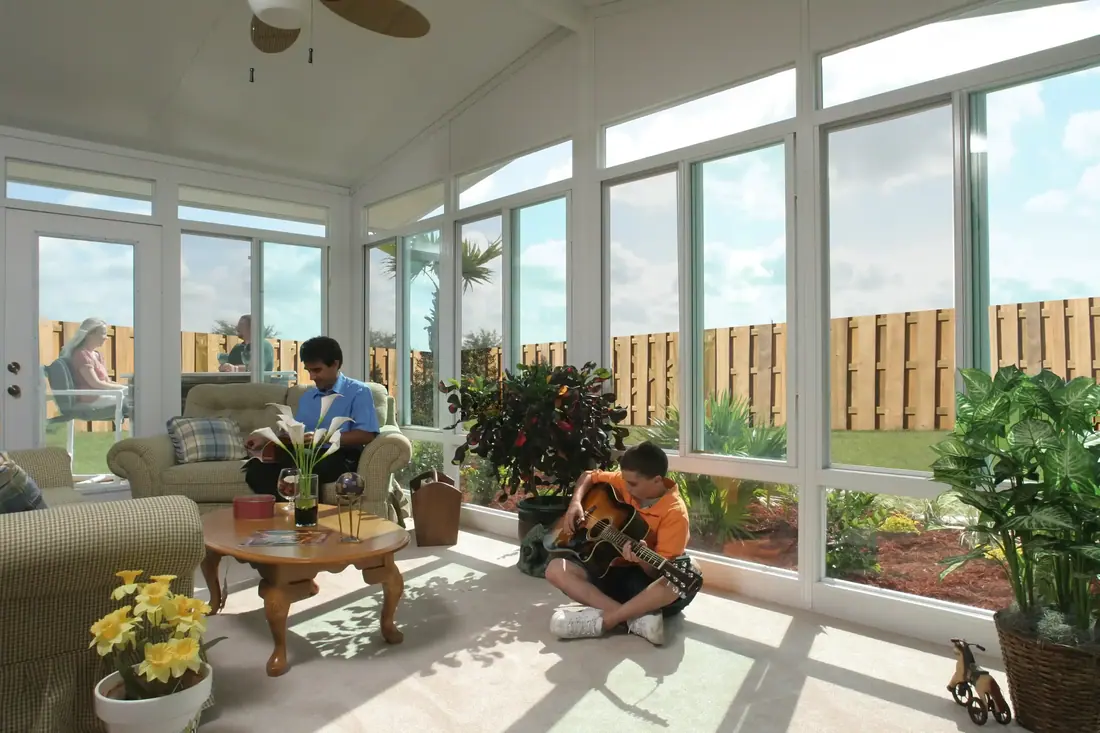
Our post on sunroom design ideas that last covers how a floor should line up with the rest of the house.
Which floors should you skip in a sunroom?
Skip solid hardwood and wall-to-wall carpet. Solid wood swells and shrinks as the room’s temperature and moisture change, and carpet holds damp near a slab. Dark, glossy floors are a third mistake, because they show every footprint and get hot in direct sun.
Dark floors in direct sun
A dark tile in front of a west window can be too hot to cross barefoot in August. If you love the look, keep it in a room with shade or choose a mid-tone. Lighter, matte floors also hide dust better than glossy ones.
How does the slab change your flooring choice?
The slab decides what is safe to lay on it. Dallas, Plano and Frisco sit on dark clay that swells when wet and shrinks in a dry summer, so a slab there can move a little. A floor with no give may crack along a joint. Ask the builder how the slab is prepared and whether the floor goes over a moisture barrier.
Moisture rises through concrete in small amounts even when it looks dry. The EPA’s mold guidance explains that moisture control is the key to stopping mold, which is why a barrier under flooring is worth asking about. A level, clean slab also saves trouble later, because a floor laid over a dip will show it.
What should you ask before the floor goes in?
Ask five things about the slab and the floor together, because a good product laid wrong still fails. Write the answers into your estimate so nobody has to remember them later. A builder who has looked at the slab in person can answer all five.
- Is the slab level, and is it sound enough to carry walls and a finished floor?
- Will a moisture barrier or sealer go under the flooring?
- Does the floor need a flexible layer to cope with slab movement?
- Is the product rated for a sunlit room, and what does the maker say about direct sun?
- How will the floor meet the house floor at the door, and will there be a step?
What furniture survives sun in a sunroom?
Furniture made for outdoor use. Powder-coated aluminum does not rust, synthetic wicker does not crack as natural wicker can, and sealed teak resists moisture. Fabric matters as much as frames, because ultraviolet light fades ordinary cushions fast. Look for fabrics described as solution-dyed or made for outdoor use.
- Frames: powder-coated aluminum, synthetic resin wicker, or sealed teak.
- Cushions: outdoor-rated, mildew-resistant fabric you can wipe or hose clean.
- Rugs: outdoor rugs that tolerate sun, spills and an occasional wash.
- Skip: natural wicker, untreated pine, leather that sits in direct sun, and cushions made for dry indoor rooms.
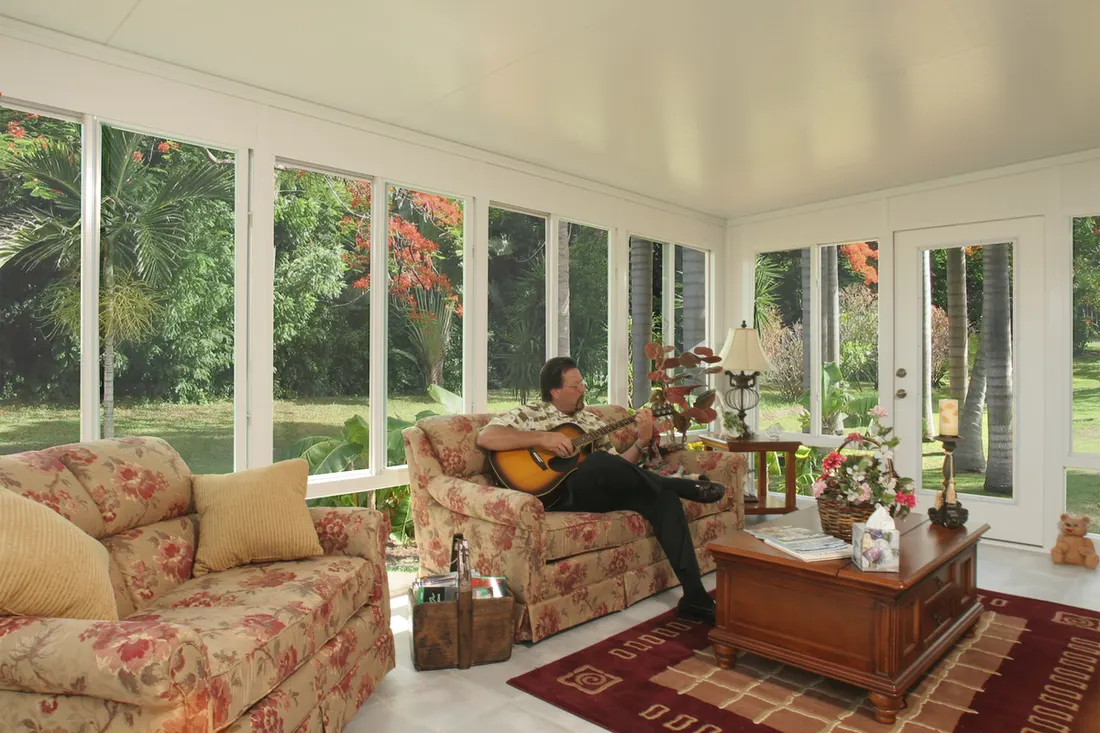
Rotating furniture and rugs once a year spreads out the fading. A pale sofa near a west window will fade first, so put the pieces you care about on the north or east side where the light is gentler.
Is humidity really the main problem in a DFW sunroom?
Not usually. Humid weather matters, especially after a wet spring, but sun and heat do more damage to floors and fabrics than damp does. The summer of 2023 was a reminder of how hard heat works on a glass room. Choose for sun first and moisture second.
How you condition the room changes the answer. An all-season room that is heated and cooled keeps swings smaller, so more flooring choices are safe. A three-season room swings with the weather, so tile and vinyl plank are the safer picks. Our post on keeping a sunroom cool and warm covers the conditioning side. The Efficient Windows Collaborative explains how the glass itself changes sun exposure, and it is worth reading if fading worries you.
American Eagle Builders is a family-owned exterior remodeler in Arlington, working across Dallas–Fort Worth since 1984. Look at our sunroom page, and ask for a free in-home estimate so we can look at your slab before you buy a floor.
Questions we get asked about this
Porcelain tile is the toughest choice, and luxury vinyl plank is the most forgiving underfoot. Both handle sun, spills and moisture. Check that the slab is sound and flat, and ask how the floor is protected from moisture coming up through the concrete.
Solid hardwood is a poor fit, because it swells and shrinks as the room’s moisture and temperature change. Engineered wood is more stable and suits a fully air conditioned room, but sun can still fade the finish near the glass.
Usually. Wall-to-wall carpet holds dampness near a slab and fades in the sun. Use an outdoor rug on tile or vinyl plank instead. It can be washed, rolled up and replaced without pulling up the floor.
Choose outdoor-rated fabric that is described as solution-dyed or made for sun, and mildew-resistant. Ordinary indoor cushions fade quickly in a glass room. Rotate pieces away from the west wall to spread the wear.
American Eagle Builders builds and installs sunrooms across Dallas–Fort Worth and offers free in-home estimates. We look at your slab and the sun on the room first, which tells us what flooring will last there.