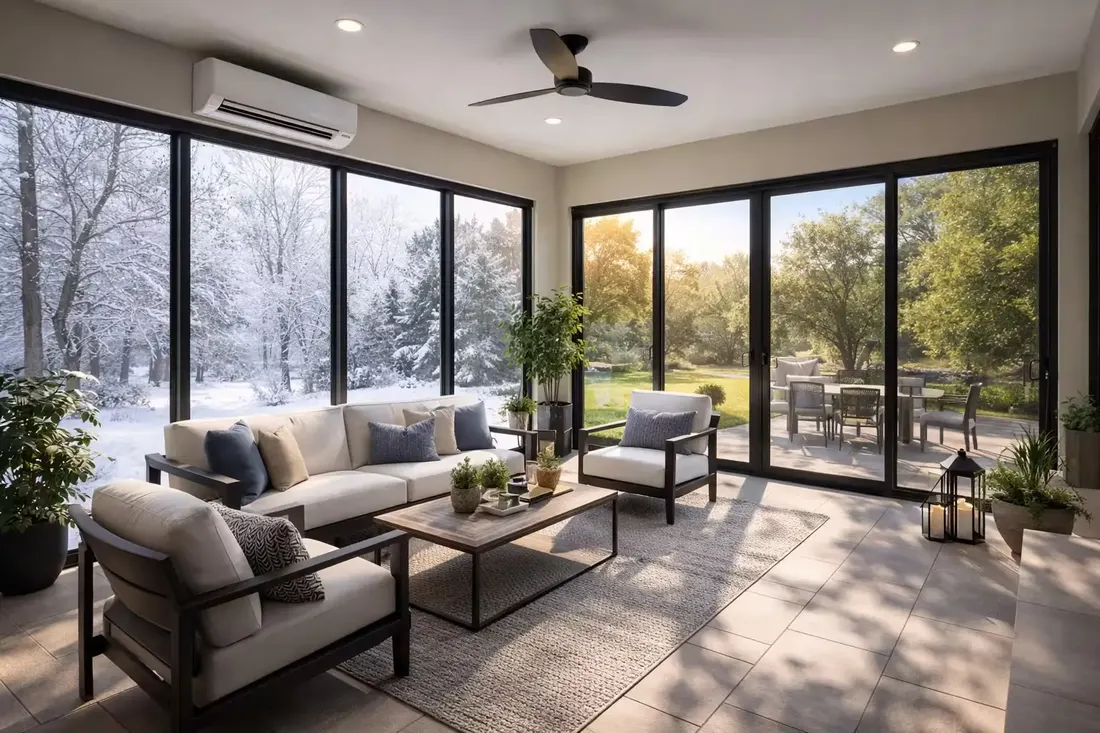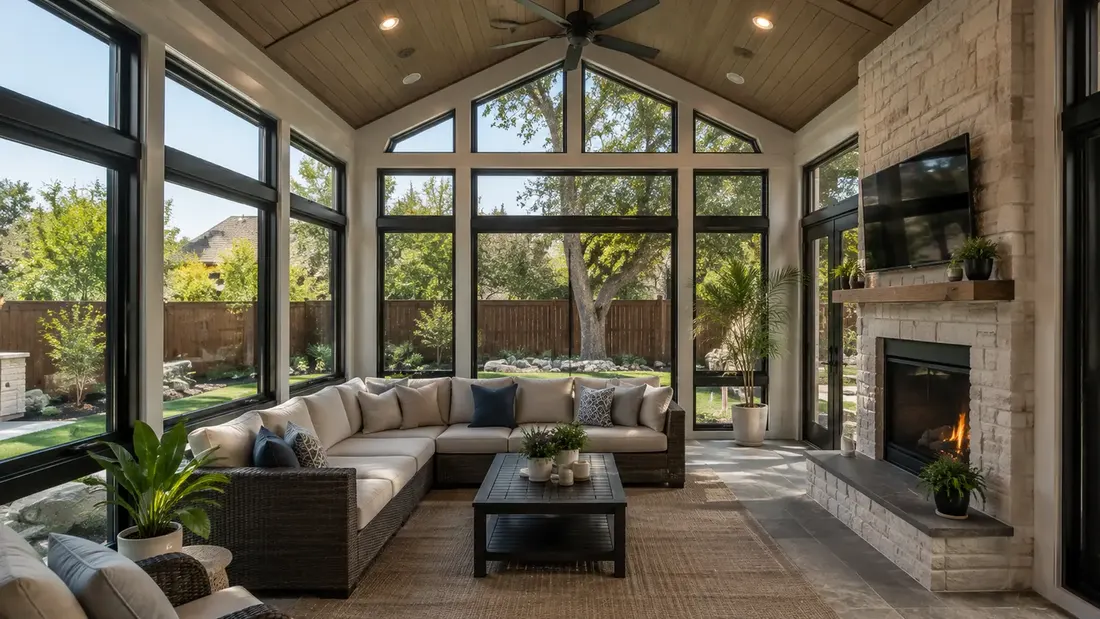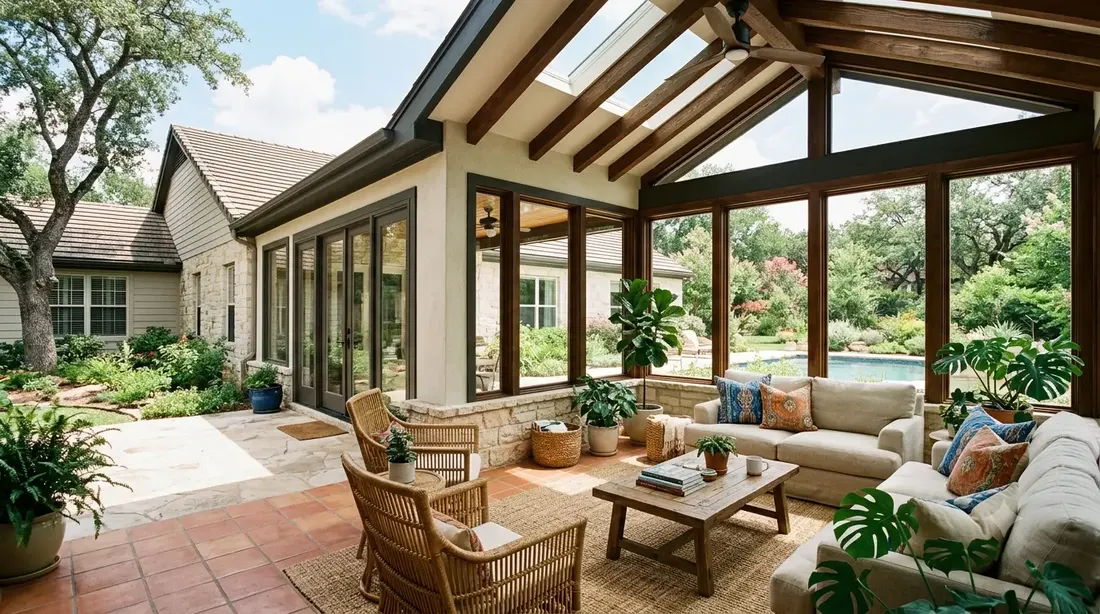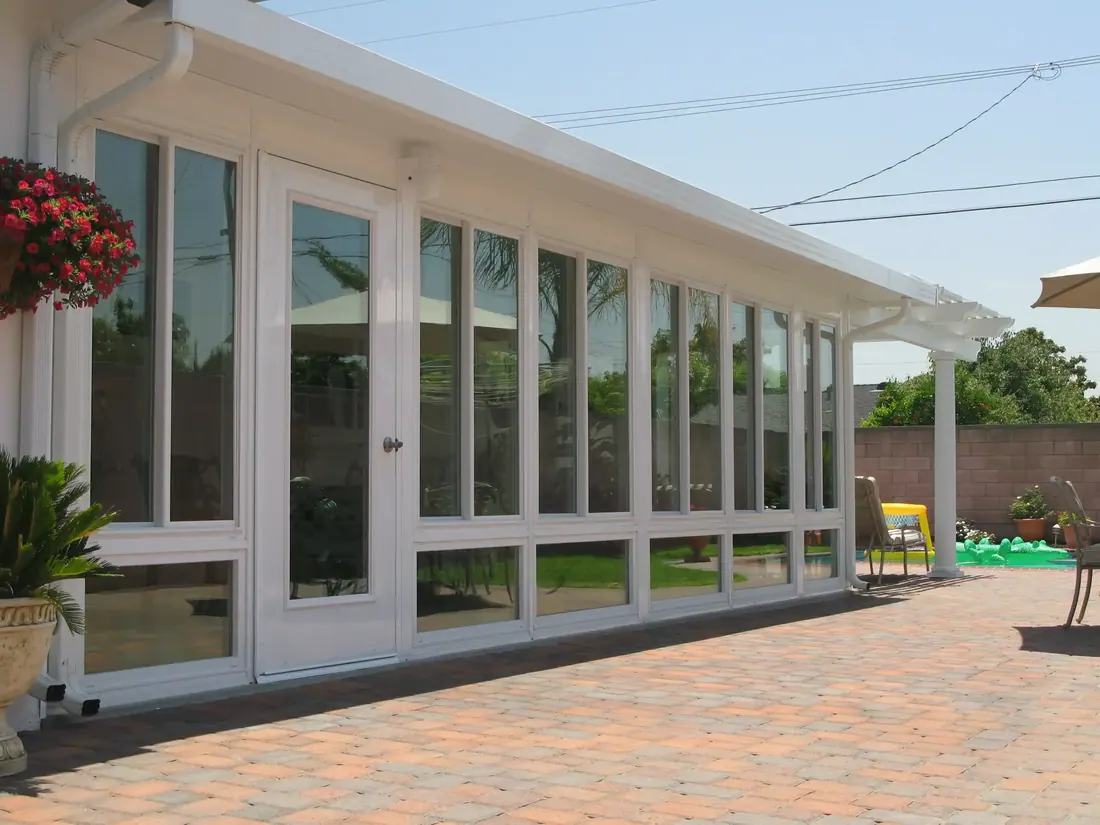
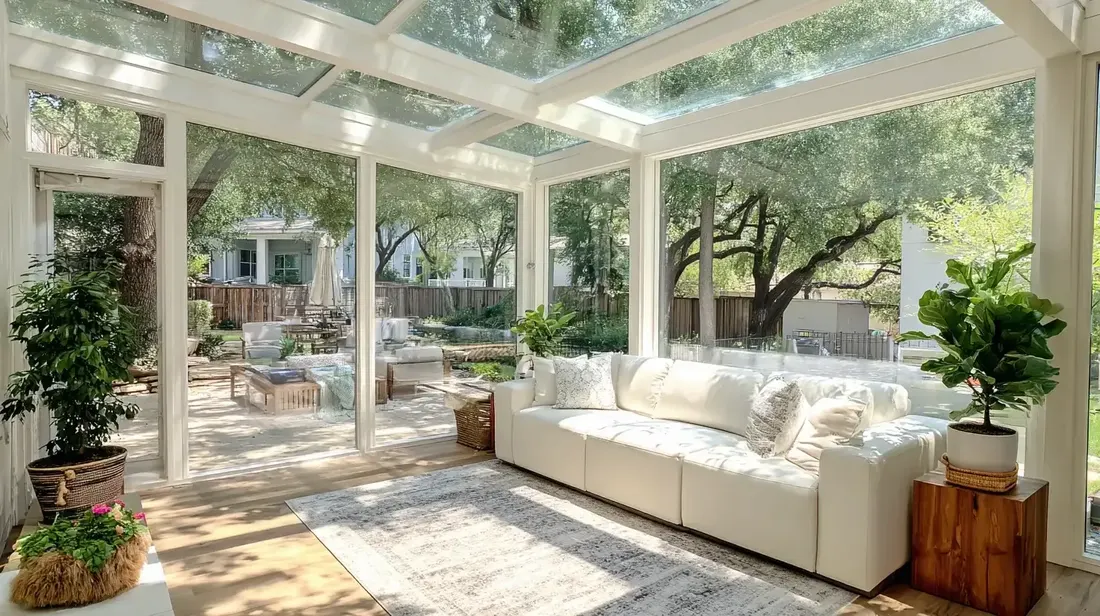
An all-season sunroom is an enclosed glass room with an insulated roof and walls, sealed frames and its own heating and cooling, built to be used in every season. The words are a promise, not a rating, so check what is behind them. This post defines the room and gives you a six-question test for your own home.
The short answer
- An all-season sunroom has an insulated roof and walls, sealed frames and its own heating and cooling.
- The label is a promise and not a rating, so ask for the roof, glass, seal and cooling details in writing.
- A six-question fit test sorts most homes, and four or more yeses make an all-season room a serious candidate.
- A shaded or north- or east-facing wall and a sound existing slab make the best starting point.
- A glass room with no cooling will be avoided in summer, whatever it is called.
- If you only want the room a few weeks a year, a screened room or covered patio is simpler.
“All-season” is a promise, and promises have fine print. A room can carry the label and still be uncomfortable in August. The useful question is not what the word means in a brochure. It is what is actually built into the room, and whether that suits your house.
What is an all-season sunroom?
It is a sunroom built to stay comfortable year-round. That takes an insulated roof, glass chosen for sun and cold, tight frames and seals, and a way to heat and cool the room. Take any of those away and you have a three-season room: pleasant in spring and fall, tiring in the extremes.
There is no single rating you can look up for the label. Two rooms called all-season can perform very differently. Ask what the roof is made of, what the glass numbers are on its label, how the frame is sealed and how the room is conditioned. The ENERGY STAR window criteria are listed by climate region, so you can check the glass against the standards for yours.
How does it differ from a screened or three-season room?
By how many weather problems it solves. A screened room solves bugs. A three-season room, with glass or panels, adds wind and rain protection. An all-season room adds temperature control, which is the hardest problem and the one that costs the most to get right.
- Screened room: air and shade, no insulation, best on mild evenings.
- Three-season room: glass or panel walls, little or no insulation, best from spring to fall.
- All-season room: insulated roof and walls, sealed glass and its own heating and cooling, built for every month.
The step from three-season to all-season is the biggest one in the ladder. It is also where homeowners are most often disappointed, because a three-season room sold with a space heater is not an all-season room. If you are not sure which one you are being offered, ask to see where the insulation is.
Is an all-season sunroom right for your DFW home?
It is, if you answer yes to most of the questions below. Run the test honestly. A no on the first or last question is a serious reason to stop and consider something simpler.
- Will you use the room in July and in January, not just in spring and fall?
- Is there a wall where the room can go that is not a blank west-facing wall, or can that wall be shaded?
- Can your home’s heating and cooling be extended, or can a separate unit be added?
- If it replaces a patio, is the slab sound enough to carry walls and a roof?
- Will your city, and your HOA if you have one, approve it?
- Do you want the room to count as part of the house, rather than as an outdoor space?
Count your yeses. Four or more means an all-season room is a serious candidate. Two or three suggests an enclosure or a screened room may serve you better. Our post on how all-season sunrooms handle heat and cold explains the building side.
Which houses and lots suit an all-season sunroom?
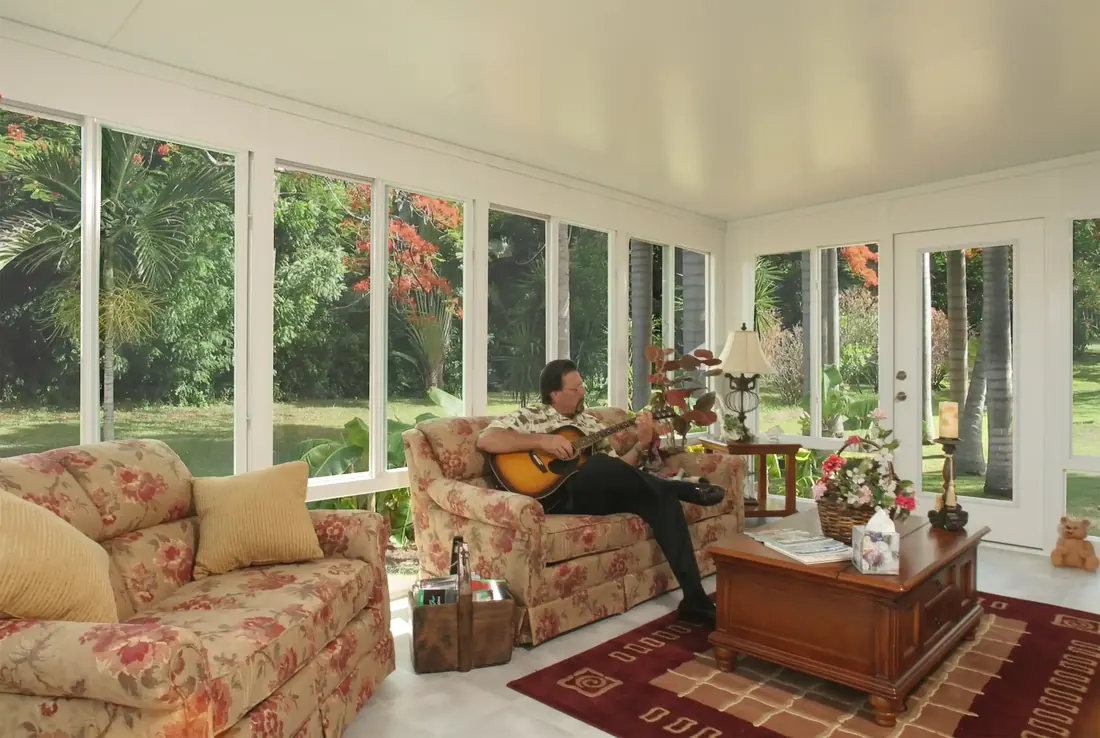
The best candidates have a shaded or north- or east-facing wall, an existing covered patio with a good slab, and a floor plan with a natural door into the room. Trees help. Colleyville lots run large and heavily treed, which is a gift for a shaded outdoor room. Frisco yards are newer and flatter, and it is easy to build too big and lose the lawn.
Sun matters most. The long heat of summer 2023 was hardest on west-facing glass, and the December 2022 freeze was hardest on rooms with poor seals. A good design answers both, and it starts with where the room sits.
Think about the weeks around the edges, too. In North Texas the mild months can feel short and the middle of summer long, and that is the case for an all-season room. If your own pattern is a few perfect months and the rest spent indoors anyway, the room will earn its keep. If you spend most of the year outside already, it may not.
When is an all-season sunroom not the right choice?
When you want fresh air more than a finished room, when you will use it a few weeks a year or when the only wall available is a bare west wall you will not shade. A screened room or a covered patio is simpler for those. Do not pay for insulation and cooling you will not use.
It is also the wrong choice if your existing cooling cannot be extended and you do not want a separate unit, because a glass room with no cooling is a room to avoid in summer. A builder should say so at the first visit. Our post on sunroom build time explains what the process asks of you.
What should the estimate spell out?
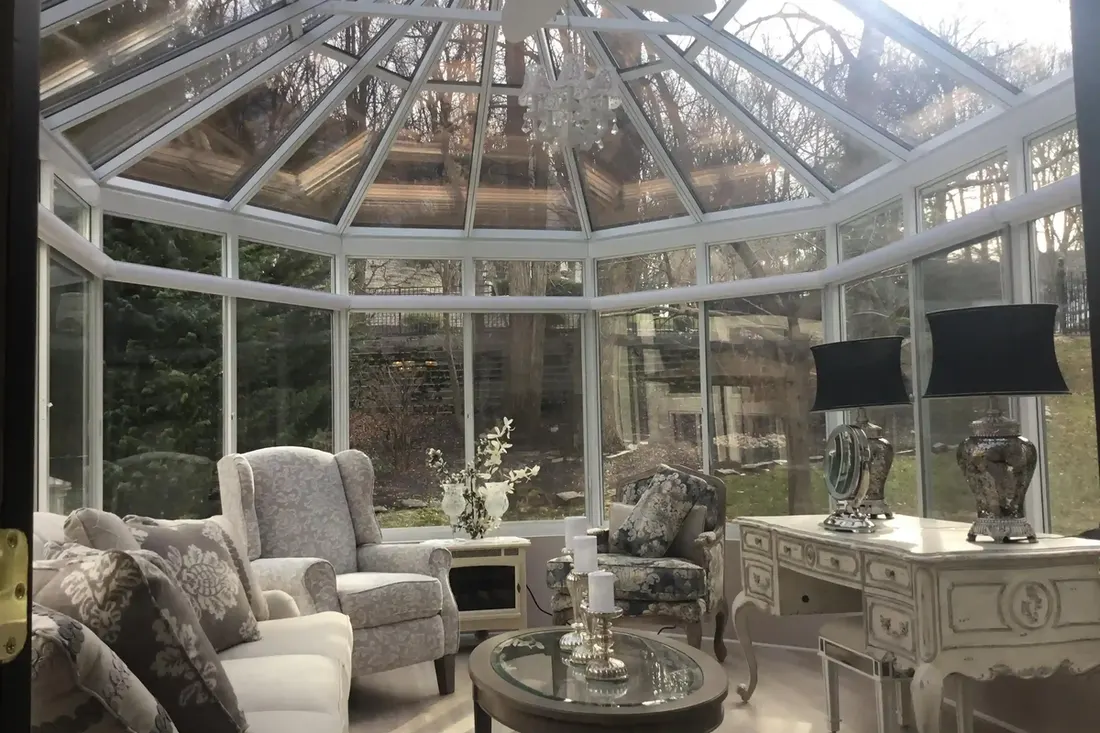
An all-season claim should show up as details in writing. Ask the builder to list each of the items below, so you can compare proposals on what is actually in them.
- The roof type and how it is insulated.
- The glass package and its label numbers.
- How the frame is built and how it is sealed to the house wall.
- How the room will be heated and cooled, and who sized the equipment.
- Who handles the permit and any HOA submittal.
American Eagle Builders is a family-owned company based in Arlington, and we have worked across Dallas–Fort Worth since 1984. We install Four Seasons sunrooms. See our all-season rooms, or book a free in-home estimate and we will run this test with you at the house. For fit questions, can a sunroom be added to any house is also worth a read.
Questions we get asked about this
A three-season room is comfortable in spring, fall and mild days, but is not built for extreme heat or cold. An all-season room has an insulated roof and walls, tight seals and its own heating and cooling, so it can be used through the year.
In everyday use, yes. Both describe a room meant for year-round use. Neither is a rating you can look up, so ask what the roof, glass, seals and heating and cooling actually are, and get them in writing.
It needs a heating and cooling source, which can come from extending the home’s system or from a separate unit. The load should be sized for the glass and the sun, not only the floor area. Ask who does that sizing.
North and east walls take less afternoon sun, so they are easier to keep comfortable. A west-facing room can work with the right glass and shading, but it needs the most attention. Walk the yard on a sunny afternoon before you decide.
Yes. We install Four Seasons sunrooms across Dallas–Fort Worth and give free in-home estimates. At the visit we will say whether an all-season room, a screened room or a patio cover fits your house.