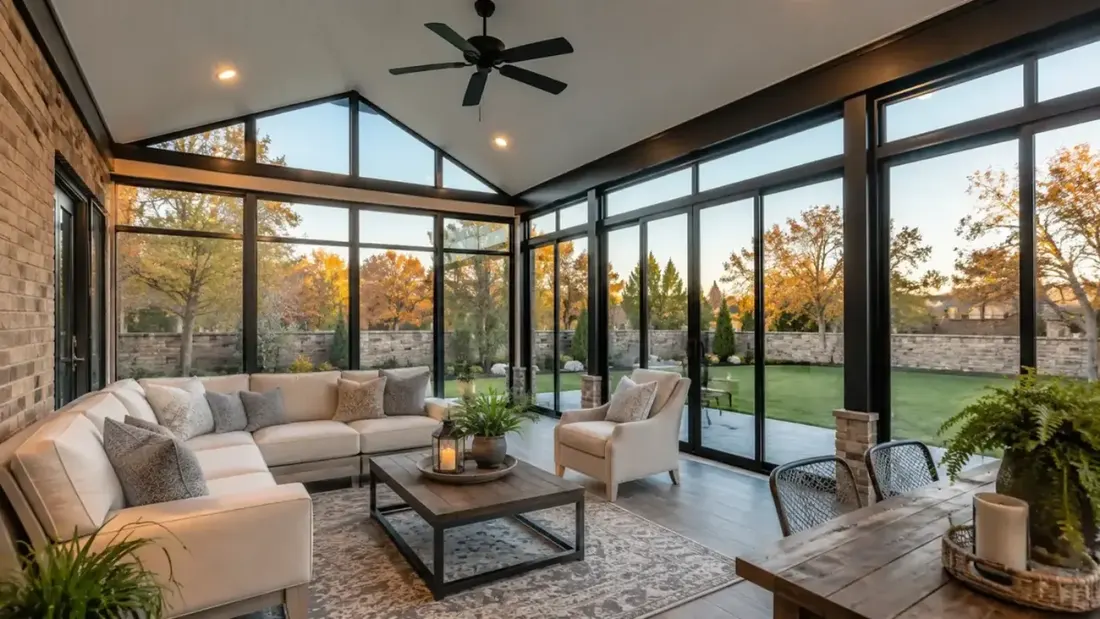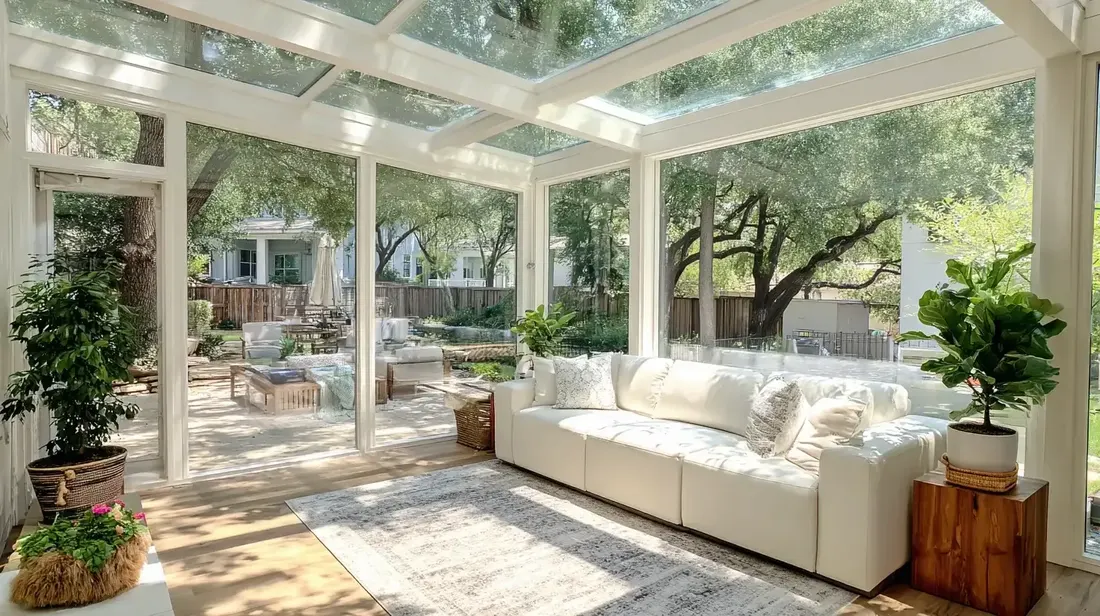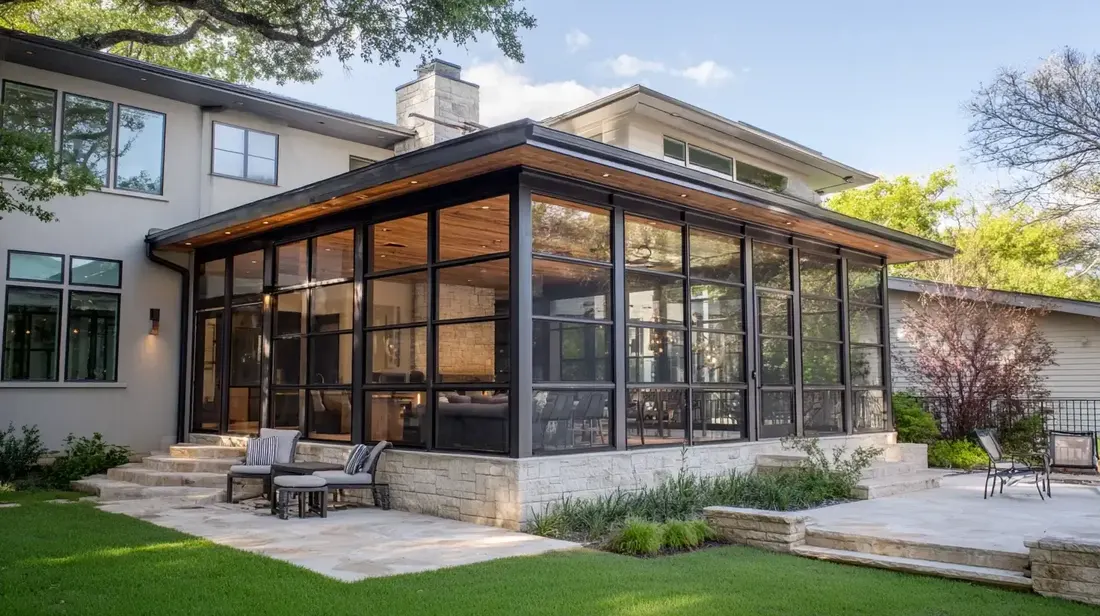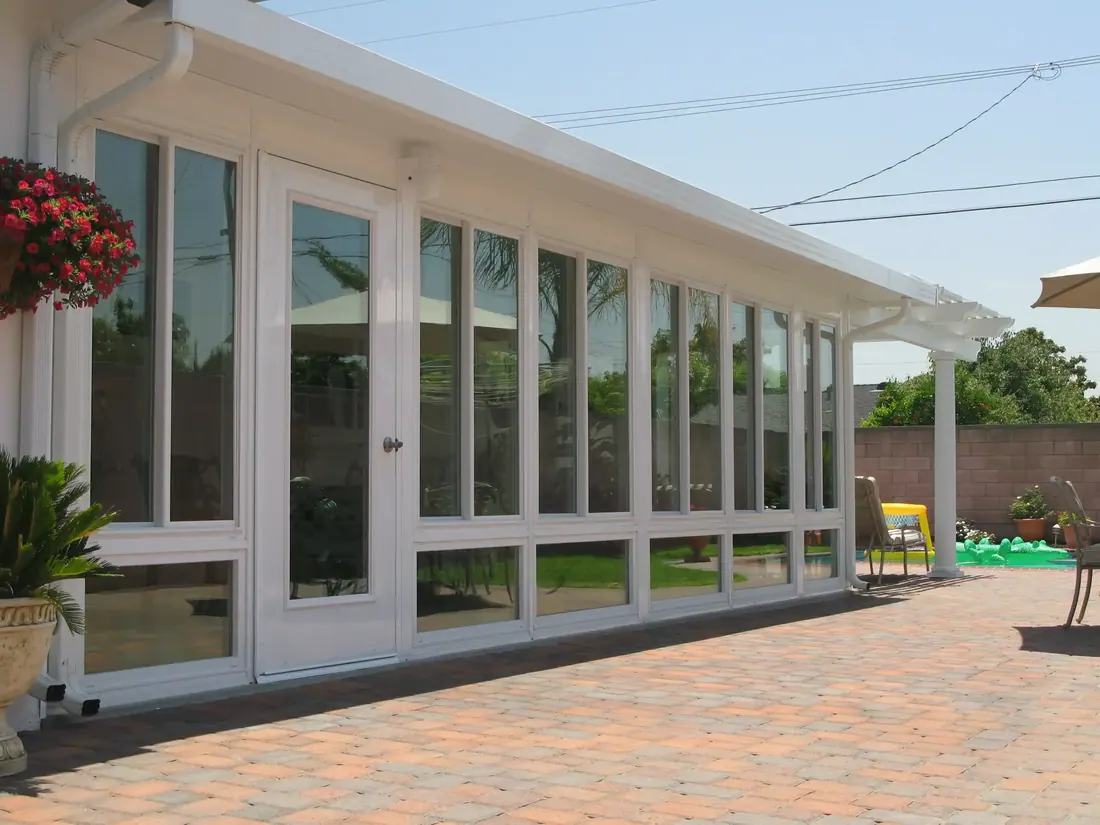
Sunroom comfort comes down to four parts: the glass, the roof, the frame seals and how the room is conditioned. An all-season sunroom is a glass-walled room built with an insulated roof, sealed frames and a heating and cooling source of its own, so it stays usable through a North Texas summer and a hard freeze.
The short answer
- An all-season sunroom works when the glass, roof, frame seals and heating and cooling are designed as one system.
- The roof is the biggest comfort decision, since it takes the most sun all day.
- West-facing glass needs the best glass package and shading, or the room will be hard to use in summer.
- A glass room loses heat faster than a walled room in a power outage, so do not treat it as a shelter.
- Ask for the NFRC numbers, the roof makeup and the cooling plan in writing before you sign.
- If you only want the room on mild evenings, a screened or open room is the simpler choice.
A room that is mostly glass feels the weather first. The February 2021 winter storm and the December 2022 freeze showed North Texans how fast a house gives up its warmth, and the long heat of summer 2023 showed the same thing from the other side. A glass room has to be built differently from a room with four solid walls, and the differences are easy to list.
What decides sunroom comfort in extreme weather?
Four parts decide it: the glass, the roof, the frame with its seals, and the heating and cooling. If any one of them is basic, the room slides back toward being a porch with windows. A true all-season sunroom treats the four as one system, so no single part has to carry the whole load.
The glass
Insulated glass has two panes with a sealed gap between them, and a Low-E coating is a thin layer that reflects heat. Together they slow heat moving in on a July afternoon and out on a January night. Every rated window carries a label from the National Fenestration Rating Council, so ask to see the numbers for the glass in your estimate.
The roof
A sunroom roof takes more sun than any wall does. A solid insulated roof keeps that heat out of the room, while a glass roof lets in more light and more heat. Roof choice is the biggest comfort decision in the whole design, so settle it before you pick anything else.
The frame and its seals
Drafts start at joints. Tight corners, weatherstripping and a sealed connection to your house wall stop air leaking in when a north wind drives through in winter. Metal in a frame can carry cold straight through it, so ask whether the frame has a thermal break and how the roof meets the wall.
The heating and cooling
A room cannot hold a comfortable temperature with no source of its own. Some rooms are served by extending the home’s system and some by a separate unit. Either way, the load should be sized for the glass and the sun on it, not just the floor area. Ask who does that sizing and when.
How does an all-season sunroom handle a North Texas summer?
Sun is the problem, more than the air temperature. Glass lets heat in, so the room stays comfortable only when the glass, the roof and any shading cut that heat before the cooling has to remove it. West-facing rooms are the hardest, and north- and east-facing rooms are easier.
Homes from Plano to Fort Worth get the same low afternoon sun, and the long summer of 2023 is a fair test of your own lot. Stand where the room would go at four o’clock on a July afternoon and see which wall takes the sun. The National Weather Service office in Fort Worth posts local forecasts and climate information if you want the bigger picture.
How does an all-season sunroom handle a hard freeze?
Cold gets in through frames, seals, the floor edge and the joint with the house. A tight shell and a working heat source slow it down. On an ordinary winter morning the room should feel like the rest of the house, but it depends on power and heat in the same way the rest of the house does.
The December 2022 freeze is the case to plan for. If the power goes out, a glass room loses its heat faster than a walled one. Don’t count on a sunroom as your warm place in an outage, and don’t store anything in it that cannot take a cold night, potted plants included.
Which part matters most in each season?
It changes with the weather. Use the table below to see what each part is doing in summer and winter, and what to ask about it before you sign.
| Part | Summer job | Winter job | Ask before you sign |
|---|---|---|---|
| Glass | Blocks solar heat | Slows heat loss | What are the U-factor and SHGC on the label? |
| Roof | Keeps overhead sun out | Holds heat in | Is it solid, insulated or glass? |
| Frame and seals | Stops hot air leaking in | Stops cold drafts | Does the frame have a thermal break? |
| Heating and cooling | Removes what gets through | Adds what is lost | Who sizes it, and for which glass? |
When is an all-season sunroom the wrong choice?
When you only want the room on mild evenings in spring and fall. A screened or open room is simpler to build and run for that. Our post on sunroom versus screen room sets the two side by side, and our patio covers are another way to get shade without enclosing anything.
It is also the wrong choice if the only available wall faces west and you will not shade it, or if you do not want to run cooling in July. A room you avoid for four months is not an all-season room, whatever the label says.
What should you ask before you build one?
Ask for the glass, roof and frame details in writing, and for the heating and cooling plan in the same document. Then run this short list against every proposal you collect.
- Which way does each glass wall face, and what shades it?
- What is the roof made of, and how is it insulated?
- What glass package is in the estimate, and what are its NFRC numbers?
- How will the room be heated and cooled, and who sized that equipment?
- How is the room joined to the house wall, and how is it sealed there?
We are American Eagle Builders, a family company in Arlington that has worked across Dallas–Fort Worth since 1984. We install Four Seasons sunrooms, and we look at which wall takes the afternoon sun before we talk about glass. Read about our all-season rooms or book a free in-home estimate. For a plain-language definition, see what an all-season sunroom is, and for upkeep tips, see how to keep a sunroom cool and warm.
Questions we get asked about this
Yes, if it is built for it. That means a glass package with a low solar heat gain number, an insulated roof, shading on the sun-facing walls and a cooling source sized for the glass. A room with basic glass and no cooling will be hot no matter what it is called.
It should stay comfortable on a normal winter day when its heat source is running. In a power outage it will lose heat faster than a walled room because of the glass. Treat it as part of the house, not as a shelter, and keep cold-sensitive items out.
Often, yes. The roof takes the most direct sun all day, so a solid insulated roof does a lot of the work of keeping the room cool. A glass roof brings in more light but also more heat. Decide the roof first, then choose glass to match it.
North- and east-facing walls take less afternoon sun, so they are easier to keep comfortable. West-facing rooms can work with the right glass and shading, but they lose the most comfort if either is missing. Walk the yard on a sunny afternoon before you decide.
Yes. We install Four Seasons sunrooms and give free in-home estimates across Dallas–Fort Worth. On the visit we check which wall takes the afternoon sun and how the room will join the house, before we talk about glass.