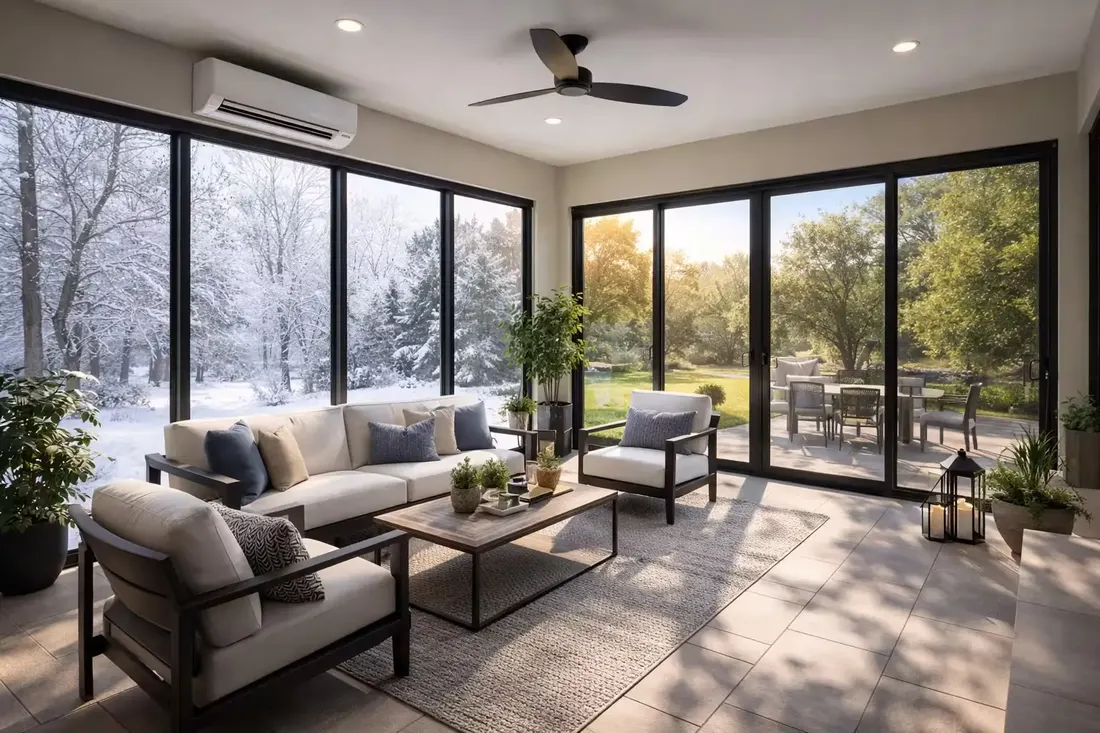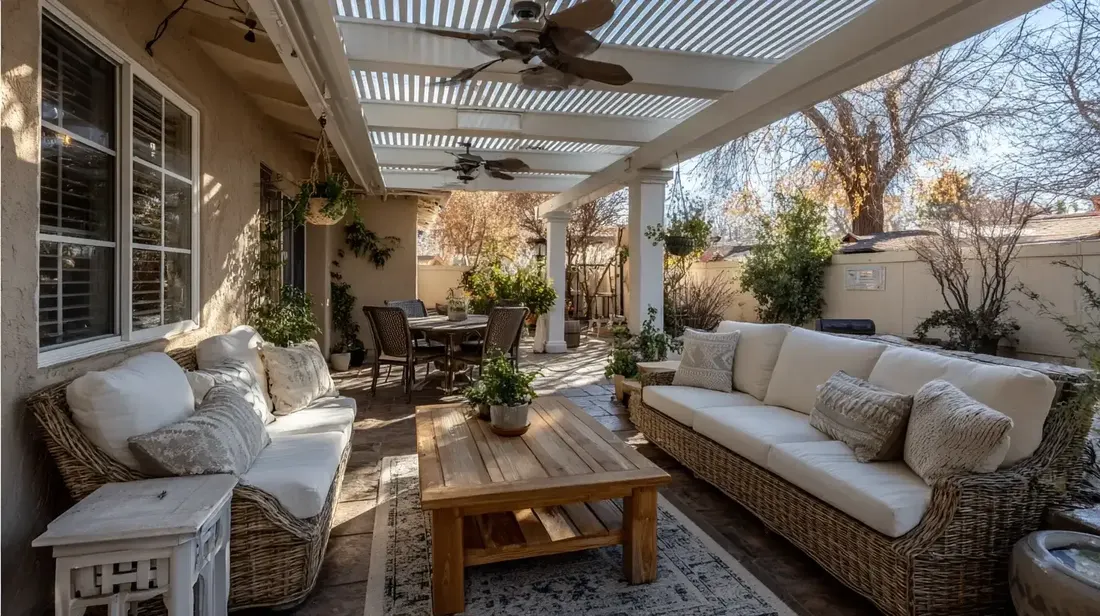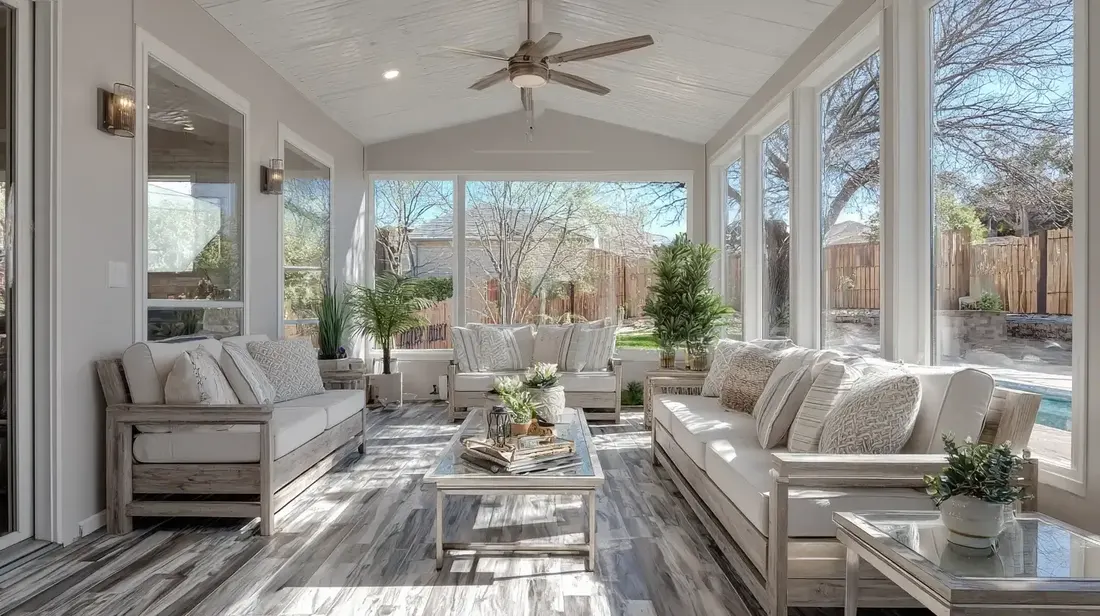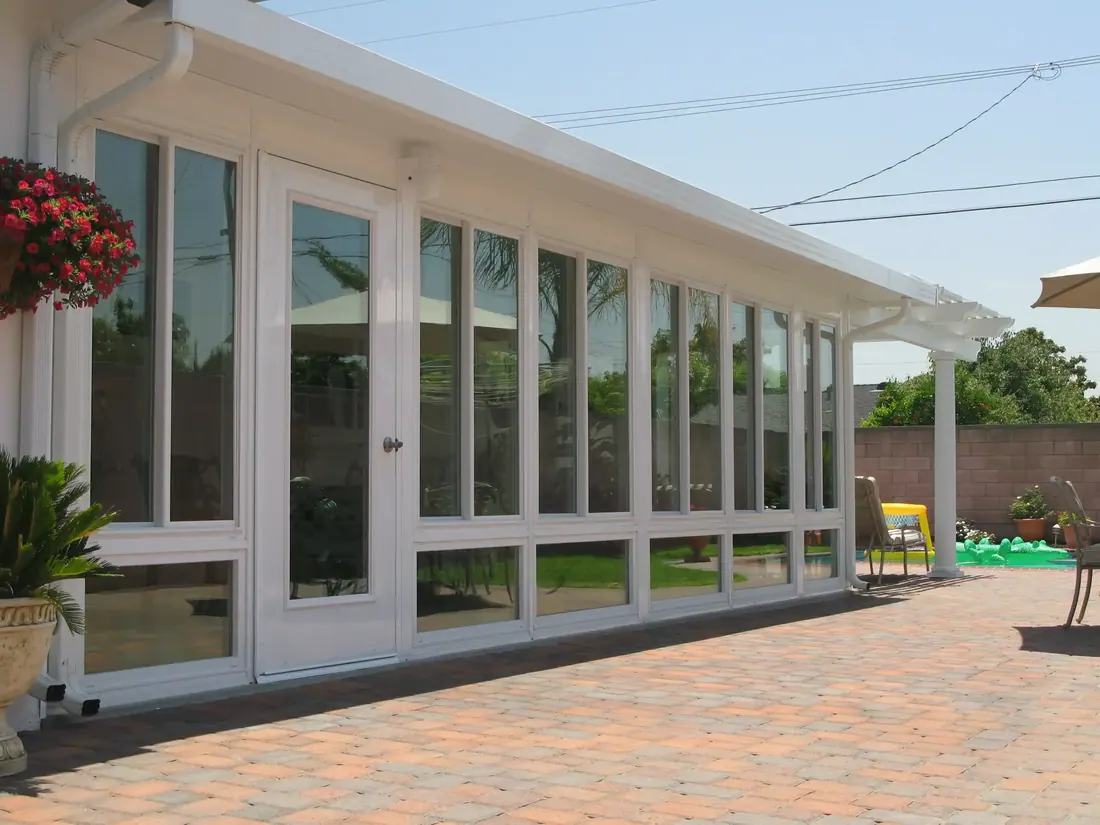
To keep your sunroom cool in summer and warm in winter, stop the sun before it reaches the glass, seal the air leaks, and give the room heating and cooling that suits its size. A sunroom is a room whose walls and roof are mostly glass, so it gains and loses heat far faster than the rest of your house.
The short answer
- Stop the sun at the glass first, because that costs less than removing the heat after it gets in.
- Seal air leaks before you add a heater, or the warmth goes straight out.
- A symptom check separates a habit problem from a repair and from a build problem.
- If the room is still hot with shades closed and cooling running, the roof or glass is the cause.
- Never run an unvented fuel heater in a closed room.
- A screened or three-season room cannot be made all-season with shades and fans.
If your sunroom is an oven by July and an icebox by January, you are not alone, and you are not stuck. Some fixes take an afternoon. Some mean the room was never built for the job. The trick is knowing which you have, so you do not spend money on the wrong one.
How do you keep your sunroom cool in a North Texas summer?
Work from the outside in. Block the sun before it reaches the glass, then slow the heat that does get in, then move the air. Each step is cheaper and more effective than cooling heat that has already entered the room.
- Shade the glass from outside where you can, with an awning, a tree or a pergola over the west and south sides.
- Add shades inside, such as solar roller shades or cellular shades, and keep them closed on sunny afternoons.
- Try a solar window film on glass that takes direct sun, and test it on one window first.
- Run ceiling fans in summer and open the room to cooler night air when the evening drops.
- Check that your cooling reaches the room and is sized for glass, not just floor area.
The long summer of 2023 showed how much a west wall matters. A pergola or patio cover placed on that side can cut the sun before it reaches the room. Our post on blocking sun on a patio has more shade ideas, and the National Weather Service posts heat safety guidance worth reading for a room you plan to use in a heat wave.
How do you keep a sunroom warm in a Texas winter?
Stop the leaks first, then add heat. Cold gets in through gaps at the frame, the door and the joint with the house wall, and it comes through single or poorly sealed glass. A heater on a leaky room is wasted effort.
- Replace worn weatherstripping and cracked caulk around frames and doors.
- Hang cellular or insulated shades, and close them at dusk.
- Put a rug over a bare tile floor, since a cold slab pulls warmth out of the room.
- Run ceiling fans in reverse at low speed to push warm air down from the ceiling.
- Ask whether the home’s heating can be extended into the room, which is usually steadier than a portable heater.
ENERGY STAR explains how air sealing and insulation work together in its seal and insulate guidance. The December 2022 freeze is a good reminder to plan for the cold side too.
Do not run an unvented fuel heater, such as a propane or kerosene unit, in a closed room, and do not leave any portable heater running unattended. If the room needs more heat than a plug-in can safely give, that is a design problem for a professional.
What does your sunroom’s symptom point to?
Match what you notice to the likely cause. This is a first test, and it shows whether you need a habit change, a repair or a rebuild.
| What you notice | Likely cause | Try this first |
|---|---|---|
| Hot by midday, cool by night | Direct sun on glass and roof | Exterior shade, shades inside, film |
| Hot even with shades closed and cooling on | Roof or glass that lets in too much heat | Ask a professional to look at the roof and glass |
| Draft on a windy day | Failed seals or weatherstripping | Reseal and replace weatherstripping |
| Cold floor, warm air | Uninsulated slab or floor | Rugs now, ask about floor insulation later |
| Fogged glass between panes | Failed seal in the glass unit | Replace that glass unit |
| Cooling runs all day and still loses | Equipment too small for the glass | Have the load figured again |
If the room stays uncomfortable after you have shaded it, sealed it and run the cooling, the problem is in the build. Roof, glass and heating and cooling are the usual suspects. Our post on how all-season sunrooms handle extremes explains what a well-built room does differently.
Which fix should you try first?
Start with the free ones. Close the shades on sunny afternoons, open the room to cooler air at night, and set the fans. Those cost nothing and tell you how bad the problem really is.
Next, spend a weekend on the leaks. Walk the room on a windy day with your hand near the frames and the door. Anywhere you feel moving air is a seal to replace. Only after that should you pay for film, new shades or extra equipment. Buying a bigger cooling unit for a room that leaks is a common mistake, because the unit simply runs harder and the room never settles.
When is a sunroom beyond a quick fix?
When the basics do not match the use. A three-season or screened room is not built for July heat or January cold, so no amount of shades will change that. If you want to use it all year, the answer is a true all-season room, either a new one or an upgrade of the old one.
Ask a builder to look at the roof, the glass and the wall joints before you buy more gadgets. Sometimes a few changes fix it. Sometimes the honest advice is that the room needs a different roof or new glass. A rug and a fan will not rescue a room with bare glass on a west wall.
If the room needs more than a fix, American Eagle Builders can take a look. We are a family-owned company in Arlington, we have served Dallas–Fort Worth since 1984. We install Four Seasons sunrooms and offer free in-home estimates. See our all-season rooms or book a visit. Furniture and floors matter too, so see flooring and furniture for Texas sunrooms.
Questions we get asked about this
Sun is passing through the glass and roof, and it heats everything inside. The glass package, the roof type and the direction the wall faces all matter. Start with shade on the outside and shades inside, then ask a builder whether the glass or roof is the cause.
Yes, they cut the sun that comes through the glass. Solar roller shades help in summer, and cellular shades also slow heat loss in winter. They help most when the glass takes direct sun for hours, and least when the room is leaky.
Sometimes. It depends on whether the existing system has spare capacity and how the ducts run. A room with lots of glass can need more than its floor size suggests. Ask a professional to figure the load before you decide.
A plug-in electric heater can be used with care. Do not leave it unattended, and keep it clear of furniture and curtains. Never use an unvented propane or kerosene heater in a closed room. If you need a lot of heat, the room needs a proper source.
Yes. We install Four Seasons sunrooms across Dallas–Fort Worth, and we can look at a room you already have. We will tell you whether it needs a simple fix or a different roof or glass.