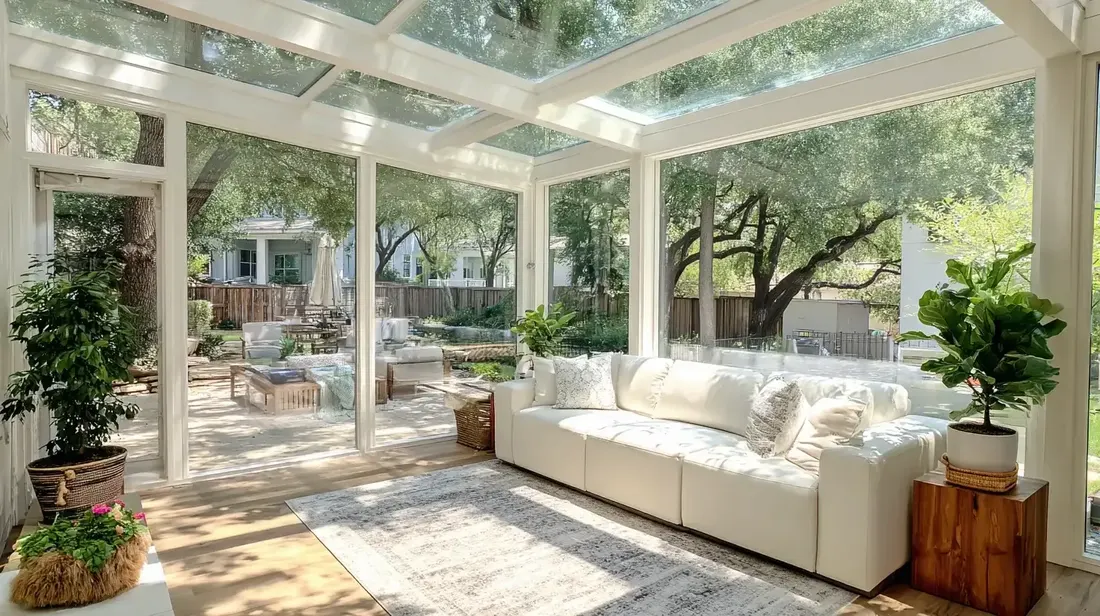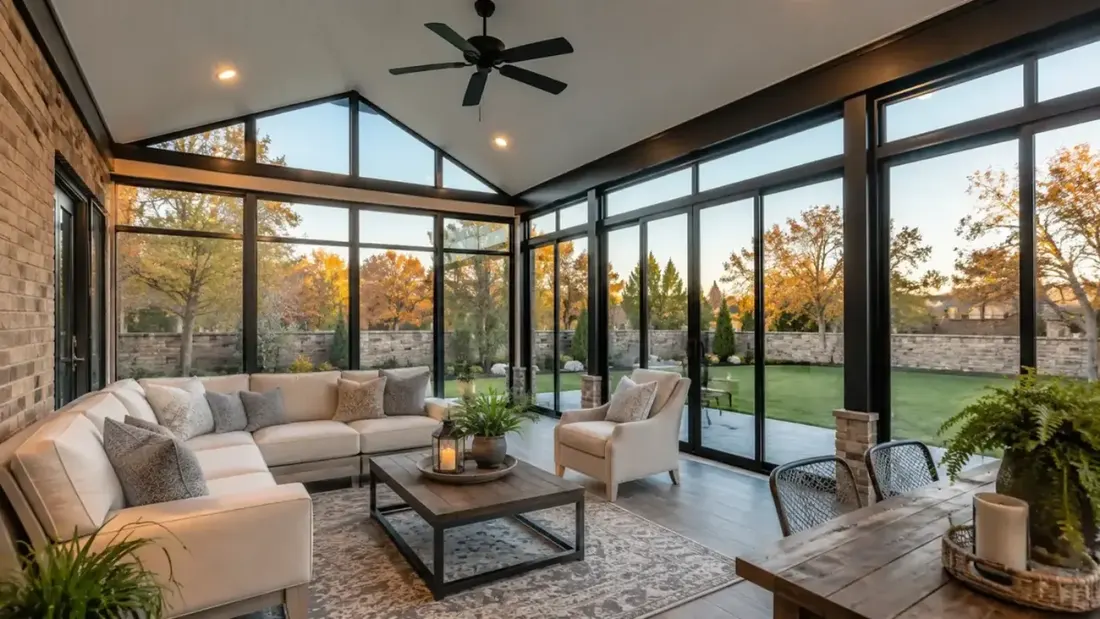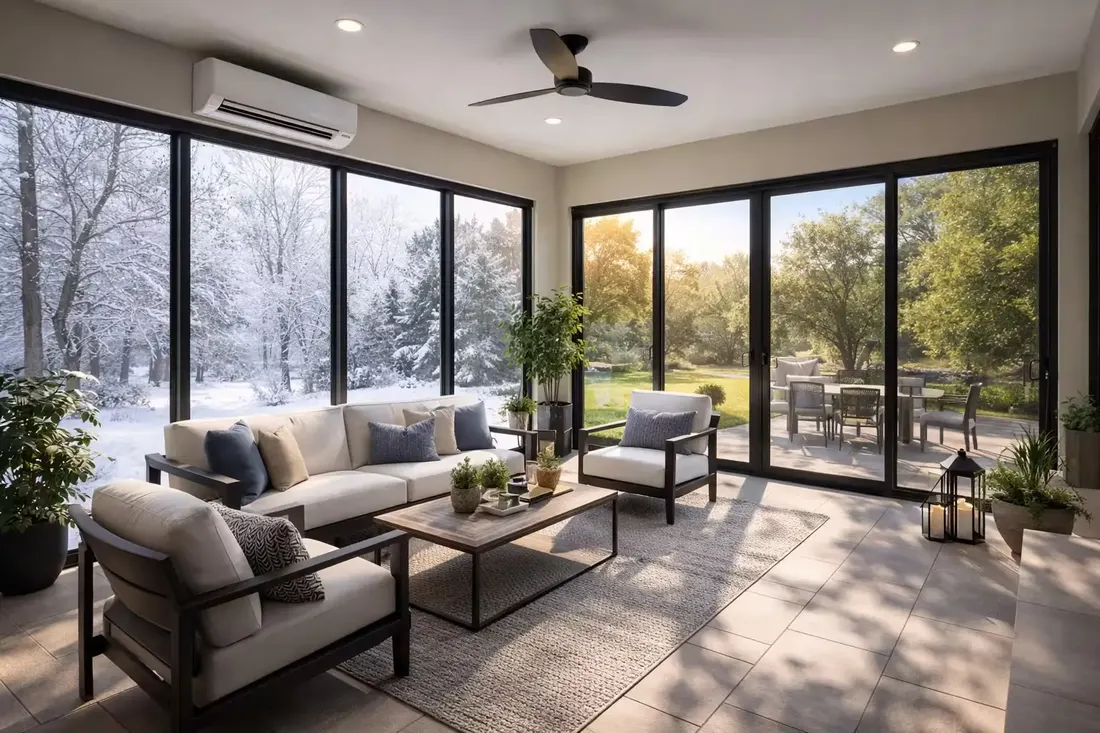
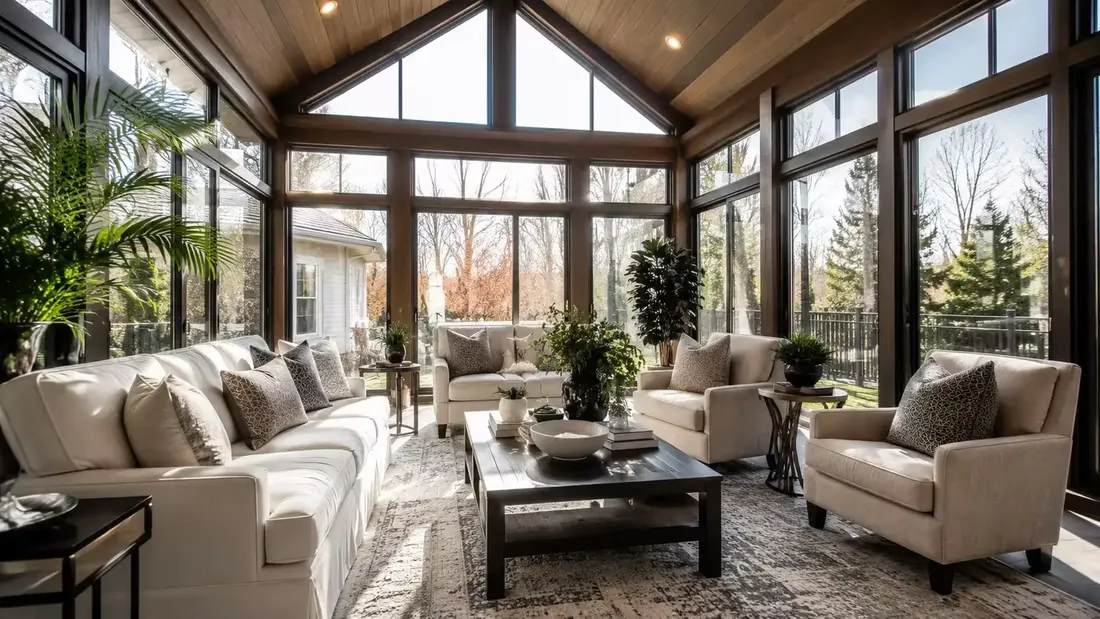
An all-season sunroom is an enclosed room with insulated walls, roof and glass that ties into your heating and cooling. In North Texas it can be a bright morning room in January and a cool reading room in August. Here is how people use it across the year, and where it falls short.
The short answer
- An all-season sunroom pays off only when you use it in most months.
- Plan the room around the two or three things you will do in it every week.
- Shade the west glass, or the room will fight your air conditioner in summer.
- A sunroom is not a shelter, because it still depends on power and a system.
- A bedroom use carries extra code rules, so ask your city before you plan one.
- A screen room cannot do the winter jobs that an insulated room can.
A room only earns its square footage if you walk into it often. That is the real test for an all-season sunroom. If it is comfortable enough in every month, it becomes the room the household drifts toward. If it is not, it becomes the place where the spare chairs go. The ideas below are organized around the North Texas calendar so you can check each one against how you actually live.
What is an all-season sunroom good for in each season?
Each season has a job. Spring is for fresh light without pollen, summer is for a cool room with a view, fall is for hosting, and winter is for sun without cold air. The table lays out a use for each and the one thing to watch.
| Season | A good use | What to watch |
|---|---|---|
| Spring | Breakfast room with the doors shut against pollen | You also lose the breeze, so run the fan |
| Summer | Reading room or office kept away from the afternoon heat | Shade the west glass or the room will fight the air conditioner |
| Fall | Dinner for guests while the leaves turn | Check the room’s lighting at dusk, since the days shorten |
| Winter | Morning coffee in low sun, a place for potted plants | Cold glass can feel chilly near the window, so sit back from it |
Nothing in the table is a promise about energy bills. A well-built room helps, but the glass area is large, and a room that is shaded and tied into your system will always do better than one that is not.
Which ten uses do homeowners reach for first?
The ones that need light and a view: reading, working, growing plants, dining and hosting. The list below is not ranked. Pick the two or three you would use weekly, because the room should be planned around them.
- A reading chair that gets used, because the light is good and the room is quiet.
- A home office with a view and a door you can close.
- A plant room for herbs and potted citrus that you carry in for cold nights.
- A second sitting room for the household, with a television or board games.
- A breakfast or dining area next to the kitchen.
- A stretching or exercise corner with space to move.
- A place to host family at holidays when the dining room is full.
- A hobby room for painting, sewing or models, where the light is good and the table can stay set up.
- A quiet corner for one person with a book and no screen.
- A seat for watching the yard and the weather change across the seasons.
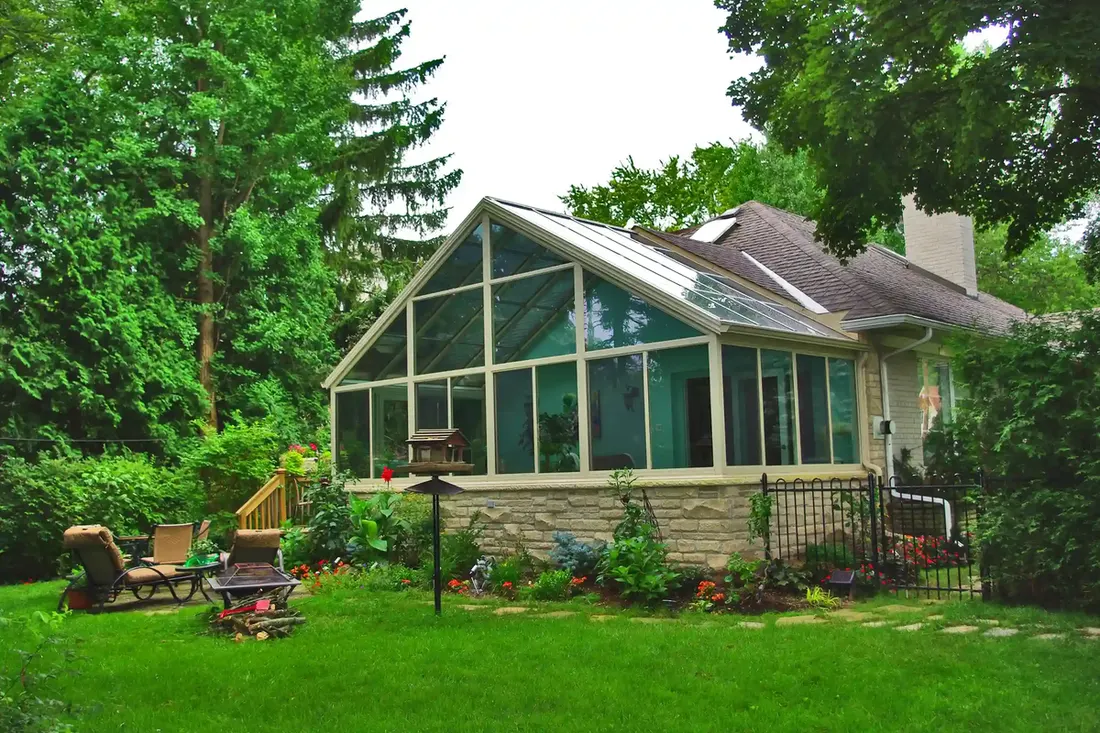
Our post on what an all-season sunroom is explains how the room is built. This one is about what to do once it is there.
Can an all-season sunroom be an office or a bedroom?
An office, yes, as long as the room is heated and cooled and you can control the glare. A bedroom is a different matter. Bedrooms carry their own code requirements, so a sunroom is rarely planned as one. Ask your city before you plan on sleeping in the room.
For a home office, a few details make the difference. Put the desk where the screen does not face the glass directly. Add shades that you can reach from the chair. Plan the outlets and network connection before the walls close, because running them later through finished trim is slow and messy.
How does an all-season sunroom handle a freeze or a heat wave?
Only as well as its heating, cooling and power allow. The February 2021 winter storm and the December 2022 freeze both showed that any room goes cold when the power goes out. An all-season sunroom has insulation and a system, but it is still a room with a lot of glass. Do not count on it as a shelter.
In a long heat spell, like the summer of 2023, the room depends on shading and a cooling system that matches its size. The National Weather Service office in Fort Worth posts local forecasts and climate summaries that are worth checking before a hot stretch. For the cooling plan itself, see our post on keeping a sunroom cool in summer and warm in winter.
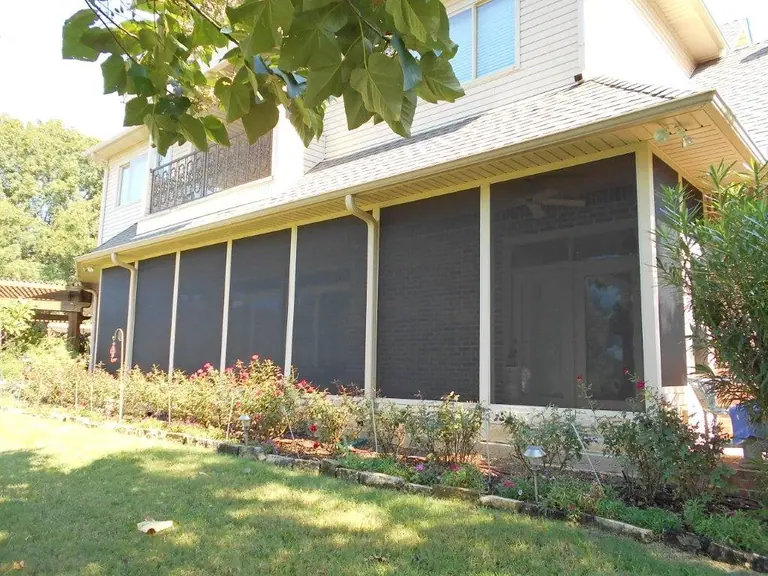
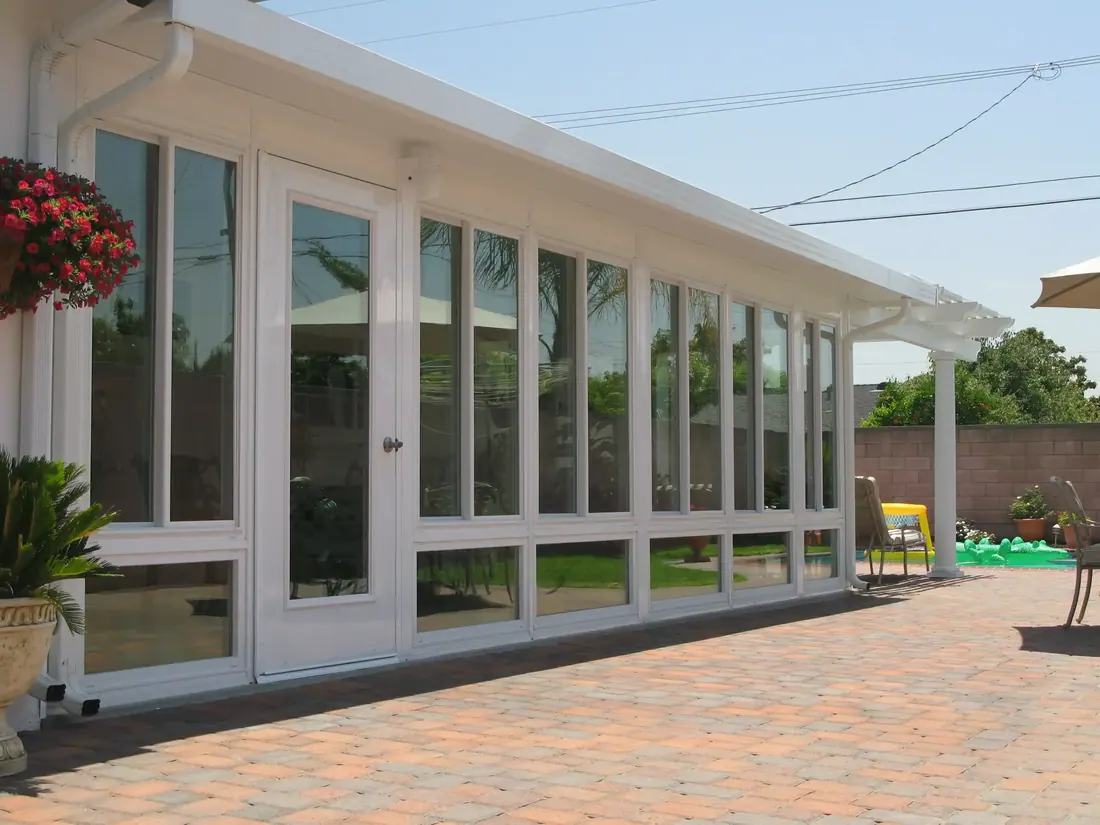
A screened porch like the one above is open to the air, so it cannot do the winter jobs in the table. If you want the room in January, you need insulation and a heating and cooling plan, not only a roof and screens.
What should you decide before you plan the room?
Decide how many months you will really use it and what you will do in it. A room for four months of evening dinners is a different build from a room you work in every weekday. Write the uses down, rank them, and give the list to the person drawing the plans.
- List the two or three things you will do in the room every week.
- Say which months you want to use it, and be honest about January and August.
- Decide how it will be heated and cooled, and who maintains that system.
- Check where the sun lands in the morning and the afternoon.
- Ask the builder how the room ties into the house roof and slab.
The ENERGY STAR guidance on sealing and insulating is a useful read for the tie-in between a new room and the rest of the house. American Eagle Builders is a family-owned exterior remodeler in Arlington, serving Dallas–Fort Worth since 1984. We explain our all-season sunrooms in person at a free estimate, where we can look at the wall and the slab.
Questions we get asked about this
Yes, if it is insulated and tied into a heating system. Without that, the room is a three-season space. Even with a system, expect the glass near the windows to feel cool on a cold morning, so plan seating a little back from the glass.
Yes. It works well when the room is heated and cooled and you can control glare with shades. Plan the desk position, the outlets and the network connection before the walls close so the room is comfortable on a working day.
It can be, if the west glass is unshaded or the cooling system is too small. A well-planned room with shade, good glass and a system sized for it can be comfortable. Heat depends on the exact design, so ask about shading and cooling at the estimate.
No. A screen room is open to the air and has no insulation, so it is used in mild weather. An all-season sunroom is enclosed and insulated and can be tied into heating and cooling so you can use it year-round.
Yes. American Eagle Builders installs Four Seasons sunrooms, including all-season rooms, across Dallas–Fort Worth. We offer free in-home estimates and look at your slab, your walls and the sun before we talk about a design.