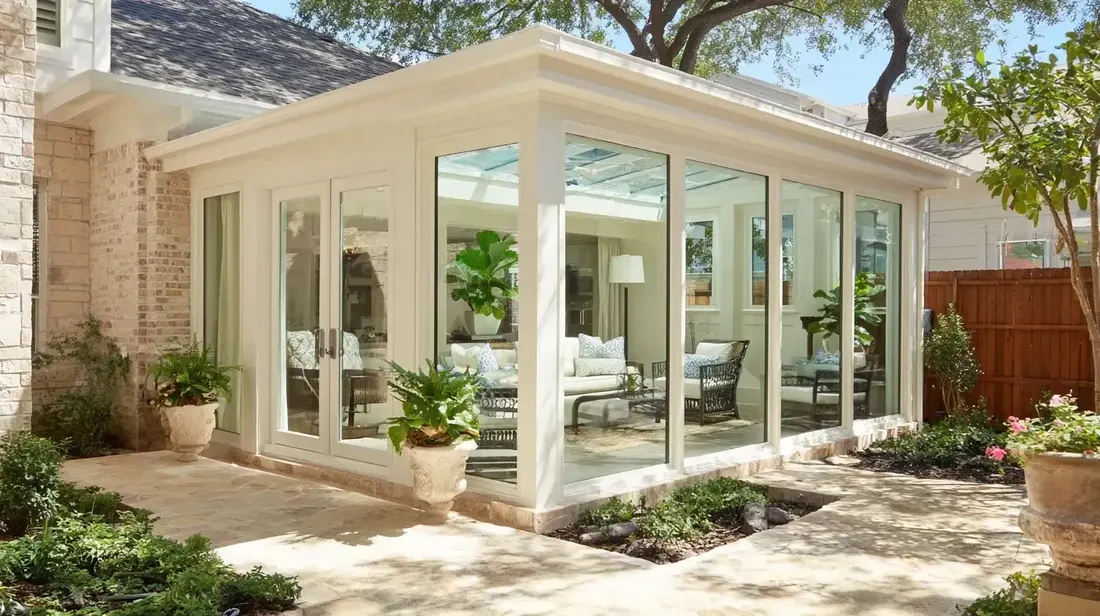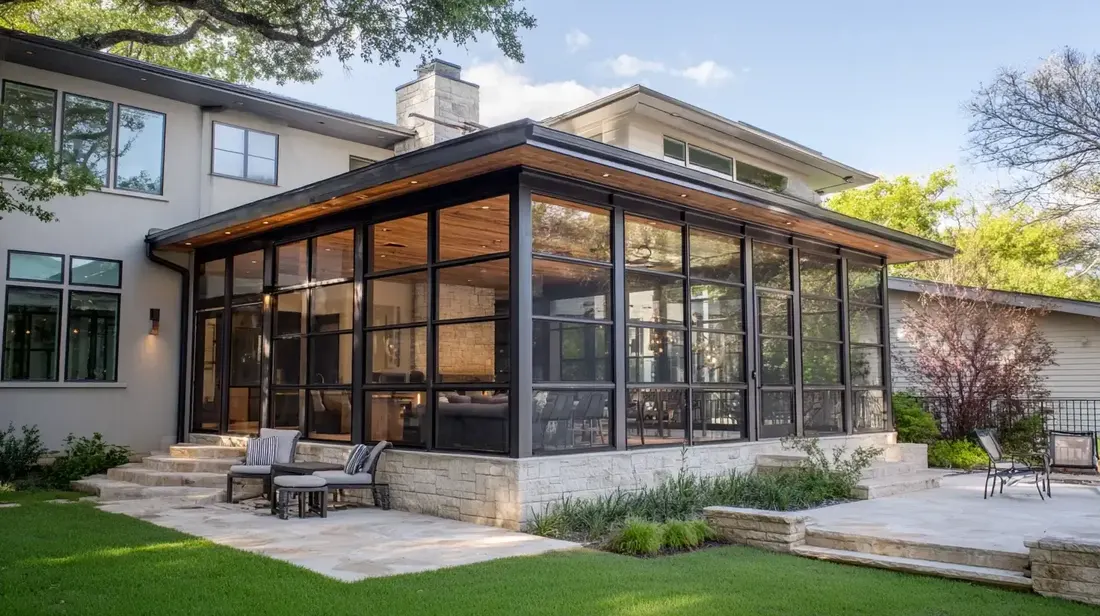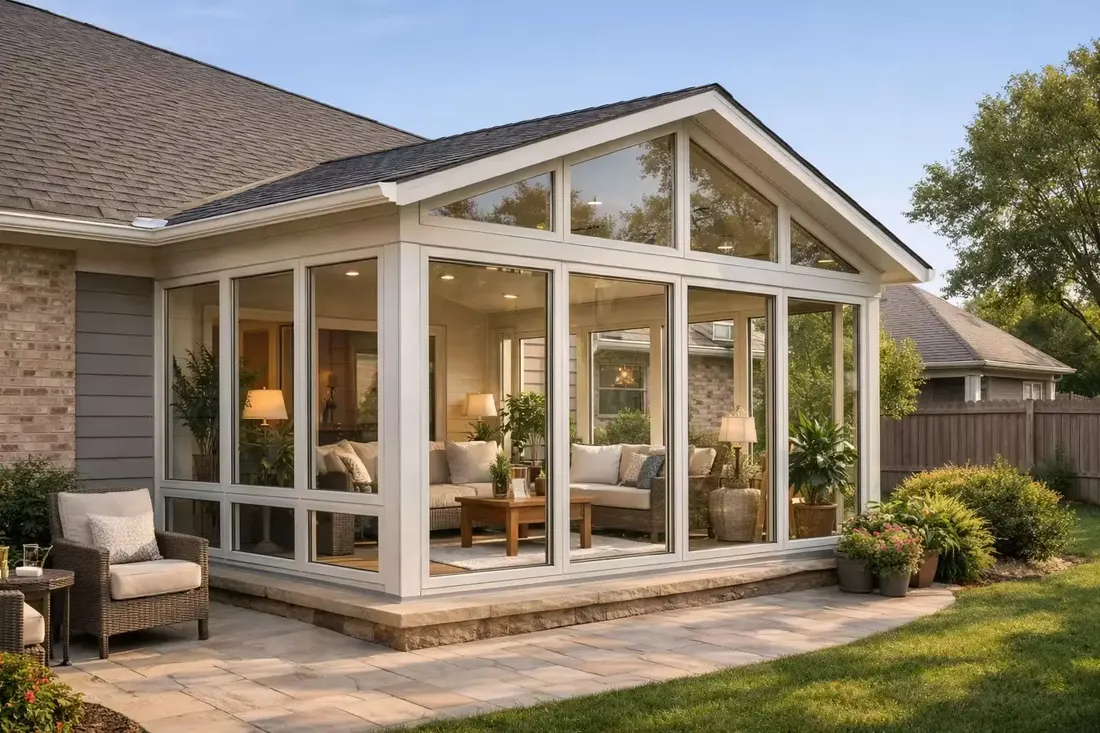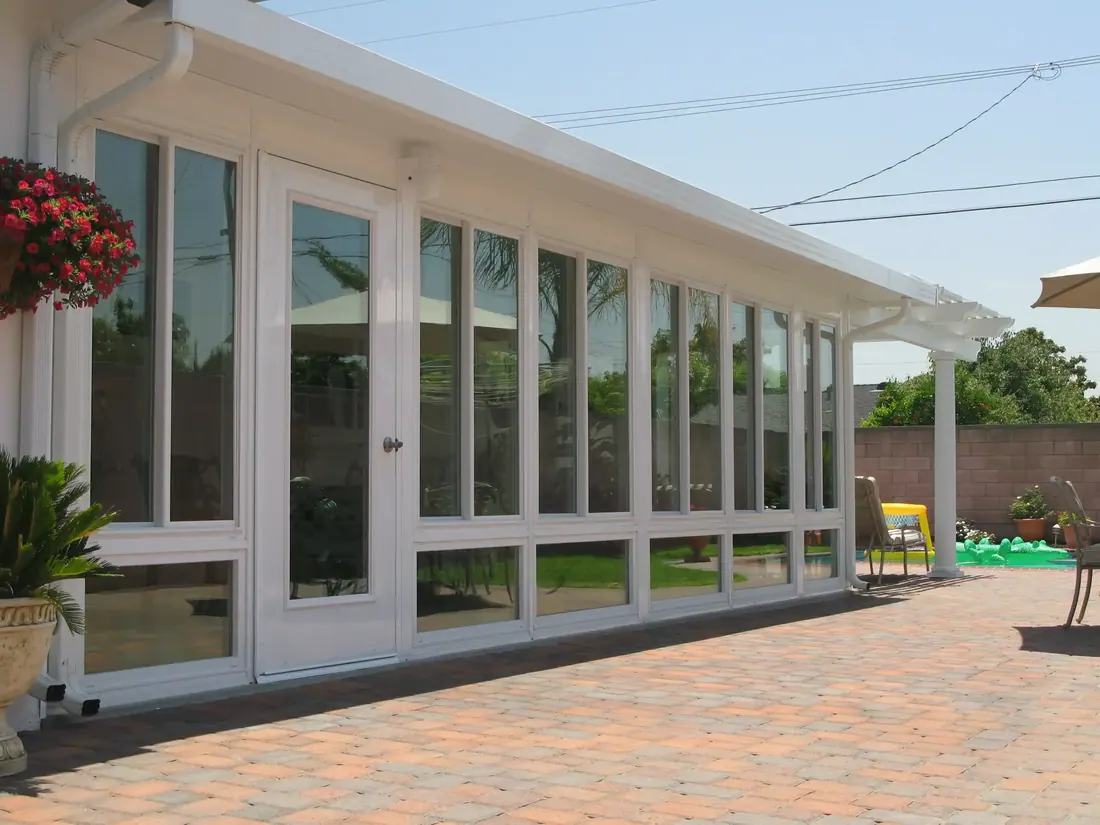
Sunroom value is not a fixed percentage or dollar amount, and anyone who gives you one is guessing. A sunroom is a glass-walled room added to the house. What it is worth to you and to a future buyer depends on whether it is finished, comfortable all year, permitted and well matched to the house.
The short answer
- Sunroom value has no fixed number, and a claimed percentage should make you doubtful.
- Comfort, match to the house, permits and layout are the four things that decide what a sunroom is worth.
- A sunroom sits between a covered patio and a full room addition, and that middle ground is often what a home needs.
- Check with your city and your appraisal district about how an enclosed room is treated.
- Build a sunroom because you will use it, not only for resale.
- A patio cover or screened room is the better choice when you want a room only a few weeks a year.
Homeowners usually ask this question while comparing a sunroom with a deck, a screened room or a full room addition. It is the right comparison, and it is not mainly about resale. A better way to look at it is use: how many days a year will you be in the room, and what would you do there otherwise?
What decides sunroom value for a DFW home?
Four things do. Whether the room is finished and comfortable all year, whether it matches the house, whether it was permitted and inspected, and whether it fits the way the rest of the house is laid out. A room that scores well on all four is easy to explain to a buyer. A room that misses one is harder.
- Comfort: an all-season room that stays usable in July counts for more than a screened room you avoid in August. The long heat of summer 2023 is the kind of test a buyer will think of.
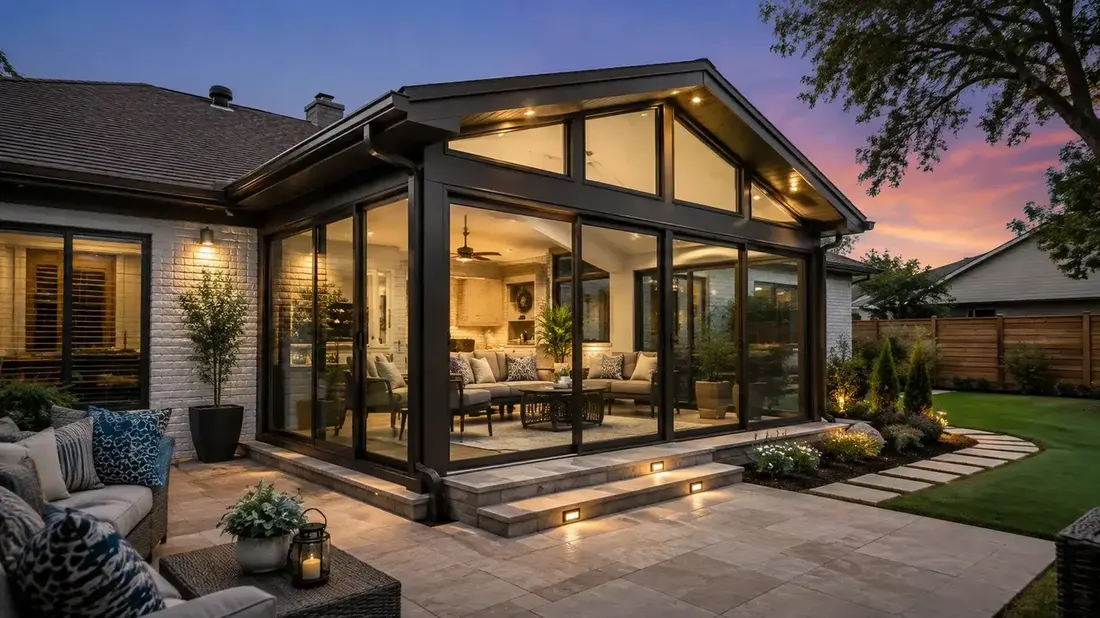
- Match: the roof line, trim and color should look like part of the house, not like something added later.
- Paperwork: permits and inspections on file, and an HOA approval if you have one.
- Layout: a door from the kitchen or the living room beats a door from a hallway nobody uses.
Match is the one people underrate. A room with its own roof pitch, trim and window grid can look like a trailer parked against the wall, even if the glass is excellent. In neighborhoods with an HOA, such as Southlake, an exterior review is part of most projects, and a room that echoes the house is easier to defend in that review. On tight Dallas lots with narrow side access, the shape of the room also decides how the build can be staged.
How does a sunroom compare with a deck, a screen room and a room addition?
Each one gives you something different, and none of them has a guaranteed return. The table shows what you get from each, and where it falls short in North Texas weather.
| Addition | What you gain | Where it falls short |
|---|---|---|
| Open deck or patio | Space for entertaining, the simplest build | Unusable in peak heat, rain and wind |
| Covered patio | Shade and a dry floor | Still open to heat, bugs and dust |
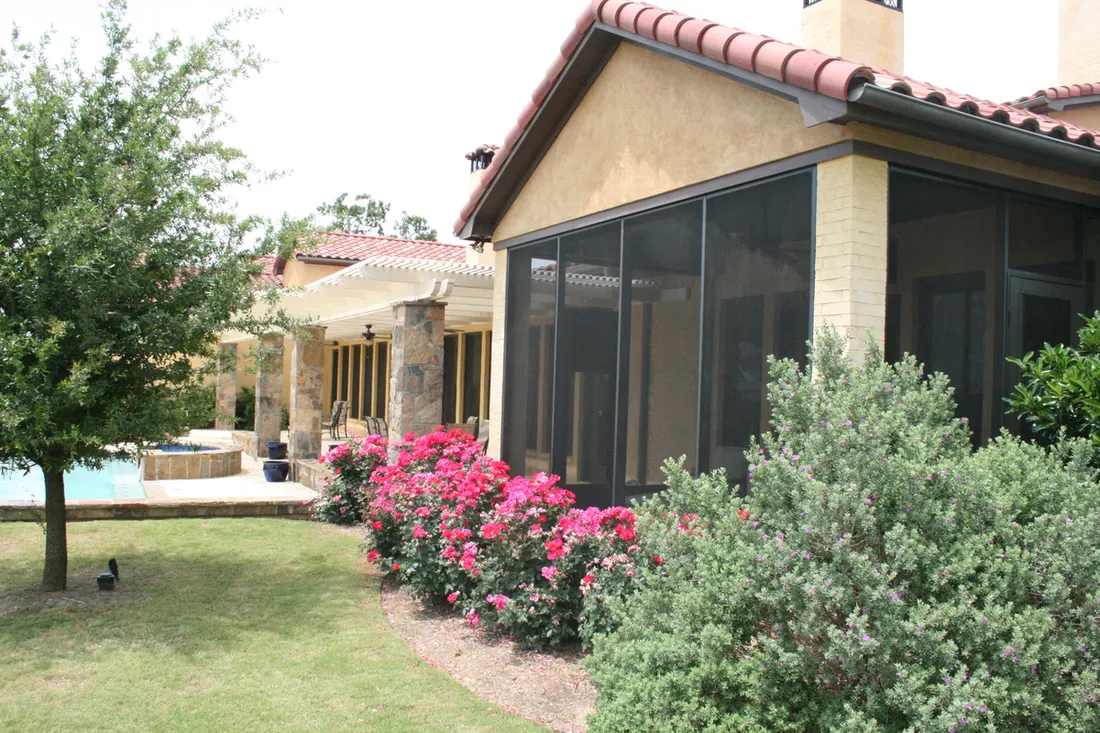
| Screened room | Air and shade without bugs | Not comfortable in extreme weather, not living space |
| Sunroom | A bright room with a view, usable most of the year | Needs good glass, a sound roof and cooling to work |
| Full room addition | Solid walls, the most flexible interior | A bigger build, with more structure to approve and finish |
A sunroom sits between a patio and a full room. You get more comfort than a covered patio, and a lighter build than a walled addition. For many homes that is exactly the gap to fill. Our post on sunroom versus screen room goes into that middle step.
Does a permit change what a sunroom is worth?
It can. A room that was built without a permit, or without a final inspection, can raise questions when you sell. Check with your city before you build, since rules differ. Plano, Frisco and Arlington each post their residential permit pages online, and our permit guide explains what to bring.
Your appraisal district also looks at what you built. How it treats a fully enclosed, heated and cooled room versus a screened one is a question for the district, not for a builder. The Dallas Central Appraisal District posts property records online, and other counties have their own.
How do you judge a sunroom by use instead of resale?
Run a plain test before you spend anything. Think of the last twelve months and ask where you would have sat in a room like this. Then answer the three questions below honestly.
- Which months would you actually use it? Winter mornings and July evenings both count only if the room is built for them.
- Who would use it? A room for one person who works from home is a different job from a room for family dinners.
- What would it replace? If it takes over a patio you never sit on, the gain is small. If it replaces a room you wish you had, the gain is large.
If you cannot answer those, you are not ready to price a sunroom. If you can, you also have the brief a builder needs to design the right one, and that does more for the end result than any resale figure.
When is a sunroom not worth building?
When resale is the only reason. No addition has a guaranteed return, so build it because you will use it. A sunroom is also a poor fit if the only free wall faces west and you will not shade it, or if you want a room for three weeks a year. A patio cover may do the job with less work.
Another test is the house itself. If a sunroom would block a bedroom window or cut off the only path to the yard, the layout will cost you more than the room gives back. A good builder will tell you so at the first visit.
What should you ask before you build for value?
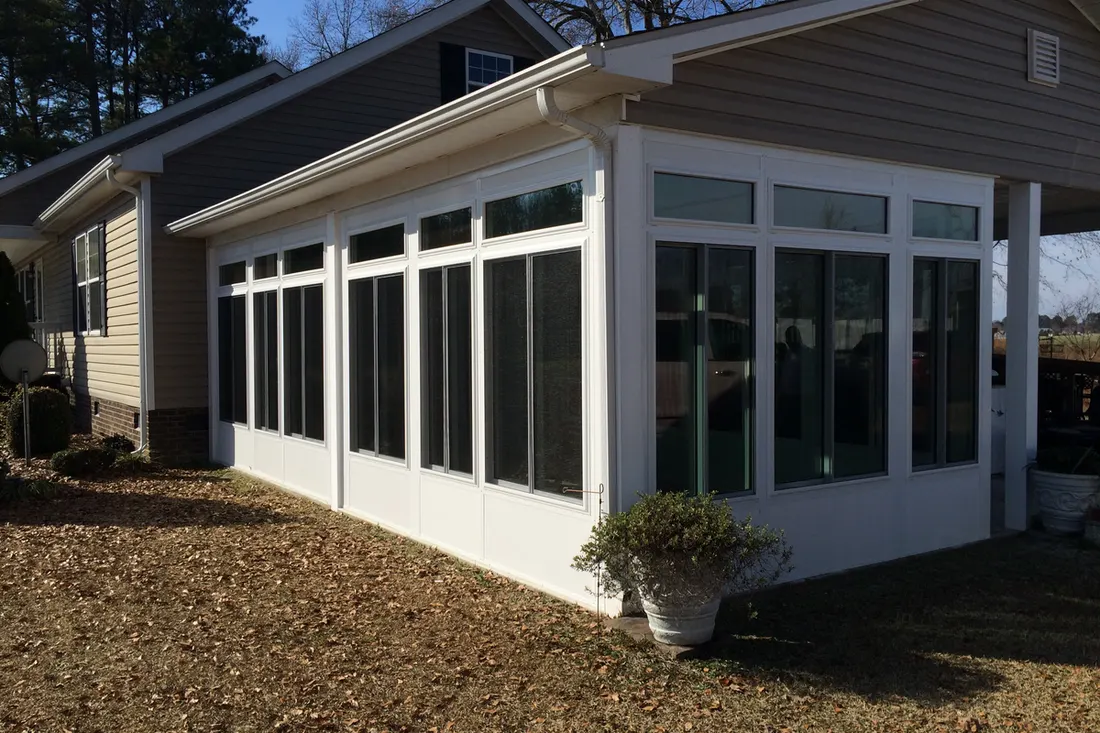
Ask what the room will be, in plain terms, and get it in writing. Ask about the roof, the glass and the way the room is cooled, because those decide comfort. Then ask who handles the permit and how the room joins the house.
Our family company, American Eagle Builders, is based in Arlington and has worked across Dallas–Fort Worth since 1984. We install Four Seasons sunrooms, and we offer free in-home estimates. Read how a sunroom adds resale value, then see our sunroom page or book a visit.
Questions we get asked about this
There is no fixed figure. It depends on the location, the quality of the build, whether the room is comfortable all year, how well it matches the house and whether it was permitted. Anyone who promises a percentage without seeing your home is guessing.
It depends on how you use it. A deck is the simplest build but is unusable in peak heat and rain. A sunroom costs more effort and gives you a room that works most of the year. Count the days you will actually use it.
It depends on how the room is built and how your appraisal district and city classify it. A fully enclosed, heated and cooled room is treated differently from a screened one. Ask your appraisal district and the city’s permit office for their definitions.
Rules differ from city to city, so check with your own city’s permit office before you build. Plano, Frisco, Arlington and many other cities post their residential permit information online. Skipping a permit can cause trouble when you sell.
Yes. We install Four Seasons sunrooms and give free in-home estimates. At the first visit we will say honestly whether a sunroom, a patio cover or a screened room fits your house and how you use it.